
News

APCIA Says Claims Data Standards in Works to Better Combat Criticism
These days the insurance industry is “caught in the crosshairs,” and it may also be caught flatfooted– responding to recent scrutiny of a policy’s worth rather than working from in front with appropriate data.
In Boston at the American Property Casualty Insurance Association (APCIA)’s annual meeting, board chair David Bell said the industry has succumbed to what has been dubbed the “horseshoe effect.” CONTINUES
Financial Results

Mercury General Corporation Announces Third Quarter Results and Declares Quarterly Dividend
Both net premiums earned and net premiums written for the nine months ended September 30, 2025 include $101 million of increased ceded premiums due to the reinstatement premiums paid and recorded in the first half of 2025 to reinstate the fully exhausted reinsurance coverage layers of its catastrophe reinsurance treaty ended June 30, 2025 following the Palisades and Eaton wildfires in January 2025.
Combined Ratio is 90.2% in Q3, compared to 87% for the same period in 2025.
Claims

SEMA Day One: CIC Weighs Customer-Pay Growth and AI in Claims as New ADAS and Repair Tools Hit the Floor
The SEMA Show opened Tuesday at the Las Vegas Convention Center with more than 2,200 brands, including more than 400 first-time exhibitors, and attendees from 140 countries, according to SEMA. The Collision Industry Conference (CIC) held its annual Las Vegas meeting the same day, among the events of SEMA week. CIC committees took on AI in claims decisions, unclear repair information, and the rise of customer-pay work, while exhibitors used opening day to launch new ADAS, AI, and repair tools.
CIC: customer-pay work grows as committees take on AI and repair information
Lauren Kolak of CCC Intelligent Solutions said customer-pay jobs average about $1,900, a figure that has held fairly steady for several years, but such jobs now account for about 26% of jobs, up from about 15% for most of the prior decade.
"We'll explain, 'If you filed this claim and your premium goes up, and people tell us it can go up as much as 45%, and you're paying $2,000 a year for insurance, you're going to add $900 a year,'" Reeves said. "'You'll probably be surcharged for three years, so there's $2,700 that you're going to get nailed in your premium over the course of three years, potentially. Why wouldn't you pay out of [pocket] $3,000 when it [filing a claim] might cost you $2,700 for insurance?'"
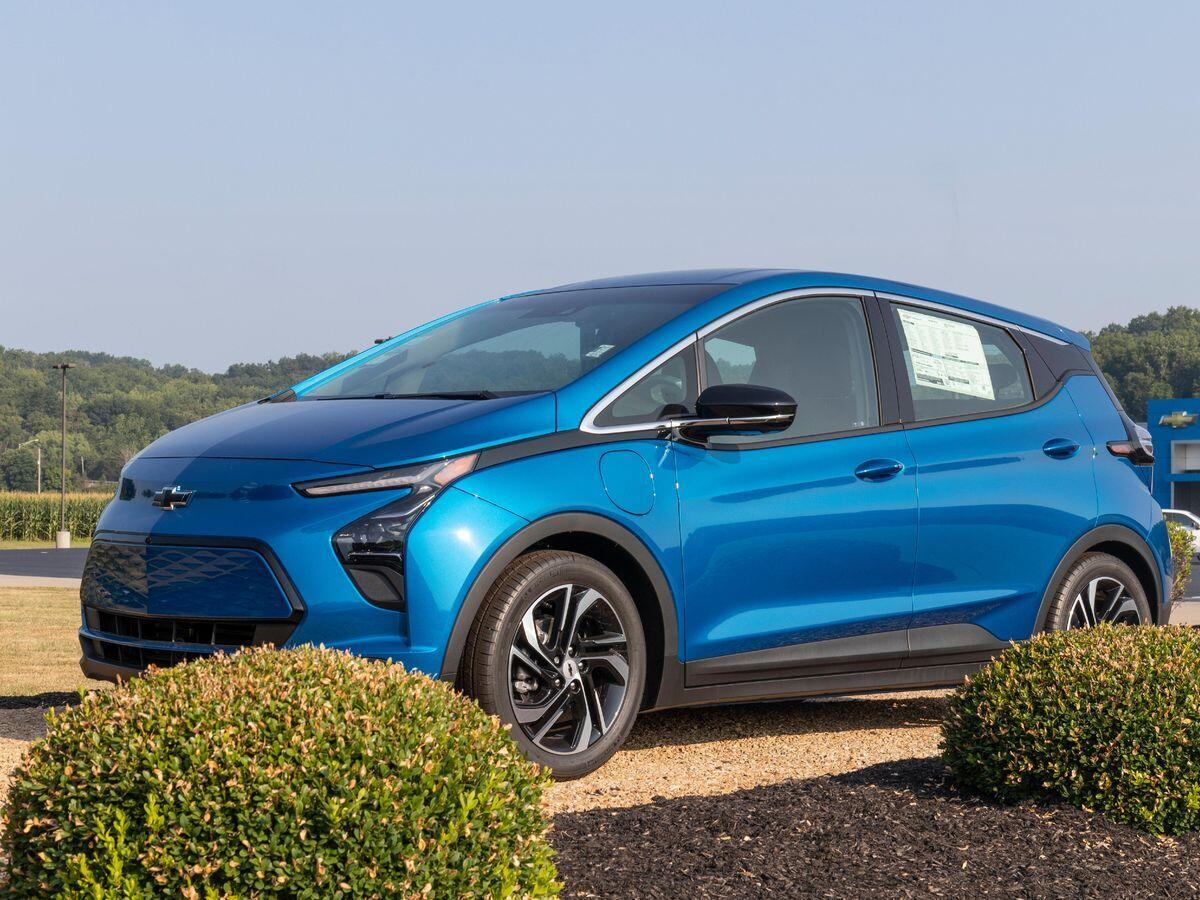
Higher Deductibles Are Changing the Auto Insurance Claims Game
More drivers are deciding some fender benders aren’t even worth reporting to their insurance companies. If repair costs land in the neighborhood of their deductible, drivers may conclude that paying out of pocket is less painful than facing a premium increase after a claim.
Filing a claim can increase car insurance premiums by 35% at renewal, according to Insurify data. That significant impact could help explain why drivers paid out of their own pockets for 26% of all repair jobs in the first half of 2026.
More than 71% of those self-paid repairs cost less than $2,000, averaging around $1,941 each time, according to CCC Intelligent Solutions, an auto claims and collision repair technology company. And, in more than 28% of repairable claims, policyholders had deductibles of $1,000 or more, up from nearly 26% last year, and just 20% in 2022.
Choosing a higher deductible usually means lower premiums as drivers agree to shoulder more risk before insurance steps in to pay. But according to CCC, this trend isn’t just shifting costs from insurers to drivers — it’s changing the entire mix of claims insurers see.
AI in Insurance
Guidewire Introduces Agentic AI Platform for P&C Insurers - ProgramBusiness | Where insurance industry clicks
Guidewire has introduced a new platform approach to agentic artificial intelligence (AI), integrating AI agents into core property and casualty (P&C) insurance operations. The company announced the initiative on Oct. 27 at its Connections conference in Las Vegas.
The platform combines applications, data, workflows, and security controls to support AI-driven underwriting, pricing, claims processing, and policy management.
According to Guidewire, AI agents operate within its existing core platform, using insurers’ current data and workflows. Built-in security controls establish operational boundaries and maintain audit trails.
AI Capabilities for Underwriting and Pricing
- Guidewire outlined several tools designed to support product development, risk assessment, and underwriting decisions:
- Advanced Product Designer: Helps product managers develop market-ready products in days through impact analysis, gap detection, and recommendations.
- PricingCenter: Enables actuaries to validate pricing models, rules, and adjustments before moving rates into production. Integration with PolicyCenter connects pricing decisions to policy workflows.
- Risk Accumulation App: Provides geographic views of exposure concentrations by peril, allowing underwriters to assess individual risks and portfolio impacts.
- UnderwritingCenter: Converts submissions into risk profiles, matches risks with underwriting appetite, and connects quoting directly to PolicyCenter.
- ProNavigator: Uses embedded AI and Guidewire-developed agents to summarize submissions, identify risk information, and recommend next actions.
Guidewire also introduced agentic capabilities for claims management, from first notice of loss through adjudication. Concierge allows claimants to report losses through voice or chat interactions with autonomous agents. The system collects loss information and transfers claims to ClaimCenter.

InsurTech MGAs Shift from Rapid Growth to AI and Underwriting Profitability
Insurtech MGAs are prioritizing underwriting profitability, AI automation and specialty insurance expertise as carriers and reinsurers demand sustainable performance
Key highlights:
- The insurtech MGA market is entering a third phase of development, with AI agents and advanced automation following earlier waves of digital distribution and technology-driven underwriting.
- MGAs, insurers, reinsurers and investors are placing greater emphasis on underwriting profitability, portfolio quality and sustainable growth rather than rapid expansion.
- Specialized insurance expertise, disciplined risk selection and established relationships with capacity providers are becoming more important competitive advantages than technology alone.

AI can accelerate underwriting. People must remain accountable
Underwriting has always combined science with art: gathering the facts, then applying judgment to decide what those facts mean for a particular risk. AI can accelerate the first part, but it doesn’t eliminate responsibility for the second.
I see AI as a multiplier of human capability, not a substitute for underwriting expertise. Like any practical tool, AI’s value depends on knowing what it can actually do, as well as when and how to use it appropriately. The mistake is treating a large language model as a strategist or a solution to every problem—because pricing, terms, risk selection and relationships remain human responsibilities. CONTINUES
Cyber Risk

NAIC: Cyber market has nearly tripled since 2020
U.S. domestic direct premiums written were $7.5 billion in 2025, up from $2.75 billion in 2020.
The U.S. domestic cyber market has nearly tripled in the last six years, according to a new NAIC report.
U.S. domestic direct premiums written were $7.5 billion in 2025. That's up from $2.75 billion in 2020. When premium from surplus insurance companies domiciled outside of the U.S. is included, direct premiums written were about $9.5 billion in 2025. That's up 3.5% over 2024.
In 2025, there were 5.8 million domestic policies in force, up 33% over 2024. Primary policies were up 13.6%, and surplus policies were down 45.3%, while endorsement policies — which add cyber coverage to other commercial policies — were up 53.8%.
According to the NAIC report, 60% of U.S. cyber premium comes from primary cyber policies but most policies are endorsements, which represent just 4% of premium.
InsurTech/M&A/Finance💰/Collaboration
Vencora Expands Its Insurance Technology Portfolio and
Today, Vencora – a global buy-and-hold-forever acquirer of banking, financial services, and insurance technology companies – announced the acquisition of CT InsureTech (CTI), formerly Charles Taylor InsureTech, a leading provider of insurance technology, software, and services to global insurers and brokers. With offices in London, Buenos Aires, and Mexico City, CTI combines decades of insurance knowledge with forward-thinking technology to provide software and deliver enterprise services to the global insurance market, shaped by a deep understanding of the complex realities of insurance and the genuine needs of the people working within it.
“Our focus at Vencora is on building enduring technology businesses that customers can rely on for decades. CT InsureTech is exactly the kind of high-quality, mission-critical platform Vencora is built for – with deep domain expertise, strong customer relationships, and a clear path for continued growth,” said Vencora CEO Kevin Bradley. “We are committed to supporting the business to enhance its products, develop its people, and help ensure customers continue to benefit from stable, innovative solutions.”
Announcements

Mitchell Announces Plans to Transform Collision Repair Intake Through Automated Vehicle Inspection and Estimating
Mitchell, a leader in the development of innovative auto physical damage technology solutions, today announced plans to expand its collaboration with Tractable through a proposed, exclusive agreement focused on optimizing the vehicle intake process.
By connecting Tractable's LumaScanner vehicle inspection system with Mitchell’s automated estimating solution, Mitchell Intelligent Estimating, the companies intend to help North American multi-site operators (MSOs) and independent collision repair centers accelerate damage assessment and preliminary estimate creation.
"Every decision about a vehicle, whether to service it, repair it or sell it, depends on knowing its true condition," said Venkat Sathyamurthy, CEO of Tractable. "Our ambition for LumaScanner is to make that knowledge available to everyone who relies on it, anytime, anywhere. Integrating LumaScanner with Mitchell's intelligent solutions will bring that vision into the heart of collision repair, extending the value of the inspection into the estimating process itself."
Telematics, Driving & Insurance

Braking dangerously seven times more likely than speeding
New research has found that braking dangerously is seven times more common than driving at dangerous speeds.
Marshmallow Car Insurance analysed data from more than 10 million trips recorded on its telematics service, Marshmallow Move.
It scored driving behaviours out of 100 based on six ratings: dangerous, very poor, poor, average, good, and excellent.
Nearly one in five drivers (19%) received a ‘dangerous’ rating for braking compared to just 2.7% who were rated ‘dangerous’ because of speeding.
Interesting, poor braking was closely related to phone usage, with drivers who use their phone more often while driving also scoring lower on braking. The worst 25% of phone users had a ‘poor’ braking score on average, while the best 25% of phone users were rated ‘good’ on braking.
Stephen Hemmings, Marshmallow’s group product manager for telematics, said: “This data highlights a clear association between poor phone-handling scores and harsher braking. Distraction can reduce the time drivers have to recognise and respond to changing road conditions, increasing the likelihood of sudden braking.