
News

Commercial Auto Underwriting Results Show Signs of Long-Awaited Improvement: AM Best
Improved physical damage performance and easing loss reserve development pushed commercial auto underwriting metrics to their best level in a decade, according to AM Best.
Commercial auto insurers reported their best underwriting performance since 2021 in 2025, with the mid-year 2026 loss ratio hitting its lowest point in five years, according to AM Best.
The line’s net underwriting loss narrowed to $2.2 billion in 2025 from $4.9 billion in 2024, while net premiums written rose 6% year over year to $65.8 billion, AM Best said. The operating ratio fell to 96.6 in 2025, the lowest of any year in the past decade excluding the peak COVID years, when fewer vehicles were on the road.
Despite the gains, AM Best noted that commercial auto remains a hard-market outlier compared with broader property & casualty lines, where pricing has softened, and underwriters still need further improvement to approach breakeven results.
Financial Results
Allstate Reports Excellent Q3 2026 Results
"Allstate delivered excellent financial results and increased Property-Liability growth in the third quarter," said Tom Wilson, who leads The Allstate Corporation. "Revenues were $17.3 billion as total policies in force reached 217.6 million, with a 3.3% increase in Property-Liability policies. Net income was $2.1 billion, or $8.03 per diluted share, and adjusted net income* was $2.5 billion, or $9.76 per diluted share. Earnings reflected strong underwriting margins on auto and homeowners insurance, higher investment income and continued growth of Protection Services."
"The strategy to grow personal property-liability market share and expand Protection Services through Transformative Growth and building Allstate's Large Language Intelligent Ecosystem (ALLIE) reached several important milestones. Auto and homeowners insurance policies were 3.4% and 3.3% higher than last year, respectively, as new Affordable, Simple and Connected products and broad distribution resulted in increased market share. Protection Plans' international revenues are growing rapidly. ALLIE has been expanded to handle millions of service calls with additional capabilities planned for early 2027. We continue to innovate to create the future of protection," concluded Wilson.
Liberty Mutual Insurance Reports Third Quarter Results
Liberty Mutual Holding Company Inc. and its subsidiaries (collectively "LMHC" or the "Company") reported net income attributable to LMHC of $2.067 billion and $6.753 billion for the three and nine months ended September 30, 2026, versus income of $2.223 billion and $5.093 billion for the same period in 2025.
"Liberty Mutual delivered another excellent quarter, generating $2.1 billion in net income and an 89.5% combined ratio. Year-to-date net income increased 32.6% to $6.8 billion, while our combined ratio improved 1.4 points to 88.1%, reflecting the strength of our underwriting and investment performance," said Tim Sweeney, Liberty Mutual Chairman & Chief Executive Officer. "In service of our policyholders, and with the strongest capital position in our history, we will remain disciplined and pursue profitable growth amid changing market dynamics across our insurance and investments businesses."
Swiss Re books $4.2bn profit as P&C pipeline compresses
Swiss Re reported a net income of $4.2 billion for the first nine months of 2026, up 3% on the same period last year, with life and health reinsurance offsetting a 6% decline in P&C Re earnings as pricing pressure weighed on the unit.
The reinsurer’s P&C reinsurance arm delivered a combined ratio of 77.3%, well inside its full-year target of less than 85%, and the group’s return on equity held at 22.5%. But the metric that most directly measures the profitability of business being written right now told a different story. Swiss Re’s new business contractual service margin (CSM) for P&C reinsurance - an accounting measure under IFRS 17 that reflects the expected profit embedded in contracts written during the period - fell to $1.8 billion for the first nine months of 2026, down from $2.5 billion in the same period of 2025. That is a 28% decline across three consecutive quarterly results.

Lemonade Announces Third Quarter 2026 Financial Results
Here’s a look at the key metrics for the third quarter:
- Top Line: At $1.55 billion, In Force Premium grew 34%, our 12th consecutive quarter of acceleration. Revenue grew faster still, by 73% to $336 million.
- Gross Profit: increased 48% YoY to a record $118 million.
- Bottom Line: Net loss was ($44) million, while our Adj. EBITDA loss was ($20) million, in line with our expectations.
- Cash Flow: Adj. Free Cash Flow of $27 million was $9 million improved YoY;
- Cash Flow from Ops of $7 million was $3 million improved.
Claims

Faster Repairs, More Total Losses Split Auto Claims Satisfaction in JD Power Study
Repair cycle times fell 10 days in two years, while more than a quarter of auto claims ended in a total loss.
Collision repair shops are completing insured repairs faster as claim counts fall, while a growing share of auto insurance claims end in a total loss instead of a repair, according to the JD Power 2026 U.S. Auto Claims Satisfaction Study released Tuesday.
As of the first quarter of 2026, average repair cycle time stood at 15.3 days, 10 days shorter than in the first quarter of 2024, JD Power reported. The firm credited the gain to a steep drop in the number of claims.
Total losses accounted for 26% of claims in 2026, compared with 16% four years earlier...
AI in Insurance

When Claimants Use AI: How Insurers Can Adapt Their Workflows
Insureds’ growing use of generative artificial intelligence to submit claims and contest adverse determinations is challenging insurers’ claims management systems and protocols. For insurers, this increased use of gen AI by insureds creates a potential disruption to the traditional claim handling process in addition to increasing overall costs and workload. ARTICLE
The challenge for insurers is to develop better workflow strategies without allowing the higher complexity or appearance of the paperwork to turn into higher loss adjustment expenses. When developing better workstream flows, claims managers must assess:
- Who owns the response.
- What warrants additional specialist involvement.
- If the company’s own AI tools are proper and being properly utilized.
- If legal resources are being utilized in the right kinds of cases.
- How leadership can assess whether claims are being allocated to the right resources.
Climate/Resilience/Sustainability

Secondary Perils Now Drive Catastrophe Losses, Squeezing Earnings and Capital
Hail, wildfire, winter storm and inland flood now drive most North American insured catastrophe losses in most years, according to a Marsh Re report on secondary peril trends, as reported by Risk & Insurance.
The big picture:
Marsh Re said a major hurricane or earthquake still typically sets the 1-in-100 and 1-in-250 capital outcomes for diversified portfolios, but that is “less true than it was.” A single urban wildfire can produce a tail event for a concentrated portfolio, and severe convective storm is already the tail risk for some regional carriers in the central Plains states.

Just 4% of U.S. homeowners carry flood insurance — FEMA's new online tool lets you buy coverage without an agent
FEMA, the federal emergency agency, has introduced a new online tool to purchase home insurance — the first time this will be available in the U.S. without having to go through an agent.
This comes as the super El Niño climate event is ramping up, with unusually warm and sometimes wet weather expected across the hemisphere for at least several months, even as climate change continues to make flooding a problem year-round every year.
According to U.S. News and World Report, FEMA's National Flood Insurance Program, NFIP covers the vast majority of Americans with flood insurance, which is generally an add-on and not included with home insurance. Now it can be purchased online, without going through an insurance agent, with a 30-day waiting period.
El Niño's Hidden Hillside Threat: Why Homeowners Should Prepare for More Than Heavy Rain
Mercury Insurance (NYSE/NYSE TX: MCY) is encouraging homeowners to look beyond traditional flood risks as a strengthening El Niño raises concerns about potentially damaging winter storms, particularly in hillside communities and areas recovering from wildfires. While heavy rainfall can threaten homes through flooding and water intrusion, saturated slopes, unstable terrain and fast-moving debris flows can create additional hazards that homeowners may not recognize until conditions become dangerous.
"El Niño changes the larger atmospheric conditions that influence where storms develop and how precipitation is distributed, but it doesn't mean every community will experience unusually heavy rainfall," said Steve Bennett, Senior Director, Climate and Catastrophe Science at Mercury Insurance. "The concern for hillside communities is what happens when significant rainfall interacts with local terrain, soil conditions and areas where veg
InsurTech/M&A/Finance💰/Collaboration
Amdocs acquires insurance tech provider EIS for $340 million By Investing.com
Amdocs (NASDAQ:DOX) announced today it has acquired EIS, a cloud-native insurance technology provider, for approximately $340 million in cash, according to a press release statement.
The acquisition represents Amdocs’ entry into the insurance industry. EIS, headquartered in San Francisco, provides a multi-line platform covering policy administration, billing, claims and customer engagement to insurance carriers including Aflac, CSAA, Allstate, Desjardins and BNP Paribas Cardif.
"Expanding into a new vertical is a key pillar of our growth strategy, and today we are taking an important first step," said Shimie Hortig, President and Chief Executive Officer of Amdocs.
Announcements
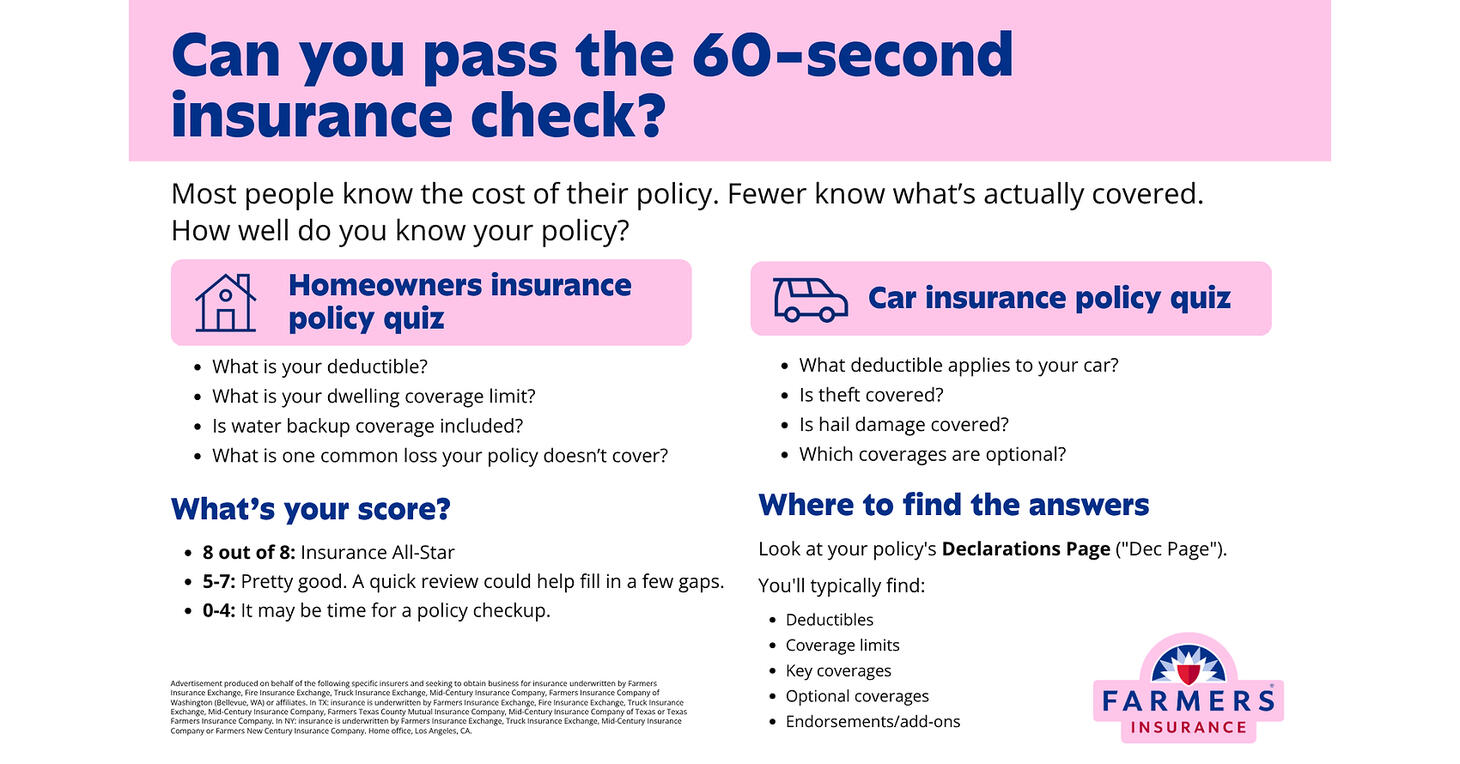
Farmers Insurance® Shares Tips to Lowering Insurance Costs While Understanding the Trade-Offs
To help consumers make informed decisions, Farmers® is sharing an Insider's Guide to Lowering Insurance Costs, along with questions consumers may want to consider before making policy changes.
"Price matters. For many households, finding ways to lower costs is essential," said Greg Pannhausen, Head of Property Product Development at Farmers. "What often gets overlooked is understanding what's driving the savings. Sometimes coverage stays the same. Other times, the consumer is taking on more financial responsibility or choosing less protection in exchange for a lower premium."