
News
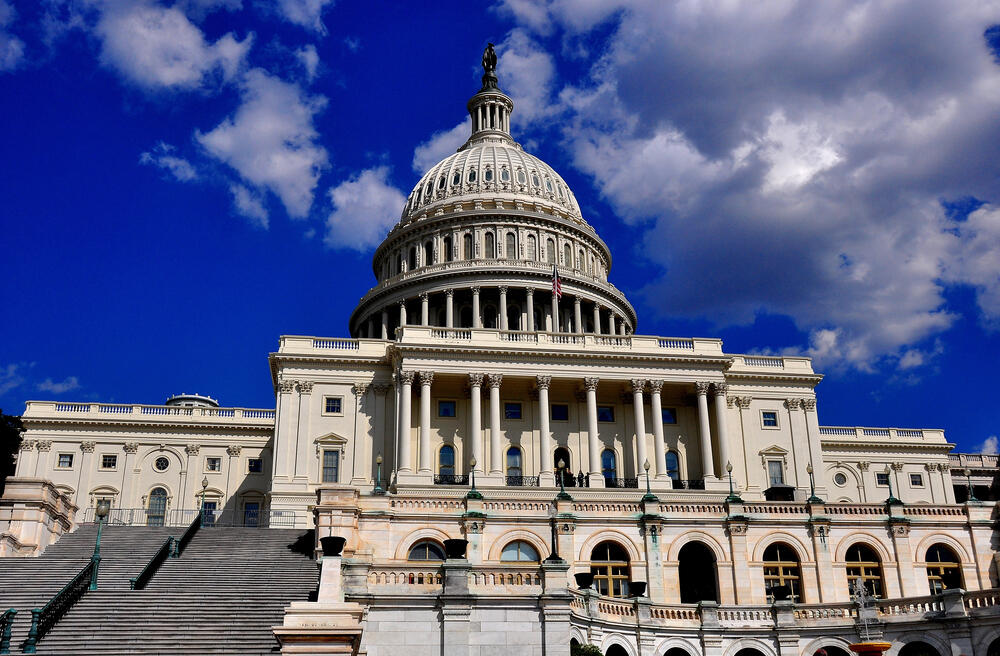
InsurPac Impacts the 2026 Election
The dust has largely settled on the 2026 U.S. midterms election, which resulted in the Democratic Party taking control of the U.S. Senate and U.S. House of Representatives—with sizeable majorities in both chambers.
Several races have yet to be called, but their outcome will not affect Democratic congressional control.
The Big “I” government affairs team works diligently to establish and nurture bipartisan relationships with members of Congress and candidates seeking federal office. These efforts are crucial to advancing the interests of the independent agency system and ensuring that the voices of agents and brokers are heard loud and clear in Washington, D.C. A vital resource in this effort is InsurPac, the Big “I” federal political action committee.
This election cycle, InsurPac disbursed $2.5 million to 267 federal campaigns, winning at least 212 of them for an approximately 80% victory rate. In disbursing this money, InsurPac did not look at party affiliation. As always, it gave money to representatives, senators and candidates who were running for federal office and have been friends and advocates of the independent agency system.
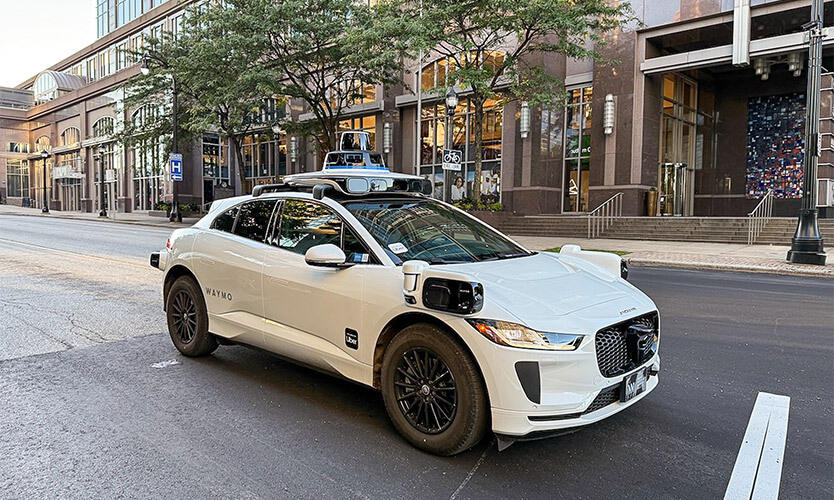
Waymo recalls self-driving cars over closed freeway lanes, manual traffic control - Business Insurance
Alphabet’s self-driving unit Waymo said on Friday it is issuing two recalls for its robotaxis over incidents involving closed freeway lanes and manual traffic control.
Earlier this week, Waymo said it halted operations of its vehicles on US freeways after a California regulator barred its vehicles from freeways in the state.
The California ban, which took effect last week, is a result of a series of incidents where Waymo robotaxis entered active construction zones, the California Department of Motor Vehicles said.
Waymo said a statement it filed two safety recalls with the National Highway Traffic Safety Administration on Thursday on its automated driving system “to strengthen how the Waymo Driver navigates closed freeway lanes and intersections with manual traffic control.”
The closed freeway lanes recall stems from unusual circumstances where a Waymo vehicle may enter and continue driving in a closed freeway lane, the company said, adding it is still working on the recall remedy. Waymo said there were no collisions or injuries reported from the closed freeway events
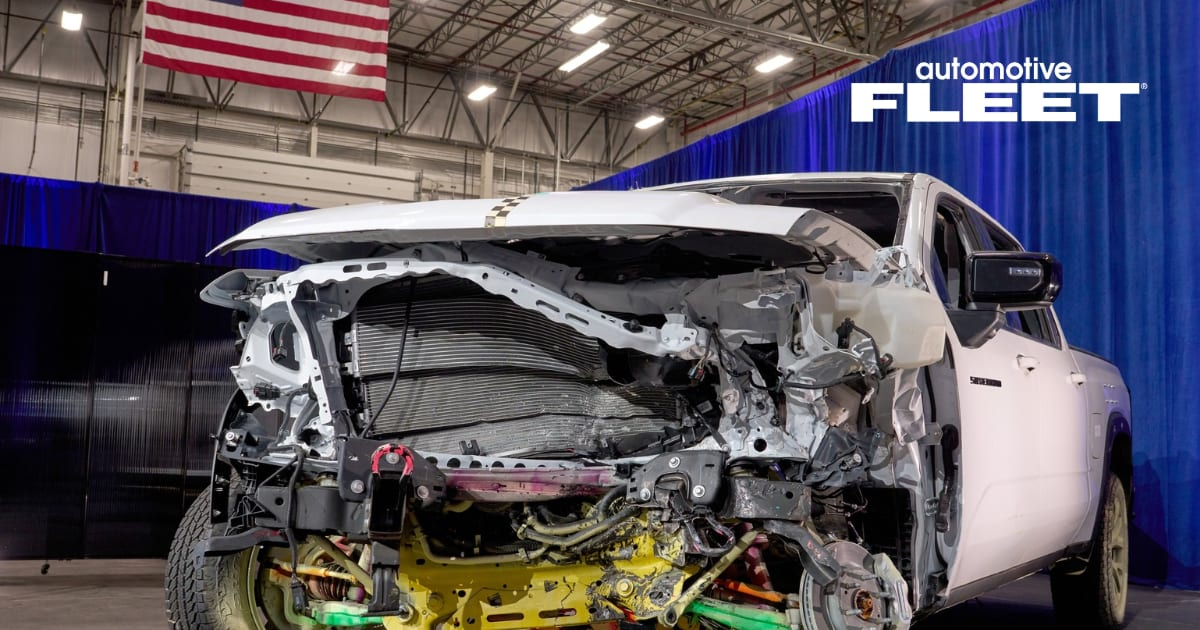
GM Conducts 92,000 Virtual Crash Tests for 2027 Chevrolet Silverado 1500
General Motors used computer simulations to evaluate crash scenarios, occupant protection and vehicle design variations before conducting physical crash tests.
General Motors performed 92,000 virtual crash tests for the 2027 Chevrolet Silverado 1500. The computer simulations focused on crash scenarios, occupant safety, and evaluating different vehicle design options.
Virtual tests were conducted prior to implementing any physical crash tests.
According to GM, approximately 80% of the truck's passive safety engineering work was completed virtually, generating nearly 2 petabytes of data.
The approach allows engineers to examine how vehicle structures and occupant protection systems respond to different crash scenarios, including variations in occupant size, seating position and vehicle components.
Unlike physical crash tests, which require test vehicles and specialized facilities, virtual simulations allow engineers to evaluate multiple design configurations before building physical prototypes.
Climate/Resilience/Sustainability
Why insurers are the hidden kingmakers in the energy transition
- Bankers need insurance coverage before lending to novel low-carbon technologies
- Insurers lack historical data to price risks for first-of-a-kind projects
- New telematics systems monitor equipment to help sites secure coverage
- Early insurer involvement at design stage can reduce project risks and costs
- Major corporate offtakers like Google can help projects secure financing
Projects to decarbonise industry often struggle to secure financing. But there is another obstacle that receives far less attention: insurance.
Without adequate cover, banks, investors and customers may be unwilling to back even the most promising low-carbon technologies.
As developers race to scale carbon capture, green steel, sustainable aviation fuel and other clean industrial solutions, insurers are finding themselves at the centre of the transition, helping investors understand and manage unfamiliar risks.

Lower reinsurance costs support improving returns for US homeowners insurers: Aon
Lower reinsurance costs are helping US homeowners insurers improve underwriting margins and prospective returns on equity (ROE), although catastrophe exposure continues to constrain profitability, according to global insurance and reinsurance broker and risk advisory firm Aon.
In its latest Homeowners Return on Equity Outlook report, Aon highlighted that increased reinsurance capacity and stronger reinsurer appetite contributed to double-digit reductions in risk-adjusted catastrophe excess-of-loss reinsurance pricing across the broader US property market at the midyear 2026 renewals.
The firm noted that greater competition among reinsurers has resulted in improved terms and more flexible coverage structures, providing insurers with opportunities to strengthen their protection and optimise capital deployment.
AI in Insurance

The AI resilience challenge
Artificial intelligence is becoming part of everyday operations of businesses, governments and society.
It can improve productivity, services and decision-making. But as AI is used in more important areas, failures may have consequences far beyond the system or organization where they begin.
Many of the risks associated with AI are already familiar, from cyber incidents and fraud to liability and business interruption. What can change is their scale and reach. As AI becomes more widely used, a problem in one system or organization can have consequences elsewhere. Drawing on insights from 50 experts, this report from Zurich and the University of St. Gallen explores how these connections arise and how businesses, insurers and policymakers can strengthen resilience. CONTINUES

OIP Insurtech: What More Than 150 Clients Taught Us About AI Readiness
Most of the specialist insurers have some form of AI initiative on their roadmaps.
OIP Insurtech (the team behind BoundAI) has worked with over 150 clients, and a consistent pattern emerges from that work. The ones that have gotten the most out of AI have done the most unglamorous bit of preparation first. Readiness is, in fact, an operational question before it’s a technology question.
Where AI Readiness Starts
The typical ready-to-go chat focuses on modern systems, available data, and APIs. Those are real issues, and they come second. Three operational factors form the basis. SEE ALL 3
Research

Here's how power outages lead to insurance claims
The cause of the outage, the resulting damage and the policy's exclusions determine whether a claim is covered.
Power outages can trigger insurance claims ranging from results that may include spoiled food, damaged appliances, frozen pipes, water damage and business interruption.
While the loss of electricity itself generally does not qualify as an insured loss, the damage that follows may be covered, depending on the cause of the outage and the terms of the policy.
For homeowners, one of the most common potential claims involves food spoilage. Extended outages can cause refrigerated and frozen food to become unsafe, with some homeowners policies cover up to $500 in spoiled food when the outage results from a covered peril.
Commentary/Opinion

Viewpoint: A Heretical Perspective on Customers’ Trust in Insurers
Our sector has a trust problem. However, this problem is a misconception about trust, not its absence or decline. Insurance professionals, from executives
This is a preview of some of our exclusive, member only content. If you enjoy this article, please consider becoming a member.
Our sector has a trust problem. However, this problem is a misconception about trust, not its absence or decline. Insurance professionals, from executives to front-line insurance employees, agency owners and producers, genuinely believe their clients don’t trust the sector.
Well, these concerns aren’t new. Almost 50 years ago, in The Geneva Papers on Risk and Insurance, Julius Neave wrote that “to the general public […] insurance is regarded as a kind of necessary evil”.
Even in the 17th and 14th centuries, traces of sarcasm appear about underwriters’ reputation for denying claims, raising technical objections and reducing payments.
An article from Susanne Sclafane this summer stimulated a thoughtful debate about insurance and trust, implying this has been eroded lately. We saw articulated follow-ups:
Alan Demers conceded that the insurance sector has always had a trust problem and elaborated on the reasons for a growing trust crisis. MORE

Technology Flexibility Is Now an Imperative
In a world of constant change, true strength for insurers no longer comes from structural rigidity, but from the ability to bend without breaking. Flexibility isn't just a nice-to-have; it's a strategic imperative. The capacity to adapt in real time determines whether an insurance business survives or maintains the resilience to thrive.
THE STRATEGIC VALUE OF FLEXIBILITY
Flexibility in insurance technology means breaking free from rigid systems. It represents the freedom to adapt products, pricing, and processes with minimal cost and disruption. Crucially, it lets an insurer apply a consistent core approach across different parts of the business without redundant rework each time.
When insurers move beyond "boxed-in," rigid software, they can respond faster to emerging trends and customer needs. With a flexible platform, these are minor adjustments instead of major IT projects. This adaptability lets insurers respond swiftly to competitive pressures, regulatory changes, or unexpected events.
Neil Chapman is senior director, insurance consultancy and technology global leadership, pricing, product, claims and underwriting at Willis Towers Watson.
Announcements

Nationwide Foundation announces $11 million contribution to provide critical food, shelter needs
The Nationwide Foundation announced $11 million in grants to help address critical food security and housing stability needs in communities across the country where Nationwide employees live and work. Timed with colder weather, the holidays and the close of Nationwide's Centennial year, the investments are an unexpected boost to the recipients' service to communities.
Food security represents the largest portion of today's announcement, with approximately $8 million supporting the Feeding America® network of partner food banks across the United States.
"Across the country, neighbors are facing sustained pressure from the cost of food, housing, health care and other essentials, and food banks are responding to elevated demand that has lasted far too long. This $8 million commitment from the Nationwide Foundation meets that moment with the urgency and scale it deserves, helping more communities get nutritious food to people who need it now," said Denis McDonough, CEO of Feeding America. "This is what strong partnership looks like: putting neighbors at the center, responding to what communities are telling us they need, and making sure food banks have the resources to expand access today while building a stronger, more reliable food system for the future."
Podcast Sponsor

Audio Version - 'Connected: The Podcast' --- Sponsored by Pulse Podcasts
The ‘Connected’ Podcast by Alan Demers and in dedication of Stephen Applebaum, is a condensed audio version of the day's ‘Connected' newsletter, a daily scan of all the happenings in the world of Insurance & InsurTech News.
Pulse Podcasts: Introduce a new way for your audience to hear your voice! We are a podcast creation service that helps businesses turn their written content, like blog posts and news articles, into beautiful podcasts. Our platform writes the script, records the voices, and mixes the audio to create engaging content for your audience. It's affordable and has super-fast turnaround!
LISTEN AND SUBSCRIBE BELOW