
News
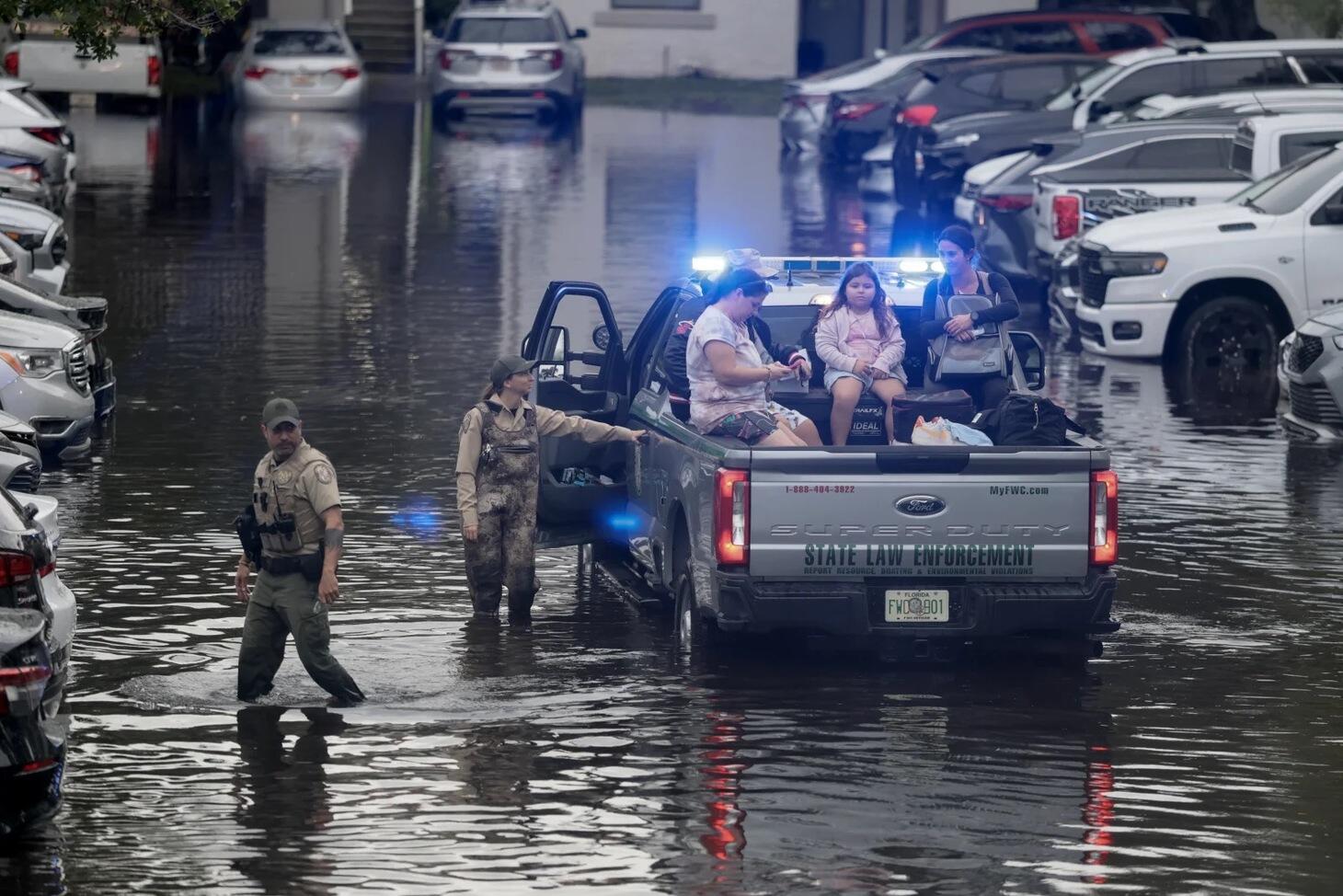
On both coasts, stormy weather could impact travelers
Before worrying about the temperature of the turkey, travelers could face a different type of uncertainty next week. This time, it's the weather — and it's affecting both U.S. coasts.
"I know there's a lot of travel for many of you as you head into the Thanksgiving holiday, but I'm going to ask you all to consider not traveling unless it is absolutely essential," said San Francisco Mayor Daniel Lurie on X Friday. He said the city is preparing this weekend for extreme high tides and rain that could hit the area Monday afternoon through Wednesday.
Over the past week, cities in California saw mudslides, waterspouts and flooding while Florida also saw coastal flooding and inundated streets. A new set of storms are expected to hit both sides of the country early next week, just as travelers head into the holiday week.

American Family Insurance to return nearly $700M to policyholders as dividends
American Family Insurance announced Wednesday it will return nearly $700 million to eligible policyholders as dividends this year.
The company said it is the largest distribution to policy members in its nearly 100-year history.
About 3.8 million personal vehicles and homes insured by policy members are expected to receive a payment. The dividends are about $164 per insured vehicle and $225 per homeowners policy. Individual amounts are based on annual premiums as of July 31.
American Family Chair and CEO Bill Westrate said the company is proud to share value directly with its policyholders.
“Lower-than-expected near term claims activity, along with actions we’ve taken to reduce operating expenses and our strong financial position, created a unique opportunity to share value with our policyholder members,” Westrate said. “This dividend reflects our commitment as a mutual organization to deliver value for our policyholder members and demonstrates one of the advantages of the mutual company structure.”
The company expects to distribute the payments in December.
State News

Florida drivers to get $122.7 million in auto insurance refunds and credits
Three auto insurers will return about $122.7 million in excess profits to eligible Florida policyholders through refunds or credits toward policy renewals, Insurance Commissioner Mike Yaworsky announced.
Cimarron Insurance, Liberty Mutual Personal Insurance Co. and Security National Insurance Co. will process the refunds or credits within 60 days, according to the Florida Office of Insurance Regulation. The payments cover excess profits from 2023 through 2025 and bring the total announced this year to more than $168 million.
Liberty Mutual will return the largest share, about $73.1 million, followed by Security National at about $48.6 million and Cimarron at $908,149.
“The Office of Insurance Regulation keeps an open dialogue with auto insurers about excess profits, and I encourage other companies to review their books too,” Yaworsky said in a statement.
Climate/Resilience/Sustainability

American Property Casualty Insurance Association (APCIA): EL NIÑO AND WINTER WEATHER: HOW TO PROTECT YOUR HOME, CAR AND FINANCES BEFORE THE STORM
When severe winter weather strikes, the time to prepare has already passed. This year, a potentially significant El Niño weather pattern could bring heavier rainfall, flooding, mudslides and severe storms throughout the winter months.
Some forecasters are comparing current conditions to the powerful 1982-83 El Niño, which caused widespread flooding and billions of dollars in damage across California. While the extent of its impact remains uncertain, consumers should review their insurance coverage and take practical steps to reduce risk before winter weather arrives.
Experience the full interactive Multichannel News Release here
Recent years have shown that severe flooding can happen almost anywhere, often with little warning. Consumers should not assume they are protected from flood losses simply because they do not live near the coast. Flooding remains one of the costliest natural disasters, yet many homeowners are uninsured for flood damage.

El Niño's Aftermath: Why Flood-Damaged Cars May Be Unsafe Even After They Dry Out
Mercury Insurance (NYSE/NYSE TX: MCY) urges drivers whose cars have flooded to leave the engine off, even if the seats feel dry and the dashboard lights come on. Water can reach wiring beneath the carpet or enter the engine, and starting the car can make the damage worse. A qualified technician should inspect the vehicle before anyone attempts to drive it.
"It's a natural reaction to reach for the keys. You need to get to work, the water is gone and you want to know if the car still runs," said Michael Curcio, vice president of claims at Mercury Insurance. "Before starting your vehicle, take a moment to safely assess both your surroundings and the vehicle itself. If the vehicle was exposed to floodwater, starting it could be unsafe and may cause additional damage. Look for signs of water intrusion, such as mud, debris, or visible waterlines, and contact your insurer to report what you find. If possible, take photos showing how high the water reached. Even a simple photo of the waterline on the door can help your claims representative understand the situation and guide you through the next steps."
AI in Insurance

Only 5% of insurers and banks achieve AI agents maturity despite 59% adoption
Only 5% of insurers, banks, and financial services firms have achieved enterprise-wide agentic AI maturity, although 59% are already piloting or deploying multi-agent systems, according to Capgemini‘s World Cloud Report for Financial Services 2027.
The research, based on a 2026 survey of 1,100 executives across 14 markets, found that 10% of institutions report enterprise-wide orchestration capable of supporting autonomous business processes. Far fewer meet the report’s broader maturity criteria covering deployment, governance, cloud infrastructure, security and financial accountability.
- 59% of financial institutions are piloting or deploying multi-agent AI systems, but only 10% report enterprise-wide orchestration and 5% meet the criteria for advanced AI maturity.
- 62% lack identity and access-management infrastructure capable of supporting continuous agentic AI execution. Regulatory compliance (50%), security (47%) and auditability (39%) are the main cloud-selection priorities.
- 48% cannot consistently demonstrate ROI from agentic AI, while 51% lack mature investment evaluation controls. Among AI leaders, 83% have established outcome accountability, compared with 25% of other firms.

How P&C insurers can make AI-supported decisions pay off - Capgemini
How P&C insurers can make AI-supported decisions pay off
Giving employees AI tools is the easy part. The returns come from embedding AI into decision-making, building confidence in its outputs, and combining AI with human expertise to improve decisions, with people remaining accountable.
Capgemini’s World Property & Casualty Insurance Report 2026 found that nearly half of surveyed property and casualty (P&C) employees said they are comfortable relying on AI recommendations for moderately complex decisions. But comfort is not performance. And 42 percent of insurers track no AI metrics at all, so many cannot say whether those decisions are improving outcomes.

Insurance AI spend soars as measurable returns stay out of reach
Nearly two-thirds of insurance chief executives plan to direct between 11% and 20% of their total budget to artificial intelligence over the next 12 months, yet just 1% say their organization has already achieved a measurable return on that investment, according to the 2026 KPMG Global Insurance CEO Outlook, released November 19, 2026.
The survey draws on responses from 100 insurance CEOs across 12 markets, all leading organizations with annual revenues above $500 million. Some 82% identify AI as a top investment priority over the next three years. Despite that level of commitment, the gap between spend and demonstrated results is stark.
That gap is not unique to this survey. A 2026 Deloitte Canada analysis of the domestic market found that insurers have moved quickly to test and deploy AI across their businesses, but that value from individual use cases rarely compounds across the enterprise – what Deloitte describes as an “orchestration gap,” meaning the failure of isolated AI initiatives to build on one another and generate broader business performance.

Multimodal Claims Intake with Agentic AI: A Practical Architecture
Modern property/casualty claims intake is increasingly driven by multimodal interactions.
Even simple auto claims now arrive as a bunch of ACORD notices, claimant narratives, damage photos, scanned repair estimates, emails, and call records. Property claims add complexity through aerial imagery, contractor reports, and handwritten notes; catastrophic events additionally tighten intake time frames.
Claims leaders are under extreme pressure to make claim processing faster, reduce manual rekeying, and control leakage and fraud as traditional claims automation hits a ceiling at that point. Linear extraction logic cannot effectively adapt to dynamic intake processes and handle unstructured evidence streams. Specialized artificial intelligence tools are better at processing unstructured submissions, but designing AI automation to handle multimodal claims without turning every handoff and exception into manual work is still difficult.
Research

Insurance workforce shifts test independent agents: Agree or disagree?
The insurance industry continues to navigate a changing workforce. Carriers seek experienced professionals, employee turnover is slowing, and artificial intelligence is reshaping the skills workers need to succeed.
How are independent insurance agencies faring?
According to the third-quarter 2026 Insurance Labor Market Study from Aon and The Jacobson Group, 49% of insurance carriers expect to increase staffing over the next 12 months, while another 40% anticipate maintaining current headcount.
Among carriers planning to hire, 78% are most likely to recruit experienced professionals, particularly in analytics, compliance and accounting. Meanwhile, the industry's 12-month voluntary turnover rate has fallen to 7.6%, down from 9.2% a year earlier, according to The Jacobson Group.
Artificial intelligence is adding another dimension to workforce planning. The International Insurance Society's 2026 Shin Research found that 86% of insurance professionals identified AI, automation and machine learning as the trend expected to have the greatest impact on the industry over the next decade.
Commentary/Opinion
In Insurance IT Do We Build or Buy? The Answer Is Much More Nuanced
While A.I. can generate code in seconds, it can’t replicate decades of insurance experience. Additionally, even the best A.I. requires oversight and review.
A.I. has fundamentally changed how smart Insurtech companies look at writing code, automating workflows and rolling out new solutions. Technology that previously took significant time and dollars to develop can now be built in a fraction of the time at a lower initial cost. Every conference agenda right now has the same question on it: build or buy? The answer is: Both. The dynamic is not binary.
The organizations moving fastest are buying the foundation and building on top of it when appropriate. As teams navigate how to best leverage internal resources and where to bring in outside expertise, here’s what they need to be thinking about.
Look Beyond the Initial Build
The pitch for building always starts with cost. Yes, A.I. can lower the cost of building a system. I’ve seen it firsthand. But developing a system is just one small part of the equation. Owning and maintaining the system is where time and cost compound.
People
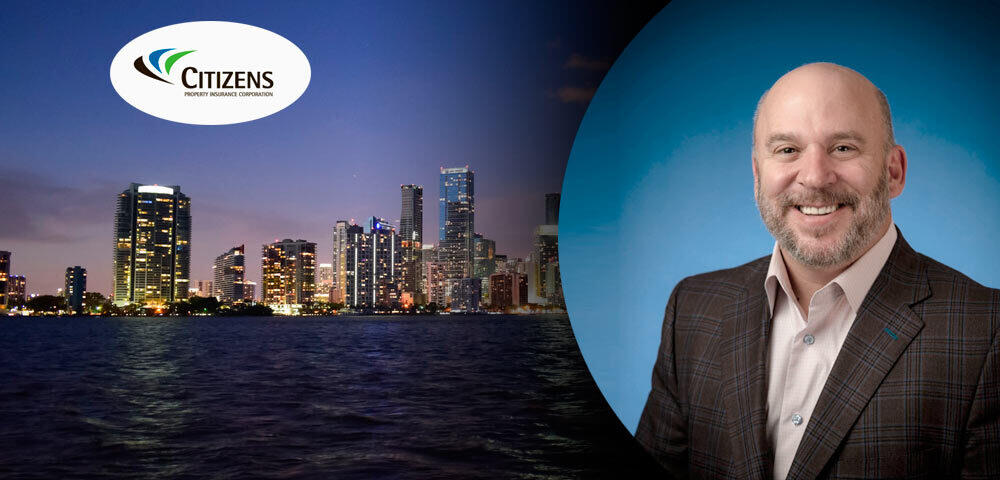
Citizens Property Insurance CEO Tim Cerio to step down as policies fall to 215,000
Citizens Property Insurance Corp. President and CEO Tim Cerio will leave his position in January 2027 after leading the state-backed insurer since January 2023.
Citizens’ policy count has fallen to approximately 215,000, supported by depopulation and clearinghouse programs, legislative reforms and the entry of 20 new home insurers into Florida’s market. Citizens’ Board of Governors will appoint a successor, with no replacement or interim leader announced ahead of its December 7 meeting.