
News

Best’s Market Segment Report: AM Best Maintains Stable Outlook on US Personal Lines Insurance Segment
AM Best has maintained its market segment outlook for the U.S. personal lines segment at stable, citing in part improved rate adequacy and refined underwriting practices that continue to fortify underwriting performance, along with the ongoing refinement of catastrophe exposure analysis.
In its Best’s Market Segment Report, “Market Segment Outlook: US Personal Lines,” AM Best notes that its outlooks for the personal auto and personal lines segments have been at stable since November 2024, while its outlook for the homeowners segment was revised to stable in December 2025.
“While the profitability in the personal lines segment has rebounded, a sense of heightened competition on pricing will test whether insurers can sustain those gains,” said Chris Draghi, director, AM Best.
Earnings continue to improve in the personal lines segment, not only through a rebound in underwriting performance but also through greater net investment income. Softening reinsurance pricing provides an opportunity for enhanced earnings and expansion of reinsurance protection with more affordable structures.
However, offsetting factors in play include a shifting focus toward premium growth that requires prudent rate management to avoid margins declining too quickly. Claim severity also remains high compared to older years, though it is stabilizing for property-related losses while liability claim severity continues to rise. The report also notes greater regulatory scrutiny of the fairness, affordability, and application of rates, which may increase administrative burdens for insurers.
Cyber Risk

AI Advances Coincide With Sharp Rise in Cyber Incidents, Marsh Data Shows
Artificial intelligence is accelerating the pace and scale of cyberattacks, leading to more incidents reported by businesses and creating new challenges
Artificial intelligence is accelerating the pace and scale of cyberattacks, leading to more incidents reported by businesses and creating new challenges for companies and their insurers, data from insurance broker Marsh showed.
“The signs that the attackers are using AI enabled and agentic tools to identify vulnerabilities is happening. So I would say we could attribute AI to a significant number of these,” Meredith Schnur, Marsh Risk’s US and Canada cyber practice leader, told Reuters in an interview this week.
Marsh said its clients reported 105 cyber incidents in the last two weeks of October, more than double the 48 recorded in the final two weeks of May.

Supermarket fridge hacks expose a blind spot in cyber insurance portfolios
The hackers who cooked supermarket stock across Europe this fall worked through two families of refrigeration controllers spread across dozens of countries. That is exactly the kind of correlated exposure that keeps aggregation risk front of mind for insurers writing cyber-physical coverage.
The first wave hit on the night of October 11, when attackers took remote control of refrigeration controllers at about 700 retail locations in France, according to the Paris prosecutor’s office, which said the attack caused significant food spoilage and roughly 20 fires. Similar attacks followed at supermarkets elsewhere in Europe and at French blood banks.
Tom Dryden (pictured), head of cyber – Europe at McGill and Partners, said the speed of the spread confirmed the market’s long-held fear. “A systemic, widespread event like that is exactly what the insurance market’s been slightly nervous of, quite rightly,” he told Insurance Business.
AI in Insurance

INSTANDA CEO Sees Governance, Human Oversight As Top AI Priorities
As insurers have become more comfortable using AI, there’s a challenge beyond simply learning the technology: learning how to secure it.
“I think our job right now is to leverage the AI capabilities in a way that is secure and properly governed,” said Tim Hardcastle, co-founder and CEO of InsurTech INSTANDA, speaking with Carrier Management at InsurTech Connect in Las Vegas this year. “That’s the number one priority for us.”
While plenty of opportunity exists for insurers with the use of AI, the same tools that make technology more accessible also create new exposures.
“Unless it’s managed, controlled and governed, you could end up with some risk exposure,” he said. “Whether it’s personal information or in a company environment, you could lose customer data.” CONTINUES

Q&A: The data center boom is creating complex coverage questions
AI data centers combine property, cyber, business interruption and liability exposures that may not fit neatly into traditional insurance policies.
The AI boom has fueled an unprecedented wave of data center construction, bringing not only substantial new insurance opportunities but a host of increasingly complex risks. Individual data center construction projects can cost upwards of $20 billion, Swiss Re reports, with insured values coming in even higher once specialized technology is installed on-site.
Not only do these projects involve substantial financial investments, but they also operate around the clock and depend on reliable power and connectivity. This combination of property, cyber, business interruption and liability exposures may not fit neatly into traditional insurance policies.
In this Q&A, Sergio Oehninger, partner, and Garrett Nemeroff, of counsel, with Morgan Lewis's global insurance recovery practice, discuss what insurers should consider when placing coverage, where potential coverage gaps may exist and how the insurance industry is responding to changing risk profiles.
Research
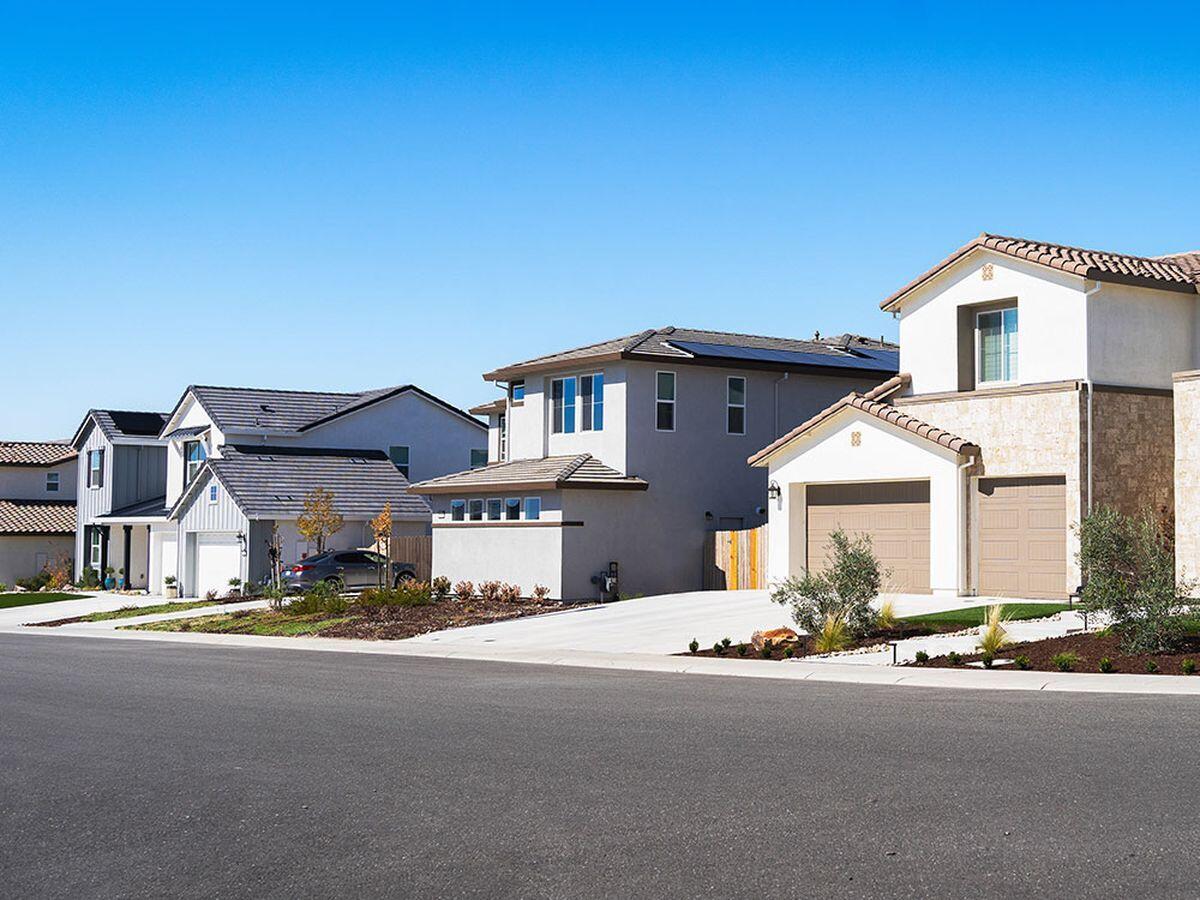
Home Insurers Are Making Money Again, But Not All Are Cutting Rates
After years of soaring premiums, canceled policies, and shrinking coverage, homeowners might finally have something to celebrate: Their insurance companies are making money again.
Home insurance companies are enjoying some of their strongest financial results in more than a decade, a new report from the Insurance Information Institute (Triple-I) and actuarial firm Milliman finds. In fact, during the first nine months of 2026, global insured catastrophe losses totaled just $92 billion, the lowest comparable figure since 2019 and 29% below the 10-year average, according to a report from Gallagher Re.
This means the insurance industry has now experienced six consecutive quarters without a single catastrophe causing more than $10 billion in insured losses.
But while the industry’s financial fortunes have improved, homeowners might still have to wait for good news to show up in their bills.
In fact, Insurify projects the average annual cost of homeowners insurance will rise another 4% total in 2026, to $3,057. This follows a 12% increase in 2025.
Since 2021, the average cost of homeowners insurance has jumped 46%, according to Insurify data. That’s nearly three times the overall inflation rate.
Financial Results
Progressive direct auto outpaces agency as combined ratio drifts
Personal auto direct distribution is pulling further ahead of the agency channel in the US, as the country’s largest private passenger auto insurer posted another month of faster direct growth alongside a widening combined ratio in October 2026.
The Progressive Corporation (NYSE: PGR), based in Mayfield Village, Ohio, reported that direct auto policies grew 7% year over year to 16.8 million as of October 31, 2026, while agency auto rose 6% to 11.4 million. Total policies in force reached 40.5 million, up 6% from 38.4 million a year earlier, according to the company’s October 2026 earnings release published on November 18, 2026.

Zurich Insurance sees greater capital synergies from Beazley takeover
Zurich Insurance (ZURN.S), on Tuesday raised its estimate for capital synergies from its acquisition of Beazleyto $1.8 billion from $1 billion, as it saw greater benefits from integrating the British insurer.
- The capital synergies are expected within the first two years, Zurich said ahead of an investor day
- It now sees medium-term revenue growth opportunities of about $1.5 billion, up from $1 billion
- Cost synergies are expected to exceed $150 million
- Zurich completed the acquisition on October 1 and said it remained on track to meet or exceed its three-year targets

Driven Brands Finds Fixed Asset Errors, Delays Q3 Filing, and Lowers 2026 Earnings Outlook
The CARSTAR parent pointed to strain on lower-income consumers at Take 5, Maaco, and its collision business.
Driven Brands Holdings Inc., the parent company of CARSTAR, Fix Auto USA, and ABRA, said Nov. 3 that it found new errors in how it reported fixed assets and lowered its full-year earnings outlook, according to a company news release.
“Our updated outlook reflects ongoing macroeconomic headwinds, continued pressure on lower-income consumers across Take 5, Maaco and Collision, and additional restatement-related costs,” said Danny Rivera, president and CEO.
“To address these issues, we are continuing to add accounting resources and work with outside accounting advisors to correct the errors we’ve identified, including reconciling our fixed asset records,” said Mike Diamond, chief financial officer. “We are also reviewing whether any other areas require adjustment. To date, the adjustments from these issues have a negligible impact on Adjusted EBITDA.”
Claims

Retirements, A.I. Gaps and Climate Shocks Reshaping Property Claims
Retiring adjusters, lagging A.I. scale-up and shrinking catastrophe recovery windows are straining insurance companies, according to Sedgwick.
Nearly 25% of claims adjusters are expected to retire by the end of 2027, threatening the loss of decades of institutional knowledge across the property insurance sector, according to Sedgwick’s 2026 Loss Adjusting Insights Report.
The surge of departures is converging with rising claim complexity, data center exposures, volatile catastrophe patterns and growing valuation disputes, the report found.
Workforce And Technology Pressures Mount
Nearly three-quarters, or 73%, of insurance professionals surveyed believe the greatest impact of the retirement wave will be the loss of institutional knowledge, while 62% expect a resulting shortage of mentorship opportunities, Sedgwick found. Meanwhile, 20% of insurance companies say hiring talent has become more difficult compared with last year, the report said.
Predict & Prevent

Nationwide Expands Hail-Alert Program as Part of Predict-and-Prevent Push – PredictandPrevent
More than 11,000 members have enrolled in a weather alert program built on a Nationwide and Tomorrow.io partnership that has grown from hail-specific alerts into broader protection alerts, according to Veronica Anderson, AVP, Property Risk Solutions for Nationwide, in an interview with ClimateTech Connect.
The big picture: Nationwide frames the partnership as part of a “predict and prevent” strategy intended to shift the insurer’s role beyond post-loss claims handling toward helping customers avoid damage before it occurs.
Andersen said this approach is meant to improve customer experience, manage loss ratios and differentiate Nationwide competitively. What they’re saying: “Embracing a predict and prevent mindset helps us and our distribution partners better serve customers, keep insurance affordable, and be a stronger protection partner,” Andersen said.