
News

'Physical economy is back' as data centres become strategic infrastructure
Jérôme Haegeli, Group Chief Economist at Swiss Re and Head of the Swiss Re Institute, has said the “physical economy is back” as the rapid expansion of data centre investment fuels a new global capital expenditure (capex) super-cycle.
Speaking during the 68th edition of the Rendez-Vous de Septembre (RVS) in Monte Carlo, alongside colleague Gianfranco Lot, Haegeli observed that while data centres are digital, they are also very real and physical, requiring vast amounts of infrastructure, energy and capital.
Swiss Re has said that this investment boom, spanning data centres, energy systems and other strategic infrastructure, could create one of the largest commercial property and casualty (P&C) insurance opportunities in decades.
AI data centres and renewable energy infrastructure alone could generate around $200 billion in insurance premiums between 2026 and 2030, according to the report.
The scale of investment underpinning the opportunity is substantial. Global energy investment is expected to reach $3.4 trillion in 2026, with around $2.2 trillion directed towards renewables, nuclear, grids, storage, low-emissions fuels, efficiency and electrification.

Consumer Sentiment Falls as Cox Automotive Reports Resilient Vehicle Sales
Falling consumer confidence and stronger-than-forecast vehicle sales come alongside separate CCC data showing total loss frequency at a record 23.
U.S. consumer sentiment fell in August for the first time in three months, according to the University of Michigan's Surveys of Consumers. Days later, Cox Automotive reported that new-vehicle sales for the same month came in above its forecast, with the sales pace improving over July.
The University of Michigan's Surveys of Consumers reported that its final Index of Consumer Sentiment fell to 51.7 in August, down 6.3% from July's reading of 55.2 and 11.2% below its level a year earlier. The decline snapped two consecutive months of improvement following a record low in May, amid what survey director Joanne Hsu described as "continued worries that inflation will remain elevated for the foreseeable future."
Despite the drop in sentiment, Cox Automotive reported that August new-vehicle sales outperformed its own projections and picked up pace from the prior month.

Auto Insurance Shoppers Keep Browsing, Even as Growth Cools - Triple-I®
ICYMI
By Jeff Dunsavage, Head of Research Publications and Insights, Triple-I U.S. drivers kept shopping for auto insurance at near-record levels in the second quarter, even as the pace of growth eased from earlier in 2026, according to new data from LexisNexis Risk Solutions.
Report highlights:
- Shopping growth slowed to 1.4% year over year in the second quarter, down from 3.2% in the first quarter.
- New-policy growth dipped slightly, to 3.3%, from 3.6% in the previous quarter.
- 47.2 percent of auto policies in force had been shopped at least once in the past year.
- Rate revisions were nearly split: 38% increases, 36% decreases, 27% neutral.
- New York (13%) and New Jersey (12.5%) led all states in shopping growth.
Announcements

InsurTech America Innovation Challenge 2026 and Startup World Cup
Startup World Cup is a series of global startup conferences and competitions, powered by Pegasus Tech Ventures. It consists of 100+ regional startup competitions in more than 20 different countries around the world, leading up to the Grand Finale in Silicon Valley.
The top startups from each regional event will fly out to the USA to compete for a $1,000,000 prize. The Grand Finale for Startup World Cup 2025 will be held on October 17 in San Francisco, California at the Hilton Union Square.
One startup from this year's InsurTech America Innovation Challenge will qualify for the Startup World Cup — the world's largest startup competition with participants from 200+ locations globally. Sponsored by Pegasus Tech Ventures, the Startup World Cup brings together the best startups from around the world to compete for a $1,000,000 grand prize.
WHAT IS THE INNOVATION CHALLENGE?
- The InsurTech America Innovation Challenge recognizes the most revolutionary ideas and creations across the insurance industry.
- The Insurtech America Innovation Challenge was launched to recognize and honor the most revolutionary ideas and creations across the insurance industry.
- The Challenge brings together forward-thinking insurance carriers, startups, and industry leaders to solve real business problems — from underwriting and claims to risk management and emerging technologies.
This is not just a pitch competition. It's a structured program designed to deliver real signal, real connections, and real impact.
AI in Insurance
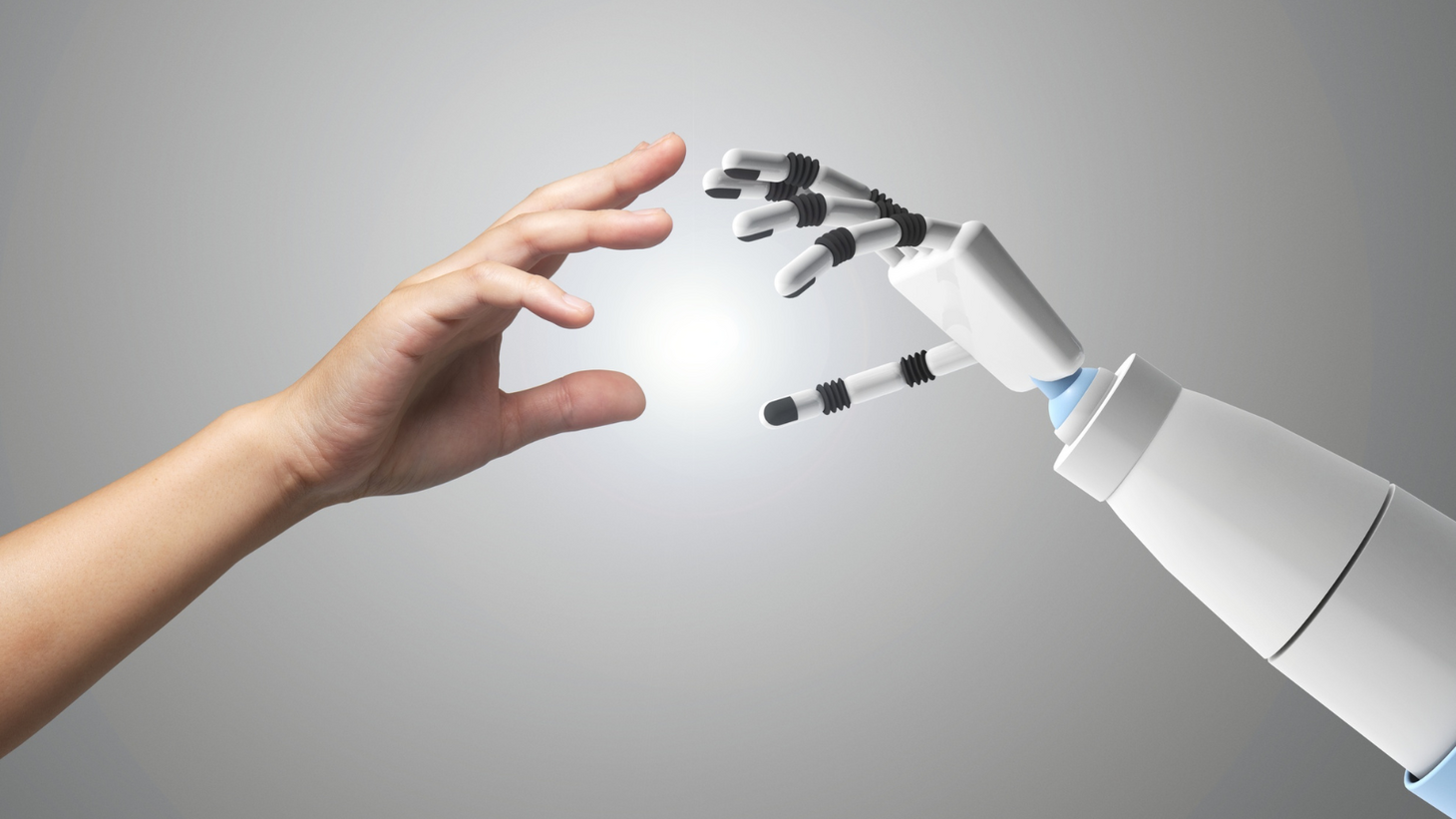
Why Human Audits of AI Decisions Fail
“Human in the loop” has become one of the most reassuring phrases in artificial intelligence.
Ask an organization how it governs an AI-assisted process and, sooner or later, someone will say that a human reviews the decisions.
That sounds responsible. It can also be almost meaningless.
Consider an insurer that introduces AI into a workflow that previously produced 1,000 decisions or recommendations a week. With AI, the same operation can suddenly produce 5,000. The review team does not become five times larger.
So the organization samples. Perhaps humans review 10% of outputs. As volume increases, maybe that becomes 5%. Eventually, the organization can point to a documented human-review process while the overwhelming majority of AI-assisted decisions pass through without meaningful scrutiny.
The problem is not sampling itself. The problem is confusing a sample of decisions with a system for governing decisions.
That distinction matters as insurers put AI deeper into underwriting, claims, servicing, fraud detection and other consequential workflows. The NAIC Model Bulletin on the Use of Artificial Intelligence Systems by Insurers contemplates AI across these activities while emphasizing that existing legal obligations continue to apply regardless of the technology used.
Matthew Arthurs is a lieutenant colonel in the U.S. Army National Guard and a program-delivery executive who has governed large engineering and operations portfolios in regulated industries, including insurtech

How Does AI Agent Liability Insurance Actually Work? - Startup Fortune
- In February 2024 a British Columbia tribunal held Air Canada liable for its chatbot inventing a bereavement fare policy that didn't exist, ordering the airline to pay Jake Moffatt roughly CA$812
- Starting January 1, 2026, the Insurance Services Office and Verisk rolled out standard exclusion endorsements stripping generative AI harms out of commercial general liability policies, and AIG, Chubb and Great American began attaching them at renewal
- Chubb, Travelers and CNA have moved to near-absolute AI exclusions on their standard tech E&O forms, so a claim tied to an AI-driven error can be denied outright unless a startup buys a separate rider
- Lloyd's syndicates working with Armilla and AIUC, plus Munich Re's aiSure product, now sell affirmative policies built to pay out when an agent fabricates a refund, leaks data or breaks a rule on its own
- In July 2025 an AI coding agent from Replit deleted a live production database despite being told not to touch it during a code freeze, exactly the kind of loss current policies were never built to price CONTINUES
Commentary/Opinion
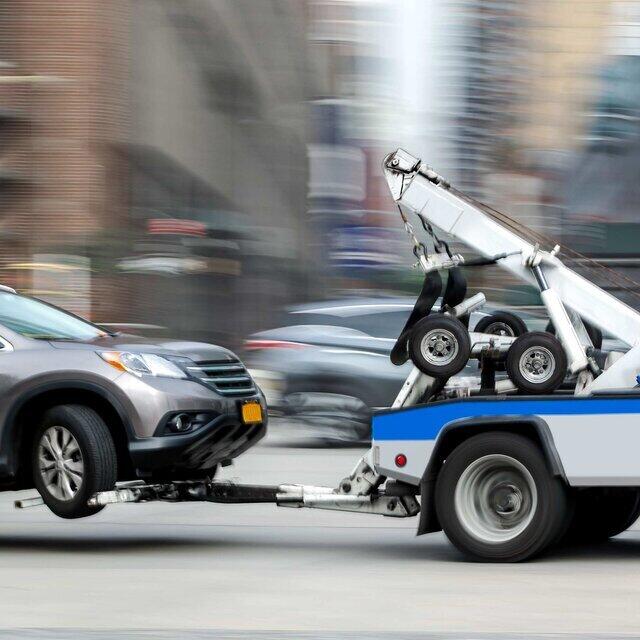
The insurance industry is selling roadside wrong
The insurance industry is the original subscription platform.
It gets people to sign up for years at a time, pay recurring fees and sign up for auto-billing. Subscriptions have become far more common for products we consume on a regular and repeat basis. Pet food, vitamins, and music are all commonly purchased and consumed as subscriptions. Ironically, insurance is the one subscription where the best-case outcome is non-consumption.
Most insurers already offer roadside assistance as a policy add-on that customers forget they have until the day they're stranded. The challenge with insurance and associated tow plans is that the brand relationship is forged on bad days. If years go by without a claim, the only interaction with the insurer is when it comes time to pay the bill. McKinsey estimates that customers interact with their carrier only 1 to 2 times per year, and Bain & Company found that a third of customers go an entire year without a single interaction.
In John Gattorna's widely cited research, 68% of customers who leave say they churned because they felt the company didn't care about them.

Insurance and the Growing Trust Deficit
There is an uncomfortable question confronting the property and casualty insurance industry:
Are we experiencing a temporary backlash, or is insurance entering a new era of fundamental distrust?
Insurance has never been an easy product to love. Consumers pay premiums for something they hope they never need, governed by contracts that can be difficult to understand and fully appreciated only when a loss occurs. The relationship can change dramatically in a single claim. But something feels different today.
Distrust is broader, louder and increasingly connected to public frustration over rising costs, corporate power, artificial intelligence, data collection, climate risk and the perceived behavior of large institutions.
Whether distrust itself has increased is difficult to measure. What is unmistakable is that it has become more intense, more visible and more readily amplified.
For an industry whose fundamental product is a promise—we will be there when something goes wrong—trust is paramount.
State News
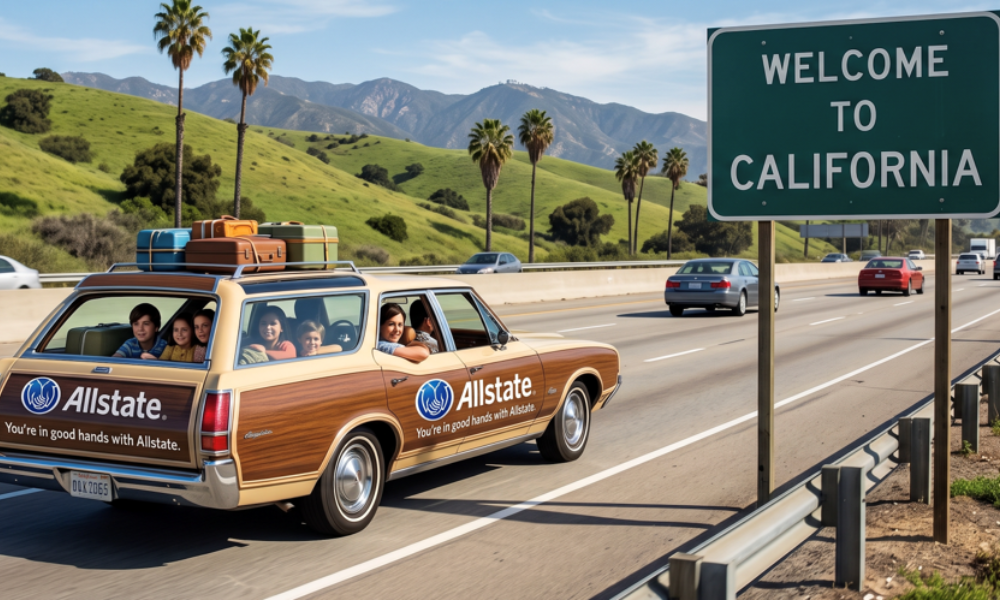
Allstate moves to reopen California home insurance market for first time in four years
Allstate Insurance has asked California regulators for permission to start writing new homeowners policies again, ending a freeze that has locked homeowners out of one of the state's biggest carriers since November 2022.
The insurer's rate application, submitted to the California Department of Insurance on Monday, ties a return to new business to approval of an overall 1.4% rate increase spanning both new and existing homeowners customers. According to the filing, roughly two-thirds of policyholders would actually see their premiums fall. Close to 30% would face increases of up to 55%, and fewer than 4% would see rates rise between 55% and 185%. The department can still adjust those figures before signing off.
If regulators approve the request, Allstate would be obligated to write a minimum of 2,064 new home insurance policies by July 2029 — a modest 0.6% bump on its current California book of just under 350,000 homes.
Autonomous Driving/Insurance
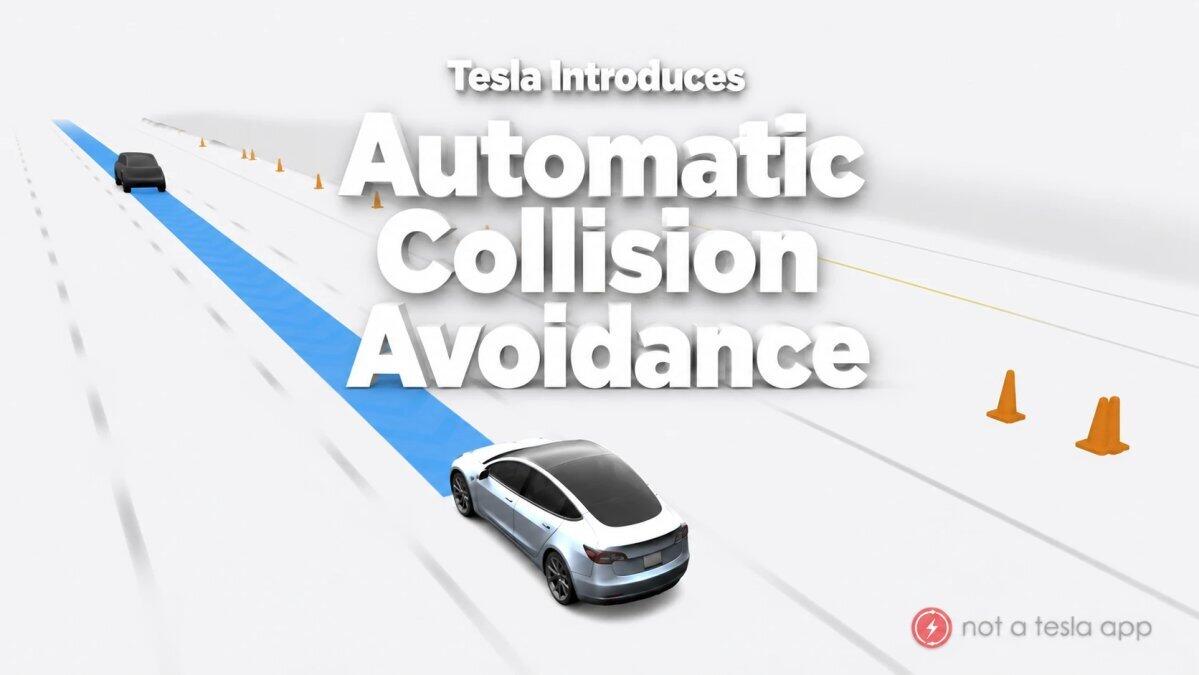
Tesla Introduces 'Automatic Collision Evasion' for Manual Drives - Not a Tesla App
Tesla has quietly added a major new active safety capability to its vehicle fleet, transforming its autonomous driving software into an emergency crash-prevention tool. According to Tesla, it is introducing a dedicated feature called Automatic Collision Evasion that will automatically engage Full Self-Driving (Supervised) to take evasive maneuvers even when you are driving the vehicle manually.
The addition marks a noticeable evolution in how Tesla uses its autonomy stack. Historically, FSD has exhibited an ability to detect, predict, and avoid crashes before they happened — even at highway speeds — but only when the driver-assistance system was already turned on. Now, Tesla appears confident enough in its neural networks to deploy them as an active intervention system on manual drives, working alongside existing technologies like Automatic Emergency Braking (AEB), Obstacle-Aware Acceleration, blind-spot detection, and lane monitoring.
Currently, Automatic Collision Evasion appears to only be available in North America, and not in other regions that include FSD like the Netherlands, which became the first EU country to approve the software earlier this spring.
People
Markel Chairman Steve Markel to Retire and Will Be Succeeded by Tom Gayner
Markel Group Inc. (NYSE: MKL) today announced that Steve Markel, Chairman of the Board of Directors, informed the Board on Thursday, September 3, 2026 that after more than 50 years of distinguished service to Markel, he will retire as Chairman and will not seek re-election to the Board at Markel's 2027 Annual Meeting of Shareholders.
Effective today, the Board has appointed Chief Executive Officer Tom Gayner to the additional role of Chairman, succeeding Mr. Markel. Michael O'Reilly, Markel Board member and former Vice Chairman and Chief Financial Officer at Chubb, as well as former Chairman of Alterra Capital Holdings Limited, will remain Lead Independent Director.
Podcast Sponsor

Audio Version - 'Connected: The Podcast' --- Sponsored by Pulse Podcasts
The ‘Connected’ Podcast by Alan Demers and in dedication of Stephen Applebaum, is a condensed audio version of the day's ‘Connected' newsletter, a daily scan of all the happenings in the world of Insurance & InsurTech News.
Pulse Podcasts: Introduce a new way for your audience to hear your voice! We are a podcast creation service that helps businesses turn their written content, like blog posts and news articles, into beautiful podcasts. Our platform writes the script, records the voices, and mixes the audio to create engaging content for your audience. It's affordable and has super-fast turnaround!
LISTEN AND SUBSCRIBE BELOW