
Research

Meet The World’s Best Insurance Companies 2026
Consumers rated these global insurance firms highest for their customer service, claims processing, pricing, transparency, advice and more.
To create this fourth annual edition of the World’s Best Insurance Companies, Forbes partnered with market research firm Statista, which surveyed more than 45,000 people across 13 countries in early 2026.
Respondents were required to have held at least one insurance policy for their home, car or life within the last three years. They were then asked a series of questions about how satisfied they were with their insurer and if they would recommend it to others. Participants were also asked to rate their insurer based on criteria including the advice offered, customer service, price performance, transparency and claims service. Ultimately, the responses were analyzed and scored, and 274 insurance companies with the highest scores made one or more of our final lists—110 companies on the homeowners insurance list, 135 on the auto insurance list and 140 on the life insurance list.
Several insurance groups landed on multiple lists or in more than one country. AXA, for example, ranked in France, Germany, Italy, Japan, South Korea, Spain and the United Kingdom, and it took the No. 1 spot for life insurance in India.
Allianz made the rankings in Australia, Brazil, France, Germany, Italy, Spain and the U.K., while Zurich ranked in Australia, Brazil, Germany, India, Italy and Japan.
News

Auto insurers face a new problem: it isn't price
JD Power's 2026 study points to a challenge that rate cuts alone won't solve
Auto insurance prices are finally easing in 2026. But a new JD Power study shows that carriers are losing ground on a different front: the customer experience.
Overall satisfaction held steady at 644 on a 1,000-point scale, unchanged year over year. Price satisfaction edged up three points as fewer customers (30%) reported insurer-initiated premium increases.
When increases do happen, the damage is significant. Satisfaction with price for coverage drops 155 points to 486 among customers who received a carrier-initiated increase.
The study’s central finding is about friction, rather than price. A seamless cross-channel experience is now the single most impactful driver of satisfaction. Yet insurers are consistently failing to deliver it.
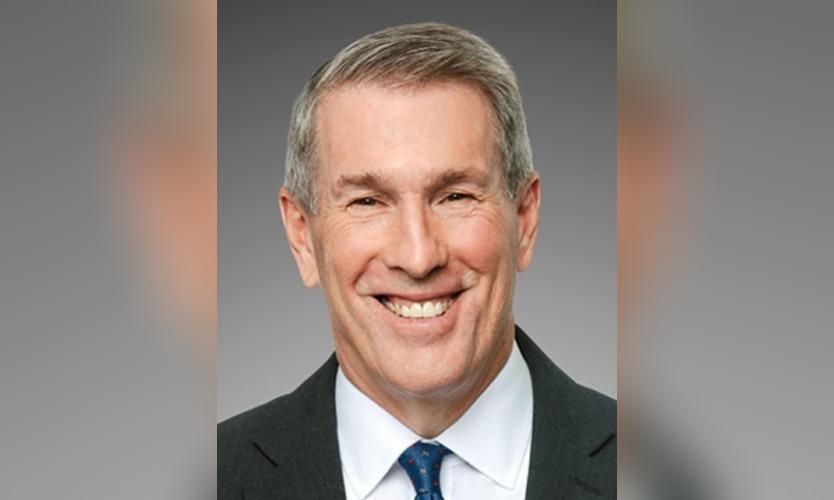
New AIG CEO Andersen sees opportunities ahead
From technological revolution to geopolitical conflicts, the commercial property/casualty industry has never been “more relevant,” according to Eric Andersen, the recently appointed president and CEO of American International Group.
“Now is probably the most exciting time in my career,” he said, speaking at the S&P Global insurance conference Tuesday. Mr. Andersen, who left Aon last year, joined AIG in February and succeeded Peter Zaffino as CEO on June 1. Mr. Zaffino is now AIG’s executive chairman.
The advent and explosive growth of artificial intelligence will require an enormous expansion of infrastructure and capabilities, all of which will need insurance, Mr. Andersen said.
The boom in data center construction is “probably the biggest opportunity short term” for the property/casualty industry, as it will require everything from construction insurance to cyber liability coverage, he said.
In addition to supporting the expanding technology infrastructure, the insurance industry is benefiting from the technology itself, Mr. Andersen said.

S&P Global analysis: Why P&C insurer profitability surged in Q1 2026
The U.S. property and casualty insurance industry achieved record-breaking underwriting profitability in the first quarter of 2026.
According to S&P Global Market Intelligence, the U.S. property and casualty insurance industry achieved record-breaking underwriting profitability in the first quarter of 2026, with a combined ratio of 89.5% before policyholder dividends.
This marks the best first-quarter performance in at least 25 years. The industry's net underwriting gain reached $22.10 billion, driven primarily by exceptional results in homeowners' multiperil and private auto lines.
When you consider the ongoing challenges in select casualty segments and increased competition in key markets, the first-quarter results are particularly noteworthy.
Why catastrophe losses haven't derailed profits
These days, property insurance news is all about billion-dollar hurricanes, wildfires, and storm losses. While they attract a great deal of attention, their impact on private insurers was not uniform.
“For example, an excessive amount of damage from Hurricane Helene in 2024 stemmed from flooding, which was largely borne by the National Flood Insurance Program and/or non-U.S. reinsurance companies rather than U.S. private homeowners' insurers, limiting the effect on carriers’ books,” said Jason Woleben, insurance analyst at S&P Global Market Intelligence.
In 2025, hurricane-related losses were exceptionally low, reportedly under $1 billion, compared with an average of roughly $30 billion annually from 2016 through 2024.
“This unusually benign hurricane season, combined with the full earning-in of several years of aggressive rate increases, boosted industry profitability over the past two years,” Woleben added.
A delayed payoff years in the making
The analysis by S&P Global Market Intelligence points to major improvements in property and private auto results. According to Woleben, the primary driver is the realization of several years of aggressive rate hikes.
“Insurance companies are now finally earning the benefits of these price increases in their books, which has increased profitability,” Woleben explained.
Other risk management strategies, like separate wind and hail deductibles as well as non-renewals, have also helped with overall loss mitigation, but the delayed payoff is the key behind the impressive profits.

American entrepreneur W.R. Berkley passes away
W.R. Berkley (WRB.N) said on Tuesday that its founder and executive chairman William R. Berkley has died at the age of 80, marking the end of a long tenure that saw him transform the commercial insurer into a Fortune 500 powerhouse.
The company has appointed his son, W. Robert Berkley, Jr., as chairman, effective immediately.
William R. Berkley founded the company in 1967 and built it into one of the largest U.S. commercial property and casualty insurers. The company has a market value of about $25 billion, according to LSEG data.
W.R. Berkley operates a decentralized global business model comprising more than 60 specialized units that provide insurance tailored to specific industries and territories. It remains a major commercial insurer, consistently ranking among the top U.S. property and casualty providers. Berkley was chief executive for nearly five decades before handing over the reins to his son in 2015 and becoming executive chairman.
"He was a father, best friend, and mentor to me and numerous colleagues, and his influence on us, our company, and the broader industry and the countless lives he touched and enhanced is immeasurable," Berkley, Jr. said in a statement.
AI in Insurance

Cyber, AI and economic pressures dominate insurance concerns in RiskScan 2026
According to RiskScan 2026, a cross-market research study by the Insurance Information Institute (Triple-I) and Munich Re US, cyber incidents, economic pressures, and artificial intelligence have emerged as the top concerns across five key insurance market segments, underscoring the growing interconnectedness of modern risk.
For the 2026 edition, Munich Re US and Triple-I commissioned independent market research firm RTi Research to conduct an online survey of more than 1,700 respondents.
The study explored shifting risk perceptions and increasingly interconnected exposures across the U.S. and U.K. insurance markets, with RiskScan 2026 highlighting a broad convergence of cyber, economic, technological, and catastrophe risks.
RiskScan 2026 observed that today’s digital landscape features an increasing frequency and complexity of cyber threats, from companies vulnerable to customer data breaches to smart homes that are interconnected and exposed to potential attacks.
“We see cyber losses on the rise and becoming more costly for the insurance industry, which underlines the value of cyber coverage. Cyber continues to be a threat that is difficult for businesses and individuals to predict and continues to pose a significant risk to all market segments,” the research report added.

Agentic AI in underwriting: The future of insurance decision making at scale
If you’ve ever watched a submission move through a typical insurance carrier, a surprising reality becomes clear: the process lags, but the systems themselves aren’t the problem. Rating engines work, data sources connect, and workflow platforms route cases correctly.
So why does underwriting still move so slowly? The reason is simple. A submission is received as a set of emails, PDFs, spreadsheets, loss runs, and other supporting documents, presented in both structured and unstructured formats. Someone checks it for completeness, follows up on missing information, assembles the file, pulls external data, runs pricing scenarios, drafts documentation, and routes approvals. At every step, a person is manually carrying the file forward. The bottleneck here isn’t risk assessment: it’s coordination. That’s why cycle times remain stubbornly long despite years of technology investment.
A case for agentic
For carriers facing rising customer expectations, intensifying competition, and increasingly complex risks, the stark reality is that speed and scalability are no longer advantages: they’re imperatives. The next evolution of underwriting isn’t a faster workflow – it’s removing manual orchestration altogether through a new agentic underwriting operating model.

Why Technology Cannot Replace The Licensed Insurance Agent
There is no shortage of conversation in financial services about innovation. Robo-advisors, fintech platforms and digital wealth management tools have captured the imagination of investors, journalists and conference keynotes for the better part of two decades. The promise is always the same: Technology will democratize financial advice, making sophisticated guidance available to everyone at a fraction of the cost.
Meanwhile, a licensed insurance professional is sitting at a kitchen table in a Columbus, Ohio, suburb or in a mobile home outside Savannah, Georgia, walking a 64-year-old widow through the most consequential financial decision of her retirement years. Nobody is writing about them. Nobody is celebrating the person helping that woman understand what Medicare coverage means for her life, her budget and her peace of mind.
I've spent nearly 20 years in this industry, and that gap in recognition bothers me more today than ever—not because licensed insurance agents need applause, but because the consumer deserves better than a narrative that ignores the people conducting one of the most important roles in insurance and financial services.

Siri gets a second act - and the insurance industry should pay attention
For most people watching Apple's Worldwide Developers Conference on Monday, the headline was the arrival of a smarter, more capable Siri. For the insurance industry, the more interesting story is everything underneath: a new class of AI agent arriving on hundreds of millions of devices, a US$250 million litigation trail already laid down, and a privacy architecture that raises as many questions as it answers.
Apple unveiled what it is calling Siri AI - an entirely rebuilt assistant capable of understanding natural conversation, reading what is on screen, and taking action across apps and personal data.
Demonstrations at WWDC showed executives using Siri to find World Cup schedules, organise watch parties complete with recipes and group chat invites, identify concert dates, purchase tickets, and locate a friend's address by cross-referencing a photo with email contacts. It is a significant step up from a voice assistant that, until now, struggled to reliably set a timer.
Announcements

Neural Earth Launches Prometheus to Replace Legacy Risk Workflows Across P&C Insurance and Commercial Real Estate
Neural Earth today announced the launch of Prometheus, a decision intelligence platform that replaces fragmented, reactive property risk workflows with unified, real-time decision clarity. Built for property and casualty insurers, reinsurers, and real estate investors confronting persistent and escalating climate risk as well as accelerating capital market exposure. Prometheus transforms complex, disparate, and siloed earth data into business-critical decisions made in seconds, from the individual property to an entire national portfolio.
For P&C carriers, Prometheus enables underwriting insights at parcel precision, real-time portfolio concentration monitoring, and proactive risk management before a loss event escalates.
Commentary/Opinion
A Practical Launch Framework for Insurance Startup Programs
If we could restart many insurance program launches we have worked on or observed over the last decade, we would not begin by hiring more people or buying more technology.
We would begin with a better operating structure.
Insurance startups, MGAs, carriers, wholesalers, and brokers often struggle to launch new programs because the work is not organized clearly. Strategy, underwriting, technology, compliance, vendor management, operations, testing, and distribution move at different speeds, and too often, no one owns the launch end-to-end.
The result is predictable. Decisions stall. Vendors wait for answers. Testing starts late. Carrier requirements are only partly translated into operations. Founders and executives get pulled into work that should sit elsewhere.
Most launch problems are caused not by a lack of talent but by unclear roles, weak project discipline, and too much execution work falling on senior leaders.
If we had to do it over again, we would start with a lean core team, add project management early, build operations alongside product, use technology selectively, and rely on flexible staffing before permanent headcount. FULL COMMENTARY
Nick Lamparelli is the managing partner of Insurance Nerds and chief program officer for Latin International Reinsurance Group
Predict & Prevent

IBHS rounds out Wildfire Prepared program with Neighborhood and Multifamily standards, updates Home requirements
The Insurance Institute for Business & Home Safety (IBHS) *today announces updates to its **Wildfire Prepared program*, introducing formal standards for multifamily properties and neighborhoods alongside updated requirements for single-family homes.
The updates round out the program's science-based approach to wildfire mitigation, extending it beyond individual homes to address wildfire risk at the building and neighborhood levels — helping reduce the potential for home ignition and structure-to-structure fire spread.
"The decisions you make to protect your home can directly affect the homes around you during a wildfire," said IBHS Senior Director for Wildfire Steve Hawks. "These updates will help more families and communities take a coordinated approach to stop fire spread from block to block."
The update includes the formal addition of Wildfire Prepared Neighborhood — first piloted with national homebuilder KB Home at sites in both Southern and Northern California — designed to reduce home-to-home wildfire spread. It also introduces Wildfire Prepared Multifamily, with mitigation standards for owners of duplexes, townhomes, apartments and condominiums.