
News

Middle East conflict creates limited Q1'26 pressure for global specialty P&C insurers
Morningstar DBRS, a global credit ratings, risk analysis, and financial research agency focused on banks, insurers, and financial institutions, says the financial impact of the ongoing Middle East conflict on global property and casualty (P&C) insurers remained limited during the first quarter of 2026, despite continuing disruption across the region and the closure of the Strait of Hormuz to standard shipping traffic.
In its latest commentary, Morningstar states that insured losses linked to the conflict have so far been largely contained within specialist insurance markets rather than the wider global P&C sector.
The company explains that most standard insurance policies exclude war-related events, meaning direct exposure is concentrated among insurers underwriting specialist products such as marine war risk, aviation war cover, political violence, terrorism, energy, trade credit, and cyber insurance.

Half of Personal Auto Policies Were Shopped in Past Year
Half of personal auto policies were shopped in the past year, with distracted driving also on the rise.
Personal auto policy shopping reached historic highs in the fourth quarter of 2025, with almost half (47%) of policies shopped at least once in the previous 12 months, according to the 2026 “LexisNexis U.S. Auto Insurance Trends Report.”
Policies with a deductible of $1,000 or higher increased from 23% in 2022 to 33% in 2025.
The report depicts a personal auto market under pressure, driven by record shopping, price sensitivity and distracted driving. It also highlights how consumers are managing premium costs with higher deductibles, while rising bodily injury costs continue to reshape claims.
From 2022 to 2025, total shopping volume grew 35.7%, with LexisNexis finding that shopping behavior increasingly expanded into historically stable consumer segments. As a result, retention dropped 4.7 points from the first quarter of 2022 to the fourth quarter of 2025, with the majority of the drop occurring from 2022 to 2024.
Financial Results

State Farm reports Q1 2026 results for P&C companies
State Farm released the Q1 2026 financial results for 13 of its P&C carriers.
During the quarter, the group of companies reported a net underwriting gain of $1.8 billion, compared to a $5.1 billion loss in Q1 2025.
State Farm’s auto carrier saw the biggest improvement, going from a $3.6 billion loss in Q1 2025 to a $1 billion gain in Q1 2026.
The group of companies reported $27.9 billion in written premiums, a 1.9% increase from Q1 2025.

Commercial P&C Market Shifts Into Reverse as Soft Market Takes Hold
Average premiums across all account sizes fell in Q1 2026 for the first time since 2017, according to The Council of Insurance Agents & Brokers.
The commercial property and casualty insurance market has flipped into soft market territory for the first time in nearly nine years, with average premiums falling across all account sizes in Q1 2026, according to The Council of Insurance Agents & Brokers’ quarterly survey, as reported by Risk & Insurance.
The big picture:
After more than eight years of sustained premium increases, buyers across commercial lines are finally seeing meaningful relief — a shift driven by expanded carrier appetite, more flexible underwriting, and improved loss ratios in key segments. Not all lines are moving in the same direction, however, and the market’s softening masks significant stress in certain segments.
By the numbers:
- Overall average premium change came in at -1.2% in Q1 2026, ending a 33-quarter streak of increases.
- Commercial property led all lines with a -5.5% average premium decrease, a sharp acceleration from -0.7% the prior quarter.
- Commercial auto bucked the trend entirely, rising 5.8% — the highest increase of any line and its 59th consecutive quarter of increases.
- Workers compensation fell 3.7%, cyber fell 3.5%, D&O liability fell 2.1%, and employment practices fell 1.8%.
- General liability averaged a 2.6% increase and umbrella averaged 4.8%, while surety bonds held flat at 0.0%.
AI in Insurance
56% of planned US data centres are in catastrophe exposed locations
A new analysis from Lloyd’s global specialist re/insurer MS Amlin has revealed that 56% of the 670 planned US data centre projects representing nearly $800 billion in investment, are located in states that are highly exposed to either hurricanes, severe convective storms, earthquakes or winterstorms.
MS Amlin’s analysis examined over 670 data centre projects that are either under construction or in the planning phase throughout the United States, revealing that 320 of these facilities are categorised as high risk for tornadoes, significant hail, and damaging winds.
The research indicated that the current data centres located in states that are particularly vulnerable to severe convective storms (SCS) have an estimated value of nearly $20 billion, implying that the potential future AI infrastructure in areas prone to storms could be almost 40 times the worth of the existing facilities.
According to MS Amlin, just over half (51%) of planned US data centre projects worth $670 billion are located in states at high risk of severe convective storms.
In addition, MS Amlin also noted that 27% of data centres, representing $440 billion in investment, are planned in states at high risk of winter storms, which can disrupt power networks and create complex business interruption risks.
Cyber Risk

How AI Cyber Threats are influencing Cyber Insurance Premium Costs - Cybersecurity Insiders
Artificial Intelligence (AI) has transformed modern businesses by improving efficiency, automation, and decision-making. However, the rapid growth of AI technologies has also introduced new cybersecurity risks.
These evolving threats are significantly influencing the cyber insurance industry, particularly in the way insurance companies calculate and price premiums. As organizations become more dependent on digital systems and AI-powered tools, insurers are reassessing risk models to address the increasing complexity of cyber threats.
One of the major reasons AI threats affect cyber insurance pricing is the rise of sophisticated cyberattacks. Cybercriminals are now using AI to automate phishing campaigns, create deepfake content, crack passwords, and identify system vulnerabilities more efficiently than ever before. Traditional cybersecurity defenses often struggle to keep pace with these advanced attacks.
As the likelihood of successful cyber incidents increases, insurance providers face higher claim payouts, leading them to raise premiums to balance financial risks.
State News

California’s home insurance crisis: What it means for advisors
The California property insurance market is facing severe structural strain, making coverage increasingly expensive and difficult to find.
California’s home insurance crisis unfolded gradually over the past decade, starting with catastrophic wildfire seasons in 2017 to 2018 that caused massive losses and exposed how quickly risk was increasing.
Over the next few years, insurers faced rising pressures from more frequent fires, surging construction and rebuilding costs, and higher reinsurance prices, while state rules limited their ability to raise premiums or use forward‑looking risk models.
By 2022 to 2023, this mismatch hit a breaking point: major insurers began pausing or limiting new policies and cutting back in high-risk areas, reducing the private market and making it harder for homeowners to find coverage.
“Over the past few years, the conversation in California has broadened from ‘rates are rising’ to ‘capacity is shrinking,’ explained Robert Pritula, national placement and solutions leader at Marsh McLennan Agency.
How the insurance crisis escalated
“Since then, the situation has worsened into a full availability crisis, with widespread policy non-renewals and rapid growth of the state’s FAIR Plan, the insurer of last resort, as more homeowners are pushed out of the private market,” said Natalie Balyasny, a licensed California broker at World Insurance.
Predict & Prevent
Stand and Frontline Wildfire Defense launch innovative partnership to lower insurance premiums with proactive wildfire defense technology
Stand and Frontline Wildfire Defense today announced a partnership to provide direct premium discounts based on the use of Frontline's wildfire defense technology.
Homeowners who install a Frontline exterior defense system can receive a Stand assessment that simulates their home's survivability with and without the system, potentially unlocking coverage and risk-adjusted premiums previously unavailable to them.
The partnership arrives as California's home insurance market remains in crisis, as major carriers continue to exit or restrict coverage in fire-prone regions, leading to an estimated $1.3T coverage gap. This partnership takes a different approach: proving that a home equipped to defend itself from wildfires can secure lower insurance rates.
Under the program, Stand underwrites wildfire risk using its physics-native frontier model that simulates how fire, wind, and embers interact with individual structures. Stand's model incorporates the full physics of how a property interacts with fire, including inputs like humidity, moisture, vegetation, and structural materials. For homes equipped with a Frontline system, the model has demonstrated up to a 60% decrease in modeled risk, translating directly into a reduction in premiums.
People
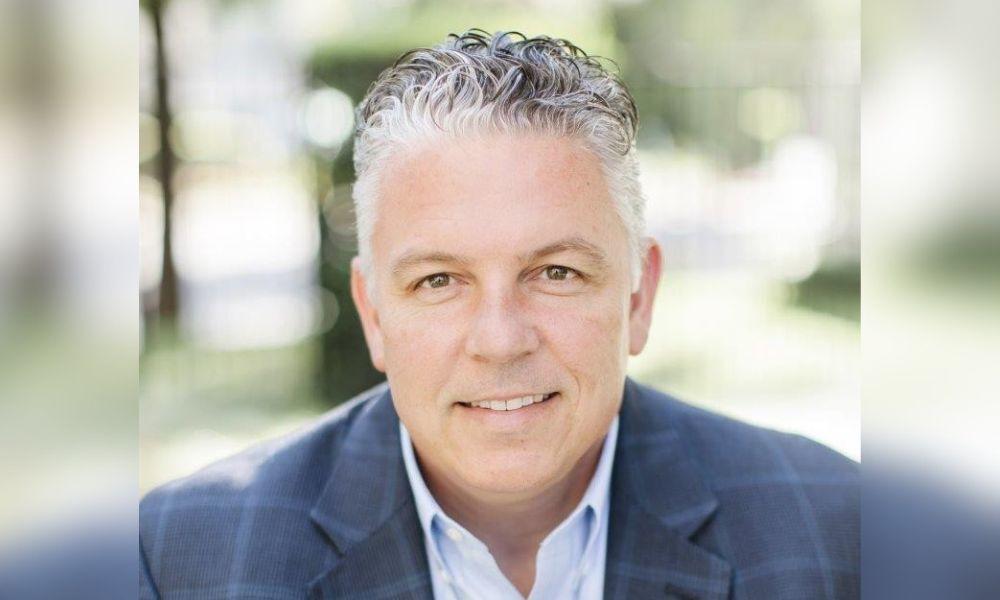
Kemper names Stephen McAnena permanent CEO after seven-month leadership gap
Kemper Corporation has named Stephen J. McAnena (pictured) as its new president and chief executive officer, bringing to a close a seven-month search that began when longtime CEO Joseph P. Lacher, Jr. departed abruptly in October 2025.
McAnena, who joins from Horace Mann where he served as executive vice president and chief operating officer, will assume the role effective June 1 and will also take a seat on Kemper's board of directors. Interim CEO C. Thomas Evans, Jr. will return to his position as executive vice president, secretary, and general counsel.
Podcast Sponsor

Audio Version - 'Connected: The Podcast' --- Sponsored by Pulse Podcasts
The ‘Connected’ Podcast by Alan Demers and in dedication of Stephen Applebaum, is a condensed audio version of the day's ‘Connected' newsletter, a daily scan of all the happenings in the world of Insurance & InsurTech News.
Pulse Podcasts: Introduce a new way for your audience to hear your voice! We are a podcast creation service that helps businesses turn their written content, like blog posts and news articles, into beautiful podcasts. Our platform writes the script, records the voices, and mixes the audio to create engaging content for your audience. It's affordable and has super-fast turnaround!
LISTEN AND SUBSCRIBE BELOW