
News
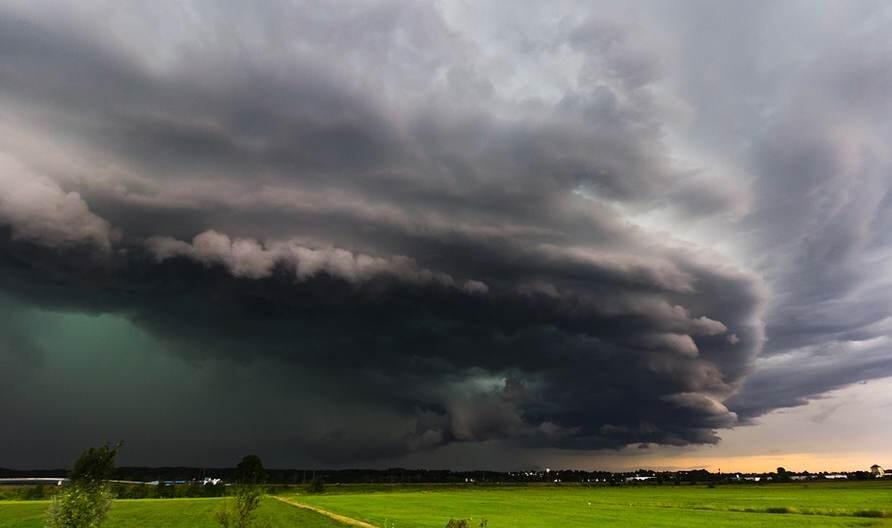
US severe convective storm (SCS) industry losses exceed $35bn in 2026 so far: Gallagher Re
According to reinsurance broker Gallagher Re, year-to-date industry losses from US severe convective storms in 2026 have accelerated and climbed above $35 billion, as the peril’s quieter start to the opening months of the year have since given way to prolific activity.
The broker has recently published a new event commentary report, covering the considerable US SCS activity that has affected much of the Plains, Midwest, and Mid-Atlantic, over the last week.
“A highly active stretch of severe convective storms (SCS) brought considerable damage across parts of the Plains, Midwest, and MidAtlantic in the US from August 9-12. The period featured a high-end derecho event that left significant damage across the Chicago (IL) metro region and other notable population centers in Indiana, Ohio, and Kentucky on August 11,” the report reads.
However, Gallagher Re highlights that the overall direct economic cost will be at least 25% higher once uninsured or underinsured assets and other losses have been accounted for.
“When including the preliminary estimate for the recent stretch of activity across the central and eastern states (August 9-12), public and private US SCS losses have now exceeded USD35 billion in 2026,” the broker said.
NICB Warns Consumers to Watch for Flood-Damaged Vehicles During Peak Flood Season
As storms and severe flooding continue to impact communities across the United States, the National Insurance Crime Bureau (NICB), the insurance industry's association dedicated to preventing and combating insurance crime and fraud is urging consumers to exercise caution when shopping for a used vehicle. Flood-damaged vehicles frequently reenter the used car market following major disasters, sometimes hundreds of miles from where the flooding occurred and often without proper disclosure.
"Every major flooding event creates an opportunity for criminals to profit at the expense of consumers," said David J. Glawe, President and CEO of the National Insurance Crime Bureau. "A flood-damaged vehicle may look perfectly normal on the outside, but hidden damage can create serious safety hazards and expensive repair bills in the following months or years. Before purchasing any used vehicles, consumers should take advantage of every resource available to ensure they're making an informed decision."
As of August 2025, CARFAX estimates that as many as 530,000 flood-damaged vehicles were on U.S. roads.

Homeowners Insurance Market Reaches ‘Fragmented Phase,’ Says S&P GMI
New research from S&P Global Market Intelligence looks to suggest that homeowners insurers are reaching rate adequacy, but certain marketplace factors are creating what it called a “fragmented phase.”
Nationally, the U.S. effective approved homeowners rate change declined from about 13.6% in 2024, to about 6.3% in 2025, to now about 1.8% through July 2026.
“This downward trend suggests carriers have largely completed the national adequacy reset and are now looking for price change as needed or as necessitated by jurisdiction, peril mix and regulatory timing,” said S&P GMI. ARTICLE
Research

88% OF POLICYHOLDERS WANT TO BE NOTIFIED WHEN THEIR INSURANCE COVERAGE IS NOT OPTIMAL, BEFORE SOMETHING GOES WRONG, NEW VIU BY HUB SURVEY FINDS
Consumers expect their insurance provider to do more than renew the same policies and handle claims communications, but many say their provider isn't keeping pace. According to new research from VIU by HUB, an omnichannel embedded personal insurance brokerage, policyholders want their insurance provider to play a proactive role in helping them navigate their coverage as their lives change.
The latest findings from the VIU by HUB Insurance Experience Survey reveal that 88% of policyholders would value an insurance provider that proactively flags when their coverage no longer fits their life, without having to ask, yet nearly 3 in 5 (56%) say their provider hasn't proactively reached out in over a year, or aren't sure it ever has, including 21% who say it has never happened at all. The finding underscores demand for an ongoing relationship rather than a one-time transaction.
AI in Insurance

AI adoption in reinsurance likely to remain gradual despite growing enthusiasm: AM Best
While artificial intelligence (AI) adoption in reinsurance will likely remain gradual due to key challenges, it is becoming a major differentiator for companies that successfully incorporate it into underwriting, claims, and operations alongside appropriate governance and risk controls, AM Best highlights in a recent report.
AI has rapidly become one of the most widely discussed topics across the insurance and reinsurance industry.
Even though every major reinsurer is assessing methods to integrate it into its operations, the industry is still in the relatively early stages of implementation, according to AM Best’s report – Global Reinsurance at an Inflection Point: Can Discipline Survive the Temptation of Record Capital?
“Initial investments have largely focused on efficiency gains and cost reduction opportunities. Reinsurers have explored applications ranging from document processing and claims administration to workflow automation and internal knowledge management,” analysts noted. “These projects generally offer clearer return.”
Most recently, focus has broadened to encompass underwriting support and risk analytics.

PYMNTS | Insurance Regulators Get Schooled on AI Governance
Insurance regulators are moving artificial intelligence governance from the policy manual into the examination file.
On Thursday (Aug. 13) at its Summer National Meeting, the National Association of Insurance Commissioners provided an update on its AI Risk Evaluation Supplement, a structured set of inquiries designed to help state regulators examine how insurers use and oversee AI.
The working group renamed the document from the “AI Systems Evaluation Tool” to reduce confusion about its purpose. The supplement isn’t a certification program, a rating system or a new insurance law. It gives regulators a common way to gather evidence about AI use during market conduct reviews, financial examinations, financial analysis or stand-alone inquiries.
The distinction is important, but the practical effect may be more important. The NAIC’s AI principles and 2023 model bulletin established expectations for responsible AI use. The supplement begins translating those principles into specific requests for information.
In other words, insurers may need to do more than say they govern AI responsibly. They’ll need to show how.

Is Insurance About to Repeat Its Biggest Technology Mistake with AI? | The AI Journal
Today’s legacy technology estates were never intended to become barriers to innovation. Most began life solving genuine business problems. Over time, however, new products, changing regulation, rising customer expectations, and successive waves of technology added new systems, integrations, and workarounds until complexity became embedded in the operating model itself.
The result was technology estates carrying increasing technical debt and operational complexity, making meaningful transformation progressively harder. There is now a growing risk the industry is laying the foundations for its next generation of legacy, this time with AI.
Across the industry, organisations are deploying copilots, chatbots, productivity tools, and isolated AI use cases that promise faster execution and measurable efficiency gains. Many are delivering genuine value. The danger is not that these projects fail. It is that they succeed just enough to convince organisations they are transforming when they are actually reinforcing the structural constraints that created today’s legacy challenge in the first place.
The New Layering Problem
For years, insurers have dealt with technology limitations by adding another layer. A new integration. A new workflow. A new application. A new vendor. A new workaround. Each decision solved an immediate problem. Collectively, they created an environment that became increasingly difficult to change.

Insurers Overestimate Their Progress With AI: Study
A study of more than 300 respondents covering several industries finds a considerable disconnect between how organizations assess their progress on AI and where they actually are with real-world AI integration in the insurance sector.
The third annual EXL U.S. Enterprise AI Study found a significant shift from experimentation to enterprise-wide scale in AI.
Scaling AI is now a high priority for 96% of insurers, compared to 86% in 2025.
Agentic AI is advancing the fastest in risk management, actuarial, underwriting, and customer experience, orchestrating complex, end-to-end workflows across multiple systems and roles, the survey found. MORE
nsur.ai Launches AI Underwriting Assistant
nsur.ai, an insurance technology company delivering artificial intelligence (AI) solutions for underwriters, announces general availability of its AI Underwriting Assistant, built exclusively for property and casualty (P&C) underwriters to work alongside any platform or core system.
Unlike traditional underwriting technology, nsur.ai provides immediate value without forcing carriers or MGAs to replace existing infrastructure. The AI Underwriting Assistant is not a policy administration system, a rating engine, or a replacement for either. It is a personal assistant for the underwriter. One that handles the reading, gathering, checking, and drafting surrounding every risk, regardless of where that risk lives.
"Underwriters are our most expensive and most constrained resource, yet they spend hours sifting through manuals to find answers," said Jay Menna, CEO of nsur.ai. "While AI is being adopted by technology platforms, underwriters are too often bound by whatever limited functionality those systems provide. We built nsur.ai to operate as an assistant for the person, not the platform."
State News

Three Bills to Reform Insurance Claims Abuses and Help Homeowners Keep Their Insurance Pass Final Committee, Head to CA Assembly Floor, Says Consumer Watchdog
Three bills to help families prevent home insurance nonrenewals and require fair and timely payouts of a claim after a disaster were advanced out of the Assembly Appropriations committee today. Every Fire Survivor's Network and Consumer Watchdog, the bill sponsors, cheered the bills' approval and move to a final vote on the Assembly Floor.
SB 1301, authored by Senator Ben Allen, protects policyholders from unexplained and abrupt insurance nonrenewals by requiring more notice before a loss of coverage, specific disclosure of the reasons a policyholder may be dropped, and an opportunity to make repairs to keep coverage when possible.
SB 878, authored by Senator Sasha Renée Pérez, strengthens existing laws on claim delays by requiring insurers to respond to claims in writing and on time and penalizes late payment of undisputed claims. The bill also requires partial payment within 30 days of a disaster for a home that is a total loss after a wildfire, and full payment within 30 days once a homeowner hires a contractor to rebuild.
SB 877, also Pérez, helps consumers challenge claim underpayments by requiring insurers to disclose all original loss estimates and all revisions.
InsurTech/M&A/Finance💰/Collaboration
ZestyAI's Z-WATER wins approval in 20+ US states
ZestyAI, a risk decision platform for the insurance industry, has confirmed that regulators in more than 20 US states have accepted its Z-WATER™ model for non-weather water risk, allowing carriers to use the tool in their rate and rule filings.
Non-weather water damage has become the fourth most expensive cause of loss in home insurance, generating in excess of $15bn each year from more than a million claims, while the average cost per claim has climbed by 80%, it said. ZestyAI noted such losses typically stem from everyday issues within a property, such as a burst pipe, ageing plumbing, a faulty appliance or a concealed leak, which can cause extensive damage before being noticed.
Recommended Events

ITC Vegas | Horizon of Possibilities
ITC Vegas September 29, 2026 - October 1, 2026
The largest insurance innovation event in the world - Predict, Prepare, Progress
From the shore, the ocean can appear calm. Yet, under the surface, tectonic plates shift, pressure builds, and currents redirect—long before we detect movement. That’s insurance right now. Climate, technology, regulation, and human behavior are reshaping risk in real time. Change isn’t coming; it’s already here. The real question is how we move forward.
We set our sights on the horizon and turn insight into action.
‘Connected’ proudly sponsors ITC Vegas 2026. Rate Discounts available for ‘Connected’ followers, please contact Alan Demers