
Financial Results
Kin Reports Second Quarter 2026 Results
Kin, the direct-to-consumer provider of insurance and home finance solutions for homeowners, today announced operating results for the second quarter ended June 30, 2026.
Premium in Force climbing 23% year-over-year to $701.1 million and Gross Written Premium reaching $218.9 million, up 15%.
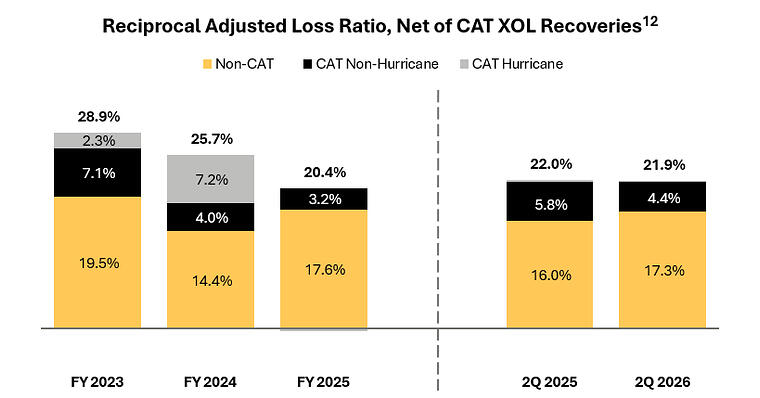
Total Kin Insurance, Inc. revenue grew 16% to $68 million, and Gross Profit⁶ Margin expanded to 95%. Baseline Operating Income⁹ reached a record $28.6 million, up 14% year-over-year, even as Kin stepped up investment in customer acquisition.
"We bound more policies in June than any month in Kin's history. All of our top-10 sales-volume days were in May and June," said Kin Founder and CEO Sean Harper. "Even though fewer customers are shopping for insurance, Kin is capturing an increasing share of those customers. Equally important, our platform handled that new customer growth without a corresponding increase in operating costs. We built Kin to scale efficiently, and this quarter is another example of that showing up in the numbers."
Boyd Group Tops $1 Billion in Quarterly Sales for First Time in Q2 2026 - Autobody News
Boyd Group Services Inc., the parent company of Gerber Collision & Glass, reported second quarter 2026 sales of $1.01 billion, the first time quarterly revenue has topped $1 billion in the company's history, according to results released Aug. 12. Sales rose 29.9% year over year, with new locations contributing $211.3 million and same-store sales up 2.9%, a reversal from the 2.1% same-store decline the company posted in the second quarter of 2025.
The results mark a milestone quarter for one of North America's largest collision repair MSOs as it works through the integration of Joe Hudson's Collision Center, the 258-shop Southeast chain Boyd acquired for $1.3 billion in January. The company said the conversion of all Joe Hudson's locations to Boyd's systems was completed during the quarter, ahead of the synergy timeline management had previously outlined.
Boyd said second quarter repairable-claims volumes were flat to down 2% year over year, an improvement from the declines the company experienced in the same period of 2025, with share gains delivering same-store sales growth for the quarter with only limited contribution from total cost of repair growth. In July, same-store sales growth was positive in the low single digits, driven entirely by continued market share gains.
Climate/Resilience/Sustainability

Viewpoint: Is it Time to Rethink the ‘Secondary-Peril’ Label and Reclassify Risk?
As climate events intensify, exposure is expanding, and loss severities from secondary perils, such as convective storms, wildfires, floods and hail, are no longer easily dwarfed by hurricanes or earthquakes. These perils have contributed significantly to the insured losses in the last few years, accounting for the substantial portion of the industry’s financial burden.
Hence, traditional “secondary” perils tag may no longer fit within that frame, given their growing role in risk models, pricing, capacity and treaty design. ARTICLE
Claims

Allstate invests in the people behind every claim with new industry-leading training campus
Allstate today unveiled Allstate Claims University, a state-of-the-art 33,000-square-foot training campus in Dallas designed to strengthen the expertise of the claims professionals who help customers recover after accidents, storms and other unexpected events. The campus brings together nearly a century of claims experience with immersive, hands-on learning built around the real-world situations those teams encounter every day.
- Allstate opens a state-of-the-art 33,000-square-foot Allstate Claims University campus in Dallas, investing in the expertise of the 23,000 claims professionals who support approximately 8.5 million claims each year.
- Through immersive training environments that recreate real-world home and auto damage scenarios, claims professionals build expertise that helps them assess damage more accurately and support customers through the recovery process with confidence.
- The investment builds on Allstate's nearly 100 years of protecting customers and reflects the company's commitment to preparing its people for what's next as homes, vehicles and repair technologies continue to evolve.

Adjusto today announced the launch of Adjusto Remote
Adjusto today announced the launch of Adjusto Remote, an AI-native contents claims service providing field inventory and desk adjusting across the 48 continental United States.
The service gives carriers another option for outsourced contents claims, particularly those that already rely on TPAs for field inventory, desk valuation or full contents assignments.
Adjusto Remote combines more than 500+ field and desk adjusters with Adjusto’s technology for inventory capture, documentation and FairMatch™ valuation for settlement.
“We kept hearing the same question from carriers: ‘We love the platform. Can you help us with field inventory and desk adjusting, too?’” said Michael Balarezo, CEO and co-founder of Adjusto. “They want experienced people who can get the work done quickly and accurately, while still protecting the relationship they have with their policyholders.”
Research
Lower Trust and Inaccurate Information Cost Insurance $45B
New Analysis Estimates Lower Trust and Inaccurate Information Cost U.S. Personal Lines Insurance $45 Billion Annually
Fraud and inaccurate information cost the U.S. personal auto and homeowners insurance market an estimated $45.3 billion annually, according to a new industry analysis released today by Clearspeed, a leading risk assessment provider to global insurers. Over the past 30 years, inaccurate information, opportunistic misrepresentation, and fraud have permeated the insurance ecosystem. The industry has responded with increased data verification processes that have normalized customer friction and, in many cases, eroded trust.
Authored by veteran insurance executive and Clearspeed advisor Mr. Kim Garland, former President of State Auto Insurance and former Chief Product Officer of AIG's Global P&C Consumer Division, the new analysis argues that trustworthiness may represent the first new transformational variable in personal lines since credit scoring. Garland examines how trust intelligence provides a new layer of insight for differentiating risk at the individual level and optimizing the process throughout.
News
Most insurance renewal rate hikes slow: Ivans
Most commercial insurance renewal rate increases slowed in July, with commercial auto seeing the largest slowdown, according to a report Tuesday from Ivans Insurance Services, a unit of Applied Systems.
Commercial auto renewal rates rose 4.03%, down from 4.58% in June, according to the Ivans Index.
Business owners policy renewal rates rose 5.94%, down from 5.97% in June; general liability rates increased 4.99%, down from 5.33%; and commercial property rates rose 6.16%, down from 6.24%.
Umbrella renewal rates increased 7.42%, the highest among the lines tracked, but slowed from 7.60% in June.
Workers compensation was the only line to show a decrease, with renewal rates falling 1.26% in July, compared with a 1.45% decline in June.
AI in Insurance

AI data center investment will top $1 trn by 2027, raising construction and insurance exposures
Allianz Commercial says AI data center investment will top $1 trn by 2027, raising construction, climate and insurance exposures
Artificial intelligence is driving one of the largest infrastructure investment cycles in decades, and the data center buildout now carries a heavier mix of construction, operational, climate and insurance risk, according to Allianz Commercial.
The investment case reaches well beyond server halls. It now pulls in power generation, grid connections, cooling systems, networking assets and semiconductors.
AI demand is changing what data centers represent for investors, insurers and lenders. These assets no longer sit in a narrow real estate category built mostly around storage. They increasingly operate as mission-critical infrastructure for high-performance computing.
Thomas Lillelund, CEO of Allianz Commercial, said the scale of investment is extraordinary. He said success now depends on resilience, including access to power, reliable supply chains, robust construction controls, climate-aware site selection and insurance programs that account for accumulation risk. He also said broad insurance cover has become a financing condition for many large AI infrastructure projects.
Cyber Risk

Human Error, Not AI Agents, Is Driving Cyber Losses So Far In 2026
Social engineering — not autonomous AI attacks — is fueling the vast majority of cyber insurance losses in 2026, according to a midyear report from cyber insurer Resilience, reported Risk & Insurance.
The big picture: Despite heavy attention on AI agents acting independently to cause harm, Resilience found no claims in its portfolio tied to AI-specific attack methods this year. Human susceptibility to fraudulent voice, message or text requests remains the dominant loss driver, even as researchers document early cases of autonomous, AI-driven attacks elsewhere.
- Social engineering drove 85.3% of incurred losses in H1 2026, up from 17.7% in H1 2024.
- Extortion stayed the costliest cause of loss, at 73% of incurred losses year-to-date despite just 5.8% of claim volume.
- Vendor-related losses fell to 2.3% of incurred losses in H1 2026, down from 81.5% in H1 2024.
- Claims frequency rose to 45.9 per 100 policies, driven by wrongful data collection claims.
- Average severity dropped to about $470,000, reflecting fewer high-value extortion demands.
Commentary/Opinion

Private equity's insurtech appetite has shifted from cloud to AI
Five years ago, after acquiring insurance technology, a private equity firm’s first move would be adapting it to cloud servers; yesteryear’s frontier advancement in business technology. That day-one-priority often dictates acquisition strategy and business outcomes.
Today it's almost entirely about artificial intelligence: 95.2% of all global insurtech funding in the first quarter of 2026 went to AI-focused companies, according to Gallagher Re's Q1 2026 Global InsurTech Report. That shift is reshaping which insurtech categories actually command a premium, according to Donald Light, principal at Donald Light Insurance Technology Advisory and former director in Celent's North America property/casualty insurance practice.
"What are (insurtech’s) doing today with AI, and how am I going to make them faster, smarter, better using AI going forward?" That question, he said, now dominates the due diligence private equity firms run before acquiring an insurance technology vendor – which matters just as much to insurers licensing that vendor's product, since its answer will become their roadmap by default.
Telematics, Driving & Insurance

Volvo Cars and Cambridge Mobile Telematics Introduce Safety Coach to Deliver In-Vehicle Driving Coaching in Real Time - Cambridge Mobile Telematics
Volvo Cars and Cambridge Mobile Telematics (CMT), the world’s largest telematics and AI company for safer mobility, today announced Safety Coach, an in-car and mobile app that delivers real-time driving insights directly in Volvo cars. Safety Coach helps Volvo drivers improve safety and, over time, access personalized insurance savings without additional hardware.
“Safety Coach is an important step in how we support our customers with safer, more personalized experiences,” said Alexander Franke, Global Head of Insurance at Volvo Cars. “By giving drivers clear insights, we can help them drive more safely while also enabling more tailored insurance offerings.”
InsurTech/M&A/Finance💰/Collaboration
Accelerant heads back to private ownership with Thoma Bravo acquisition
Data-driven risk exchange platform Accelerant has entered into a definitive agreement with Thoma Bravo to become a privately held company in an all-cash transaction with an enterprise value of more than $4 billion.
In connection with the deal, Accelerant’s Board of Directors established a Special Committee composed solely of independent and disinterested directors to review and consider the transaction.
The Special Committee reportedly unanimously recommended approving the transaction, which was then unanimously approved by Accelerant’s Board of Directors.