
News

'There's A Bubble': Car Payments Are Hitting Record Highs - AOL
[Ed.Note: Record highs in; average new car cost, negative equity and car payments is not a winning formula for car manufacturers or consumers.]
Stay well, drive safe, spend reasonably. Or don't, I'm not your dad.
This won't be a surprise to anyone whose Instagram Reels algorithm is just those videos of dealership employees rattling off what they drive and what their monthly payment is, but the amount the average person pays to finance a car has never been higher.
According to Edmunds, the average monthly payment of newly financed new cars went up to $773 for Q1 2026 whereas a JD Power report has the number pegged at $806. Both sources, meanwhile, say about 20 percent of all new car financing deals had payments exceeding $1,000.
And sadly, the numbers make complete sense when you remember the average transaction price on a new car crossed $50,000 late last year—doing some math ourselves, the monthly payment on a 50-grand, 72-month loan at 7 percent (the most common term and the current average APR for new cars) is $852.45.
Edmunds also reports that the average down payment made on a new car fell to an all-time low of $6,206.
In the cinematic retelling of what happened to the car market post-2020, this is the point where Steve Carell gets on the phone and bluntly tells his associate, "Hey, there's a bubble."

Reconstruction Costs Decelerate as Personal Lines Premium Increases Slow
Reconstruction cost increases are beginning to ease across both residential and commercial properties, offering some relief after years of steep inflation driven largely by labor and materials pressures. At the same time, rate increases for auto and homeowners policies have fallen back toward pre-pandemic levels.
Total reconstruction costs in the U.S. increased by 3.6% from April 2025 to April 2026, a significant drop from the 5.2% increase over the previous 12-month period, according to a new Verisk report.
Verisk’s “360 Value Quarterly Reconstruction Cost Analysis: Q2 2026” found that total residential costs increased by 3.2% from April 2025 to April 2026. Every state saw residential reconstruction cost increases, with the District of Columbia seeing the largest at 5.7%, followed by Indiana at 4.6% and Kansas at 4.6%.

California RV Owners Are Turning Idle Assets into Real Income, and RVezy Is Making It Easier Than Ever
The average RV in North America is used three to four weeks per year. For the other eleven months, it sits. In a driveway. In a storage facility. Depreciating, accruing insurance costs, and generating nothing.
For the more than 20,000 California RV owners who have listed their vehicles on RVezy, that reality has changed.
RVezy, North America's leading peer-to-peer RV rental marketplace, today highlights the owner-specific advantages that have made it the platform of choice for California RV owners heading into peak summer season. Among them: the only guaranteed owner payout program in North America, same-day payments that hit an owner's bank account the moment their RV is picked up, in-house insurance coverage up to $2M in liability, and a dedicated Host Experience Team that provides every owner with a personal account representative.
"We never built a platform that treats owners as inventory," said Michael McNaught, CEO of RVezy. "Every RV on RVezy belongs to a real person who saved for it, uses it for family trips, and trusts us with it when they are not. That trust is the foundation of this business. The payout guarantee, the dedicated support team, the in-house insurance. Every one of those things was built because we believe owners deserve a genuine partner, not just a marketplace to list on."
Climate/Resilience/Sustainability

Organizations Must Plan for Climate Tipping Points | Insurance Thought Leadership
Finding a route through extreme uncertainty from climate tipping points is now urgent for organizations. A pragmatic mindset and proven techniques can uncover your path.
Climate systems are moving toward abrupt, irreversible shifts. These tipping points include the collapse of the Atlantic Meridional Overturning Circulation (AMOC), the system of ocean currents in the Atlantic that plays a crucial role in regulating Earth's climate by transporting heat from the tropics northward.
The AMOC is likely weakening. Should it reach a tipping point, the impacts could challenge the historical wisdom that climate change unfolds gradually. Regional conditions could now flip quickly, bringing severe cooling to northern Europe, forcing storm tracks into new positions, shifting monsoons and altering coastlines.
The most recent Nordic Tipping Week saw researchers and policymakers treat AMOC tipping as a realistic planning case. When science moves from questioning if a tipping point might happen to focusing on when, an organization's planning expectations need to change.
It is critical that organizations and their stakeholders lift themselves out of the climate catastrophizing that tipping points may prompt. That's because doom can shut down action.
Financial Results
Progressive (PGR) Is an Underwriting Machine, Not Just a Growth Story - Alphastreet
Progressive is often described as a fast-growing auto insurer, and the growth is real. But that label is incomplete. The more important fact is that Progressive has kept growing while posting combined ratios that many insurers would gladly accept even in a flatter market. That points to a more durable advantage: Progressive is not just adding policies; it is using segmentation, product iteration, and underwriting discipline to select profitable growth.
Why Progressive is more than a policy-growth story
A pure growth story in insurance can be dangerous. Premiums can rise quickly when an insurer cuts price too aggressively or loosens underwriting standards, but that kind of growth often comes back later through weaker margins or reserve pain. Progressive’s recent results point in the opposite direction.
In Q1 2026, companywide net premiums written grew 6% and policies in force grew 9%, while the combined ratio remained a strong 86.4. That is the key analytical signal. Progressive is still expanding, but it is doing so while keeping underwriting profitability well ahead of the 100 level that marks underwriting break-even.
The same pattern held in 2025. Net premiums written grew 12%, policies in force grew 10%, and the company finished the year with a combined ratio of 87.4. Over the last five years, Progressive added nearly 13.9 million policies in force, equal to more than 21.7 million vehicles in force. That is not a one-quarter spike. It is evidence of a system that keeps compounding.

Allstate announces quarterly dividends payable in July 2026
The Allstate Corporation (NYSE: ALL) announced that its board of directors approved a quarterly common stock dividend of $1.08 per common share on May 22, 2026. Allstate also declared the payment of quarterly preferred stock dividends.
Allstate declared a quarterly dividend of $1.08 on each outstanding share of the corporation's common stock, payable in cash on July 1, 2026, to stockholders of record at the close of business on June 1, 2026.
Allstate also declared approximately $29.3 million in aggregate dividends on three series of preferred stock for the dividend period from April 15, 2026, through July 14, 2026. All the preferred dividends are payable in cash on July 15, 2026, to stockholders of record at the close of business on June 30, 2026
AI in Insurance
AI Cuts Costs and Claims for Insurers
Digital Insurance reports multiple recent AI deployments are delivering measurable cost reductions for insurers.
Digital Insurance reports Whisker Labs claims its Ting sensor program has prevented more than 27,000 potential electrical fires across the U.S., and that Ting now also provides frozen-pipe alerts; Nationwide distributes the sensor free to eligible policyholders, Digital Insurance reports. Digital Insurance reports
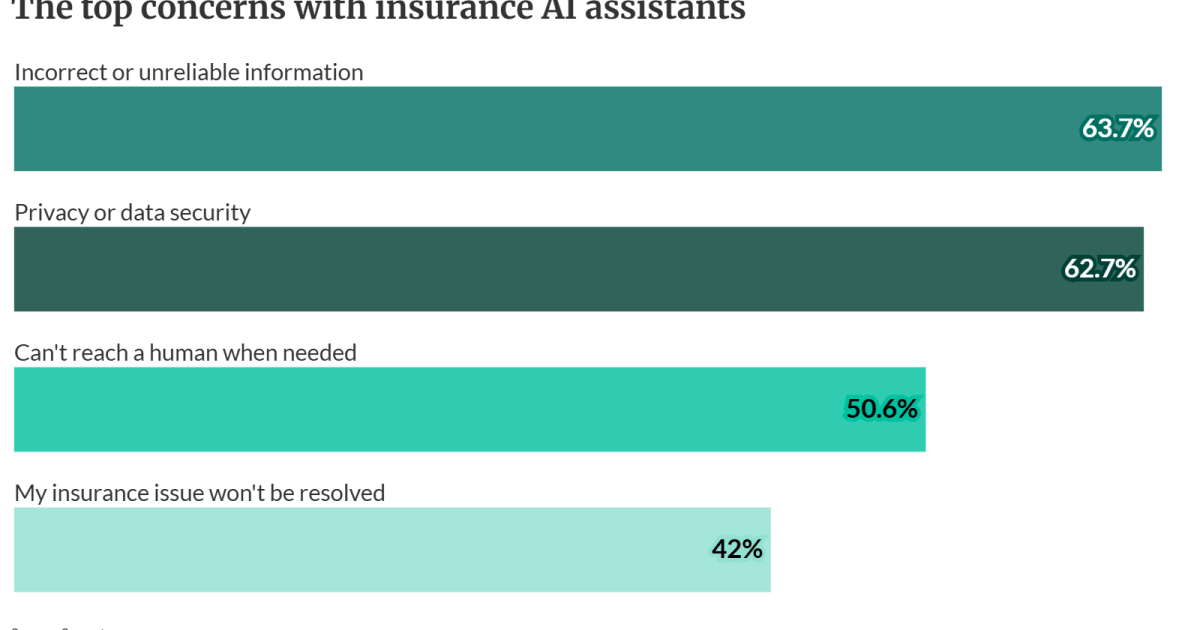
SambaSafety's 2026 Driver Risk Report found AI-enabled telematics produced an average 19% decrease in collision costs, based on 28 million driving events logged October 2025 to March 2026. Digital Insurance reports Sonant's Insurance AI Report found 68% of surveyed consumers are willing to use voice AI, though 64% cite incorrect information and 63% cite data privacy as top concerns. Editorial analysis: For practitioners, the reported examples show prevention-focused sensors, telematics, and voice automation produce operational gains but require attention to activation, data quality, and transparency.
Insurance AI Is Booming. Fraud Losses Are Not Falling. | Insurance Innovation Reporter
Insurers have spent the last three years teaching AI to catch fraud. It has somewhat worked. The models are sharper, and suspicious claims light up more often than not.
So why have the losses not moved?
Because flagging a claim and proving it are two different jobs—and the industry has only automated the first one.
The Fraud Is Rarely in the Document
Most conversations about fraud detection miss this: the documents are often real.
The repair estimate is genuine. The invoice checks out. The loss happened. But someone took out three policies on the same property from three different carriers—perfectly legal—and filed the full claim with all three. Each carrier’s paperwork looks clean on its own. The fraud only shows up when the claims are read together.
Or the cost was inflated. Or the timeline does not hold up side by side. The paper is not lying. The story is.
As Stephen Applebaum and Alan Demers noted in their April commentary, when anyone can produce a convincing receipt in seconds, the document proves almost nothing. What matters is whether the story holds together—across time, across parties and across other policies. That requires investigation.
Every claim tells a story. Most are never read.
Low-risk claims get paid automatically, which makes sense when the story is genuinely simple. But generative AI has made it easier to dress up a bad story in clean documents. The threshold for low-risk claims needs to catch up.

The hidden flaw in insurance AI adoption for advisors and carriers
Many insurers are still in a phase where AI is being applied to existing underwriting and claims workflows rather than fundamentally redesigning how those workflows operate.
“That’s understandable to an extent, as these environments are deeply interconnected, highly regulated, and built on operational models that have evolved over decades,” said Manuel Rodriguez Vera, business unit head of insurance, WNS, part of Capgemini.
For many carriers, the immediate focus has been on improving efficiency within current systems before undertaking broader operating model transformation.
However, simply layering AI onto fragmented processes often creates incremental efficiency gains rather than meaningful transformation. The bigger opportunity lies in rethinking how underwriting, intake, triage, and servicing work together end to end, experts maintain.
“The insurers who approach AI with a wide-open view will create competitive differentiation and in turn, long-term resilience,” explained Jaime Henry, vice president of product at Origami Risk.
State News
Parts of Hochul's auto insurance proposals passed, others yet to come
Elements of Gov. Kathy Hochul's proposed changes to auto insurance laws emerged in the most recently passed part of the state budget, though some proposals have been eliminated and the fates of others remain unknown.
Hochul made auto insurance costs a major initiative this budget season, aiming to lower premiums for New Yorkers who pay some of the highest rates in the nation. The governor has toured the state and worked to tie the issue to industries like farming and trucking.
Hochul wants to crack down on fraudulent claims such as staged accidents in the hope that insurance companies pass the savings on to consumers, as well as lead to a more competitive insurance market that would also lower costs.
But that idea saw pushback from some lawmakers as well as the influential New York State Trial Lawyers Association, who are skeptical that such savings would be passed to policyholders and worry that the changes could make it harder for legitimate claims to be paid out.
The Public Protection and General Government section of the state budget bill, introduced Thursday, includes changes to the language of the state's penal law expanding the definition of insurance fraud to anyone who "hires, requests, encourages, orchestrates, or invites another individual to stage a motor vehicle accident."

Louisiana eyes $50 million more for fortified roof grants
Louisiana may soon get a massive influx of money for a widely touted solution to ever-rising home insurance rates: Fortified roofs.
State lawmakers appear poised to pass a bill that would add significantly more money to the grant program that gives Louisiana homeowners $10,000 each toward a new fortified roof. The cash would come from excess funds collected by Citizens, the state-created insurer of last resort, and is expected to net an extra $50 million for the program, enough for 5,000 additional roofs — on top of the $30 million the program gets annually.
In all, the program would have enough money for 8,000 new fortified roofs this year, nearly double the number completed so far through the grant. To date, the Louisiana Department of Insurance has certified 4,800 roofs through the program.
Recommended Events

Why Insurance AI Pilots Fail - and How to Scale
Andreea Plesea and Jean Bezek from Druid AI and Paul Carroll from Insurance Thought Leadership will discuss how an orchestration approach or a Conductor layer can connect these disconnected agents while maintaining the security, auditability, and seamless experience required for insurance operations
Wednesday, June 03, 2026 at 1:00 PM Eastern Daylight Time.
What you’ll learn:
- The Scale Gap: Why most insurance AI projects stall at the pilot stage
- Agent Sprawl: How fragmented tools create hidden operational risks
- Establishing Control: Achieving visibility through orchestration and governance
- High-Value Starts: Practical scenarios for FNOL and proactive claims follow-up
In late 2025, researchers found that 95% of GenAI pilot projects fail to scale, and only 39% of organizations realized any increased revenue from their AI investments.
The problem is not lack of investment. It is lack of control.
As insurers experiment with AI agents across claims, underwriting, and customer service, core platforms and vendors are rapidly embedding their own AI capabilities. This leaves insurers managing a growing number of disconnected agents across different systems. The result is limited visibility into performance, higher governance risks in a regulated environment, and inconsistent experiences for customers and employees.