
Climate/Resilience/Sustainability
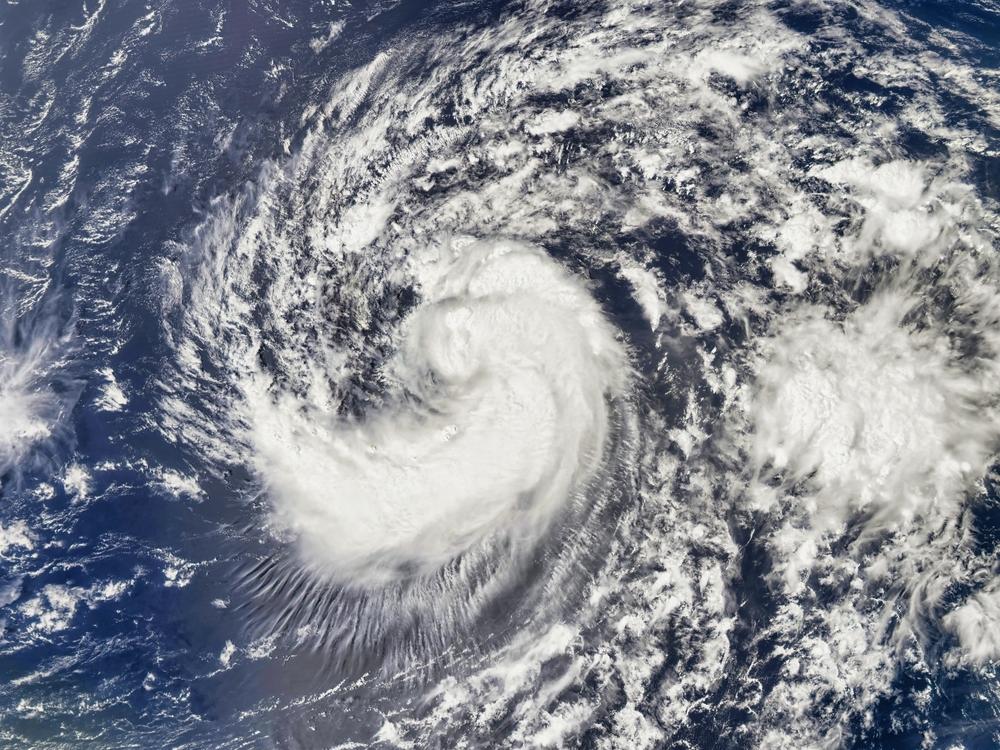
Below-normal Atlantic hurricane season forecast: NOAA
Forecasters with the National Oceanic and Atmospheric Administration on Thursday predicted a below-normal Atlantic hurricane season beginning June 1, though up to three major hurricanes could form.
NOAA forecasts a 55% chance of a below-normal season, a 35% chance of a near-normal season and a 10% chance of an above-normal season.
The agency expects eight to 14 named storms, with winds of 39 mph or greater, of which three to six could become hurricanes with winds of at least 74 mph. One to three of those could become major hurricanes with winds of 111 mph or greater.
An average Atlantic season has 14 named storms, with seven hurricanes, including three major hurricanes.
El Niño is expected to develop and intensify during the season, while Atlantic Ocean temperatures are expected to be slightly warmer than normal and trade winds weaker than average, NOAA said.
El Niño conditions tend to suppress hurricane activity, while warmer ocean temperatures and weaker winds tend to support a more active season.
“Although El Niño’s impact in the Atlantic Basin can often suppress hurricane development, there is still uncertainty in how each season will unfold,” NOAA’s National Weather Service Director Ken Graham said in a statement.

The Hurricane Hush Is a Trap
If you spent any time on the morning news this week, you saw a comforting headline. NOAA has lowered its Atlantic hurricane forecast for the 2026 season.
Colorado State is calling for the quietest year since the legendary 2015 season. Private forecasters are clustered around twelve named storms, five hurricanes, two majors, and an Accumulated Cyclone Energy index running near eighty percent of normal. For a property and casualty industry that has spent the last decade staring down loss ratios driven by Atlantic landfalls, that headline looks like a gift.
Read the underlying mechanics and the headline reverses on itself. The Atlantic is being drained of catastrophe energy by a Super El Niño in the Pacific, and that energy has to surface somewhere.
Research
Rate Insurance: Home Insurance Costs Have Surged Since 2019, but New Data Signals a Turning Point
After years of relentless premium increases, homeowners may finally have a window to reassess their coverage and take better control of their costs.
That’s a key finding from the 2026 Home Insurance Trends Report, released today by Rate Insurance, LLC, a subsidiary of Rate and one of the nation’s fastest-growing personal lines and small commercial insurance brokers.
Now in its third year, the report finds that home insurance premiums have surged 107.6% nationally since 2019 — but 2025 marked the first meaningful slowdown, with premiums rising 9.16% last year compared to increases of nearly 20% in both 2023 and 2024.
“After several years of sharp increases, we’re starting to see early signs that the market is stabilizing,” said Jeff Wingate, President of Rate Insurance. “Premiums are still elevated, but this shift gives homeowners a window to reassess their coverage, make informed adjustments and take a more proactive approach to managing long-term costs and their overall financial well-being.”
Inflation, cyberattacks top business concerns in 2026: Hartford
A new survey reveals AI optimism has been tempered by rising business risk
Inflation and cyberattacks remain among the top concerns for US midsize and large businesses as executives navigate a more uncertain economic and risk environment, according to The Hartford’s 2026 Risk Monitor report.
The report, based on a survey of more than 500 business leaders, identifies cybersecurity, economic uncertainty, supply chain disruptions, worker safety, and the growing role of artificial intelligence as the dominant risk concerns shaping operations and growth strategies across corporate America.
Cyberattacks and inflation tied as the most widely cited business concerns, each flagged by 77% of surveyed leaders. The findings mark a notable escalation in tariff-related anxiety, with 63% of business leaders expressing concern over trade tariffs. Geopolitical conflicts were also identified as a key operational concern by 43% of executives surveyed.
News

Memorial Day: 2026 Date, Meaning & Origins | HISTORY
Memorial Day is a federal holiday that celebrates and honors the men and women who died while serving in the U.S. military.
Observed every year on the last Monday of May, Memorial Day was originally called Decoration Day in a nod to the tradition of placing flowers or other decorative displays at gravesites.
The origins of Memorial Day date back to the Civil War, which claimed the lives of some 620,000 soldiers. In the aftermath, devastated communities sought to honor their dead. The commemoration caught on across the nation, eventually expanding to honor fallen soldiers from all wars, but it wasn’t until 1971 that Memorial Day became a federal holiday.
Today, many Americans observe Memorial Day by visiting cemeteries or memorials, holding family gatherings and participating in parades. Unofficially, it marks the beginning of the summer season.
Key Facts:
- Americans celebrate Memorial Day to honor U.S. military members who have died in combat.
- The holiday was originally called Decoration Day because people would decorate the gravesites of fallen soldiers with flowers, American flags or other tributes.
- A tradition since the 1860s, Memorial Day only became a federal holiday in 1971.
- Whereas Memorial Day commemorates deceased U.S. soldiers, Veterans Day honors all former members of the military with an emphasis on living veterans.

In Memory of Stephen Applebaum - The Dragonfly Foundation Chicago
Stephen Applebaum was passionate about giving back. He not only believed in helping others but demonstrated this in his actions every day. Stephen's loving daughter, Jessica Merar, CCLS is the Executive Director of The Dragonfly Foundation Chicago. He cared deeply about supporting the foundation and Jessica's devoted leadership.
About Dragonfly:
The hardships associated with pediatric cancer often leaves families feeling isolated, longing for a supportive community.
Since its foundation, The Dragonfly Foundation has been providing support to children with cancer and their families. We offer services to in-hospital and outpatient individuals, along with community-building activities. We provide respite during the journey of cancer treatment, restoring strength, courage, and joy.

AI and Geopolitical Shifts Top Emerging Risks for Insurance Industry in 2026
Sixty percent of C-suite respondents — including chief risk officers, chief actuaries and lead consulting partners — said economic and geopolitical risks would have the greatest impact on their organizations in 2026, with greater-than-normal financial volatility and geoeconomic and globalization shifts leading the way.
But when asked to look three or more years ahead, the focus shifted decisively toward technology: 34% selected a technological risk as most impactful over the longer term, with artificial intelligence adverse outcomes chosen by 27% of senior leaders as the single greatest future threat, according to the 19th Annual Emerging Risk Survey released in March 2026.
The survey drew more than 100 C-suite participants and over 350 total respondents from across the insurance and financial services industries.
AI in Insurance
Acrisure announces layoffs
Acrisure is laying off 11% of its workforce, or about 2,250 employees, according to reports. The layoffs will begin this week and continue through 2027.
In a letter announcing the layoffs, Acrisure cites advances in technology, AI and digital platforms as reasons for the layoffs.
The company announced layoffs of 400 employees from its accounting department in October 2025.
“As we look ahead, we need to increase revenue growth through greater connectivity, tighter alignment, and continued investment in technology,” wrote CEO Greg Williams. “The greatest risks we face are not acting decisively enough and seeking comfort in the way things ‘used to be.’”
Consumer Comfort with AI for Severe Weather Monitoring Climbs to 51% in 2026, Insurity Survey Finds
New findings from the Insurity 2026 AI in Insurance Report show growing consumer openness to AI-driven risk monitoring as extreme weather events intensify
Insurity, a leading provider of cloud-based software and analytics for property and casualty insurers, today released new findings from its 2026 AI in Insurance Report examining consumer attitudes toward artificial intelligence (AI) in severe weather monitoring and catastrophe response.
The data suggests consumers are increasingly open to insurers using AI to help anticipate and respond to climate-related risks. According to the report, 51% of consumers say they would feel comfortable if their insurance provider used AI to monitor severe weather conditions and deliver real-time alerts about potential risks such as hailstorms, floods, or wildfires, up from 45% in 2025.
Beyond early warnings, many policyholders also see potential value in AI-driven claims support following major weather events. Forty-two percent of respondents say they believe AI could help insurers process claims more efficiently after severe weather events, an increase from 28% in 2025.

Nearly half of US properties saw 15% risk swings after AI data enrichment: Moody’s study
Enriched property attributes reveal hidden shifts across insurance portfolios
Moody's has found that artificial intelligence-driven property data can materially change how US severe convective storm risk is priced and allocated across insurance portfolios.
According to a new white paper, Moody's said that adding enriched attributes led to a reduction of about 5% in modeled average annual loss for severe convective storm. At portfolio level, that suggests building stock that is somewhat stronger than the model’s default assumptions.
Moody’s stressed, however, that this small headline change masks much larger movements underneath. Nearly half of all properties recorded a change in modeled loss of more than 15%, either up or down, once enriched data were applied. More than 226,000 locations saw material increases in modeled loss, while over 266,000 saw decreases of similar magnitude.
State News

California FAIR Plan to raise rates by 30%
Rate increases will be much larger in areas at high risk of wildfire.
The California FAIR Plan will raise rates by an average of 29.1% starting this October.
Increases will vary based on wildfire risk, and some homeowners will see their rates rise more than others. About half of policyholders will see increases of 30% to 50%, but homeowners in particularly fire-prone areas could see hikes of 50% to 200%.
Some homeowners could see a smaller than average increase (under 30%), and homeowners in low-risk areas could see their premiums drop.
The hikes will apply to policyholders when they renew starting Oct. 15.
The FAIR Plan, the state's insurer of last resort, covers homes in wildfire-prone areas that traditional insurers have deemed too risky. As wildfire risk has grown and insurers have pulled back coverage in the state, the FAIR Plan has grown substantially in recent years, now insuring nearly 670,000 homes across California.
As of the end of last year, the FAIR Plan had a total exposure of $724 billion, up 230% from the fall of 2024.
Telematics, Driving & Insurance

Executive Viewpoint: What Telematics Got Wrong and What It Means for Commercial Auto
Executive Summary
"We measured exposure and called it behavior. We measured compliance and called it quality. We built crash detection that catches the crashes we'd have heard about through a phone call anyway." That's how InsureVision's Dan Freedman sums up his view of where telematics has gone wrong in applications to commercial auto insurance.
Freedman spent years on the inside of telematics, building one of the UK's largest telematics insurance products. He believed in it, as did most people in the industry. But having lived through the experience of what telematics promised and what it ultimately delivered, he now believes the industry measured the wrong things. But hope is not lost, he suggests, reporting that AI processing video footage has changed fundamentally in the last three years
Recommended Events

CIECA CONNEX Conference, Sept. 29 - Oct. 1- San Antonio
Steve Greenfield to present atCIECA's 17th Annual Conference: CONNEX 2026
"How Technology is Reshaping the Collision Industry"
Steve Greenfield is General Partner of Automotive Ventures, an early-stage automotive technology and mobility VC fund that helps entrepreneurs raise growth capital and accelerate their businesses, and delivers outsized returns to investors in the fund.
Steve has more than 25 years of experience in the automotive technology space. He started his career in 1999 selling software to car dealers and has overseen more than $1 billion in automotive technology acquisitions INFO