
News
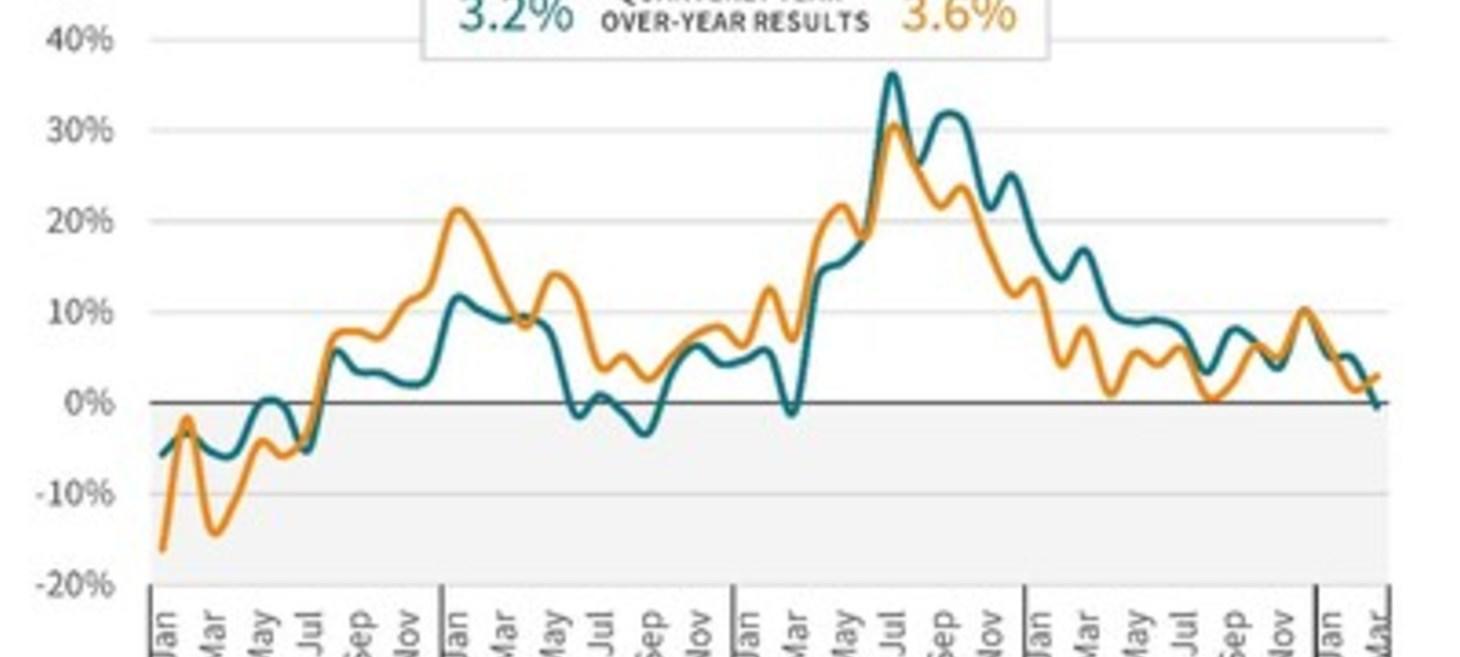
Auto Insurance Shopping and New Policy Growth Registers "Warm" on the Q1 LexisNexis® U.S. Insurance Demand Meter
U.S. auto insurance shopping and new business growth shifted from "Hot" to "Warm" in the first quarter of 2026 in the latest U.S. Insurance Demand Meter from LexisNexis® Risk Solutions.
While year-over-year (YOY) shopping growth decreased to 3.2% and new policy growth dropped to 3.6%, shopping was still significantly elevated relative to historic levels, even with Demand Meter readings cooling.
Key Takeaways
- Shopping Growth Shifts to "Warm": Quarterly year-over-year U.S. auto policy shopping growth slowed to 3.2% in Q1 2026, even turning negative in March, which was down from the increase of 6.9% in Q4 2025.
- New Policy Growth Returns to "Warm": New policy growth reached 3.6% for the quarter, down from the 7.1% increase in Q4 2025, which sat closer to levels seen in mid-2025.
- Older Shoppers Continue to Lead Growth: Policyholders aged 66 and older led all age cohorts for the 13th consecutive quarter, with shopping growth rising 7.1% year-over-year.
- Direct Channel Remains Strongest, Exclusive Channels Continue to Grow: The direct channel has the highest growth at 9.4%, while the exclusive agent channel grew 5.6%, up from 5.3% in Q4 2025, and the - independent agent channel contracted -7.9%.
- Annual Shop Rate Reaches New High: At the end of Q1, 47.3% of policies-in-force had been shopped at least once within the previous 12 months, the highest rate recorded since the Insurance Demand Meter began tracking in 2020.

The Big Dog Is Off the Tech Porch: State Farm as ‘Next Gen Good Neighbor’
You’d have to roll back the calendar a few decades to find a time when competitive moves by the nation’s biggest auto and home insurer were described with the phrase, “The big dog is off the porch.”
Still, against the backdrop of competition surging in the personal lines insurance market, it was hard for this “mature” journalist not to draw a parallel to the price wars of the late 1990s and AI wars that seem to be revving up in 2026 when reading today’s State Farm media statement detailing the carrier’s “Next Gen Good Neighbor” vision.
The statement, as well as blog items posted on State Farm’s website last week from President and Chief Executive Officer Jon Farney and from Joe Park, executive vice president and chief digital information officer, promise a future-ready carrier that will focus “on even faster and simpler claims service; more competitive prices that match price to risk; and data-driven underwriting.” STORY CONTINUES

American Property Casualty Insurance Association (APCIA) -- THE COST OF LIVING IS RISING: LEGAL SYSTEM ABUSE IS A MAJOR, OFTEN OVERLOOKED REASON
BACKGROUND
Americans are struggling with higher prices for everyday necessities – from groceries and gas to housing and insurance. One major factor often missing from the conversation is legal system abuse.
Experience the full interactive Multichannel News Release here
When the civil justice system is exploited for profit instead of fairness, the costs don't stay in the courtroom. They ripple through the economy—driving up insurance premiums, increasing the price of everyday goods and services, and reducing affordable insurance coverage options for families and small businesses.
WHY IT IMPACTS EVERYONE
Legal system abuse functions like a hidden cost-of-living tax on households and businesses. Excessive litigation and rising legal costs force businesses to spend more just to operate – and those costs are ultimately passed on to consumers. As a result, the U.S. tort system costs the economy:
Millions of jobs - Hundreds of billions of dollars in lost economic output - Higher prices and reduced purchasing power for households
For families, that adds up to nearly $6,000 per household every year in higher prices and fewer choices.
These costs show up where people feel them most— at the grocery store, at the gas pump, at their doctor's office, and in monthly insurance bills.
Climate/Resilience/Sustainability

Mercury Insurance Announces Strategic Investment in BurnBot to Advance Wildfire Mitigation and Make Insurance More Affordable and Available
Mercury Insurance (NYSE: MCY) today announced a strategic investment in BurnBot, a wildfire mitigation technology company.
The investment reflects the Company's proactive approach to reducing wildfire risk before it turns into loss and is part of Mercury's broader effort to strengthen community resilience and support long-term insurance availability and affordability in wildfire-prone regions, particularly in California.
As insurers, communities, and policymakers continue to grapple with the challenges of obtaining affordable home insurance in wildfire risk areas, Mercury is leaning into solutions that can reduce risk. The Company is pairing real-world mitigation with new ways of thinking about how to better respond to a dynamic environment with increasing uncertainty.
BurnBot develops and operates robotic, data-driven systems designed to carry out hazardous fuels reduction and vegetation management at scale. The company works with public agencies, utilities, and communities to reduce wildfire risk across the wildland-urban interface.
Through this investment and partnership, Mercury and BurnBot will explore risk reduction strategies for communities facing wildfire risk with the goal of helping them become safer and more insurable over time.
Financial Results
Munich Re Q1 net profit jumps 57% on lighter major-loss burden | Reinsurance Business
A year after wildfires bruised results, the reinsurer is back on the front foot
Munich Re's first-quarter results showed a 57% jump in net profit to €1,714 million, with the reinsurance business lifted by a lighter major-loss burden as the group recovered from a year-ago period weighed down by the Los Angeles wildfires.
The figure came in roughly in line with the €1,729 million analyst consensus.
The total technical result climbed to €2,676 million from €2,054 million, while the operating result rose to €2,230 million from €1,465 million. Insurance revenue from contracts issued slipped to €15,018 million from €15,811 million on adverse currency translation.
Telematics, Driving & Insurance

Arity and Experian give carriers greater access to consumer‑consented driving intelligence - Arity
Arity and Experian deliver scalable access to consumer driving intelligence, helping insurers enhance risk assessment and pricing.
New partnership brings driving behavior insights into the insurance shopping experience more seamlessly and at greater scale
Arity, a mobility data and analytics company, and Experian, a global data and technology company, powering opportunities for people and businesses around the world today announced a partnership that connects Arity’s insurance‑grade driving intelligence with Experian’s insurance marketplace — giving auto insurance carriers a faster, more scalable path to incorporate driving behavior into quoting and qualification workflows.
Research shows three out of four consumers say they’re open to sharing their driving score for a personalized insurance quote. The barrier to telematics adoption isn’t consumer willingness — it’s access and education. This partnership addresses that gap by starting with consumer education and consent, then delivering driving intelligence where carriers already work with Experian.
“Driving behavior is one of the most valuable signals in insurance, but until now, scaling it has required carriers to build their own programs from scratch,” said Gary Hallgren, President at Arity. “This partnership changes that. By connecting consumer education with FCRA‑compliant driving intelligence at the point of shopping, we’re giving carriers something they haven’t had before — scalable, carrier‑agnostic behavioral insight without the buildout.”
Cyber Risk

Google warns: for the first time, hackers used AI to find and exploit a security flaw
Cybercriminals have used artificial intelligence to discover and weaponize a previously unknown software vulnerability – the first confirmed case of its kind – Google revealed Monday.
*Google's Threat Intelligence Group (GTIG) *detailed the finding in a report documenting an accelerating trend: malicious actors are no longer just experimenting with AI as a research aid, but are beginning to embed it directly into offensive operations.
"Frankly, the details of this event are not as important as the evidence that the era of adversary use is here," John Hultquist, chief analyst at Google Threat Intelligence Group, wrote in a LinkedIn post Monday. "We believe this is the tip of the iceberg. Other AI-developed zero-days are probably out there."

IMF warns AI cyberattacks could trigger global financial crisis
IMF has warned that increasingly sophisticated AI-powered cyberattacks could threaten the stability of the global financial system
Evermore sophisticated AI-powered cyberattacks could threaten the stability of the global financial system, The International Monetary Fund (IMF) has warned, as regulators race to contain a new generation of threats.
In their new report, the IMF said extreme cyber incidents could spark liquidity pressures and solvency concerns across banks and financial institutions.
The lender warned that AI was dramatically lowering the cost and time needed for hackers to identify and exploit vulnerabilities, increasing the risk of systemic financial shocks.
“Extreme cyber-incident losses could trigger funding strains, raise solvency concerns, and disrupt broader markets,” the IMF said.
The warning comes amid growing concern over powerful new AI systems capable of autonomously identifying software weaknesses and launching complex cyberattacks. News Updates
Last month, AI firm Anthropic alarmed governments and regulators after early testing of its forthcoming Mythos model reportedly showed it could uncover vulnerabilities across major software systems with unprecedented speed.
AI in Insurance

AM Best survey finds rapid AI uptake in insurance sector despite structural barriers - Reinsurance News
AM Best, a global credit rating agency specialising in the insurance sector, has surveyed carriers and managing general agents (MGAs) to evaluate the growing influence of artificial intelligence (AI) across the industry.
The results indicate that almost 60% of respondents anticipate AI will materially reshape their business models within the next one to three years.
However, AM Best highlights that the most significant obstacles to adoption remain data readiness, cybersecurity and privacy concerns, and the difficulty of integrating AI with legacy systems.
The findings are set out in AM Best’s Best’s Segment Report, titled, Artificial Intelligence Appears to be Ready, But Most Insurers Are Not. Drawing on responses from more than 150 insurers and MGAs with a Best’s Performance Assessment, AM Best reports that adoption is already well underway, with 41% of organisations confirming active use of AI in core business functions.
Around one in five respondents stated that their organisations have reached an advanced stage of implementation, while most indicated that a formal AI policy is already in place. AM Best also notes that insurers appear less concerned about organisational resistance or third-party model risk, but continue to view system vulnerabilities and data quality issues as key challenges.
Autonomous Driving/Insurance
Waymo recalls nearly 3,800 robotaxis after driverless car drove through a flooded road
[Ed. note: The glass is half-full. Or I should say the roadway is half flooded. Good news that autonomous cars can be recalled and retooled to handle flooded roadways. Humans cannot be recalled and educating drivers not to drive through flooded roads remains hazardous]
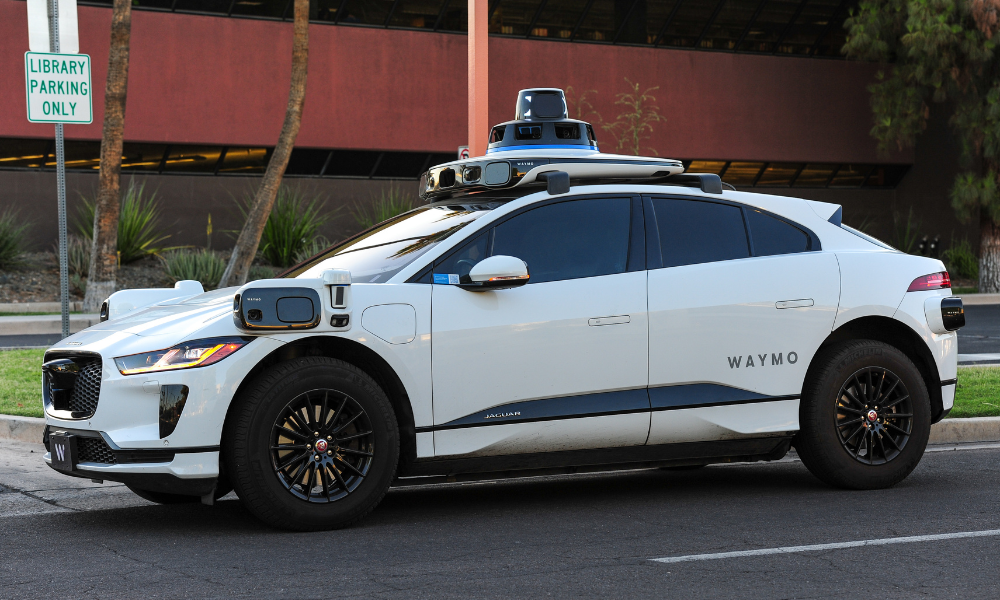
Waymo has initiated a voluntary recall of approximately 3,800 of its autonomous vehicles following a software flaw that allowed one of its driverless cars to enter a flooded roadway – raising fresh questions about how self-driving systems handle extreme weather conditions.
The U.S. National Highway Traffic Safety Administration confirmed the recall on Tuesday, noting it covers 3,791 Waymo vehicles equipped with the company's fifth and sixth generation automated driving systems.
The triggering incident took place on April 20, when an unoccupied Waymo robotaxi operating on a 40 mph highway approached a lane submerged in water. Despite its onboard sensors registering the flooding as potentially impassable, the vehicle slowed and continued through anyway. Reuters identified the location as San Antonio, Texas, where local reports noted the company briefly suspended service the following day amid heavy rainfall.
In filings submitted to the NHTSA, Waymo described a software condition in which vehicles could decelerate and then proceed through standing water on higher-speed roads – a scenario the system should have handled by stopping or rerouting entirely. The company acknowledged the gap and said a comprehensive software fix is still being developed.
InsurTech/M&A/Finance💰/Collaboration
Insurtech Startups Poised For Significant Investment Rounds In 2026 : Analysis
CB Insights has indicated that Insurtech startups are poised for historically large investment rounds in 2026, even as the sector confronts a sharply contracting pipeline of fresh opportunities. According to CB Insights’ latest analysis, the median deal size climbed to $10 million in the first quarter—nearly twice the $5.3 million peak recorded during the 2021 funding surge.
Yet overall transaction volume hit a decade-low of just 81 deals, the smallest quarterly tally since mid-2016.
CB Insights also mentioned in the research report that total capital deployed reached $1.6 billion, slightly above the quarterly average since 2023, signaling that money remains available but is concentrating on fewer, more mature players.
This divergence highlights a deeper structural challenge: insurtech is lagging the rest of the venture ecosystem.
Among companies that closed funding in Q1, 82 percent will not be positioned to raise again for at least six months—17 percentage points longer than the broader venture market average.
The wait is the longest when compared with AI, digital health, and fintech verticals. Meanwhile, the global pool of active insurtech investors continues to shrink.
The number of firms completing four or more equity investments in the space fell to a nine-year low in 2025, and the count of active investors in Q1 2026 dropped to its lowest level since late 2020.
The consequences are visible in company performance. MORE ANALYSIS
Recommended Events

Collision Industry Electronic Commerce Association (CIECA) announced that its 17th annual conference, CONNEX 2026
The Collision Industry Electronic Commerce Association (CIECA) announced that its 17th annual conference, CONNEX 2026, will be held at the Hilton Palacio del Rio in San Antonio, Texas, Sept. 29-Oct. 1.
This year’s theme is "The Rise of Software-Defined Vehicles: Collision Industry Impacts.” The event will be emceed by industry veteran Bill Garoutte. All industry stakeholders, including CIECA members and non-members, are invited to attend. Speaker List and REGISTER HERE
During the conference, thought leaders and industry experts will discuss where technology and businesses are headed and what the collision industry can do to prepare. A highlight of the conference will be a tour of the Toyota Texas manufacturing facility and Experience Center. The San Antonio facility is where Toyota manufactures Toyota Tundras and Sequoias. The event will also include a National Auto Body Council NABC Recycled Rides® vehicle gifting on Sept. 30.