
News

Trump task force recommends sweeping changes to FEMA — but not eliminating it
President Donald Trump's task force to recommend changes to FEMA approved a report Thursday that would not dismantle the disaster response agency — as some in the administration wanted — but would transfer many current federal tasks to the states, privatize flood insurance and release federal money to the states in the form of grants rather than reimbursements.
"Federal assistance should only be reserved for truly significant events that exceed state, local, tribal, territorial capacity and capability," said Michael Whatley, a member of the President's Council to Assess the Federal Emergency Management Agency and former chair of the Republican National Committee.
The council was charged to look deeply into how FEMA operates and make recommendations to Trump for improvements.
In its draft report, forwarded to Trump without objection, recommendations include establishing a common criteria to evaluate needs in advance rather than to assess damages after the storm, he said.
Grants for construction on things like homes and levees, designed to lessen the extent of damage, take about 27 months of application and review before local governments can receive federal funding, said Robert Fenton Jr., a former regional FEMA administrator.
Private insurers poised for bigger flood role under FEMA reform proposals
NFIP debt intensifies pressure for reform
The council’s proposal to move more policies into the private market reflects a growing view within the insurance sector that private carriers are better equipped to respond to evolving flood risks than the federally run NFIP.
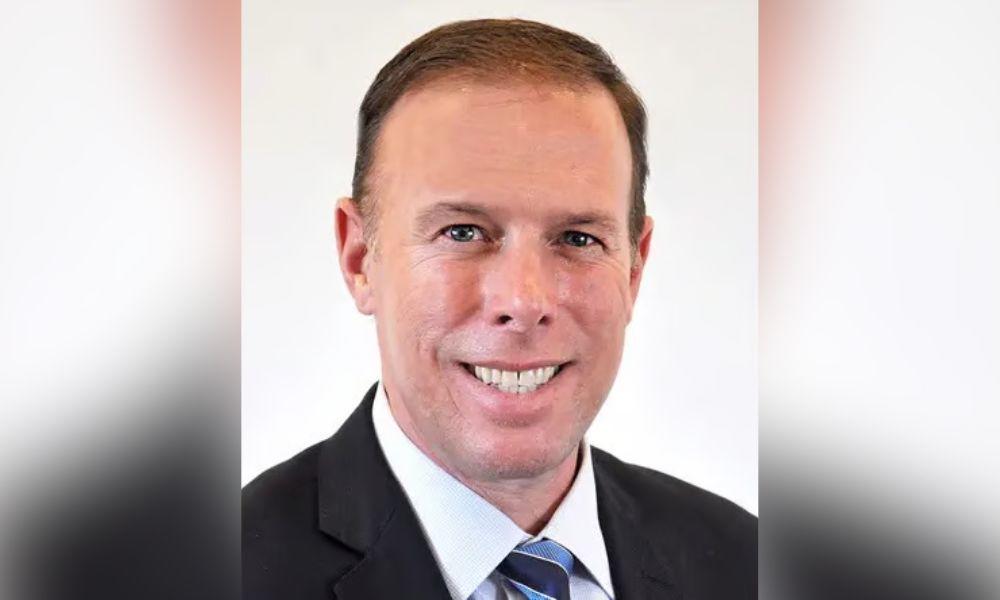
“Private carriers willing to step in and write flood risks have basically been a life preserver for this industry,” said John Dickson (pictured), president and CEO of Aon Edge. “The NFIP continues to struggle with pricing experience. It’s large, and it’s so large it makes it tough to move timely with changing needs.”
Private insurers, he added, have been able to respond more quickly to shifting weather patterns and emerging flood exposures. “I think the private industry is moving faster than the federal government can in that respect,” Dickson said. “When you can (price flood risk) precisely and accurately, I think you can have sharper conversations with customers and help them make better decisions.”
Climate/Resilience/Sustainability

Super El Niño could intensify Pacific hurricane season
There have only been five Super El Niños since 1950.
"Super" El Niño predictions are growing in certainty, and it could mean a very different Pacific hurricane season this year.
The National Oceanic and Atmospheric Administration says there's a 60% chance of an El Niño developing between May and July and a 25% chance of a Super El Niño by the end of the year. Other models say a Super El Niño is a near certainty.
El Niños warm the water in the central and eastern equatorial Pacific Ocean and can disrupt weather patterns for months. A Super El Niño raises water temperatures a few degrees higher, potentially intensifying those weather changes.
There have been 27 El Niños since 1950, happening about every three to four years, but there have only been five Super El Niños in that same period. The last Super El Niño was in 2015-2016.
While a Super El Niño could help reduce hurricane activity in the Atlantic, it could create more hurricanes in the Pacific. The Eastern Pacific hurricane season starts this Friday.
Research

Most Are Overcharged for Property Insurance, Vanderbilt Study Says
A new analysis suggests Americans are being overcharged by $150 billion annually to insure their homes, autos and businesses — and it proposes federal guardrails so that a public beset by affordability pressures could see savings.
The analysis by the Vanderbilt Policy Accelerator obtained exclusively by The Associated Press details how insurers are paying out less on claims after an accident, natural disaster or other misfortune than they did decades ago. For every $1 collected in premiums, insurers reimbursed 62 cents for claims in 2024, down from an average loss ratio of 80 cents in the 1980s and 1990s. READ ON

Economic policy risks eclipse conflict concerns in WTW's latest survey - Reinsurance News
Willis, a WTW business, has released its 2026 Political Risk Survey, highlighting that risks driven by economic policy continue to outweigh those stemming from international conflict, despite the survey being issued as conflict in the Middle East escalated.
According to Willis, respondents selected tariffs over international violent conflict as a top political risk, with 61% believing the impacts of rising tariffs are the most difficult to manage.
61% also reported that their company had experienced a negative financial impact from tariffs.
Sam Wilkin, Director of Political Risk Analytics at Willis, said, “It’s surprising that while conflict in the Middle East dominates the headlines, the effects of tariffs continue to dominate business concerns.
“But this finding is in keeping with other trends portrayed by our survey sample. The political risk map of 2026 is not simply a map of war zones. It is a map of contested systems – trade systems, technology systems, information systems and domestic political systems.
AI in Insurance

Claude Mythos, silent AI and the insurance industry’s next inflection point
In April 2026, senior finance ministers, central bankers and regulators from multiple jurisdictions engaged in a series of urgent discussions at IMF meetings in Washington D.C.
At this point, it has been well publicised that the subject was not inflation, geopolitics or market volatility, but a new, unreleased artificial intelligence system known as Claude Mythos ("Mythos") Preview, developed by American AI company Anthropic as part of its wider Claude AI system. Mythos is already being treated by governments as a potential systemic risk in cyber, capable of reshaping the threat landscape on which modern financial systems, and the insurance policies that underpin them, depend.
Mythos is an example of a growing class of so‑called “frontier AI” systems. Unlike conventional generative AI tools, it is claimed that Mythos has demonstrated an ability to autonomously identify and exploit vulnerabilities within complex software environments with minimal human input.
According to Anthropic and independent testing by the UK’s AI Security Institute, preview versions of the system surfaced thousands of previously unknown security flaws across all major operating systems and web browsers, including weaknesses that had remained undetected for decades despite extensive testing, without the reliability of that testing previously being questioned.
Following early demonstrations of Mythos’ performance, Anthropic chose not to release the AI system publicly, instead granting limited access to selected technology companies and financial institutions under its “Project Glasswing” initiative.

Willis’ Haitsch: Insurance Industry Swiftly Adjusts to the Data Center Boom
The insurance market is “scaling along with the opportunity” presented by a massive boom in data centers to meet the power demands of artificial intelligence, said George Haitsch, North American tech, media, and telecommunication leader at broker Willis.
Speaking at RIMS RISKWORLD in Philadelphia, Haitsch told Insurance Journal the infrastructure AI needs for computational power has “driven an increase in the need for significantly enlarged data centers,” and the insurance industry is stepping up to meet the specialized risks associated with data centers—financing, managing, constructing, and operation.

Can artificial intelligence truly transform specialty insurance? | Markel
AI is reshaping specialty insurance—but only when used with clear ownership and governance. Markel examines how AI can improve underwriting, claims and economics.
By Christian Stobbs, Chief Strategy and Corporate Development Officer, Markel Insurance
Earlier this year, an essay by technology investor and former AI founder Matt Schumer gained wide circulation for its claim that machines can now perform much of the technical core of knowledge work (“Something Big Is Happening”). The claim was provocative, and not entirely wrong, but it stopped short of the harder question. Capability alone does not determine outcomes; can AI create durable economic value inside real businesses, under real constraints?
This question is particularly pertinent for specialty insurers. We operate in a highly regulated industry with a complex value chain and layers of legacy technology. Judgment, accountability, pricing discipline, claims governance, and trust are not peripheral considerations—they’re the business. The real question, then, is not whether AI is a can-do-it-all machine, but whether it can be embedded in ways that genuinely improve how specialty insurance works.
Viewing AI as a capability, not a system Part of the industry’s uneven response to AI reflects a deeper misunderstanding of its form and function. AI is still too often approached as a technology project that’s owned by IT, delivered through central programs and then handed to the business.
State News
Farmers Insurance® Receives Approval for New Homeowners Insurance Rating Plan in California, Includes Sizable 22% Home/Auto Package Discount
To strengthen its ongoing commitment to California, Farmers Insurance® has been granted approval by the California Department of Insurance to introduce a new homeowners insurance rating plan, which incorporates elements from Insurance Commissioner Ricardo Lara's Sustainable Insurance Strategy.
Effective September 15, 2026, for new and existing customers with Smart Plan Home or Next Generation Home policies, the rating plan will include a significantly enhanced Home/Auto bundling discount (increasing from 15% to 22%) and savings for homeowners who implement various residential wildfire mitigation measures. Overall, the new homeowners insurance rating plan will adjust rates upwards by a statewide average of 1.5%. However, new or existing customers who choose to bundle will generally experience decreasing rates.
"We continue to see encouraging signs that the California insurance marketplace is strengthening and we want to be well-positioned to grow and provide improved coverage offerings to California consumers," said Behram Dinshaw, president of personal lines for Farmers Insurance. "Together, our new homeowners and auto rating plans provide consumers with multiple opportunities to save, especially through increased discounts for bundling policies."
Allstate Introduces ‘Just Enough Coverage’ Endorsement in Connecticut - ERRRA
Allstate submitted a Connecticut filing introducing its optional “Just Enough Coverage” personal auto endorsement, a product designed to reduce premiums by limiting coverage for permissive drivers and undisclosed household operators. The filing was submitted on May 5, 2026, with a requested effective date of October 13, 2026.
Under the endorsement, permissive drivers and undisclosed operators would only receive Connecticut’s statutory minimum liability limits for bodily injury and property damage coverage. The endorsement also removes collision, comprehensive, and other vehicle damage protections when the insured vehicle is operated by those drivers.
The filing defines undisclosed operators as household residents with driver’s licenses who are not listed or excluded on the policy. Permissive drivers are individuals using the insured vehicle with permission but who are not listed on the declarations page.
The endorsement also introduces exclusions tied to hazardous materials transportation and autonomous vehicle operation. Allstate states there would be no coverage for losses occurring while an autonomous vehicle is operating without active human monitoring or control.
2026 Outlook/Predictions
What is State Farm building for 2030? | Insurance Business
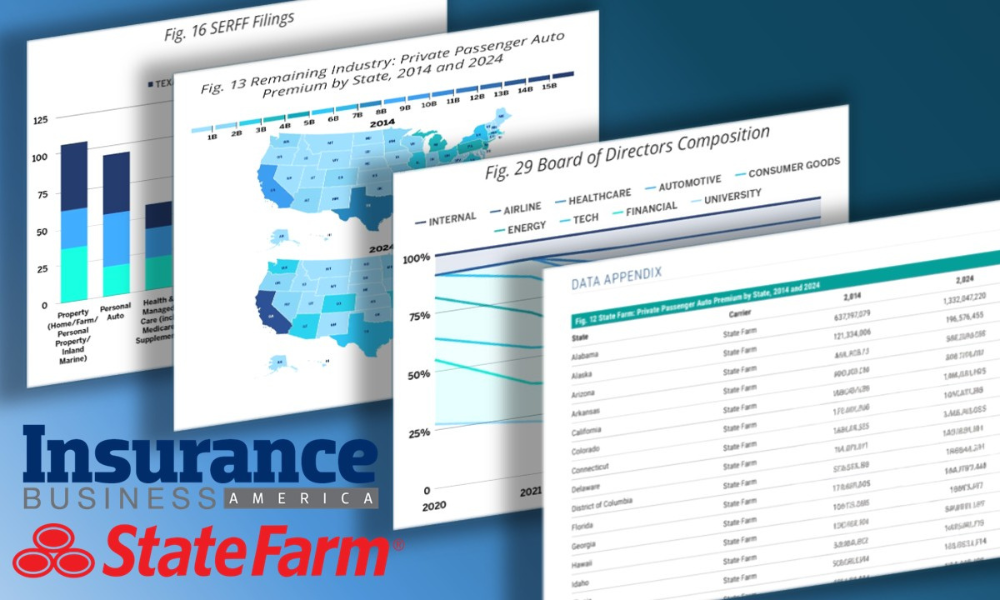
The State Farm Carrier and Market Review examines this transformation in detail, moving beyond headline innovation into the structure and direction of the carrier’s long-term strategy.
The latest IB Industry Report shows a clear pattern at the carrier: capital is being deployed toward technologies embedded in everyday risk environments. Telematics, AI-driven claims systems, mobility platforms, and data-rich underwriting tools are becoming the operational core of State Farm’s business, with selection and scale unlike peers.
Since 2019, State Farm has invested in 26 venture-backed companies with a clear concentration in automotive and insurance technology. Automotive-focused firms alone account for roughly 37% of total venture-linked funding, while insurance technology adds another $420 million. This strategy accelerated sharply in 2023, when 90% of companies backed by mutual developed auto and insurance platforms, including autonomous vehicle systems, telematics infrastructure, and cloud-based claims software. At the same time, State Farm has emerged as one of the leading holders of AI-related patents in the insurance sector, with more than 100 unique IDs granted or published in 2025 alone (each individually listed in the report).
Together, these investments reflect a deliberate buildout of data-driven infrastructure designed to support real-time underwriting, automated claims handling, and integration with next-generation vehicle ecosystems.
InsurTech/M&A/Finance💰/Collaboration

TruVideo Expands Video Intelligence Insurance Workflows
TruVideo (Wellesley, Mass.) has expanded its TruVideo Clarity platform into insurance workflows, introducing video intelligence tools intended to support underwriting, claims handling and fraud prevention.
The company says the platform captures verified video documentation from applicants, policyholders, repair facilities and third-party contractors through guided video workflows integrated into underwriting and claims systems.
TruVideo says the platform is designed to help insurers document baseline property conditions at policy inception, support remote underwriting reviews and reduce disputes involving preexisting damage.
The company also says structured video documentation can reduce the need for physical inspections and claim site visits while supporting faster claims verification and catastrophe response.
“With TruVideo Clarity, we are leveraging our expertise in the automotive industry to help transform claims operations and protect organizations from fraud,” comments Joe Shaker, CEO and Co-Founder, TruVideo. “Embedding verified video with structured data into underwriting and claims processes ensures that visual documentation becomes part of the permanent policy record.”
Podcast Sponsor

Audio Version - 'Connected: The Podcast' --- Sponsored by Pulse Podcasts
The ‘Connected’ Podcast by Alan Demers and Stephen Applebaum, is a condensed audio version of the day's ‘Connected' newsletter, a daily scan of all the happenings in the world of Insurance & InsurTech News.
Pulse Podcasts: Introduce a new way for your audience to hear your voice! We are a podcast creation service that helps businesses turn their written content, like blog posts and news articles, into beautiful podcasts. Our platform writes the script, records the voices, and mixes the audio to create engaging content for your audience. It's affordable and has super-fast turnaround!
LISTEN AND SUBSCRIBE BELOW