
News
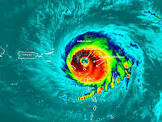
2026 hurricane season: Could another quiet season reduce home insurance rates?
2026 hurricane season: Could another quiet season reduce insurance rates?
Last year's hurricane season, although forecasted to be above average, brought no landfalls, a much-needed reprieve for home insurance companies and homeowners alike. Another year without a major hurricane could ease the strain that high home insurance rates have placed on homeowners; early predictions say that could be the case, Insurance.com reports.
The National Oceanic and Atmospheric Administration (NOAA) has released its prediction for a below-average hurricane season in 2026, which is in line with predictions from the Colorado State University and The Weather Company. After years of hurricane-driven rate increases and market upheaval in high-risk states, relief could be on the horizon.
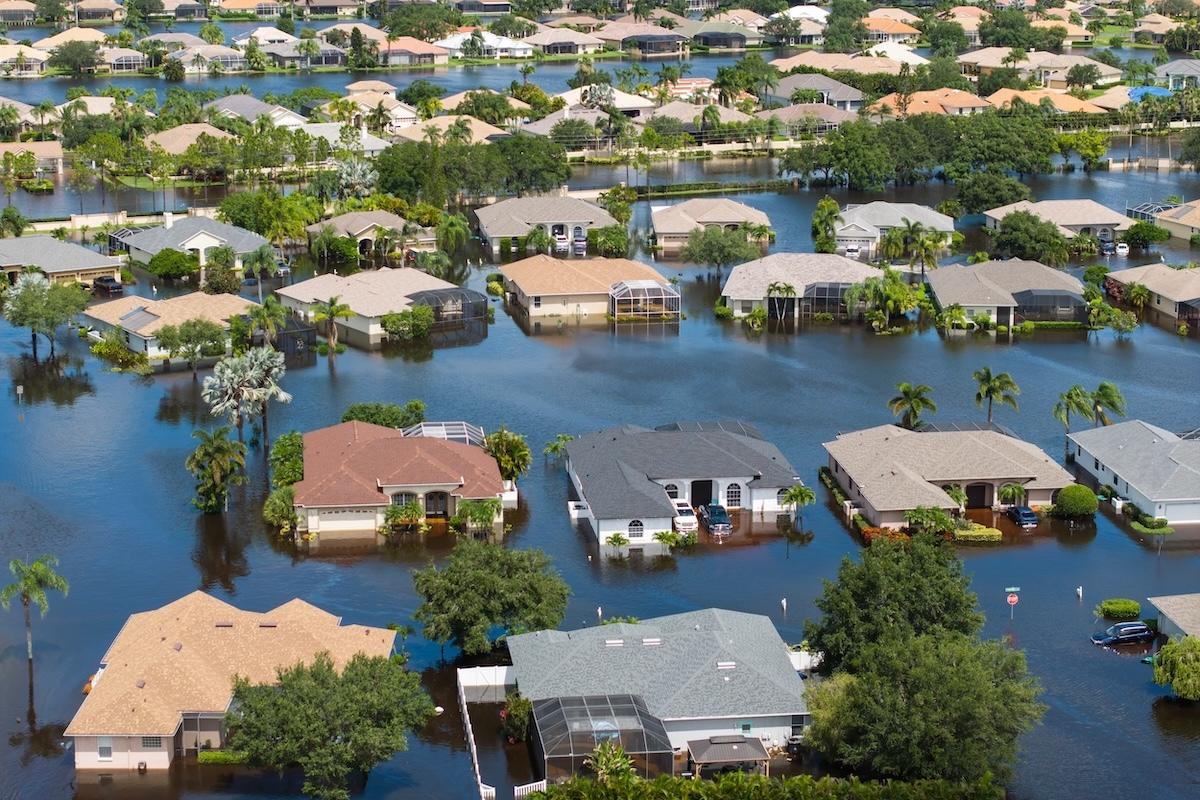
Property insurance experts are cautiously optimistic ahead of Florida hurricane season - Orlando Weekly
A “below-normal” year for storms could further a positive trend for Florida’s insurance market, industry experts contend.
But because of Florida’s location between the Atlantic and Gulf, homeowners will always be at risk, which will temper any potential reductions to premiums.
Heading into the Atlantic storm season that begins June 1, insurance experts said legislative reforms in 2022 and 2023 targeting “frivolous” lawsuits, along with a year without any storm hits, have allowed some “softening” in homeowners insurance prices, growth in new carriers into the state, and a fall in the policy count by state-backed** Citizens Property Insurance** from 1.41 million policies in October 2023 to 336,000.
“We are just becoming more and more resilient in the state. So, I’m kind of optimistic that, as we see the next storm, we are going to be in better shape than we have been in the past,” said Patricia Born, who is the Midyette Eminent Scholar in Risk Management and Insurance at Florida State University’s Herbert Wertheim College of Business.
The industry is further helped right now from a “soft cycle” for reinsurance, the insurance for insurers.
State Farm reduces base compensation for 19,000 agents
State Farm has told its 19,000 agents it is changing its compensation and benefits contract for them. The Bloomington-based company is also cutting benefits for retired agents.
State Farm has told its 19,000 agents it is making significant changes to the compensation and benefits package for agents. Several agents have said this will substantially reduce their earnings.
The Bloomington-based company is also cutting benefits for retired insurance agents. State Farm briefly mentioned the changes last month at the agency convention and sent a pre-recorded video and follow-up email Monday.
State Farm is terminating existing contracts with agents and moving to a single style of contract, said an agent in another state and confirmed by the company. There are currently several types in force, depending on the length of time as an agent, said a retired agent and confirmed by a current one. A former agent who did not wish to be named told WGLT that base commission compensation will fall 35-40% depending on the type of contract and the agent's amount of existing business. A current agent confirmed some of that could be earned back with agents writing more business and meeting company targets.
State Farm disputed the percentage of reduction, calling it "speculation."
"These changes enable agents to grow and help more customers," said State Farm in additional statements offered after publication of this story.

As Construction Booms, Insurers Draw Sharper Lines Between Good Risks and Bad
Soaring project values, catastrophe losses, and nuclear verdicts are reshaping coverage terms across property, casualty, and surety lines for the construction sector, according to Aon.
Global construction activity is expected to grow from roughly $16 trillion in 2025 to nearly $22 trillion by 2030, fueled by data center buildouts, energy transition investments and resilient infrastructure demand, the report found.
That growth is reshaping insurance needs across property, professional liability, casualty and surety lines, but not uniformly. Market conditions vary sharply by region, project type and risk class, with insurers competing aggressively for loss-free, well-managed accounts while applying stricter scrutiny to riskier segments, according to Aon.
Property Insurance: Catastrophe Exposure the Defining Variable
Construction property markets have stabilized broadly following a relatively mild 2025 catastrophe year, but natural catastrophe exposure continues to set the terms for coverage availability and pricing in high-hazard regions, the report said.
Total economic losses from natural disasters reached approximately $260 billion in 2025, with nearly 55% occurring in the U.S., the report said. Severe convective storms and wildfires were the dominant loss drivers domestically, while Europe contended with major summer storm outbreaks and the Asia-Pacific region absorbed earthquake, flooding and tropical cyclone impacts
Research
Global P&C insurance market stabilises as aggressive rate hikes fade: Allianz Research
The global property and casualty (P&C) insurance market is moving from a pricing boom towards normalisation after a period of aggressive rate hikes
The global property and casualty (P&C) insurance market is moving from a pricing boom towards normalisation after a period of aggressive rate hikes, according to Allianz Research’s latest “Global Insurance Report.”
The insurer’s data shows that global P&C premiums grew by +3.8% in 2025, well below both the prior year’s +8.5% surge and the segment’s 10 year compound average growth rate (CAGR) of +5.6%. According to Allianz, this slowdown comes as pricing cycles matured and claims inflation began to stabilise.
While North America remained the industry’s dominant market, accounting for 52% of global P&C premiums, its growth plummeted to +2.2% from +9.7% in the previous year. Western Europe remained comparatively resilient with growth of +5.3%, while the Asian market was less dynamic expanding by only +4%.
Overall, the data finds that the global insurance industry, so P&C and life and health, is estimated to have grown by +7.1% to EUR6.9trn in 2025, adding EUR456bn to the global premium pool.
Global insurance market grows 7.1% - Allianz
The global insurance industry expanded by 7.1% in 2025, adding €456 billion to the global premium pool and bringing the total to €6.9 trillion, according to a new report published this week by Allianz Research.
The “Global Insurance Report 2026”, which analyses developments in insurance markets worldwide, found that while growth moderated from the 9.4% recorded in 2024, it remained above the industry’s 10-year compound annual growth rate of 5.6%.
Life insurance remained the largest segment at €2,861 billion, followed by property and casualty (P&C) at €2,320 billion and health at €1,688 billion.
The P&C segment slowed sharply, growing by only 3.8% in 2025 – well below both the previous year’s 8.5% expansion and its 10-year average of 5.6% – as pricing cycles matured and claims inflation stabilised. North America, which accounts for 52% of global P&C premiums, recorded growth of just 2.2%, down from 9.7% the previous year.
Commentary/Opinion
Billionaire Mark Cuban Asks Why Insurance Companies Pay $2,500 for an MRI When ‘a Center Down the Street’ Only Charges $350
[Ed note: Great question Mark Cuban. The P&C insurance industry poses the same question about MRI's and other diagnostic costs.]
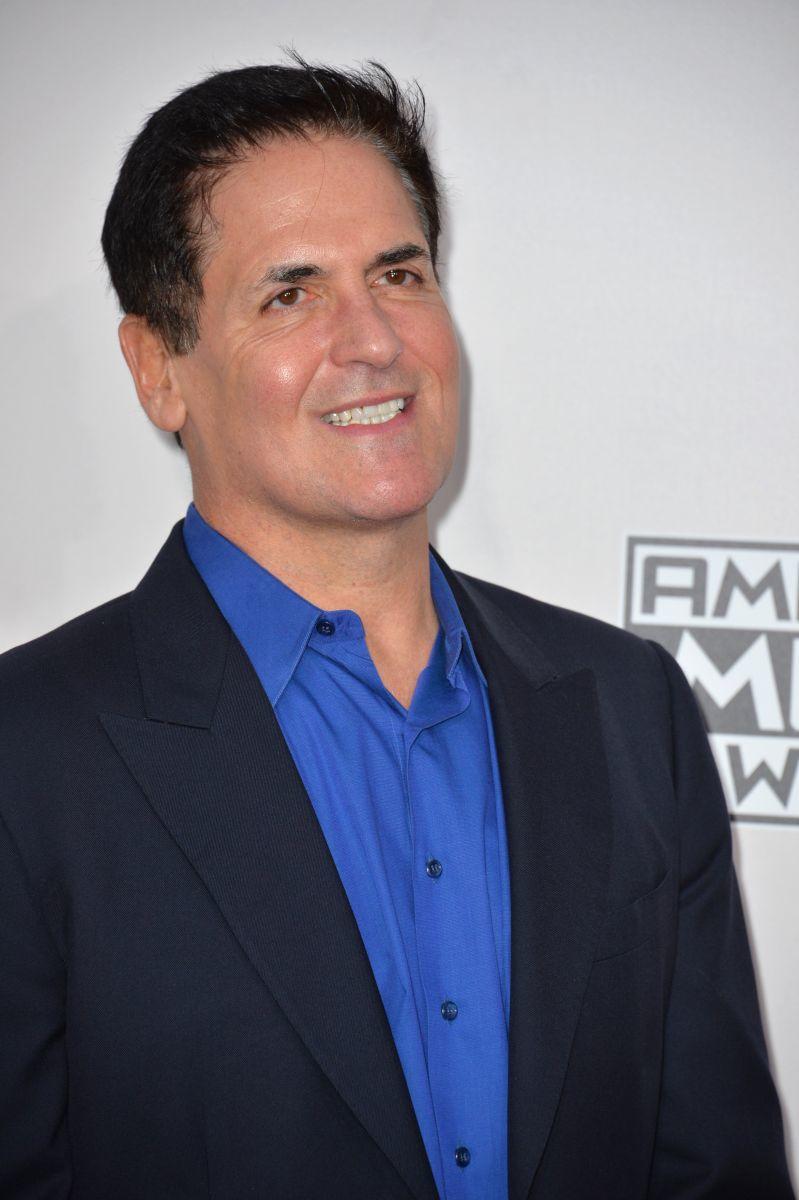
Mark Cuban questioned why insurers pay $2,500 for MRIs priced at $350 elsewhere. The debate exposed huge gaps in health care pricing.
Mark Cuban thinks America’s health care system can somehow turn the exact same MRI machine into a luxury item depending on which building a patient walks into.
The billionaire entrepreneur raised that question in a Jan. 10 post on X after responding to a physician arguing insurers are often blamed unfairly for rising health care costs.
“Drug spend, incl hospital drugs is only 14% of total HC costs,” the physician wrote. “Blaming insurance is convenient, but ins don’t set prices; they pay the bills providers submit. HC costs are high bc provider charges are high & rising fast. If you want to control costs, focus on providers, not ins.”
Cuban pushed back with a question that quickly became the center of the discussion: “Explain to me why the insurance company will pay $2500 for an MRI when there is a center down the street that will do it for $350?”
The exchange highlighted one of the most frustrating realities in American health care pricing. Two patients can receive nearly identical MRI scans using similar equipment, yet one might pay a few hundred dollars at an outpatient imaging center while another receives a bill for several thousand dollars through a hospital network.
Opinion | E-bikes? Yikes!
In my neighborhood, it has become increasingly common to see young people, plenty younger than 16, flitting about on e-bikes and motorized scooters.
In my neighborhood, it has become increasingly common to see young people, plenty younger than 16, flitting about on e-bikes and motorized scooters.
Helmetless, they careen into traffic, jam down uneven sidewalks shouldering heavy school bags, and in some cases, even putter along the margins of roads that would classify as freeways.
The parent in me winces at every instance; fear, loathing and anger in the mix.
I also sense the joy of being young and flying around doing whatever you want to do on whatever contraption is available to you. Born to be wild, and all of that.
But let us now talk about risk and insurance.
The number of lawsuits involving e-bikes is rising. Municipalities, product manufacturers and even the parents of errant e-bike riders are in the crosshairs.
I bemoan the death of any child who hops on an e-bike and is run down on their way to school. It has happened. READ ON
Announcements
Nearmap Expands Roof & Exterior Measurements as P&C Insurers Accelerate Claims Modernization
Nearmap, the leading property intelligence provider, today announced new enhancements to its as insurers increasingly adopt connected property intelligence. With more than one million roof and exterior measurements processing annually and expanded roof measurement coverage now reaching 100% of insurable properties, Nearmap is helping carriers accelerate claim settlements, improve catastrophe scalability, reduce loss adjustment expense (LAE), and increase adjuster efficiency.
Nearmap Roof & Exterior Measurements combines proprietary aerial imagery with 3D-enabled measurement technology to deliver fast, accurate, and defensible property intelligence directly within Verisk XactAnalysis® and Xactimate®, or through API integration. Measurement reports in PDF format include precise measurements, 3D property models, sketch diagrams, and historical aerial imagery, empowering adjusters to create estimates confidently.
AI in Insurance

AI adoption is outpacing governance frameworks, Willis warns
Artificial intelligence is being embedded across insurance and business operations faster than governance frameworks can keep pace, creating an accountability gap that is reshaping how risk is created, distributed and amplified, according to a new research from Willis.
The findings, published in Willis' latest Risk and Resilience review, show more than 700 million people now use leading AI systems every week, with the technology woven into operational infrastructure, customer interactions and executive decision-making. The report argued that the central challenge is no longer whether to adopt AI, but whether organizations can do so responsibly - and whether the insurance market has the tools to respond.
Spike Lipkin, chief AI officer at Willis, said the speed of adoption is creating a structural vulnerability.
"AI is already reshaping the risk landscape in real time, but many organizations are moving forward without fully understanding the systems they rely on," Lipkin said. "That creates a dangerous gap between innovation and oversight. Business leaders need to recognize that this is no longer just a technology issue, but a governance, liability and trust challenge."
State News

California Senate passes post-disaster insurance claim reform
California lawmakers are continuing efforts to strengthen consumer protections for residential insurance following recent catastrophe losses, with the Senate approving SB 876, a wide-ranging insurance reform bill focused on claims administration and coverage transparency, on May 27. The measure now heads to the Assembly for further consideration.
"Families are navigating loss, claims, and uncertainty. There is real fear, frustration, and misinformation right now with the pace of recovery," California Insurance Commissioner Ricardo Lara, co-sponsor of the bill, said in a release when SB 876 was introduced. "We will measure success when people can recover without red tape and delays, get coverage on their own terms, and rebuild so they are out of harm's way in the future. While our focus is on insurance, recovery is multifaceted, not one-dimensional. Federal, state, local, and private coordination is required for a successful recovery."
The version of SB 876 passed by the Senate would require residential property insurers to offer extended replacement-cost coverage equal to at least 50% above dwelling and other-structure policy limits. If applicants decline the additional coverage, they would be required to sign an acknowledgment confirming the offer was presented. The proposal would also apply to California FAIR Plan policies where replacement-cost coverage is available.