
News

AI Tops Insurance Executive Priorities as Regulatory Concerns and Market Volatility Reshape the Risk Landscape
Artificial intelligence now dominates the strategic agenda for insurers, brokers and other industry stakeholders — reflecting a shift from aspirational planning to urgent operational necessity, according to the International Insurance Society’s 2026 Global Priorities Report.
The survey of insurance industry executives associated with the International Insurance Society, the Pacific Insurance Conference, The Institutes, Insurance Thought Leadership and the Insurance Information Institute found that 71% of executives cited AI as the top issues across all categories of business priorities.
The IIS report’s findings signal a year in which risk managers and their insurance partners will need to contend with fast-moving technological disruption, unpredictable financial markets and a regulatory environment in flux — all while grappling with persistent talent shortages and evolving social pressures on the civil justice system, the survey report said.
Regulation and Economic Uncertainty Take Center Stage
For the first time in five years, changes in regulation surpassed cybersecurity as the top political and legal concern among insurance executives, cited by 53% of respondents. The shift suggests that risk professionals and their insurers are recalibrating their attention toward an increasingly complex and fragmented regulatory landscape — one shaped by divergent governmental approaches to AI governance, climate disclosure and market conduct.
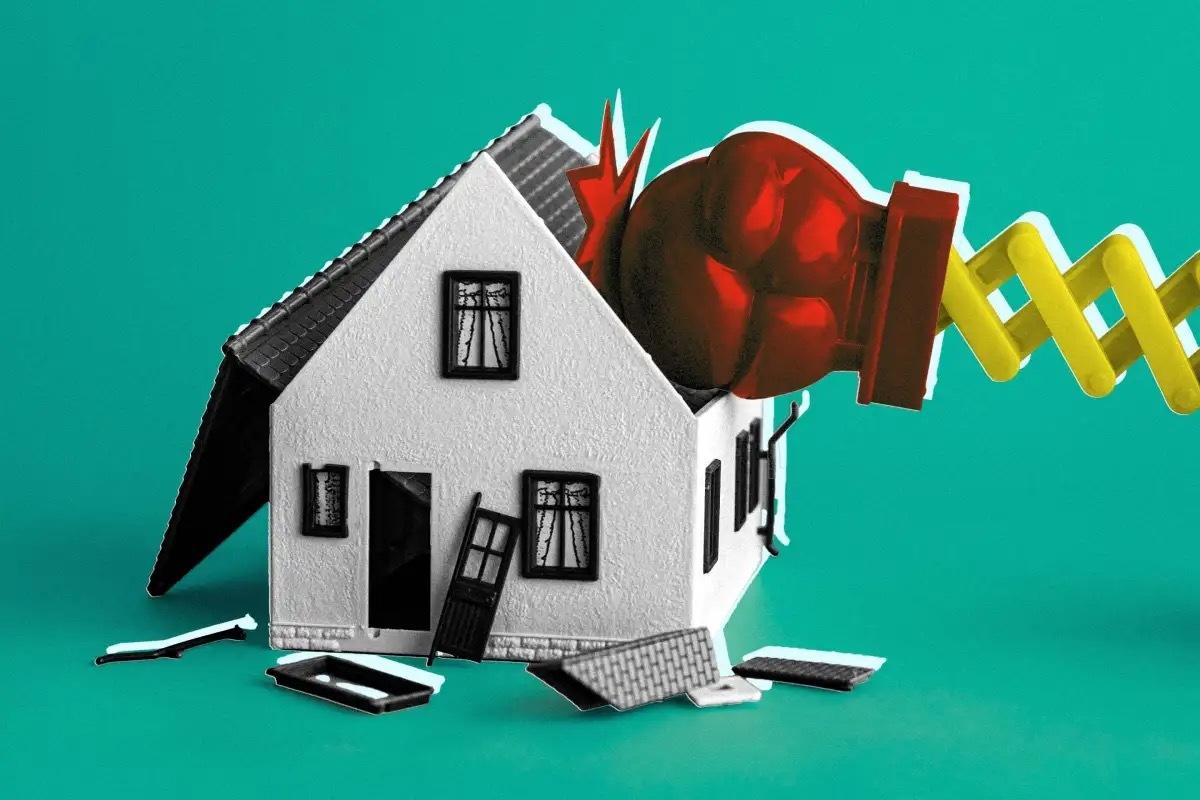
Home Insurance Premiums Expected to Surpass $3,000 This Year
If you're already struggling with the high cost of homeowners insurance, we've got bad news: Premiums are set to climb even higher this year.
A new report from insurance marketplace Insurify projects that homeowners will see a 4% increase in premiums by the end of 2026, bringing the average annual cost from $2,948 to $3,057 — with some states seeing even larger jumps. This is the fifth consecutive year of premium hikes: Since 2021, insurance costs have increased by 46%, three times faster than inflation during the same period.
Matt Brannon, senior economic analyst at Insurify, says the key reasons for the rapid rise are the increased intensity and frequency of extreme weather events, as well as higher home-building costs.
"Severe storms, which bring strong winds, hail and even tornadoes, are causing more destruction than in years past," Brannon tells Money in an email. "These events are driving up insurer losses, and they often respond by seeking higher premiums."
Extreme weather has caused nearly $3 trillion in damages across the United States since 1980, with most of the losses resulting from flooding, windstorms, heavy snow, tornadoes and wildfires. According to Brannon, the costs related to weather events in the U.S. now average about $150 billion annually, more than double the $63 billion incurred just 10 years ago. In 2025, fires in Los Angeles County alone led to $62 billion in insured losses.
But higher premiums are just one aspect of how homeowners insurance costs are changing. In the report, Insurify points out that insurers operating in states with an increased risk of severe weather often structure their policies so that homeowners bear a greater share of repair costs.
CCC Crash Course 2026 Report Finds Higher Severity and Record Total Loss Frequency
- New analysis highlights how affordability pressures, rising bodily injury costs and aging vehicles are reshaping the auto claims and repair landscape
- Total loss frequency reached 23.1% of claims, a new industry high
- Average paid bodily injury claim severity increased 10.3% year-over-year and 32% over four years
- There are 12 million less vehicles 6 years old or newer in operation as of Q3 2025 relative to 2020
- 28.3% of repairable estimates now include calibrations, reflecting increasing vehicle technology complexity
CCC Intelligent Solutions (CCC), a leading cloud platform powering the insurance economy, today released its 2026 Crash Course Report, titled “Complexity Compounds.” The report examines trends affecting the auto insurance and collision repair industry, including consumer affordability pressures, claim-filing behavior, vehicle fleet composition and repair complexity.
While underwriting results improved in 2025, the report finds the mix of claims is shifting. As higher deductibles and household financial pressures influence claim decisions, a larger share of claims entering the system have higher-severity outcomes.
Crash Course insights are derived from CCC’s national industry data spanning hundreds of millions of claims-related transactions processed through CCC’s platform, including auto physical damage and casualty claims data, supplemented by external automotive, economic and industry research.
“The claims environment continues to evolve in meaningful ways,” said Kyle Krumlauf, director of industry analytics at CCC and co-author of Crash Course. “Insurance coverage and claim filing behaviors have dramatically shifted as consumers react to an uncertain economic landscape. Combined with an aging vehicle fleet, advancing technology, rising repair complexity, and technician shortages, cost pressures across the ecosystem are likely to persist.”

Rising rebuild costs could leave homeowners underinsured
As rebuilding costs continue to rise, Gallagher is warning that many homeowners could be underinsured if their cover has not kept pace with the current cost of repairing or replacing a home.
According to the brokerage giant, the gap between insured values and actual rebuilding costs has widened as pressures build across the construction sector. Higher material prices, ongoing labour shortages, supply chain disruptions, and sustained demand for repairs after major weather events have all contributed to rising costs, making it harder for existing cover levels to keep up.
In this environment, reviewing sums insured becomes less of a routine task and more of a necessary check. Gallagher pointed to independent property valuations as a more reliable way to align cover with current rebuilding costs, rather than relying on broad inflation measures. These valuations are typically recommended at least every three years, though timing may vary depending on market conditions.
One common mistake is relying only on Consumer Price Index (CPI) increases when reviewing a home building policy.
Research
U.S. Roads Feel Less Predictable as Driving Behavior Worsens, According to New Nationwide Survey
Key Points
- Drivers say U.S. roads feel unpredictable as phone use, aggression and reckless driving continue to rise
- Stress and mistrust are growing on the road, with 4 in 10 drivers reporting stress and two‑thirds frequently witnessing road rage
- Parents' anxiety about teen driving is reshaping safety perceptions, with 40% saying they would trust an autonomous vehicle over their teen in some situations
- Company drivers confirm worsening behaviors across the board, reporting sharp increases in distraction, recklessness and unsafe driving around larger vehicles
A new survey from Nationwide finds that driving in America is becoming less predictable and less trusted. While most drivers rate their own driving highly, many say the behavior from others on the road is getting worse. Distraction, aggression and recklessness are rising, making everyday driving more stressful and harder to anticipate.
Nearly 9 in 10 drivers say phone use behind the wheel has increased in the past year, alongside similar spikes in aggressive and reckless driving. As a result, 40% say they experience stress while driving, and more than two-thirds frequently witness road rage.
That erosion of trust is reshaping how families think about safety. In fact, 4 in 10 parents say they would trust an autonomous vehicle over their teen driver in certain situations, despite ongoing skepticism about the technology.
Even the most experienced drivers are seeing the same shift. Company drivers, who operate a vehicle as one of their core job responsibilities and spend more time on the road than most, report worsening behaviors across the board, including increases in distraction, recklessness and unsafe driving around larger vehicles.
Commentary/Opinion
U.S. Commercial Insurance Market Stabilizes but New Risks Reshape Buyer Strategy: Lockton Market Update
The U.S. commercial insurance market is stabilizing after several years of volatility, but economic, geopolitical, and legal pressures continue to reshape risk and demand greater precision from insurers and buyers, according to the latest Lockton Market Update.
The quarterly report published by Lockton, the world's largest privately held and independent insurance broker, offers timely and relevant insights for commercial insurance buyers. The March edition outlines conditions across major lines of coverage and highlights how the U.S. economy and global events are influencing insurance programs for businesses.
"The commercial insurance market has entered a more stable phase, giving businesses a chance to rethink and optimize their insurance programs," said Vince Gaffigan, Lockton's U.S. Market Strategy & Engagement Group Leader. "While uncertainty from geopolitics, regulation, and rapid AI adoption persists, this edition of the Lockton Market Update is designed to help buyers navigate those challenges and unlock opportunity."
P&C Specialist article focuses on recent State Farm auto claim practice shifts |
A new P&C Specialist article explores a change in State Farm auto claim practices, which includes cutting labor rates and the use of centralized auto claim audit teams.
“The Bloomington, Illinois-based insurer has lowered labor rates by as much 20% in the past eight months, depending on the location of the repair shop,” the article says “It is also increasingly leveraging its audit team to review estimates written by its own staff adjusters and has modified policy language related to reimbursements for labor, sources said.”
The industry publication, published by Financial Times, says it interviewed more than a dozen repair shops and reviewed internal recordings and documents “showing how State Farm’s approach often turns fixing damaged autos into an opaque, adversarial process, creating friction between repair shops and the insurer.”
The article notes that while the insurer is working to lower repair costs, it is also facing regulatory scrutiny and profitability concerns as complex repairs push up claim costs higher.
“Tightening control over claim costs is one way personal lines carriers like State Farm try to protect profit margins as they vie for market share by lowering premiums and increasing ad spend to attract customers,” the P&C Specialist article says.
AI in Insurance
AI Skills Transforming Insurance Services | Allianz
Artificial Intelligence (AI) is transforming how Allianz serves its customers. Every step taken to strengthen AI skills of its workforce directly improves service quality: faster responses, more personalized solutions, better accuracy, and more time for employees to focus on meaningful, human interactions. As AI becomes a natural part of everyday work, Allianz is investing not just in tools, but in the people who use them.
A Human-Centered Approach to AI Upskilling As research by McKinsey showed in late 2025, many organizations concentrate on basic AI literacy when it comes to upskilling. Allianz takes a broader view: Allianz views AI learning as a human-skills evolution. Employees develop the capabilities that enable responsible innovation: critical thinking, curiosity, ethical judgment, and strong communication.
“It’s the natural evolution of AI skilling”, says Isabelle Kokoschka, Global Head of Learning and Skills Management Head of Allianz Global Learning and Skills Management. As AI systems become more powerful, she notes, the value of human judgment, curiosity, and critical thinking increases. ”AI changes how decisions are made, how work is organized, and how teams collaborate. Our people leaders need the skills to guide their teams through this shift, by providing reassurance in an ambiguous environment, supporting employees in integrating AI into their daily work, adapting workflows, ensuring the responsible use of AI, and becoming increasingly adept at leading hybrid teams of humans and AI.”
In 2026, Allianz introduced Fit4AI, a new global learning framework that offers two tailored global pathways: one for all employees, and one for people leaders as well Fit4AI-programs in each Operating Entity to address specific needs and cultural contexts.
State News

State Farm to move all Bloomington workers to Corporate South by 2027 - Capitol City Now
State Farm announced Thursday that it will consolidate all 13,000 Bloomington-based workers into its Corporate South campus.
According to State Farm Newsroom, workers will be moved from Corporate Headquarters and the Illinois Operations Center to Corporate South by the end of 2027.
State Farm CEO Jon Farney said the company is unsure what will happen to those facilities. Farney added that State Farm has “too much office space in Bloomington” as the reason behind the change.
The company also confirmed that hybrid and remote work arrangements will continue for its employees nationwide, and Corporate South will have space for hybrid workers.

Hawaii storms caused $1B in damage
Two back-to-back storms in Hawaii this March caused economic and insured losses of at least $1 billion, according to new data from Aon.
Those losses could increase as the damage is still being assessed, the report said.
Two Kona Storms hit the islands on March 10-16 and again March 19-24, bringing torrential rainfall across the entire state. Kona Storms are slow-moving low-pressure systems that typically form in the spring and fall.
The two-week period was the heaviest rainfall event Hawaii has seen since 2004. Rainfall reports from Oahu and Maui exceeded 52 inches.
Oahu, especially the North Shore, was severely impacted by the storms, which caused flash flooding and landslides that damaged hundreds of homes and washed out roads.
Many farms were hit hard. Aon estimates that farmland damage could be more than $9.4 million across the state, with $2.7 million of damage in Oahu alone.
Predict & Prevent

Reducing Non-Weather Water Losses Through Smart Technology
Non-weather water losses are quietly eroding profitability for American property insurers, with one in 60 insured homes filing a water damage or freezing claim each year and average losses climbing alongside labor and materials costs.
As aging housing stock, infrastructure stress and extreme temperature swings expose more vulnerabilities, traditional risk controls and pricing alone are no longer enough. Carriers that fail to get ahead of non-weather water losses risk margin compression, tougher reinsurance conversations and a growing competitive gap against peers who are already leveraging connected home technologies.
This white paper, Reducing Non-Weather Water Losses Through Smart Technology, shares exclusive findings from a limited case study conducted by *Moen *in partnership with a major national home insurer. I