
News
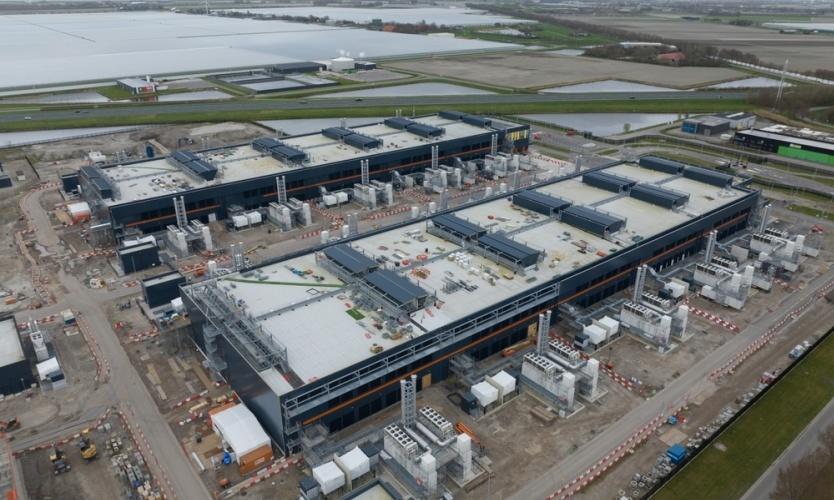
Demand and risks for global data center insurance growing: Swiss Re
Fast growth in data center construction is pushing up insurance demand and risks for the sector, a report published by Swiss Re said on Friday.
Global insurance premiums linked to data centers are expected to rise to $24.2 billion by 2030 from an estimated $10.6 billion currently, the report said.
Noting that building costs for one site can exceed $20 billion, financing institutions are pressing insurers for limits that cover the full cost of construction, Swiss Re said.
However, the re-insurance and insurance industry can only support a fraction of this limit at competitive rates for traditional risk policies, Swiss Re added.
“This accumulation of value heightens the impact of physical risks, including natural catastrophes,” the report said.
Alongside natural catastrophes, there are also risks like water damage from cooling failures and breaks in power supply.
Swiss Re expects over a quarter of U.S. data center capacity to be in areas with substantial exposure to hail fall and over 40% of capacity in areas significantly exposed to tornado risks.
Climate/Resilience/Sustainability

Nearly 1 in 4 U.S. Home Insurance Claims Are Linked to Weather as Mercury Insurance Breaks Down the Top 5 Spring Risks
Nearly 1 in 4 U.S. Home Insurance Claims Are Linked to Weather as Mercury Insurance Breaks Down the Top 5 Spring Risks
Spring weather brings a sharp uptick in home insurance claims across much of the United States, as heavy rain, severe storms, and fluctuating temperatures expose vulnerabilities in roofs, drainage systems, and property maintenance. Mercury Insurance (NYSE/NYSE Texas: MCY) is highlighting the most common spring-related claims—and what homeowners can do now to reduce risk before damage occurs.
According to the Insurance Information Institute, roughly 1 in 4 home insurance claims are tied to weather-related events, with wind, hail, and water damage among the most frequent drivers. These risks intensify in spring, when storm systems become more active and lingering winter damage can go unnoticed until it fails.
"Spring claims tend to follow very consistent patterns year after year," said Bonnie Lee, Vice President, Property Claims at Mercury Insurance. "The good news is many of the most common issues are preventable with a little seasonal maintenance and awareness."

Don't Be Fooled by 2025's CAT Losses
Insured losses in 2025 broke the $100 billion barrier for the sixth consecutive year — a number that has long been considered a measure of escalating natural catastrophe risk.
Without a major U.S. hurricane landfall, however, losses came in below the average incurred during the past decade. While the market may take a moment to exhale, context is crucial. A below-average loss year is not an anomaly; statistically, it is the expectation. Because catastrophe risk is heavily skewed by tail events, the average will always be driven by a handful of very active years, leaving the majority of years falling below the mean.
What makes 2025 stand out is that losses were modest despite the backdrop of elevated hazard potential. Sea-surface temperatures in the North Atlantic have been among the warmest on record, while global mean temperatures continued to test the upper bounds of the satellite era. Exposure concentrations in hazard hotspots are higher than ever, and rebuilding costs continue to rise. The ingredients for large losses were present in 2025, yet the atmosphere chose not to combine them.
This situation is best described as transient meteorological luck: MORE
Cameron Rye is the natural catastrophe analytics director at Willis Re
Announcements

Risk Theory Launches Dealer Transit Service to Address $7.4 Billion Vehicle Theft Exposure
Risk Theory, a leading platform of insurance distribution businesses, announced the launch of Dealer Transit, a new logistics solution designed to help dealerships mitigate the growing risk of vehicle theft during transit. The program is backed by Risk Point, a Risk Theory Company and underwriting platform specializing in insurance solutions for dealerships.
Dealer Transit integrates insurance protection with a technology-enabled transportation platform to provide dealerships with a secure and insured method of transporting vehicles. This initiative reflects Risk Theory's broader strategy of combining underwriting expertise, technology partnerships, and specialized programs to address emerging risks within the industries it serves.
Vehicle theft during transit has become a significant and rapidly escalating challenge for the automotive retail industry. Industry estimates indicate that vehicle theft during transportation contributes to more than $7.4 billion in annual vehicle theft losses nationwide. Risk Point alone paid more than $15 million in transit-related theft claims in the past year, underscoring the scale of the exposure facing dealership operators and their insurers.
Claims
Ford ‘Unicasting’ EV Strategy Signals Potential Shift in Collision Repair - Autobody News
[Ed.note: Unicasting or as in Tesla's Gigcast process offers many manufacturing advantages but may create headaches for insurers. Time to get ahead of this one]
Ford Motor Co.’s development of a new electric pickup using large aluminum castings highlights a manufacturing shift that could have implications for how collision-damaged vehicles are repaired.
The automaker is using what it calls “unicasting,” a process that replaces numerous stamped and welded parts with large, single-piece aluminum castings, according to Business Insider‘s coverage of a Ford media briefing last month.
Ford discussed the casting approach as part of its development of a new electric pickup platform, according to the report.
Autoblog reported that Ford is investing $2 billion to retool its Louisville Assembly Plant in Kentucky for the new manufacturing process, with production expected to begin in 2027.
The midsize electric pickup is targeting a starting price of $30,000. At that price point, the truck could reach higher sales volumes than previous Ford EVs, which may increase how frequently collision shops encounter unicast structures.
The unicasting approach eliminates 146 separate steel structural parts compared with a conventionally built vehicle of similar size, with the castings coming in 27% lighter than the parts they replace, according to Ford.

Where technology is strengthening claims | Crawford and Company
FAST TRACK has long been shorthand for speed. Move the file quickly, reduce cycle time, close it, and move on. But that definition is shifting as artificial intelligence moves deeper into claims operations.
“People think about fast track as rushing, as getting it done quickly, and a piece of that is accurate,” says Melanie Hughes, who leads operations for content claims solutions at Crawford & Company following its acquisition of edjuster.
“But when we look at leveraging machine learning and agentic AI, it isn’t so much about speed. Speed is the ultimate outcome, but it’s more about certainty.”
For Hughes, AI’s power lies in giving claims teams a clearer view from the outset. The emphasis is shifting toward straight-through handling, predictive triage, and exception-based decision-making.
“It gives somebody the tools to confidently look at a claim from that 10,000-foot view and know this one really needs more of a human in the loop,” she says. “Versus this one, where we can put the process through and have that human validate. It allows us to leverage human effort in a smarter way.”
Efficiency is no longer defined by speed alone, but by how precisely resources are allocated and how consistently outcomes are delivered.
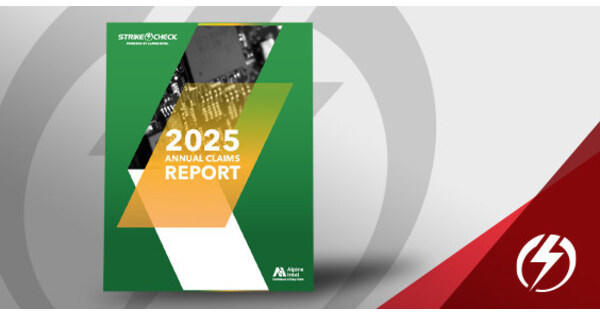
New Report: 26% of Electronics in Claims Were Functioning Properly When Assessed
More than 65% of reported perils in claims involving electrically powered items were recategorized to a more accurate cause of loss following expert assessment, according to the newly released StrikeCheck 2025 Annual Claims Report. The report also found that 26% of claimed electronics were functioning as designed at the time of StrikeCheck's evaluation.
Part of Alpine Intel's suite of services, StrikeCheck provided expertise for 401 types of electrically powered items included in property insurance claims last year. The report analyzes data from these assignments, as well as StrikeCheck's lightning verification reports, to help insurance professionals better understand how these claims could affect their processes, resolutions, and policyholder experiences.
"With every claim, we provide actionable intelligence for adjusters to make confident claim decisions," said Paul Whitmore, Alpine Intel executive vice president of specialty assessments. "This report provides a broader view for carriers to note trends, such as changes in equipment usage, seasonal impacts on causes of loss, and the electronics types that could pose risks for indemnity leakage."
Commentary/Opinion

AI’s Biggest Insurance Opportunity Is Growth, Not Efficiency
Insurers focusing on AI-driven cost reduction may miss its greater potential to expand underwriting capacity and unlock new, previously uninsurable risks.
Much of the insurance industry’s conversation about artificial intelligence has centered on efficiency. Automation, faster processing, and lower administrative costs dominate the narrative. But treating AI primarily as a cost-cutting tool risks overlooking a larger opportunity.
AI’s more consequential potential lies not in doing today’s work faster, but in expanding what insurers can underwrite at all. By improving risk assessment and integrating new sources of data, AI can make previously opaque or unmanageable risks measurable—and therefore insurable. The strategic question is no longer just how AI can reduce expenses, but how it can expand the boundaries of the insurance market.
The efficiency narrative is understandable. Insurance is structurally cost-sensitive, with margins that are often thin and volatile. AI has therefore been positioned as a way to address legacy operational inefficiencies. Quarterly financial pressures reinforce the focus on near-term gains, while longer-term growth requires sustained investment and patience. But this framing understates AI’s potential to reshape risk prevention, improve existing products, enable new offerings, enhance capital allocation, and increase underwriting capacity. COMMENTARY CONTINUES
State News
NY Lawmakers Urged to Have Faith in Auto Insurance Reform Numbers. But Do They?
New York small businesses, big businesses, rideshare companies, police and fire unions, insurers, insurance agents, truckers, bus companies, auto repair shops, university professors, district attorneys, mayors, immigrant and minority groups, and others have come out in support of Gov. Kathy Hochul’s auto insurance reforms that are intended to lower costs for drivers by fighting fraud and discouraging excess litigation and excess insurer profits.
Even faith leaders have joined the campaign. Following an endorsement from the Reverend Al Sharpton, 50 clergy and faith leaders from Buffalo to Brooklyn sent a letter to lawmakers urging them to take action on auto insurance to address the “unjust burden” of high insurance premiums on working families.
Bill combining homeowners, auto insurance advances
A bill would give the Illinois Department of Insurance authority to review and approve rates for both homeowners and automobile coverage.
Those two proposals, which started as separate pieces of legislation, were combined into a single bill that passed the House March 19. The combined bill now awaits Senate approval before being sent to Gov. JB Pritzker.
Pritzker initially called for rate review authority over homeowners insurance last summer after Bloomington-based State Farm Insurance announced it was raising rates in Illinois an average 27.2%, citing losses it had incurred from weather-related disasters in the state.
Pritzker, however, questioned that rationale. He and legislative leaders suggested the company may have been shifting losses from disasters in other states onto Illinois consumers. He also used the controversy to highlight the fact that, unlike most other states, Illinois exercises no control over insurance premiums and has no law prohibiting excessive, inadequate or unfairly discriminatory rates in the insurance industry.
Separately, Secretary of State Alexi Giannoulias has been pushing for reforms in the automobile insurance sector, arguing insurance companies were setting rates based on factors such as a person's credit rating that have little or nothing to do with their driving record.

Connecticut court shields GEICO with absolute immunity in towing dispute lawsuit
A Connecticut court has handed GEICO a win, ruling that insurers filing regulatory complaints about towing charges are shielded by absolute immunity.
The Connecticut Appellate Court, in a decision officially released on March 24, 2026, affirmed the dismissal of claims brought by four towing and auto repair businesses against GEICO and two of its employees, finding that complaints the insurer filed with the state Department of Motor Vehicles over nonconsensual towing and storage fees are protected under the litigation privilege.
The case centered on a long-running dispute between GEICO and a group of Connecticut towing and auto repair businesses – Modzelewski's Towing & Storage, Inc., Chris' Auto Clinic, LLC, MyHoopty.com, LLC, and Farmington Auto Park, LLC. The businesses accused GEICO and employees John P. Vaz, an insurance investigator, and Patrick Capri, who managed insurance claims and oversaw payment of property damage bills, of filing hundreds of baseless complaints with the DMV between 2017 and 2021, alleging overcharging and improper fees for nonconsensual towing, transporting, and storage services.
The businesses claimed this amounted to tortious interference with their customer relationships, defamation through both libel and slander, and promissory estoppel.
InsurTech/M&A/Finance💰/Collaboration

Corebridge and Equitable to merge in all-stock deal valuing combined company at $22bn - Reinsurance News
Corebridge Financial, Inc., an American multinational financial services company, and Equitable Holdings, Inc., a financial services holding company, have entered into a definitive agreement to combine in an all-stock merger, valuing the combined company at approximately $22 billion, based on the closing stock prices of each company as of March 25th, 2026.
The merger aims to establish a huge retirement, life, wealth and asset management company with enhanced distribution capabilities, scale, and a diversified portfolio. Under the terms of the agreement, which has been unanimously approved by the boards of directors of both companies, the pair will form a new parent company.
Reportedly, the combined company will have $1.5 trillion in assets under management and administration across individual and group retirement, asset management, wealth management, life insurance, and institutional markets.
Podcast Sponsor

Audio Version - 'Connected: The Podcast' --- Sponsored by Pulse Podcasts
The ‘Connected’ Podcast by Alan Demers and Stephen Applebaum, is a condensed audio version of the day's ‘Connected' newsletter, a daily scan of all the happenings in the world of Insurance & InsurTech News.
Pulse Podcasts: Introduce a new way for your audience to hear your voice! We are a podcast creation service that helps businesses turn their written content, like blog posts and news articles, into beautiful podcasts. Our platform writes the script, records the voices, and mixes the audio to create engaging content for your audience. It's affordable and has super-fast turnaround!
LISTEN AND SUBSCRIBE BELOW