
Climate/Resilience/Sustainability
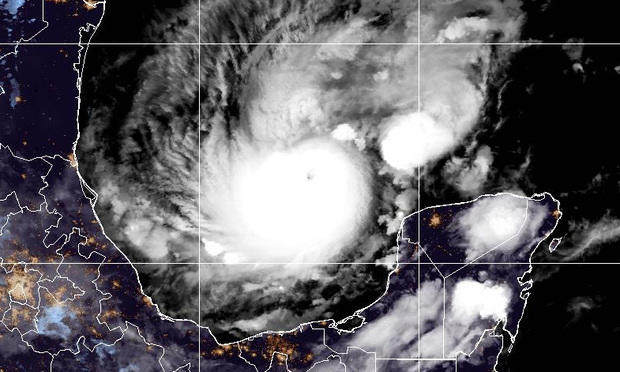
Hurricane season could be quieter this year
The United States could see another relatively quiet Atlantic hurricane season this year, according to a new report from AccuWeather.
Forecasters are predicting four to seven hurricanes this year, near or slightly below the 30-year historical average of seven. But the United States is still forecast to see around three to five direct impacts, close to the historical annual average of four.
"It's very important that everybody from South Texas all the way to Maine prepares equally for each and every hurricane season, regardless of the forecast," said Alex DaSilva, AccuWeather lead hurricane expert, in a statement. "Even if it's expected to be a slightly below average hurricane season, we can still see major hits across the United States."
The central and eastern Gulf Coast as well as the Carolinas and parts of the Virginia coastline could see above-average activity this year, while central and southern Texas could see fewer tropical impacts.
An El Niño climate pattern is expected to develop sometime this summer, which could increase winds but reduce storm activity. AccuWeather forecasters say there is a 15% chance of a Super El Niño developing in the second half of the hurricane season, which would further reduce activity.
El Niño years typically produce about 10 named storms and five hurricanes, compared to 15 storms and eight hurricanes during La Niña years. Neutral seasons typically see about 13 named storms and seven hurricanes.
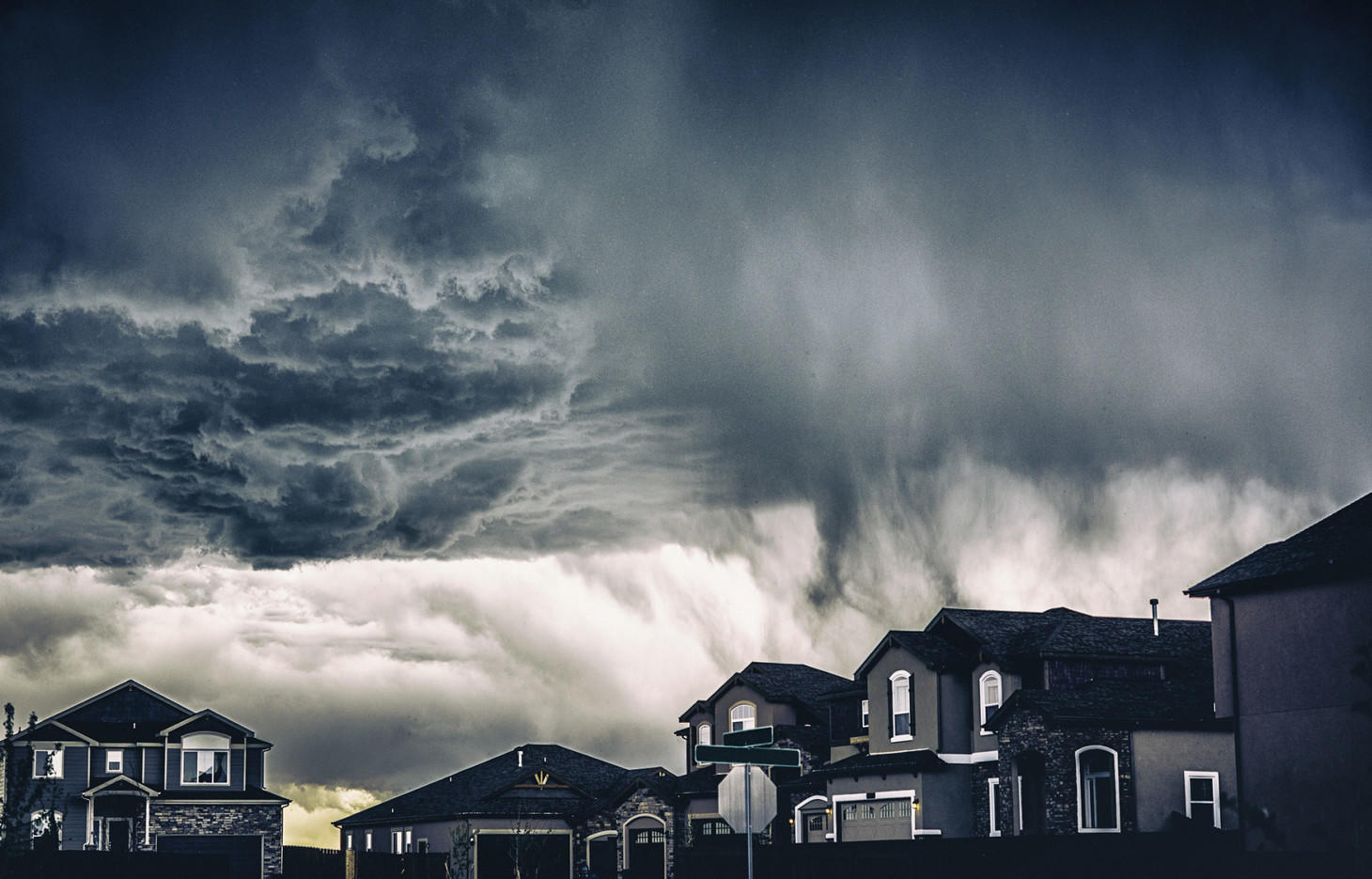
AAA Warns of Destructive Tornadoes, Hail, Flooding, and Severe Thunderstorms
Spring storms are back, and underestimating them can be costly. AAA is partnering with the Insurance Institute for Business and Home Safety to help residents prepare.
Spring weather patterns fuel fast‑developing storms capable of causing severe damage with little warning.
- Tornadoes can rip roofs from homes, collapse walls, and turn debris into high-speed projectiles that shatter windows and damage vehicles. Even weaker tornadoes can leave homes unstable and cause costly structural repairs.
- Severe thunderstorms produce destructive wind gusts that tear off shingles, break tree limbs, and damage siding, while lightning can spark house fires or destroy electrical systems. Heavy rainfall often leads to roof leaks and interior water damage.
- Large hail can punch holes through roofing materials, break windows and skylights, and heavily dent or total vehicles. Repeated impacts weaken roofs and increase the risk of leaks and long-term structural deterioration.
- Flash flooding can overwhelm foundations, enter crawlspaces and living areas, and destroy flooring, drywall, appliances, and electrical components. Once water recedes, lingering mold and structural damage can drive repair costs even higher.
- Straight line winds can uproot trees, peel off roof coverings, and lift unsecured structures like sheds and patios. Flying debris can break windows, damage siding, and compromise garage doors, leading to further interior damage.
“By the time many people realize how severe a storm is, the damage may already be done,” said Jeff Jones, AVP of Claims for AAA-The Auto Club Group. “Our claims teams see it every year, from roofs torn apart by wind to vehicles destroyed by hail. Preparing early and staying alert can reduce the damage when severe weather hits.”

Why Insurers Must Own Their View of Risk. And How to Build It
As climate effects and non-peak perils challenge traditional diversification strategies, property insurers need a comprehensive approach to accumulation risk that goes far beyond standard modeling.
The assumption that building a geographically diverse portfolio would protect insurers from catastrophic losses has been tested repeatedly in recent years. From Winter Storm Fern to the devastating 2017 hurricane season, events have demonstrated that accumulation risk can emerge from unexpected directions, turning what was once considered a diversified book of business into a concentrated exposure.
“Losses are no longer isolated to peak zone events, like a Florida hurricane,” said Michael Quigley, Head of Property Underwriting & Multiline Risk Quantification at Munich Re US. “Climate effects, urban concentration growth, and non-peak perils all mean that single-event losses can generate large correlated losses across regions and segments of an insurer’s business, turning accumulation into a true capital and earnings risk — not just a modeling issue.”
For insurers, understanding and managing this risk has become essential to long-term resilience and sustainability. WHITE PAPER
JBA launches enhanced global flood model featuring improved exposure disaggregation
Flood specialist JBA Risk Management has launched an enhanced version of its Global Flood Model, which introduces a variety of key features, such as enhanced hazard maps, a wide range of future climate event sets, and improvements to both processing speed and exposure disaggregation.
As per the firm, these developments will enable reinsurers, insurers, brokers, risk managers and asset managers to obtain a clearer understanding of both present and evolving exposure to flood risk, and to undertake transparent, fully auditable stress testing with greater confidence.
JBA Risk Management’s new global flood model includes updated maps for 17 key countries (Hungary, Japan, China, Thailand, India, Vietnam, Poland, Slovakia, Colombia, Brazil, Peru, Chile, Canada, Mexico, Bermuda, South Korea, South Africa), incorporating newly available bare earth Digital Terrain Model data, as well as refreshed hydrology aligned with JBA’s latest global methodology, updated land use information, and improved classification of river and surface water flood types.
The model also contains enhanced and expanded future climate event sets, which includes eight CMIP6‑based climate event sets, with a new 2080 timeline and two hours clauses, which ultimately helps to provide better flexibility for exploring how flood risk may evolve.
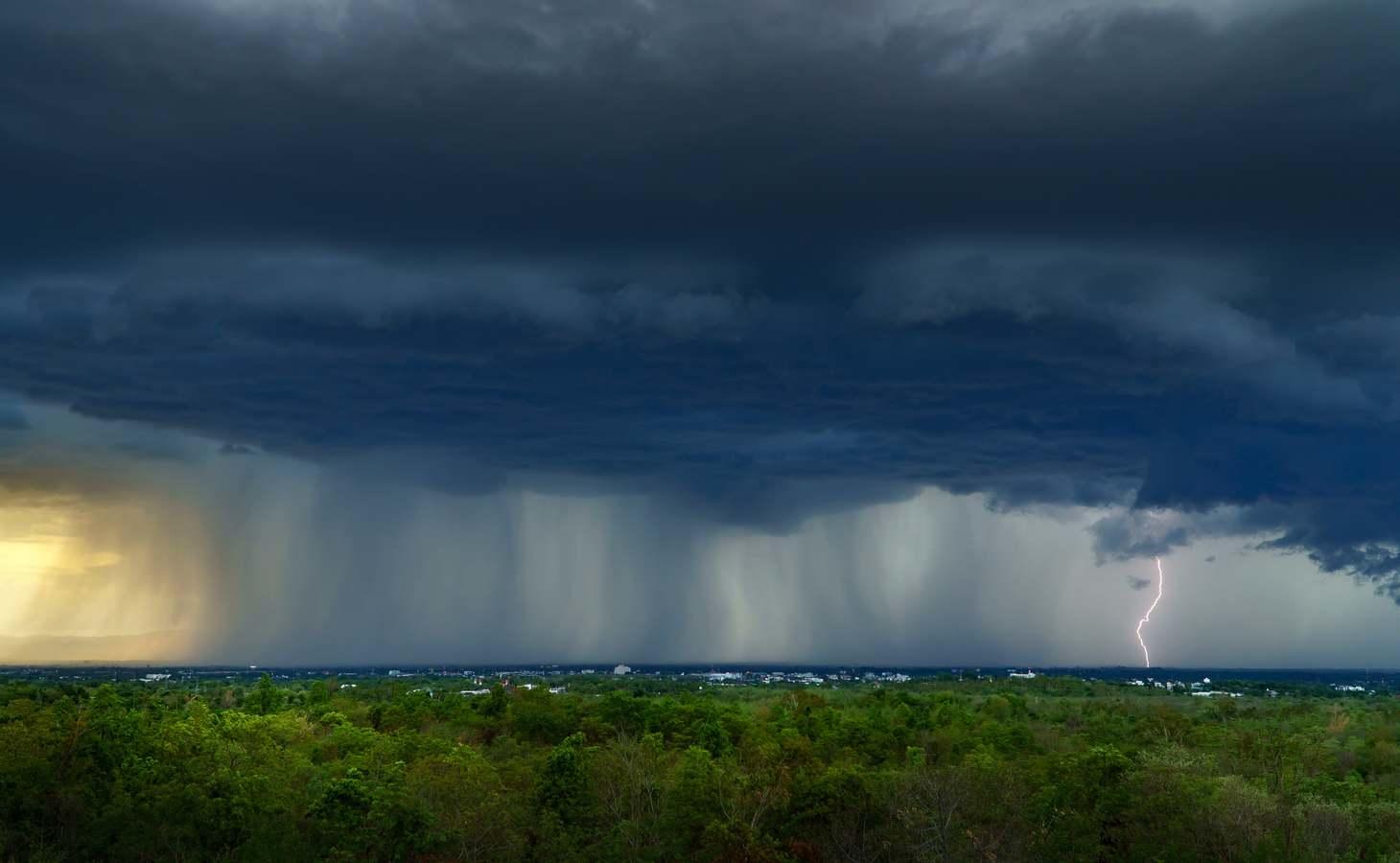
2026 Cotality Severe Convective Storm Risk Report
Cotality’s 2026 Severe Convective Storm Report highlights the changing SCS landscape and help homes and communities recover as quickly as possible. | CotalityImagine two hypothetical Oklahoma homeowners: Mark and Sarah.
Mark and Sarah have maintained their property and paid their insurance premiums for the decade since they bought their home. They thought they were prepared to weather any storm, but when a severe weather event pelted their roof with 3-inch hail, that sense of security vanished. Because field representatives were spread thin across the storm-impacted area, Mark and Sarah’s recovery stalled.
A three-week delay in claims adjustment followed—but the weather didn’t wait. During that time, it rained three times, causing a roof leak that evolved into a total-loss mold infestation. What should have been a $20,000 roof repair spiraled into a $120,000 full-gut renovation, displacing their family for six months and exhausting their coverage.
To make matters worse, when it came time to renew their policy, Mark and Sarah learned that their premiums, along with those of their neighbors, were rising.
This fictional scenario is based on a costly reality many homeowners have experienced. As severe convective storm (SCS) events—such as hail, tornadoes, and straight-line winds—become the primary drivers of annual insured losses, a family’s ability to return home depends on a high-stakes professional relay.
Resilience is no longer just a matter of individual preparation; it is a multi-stage defense where the success of each phase, from accurate risk pricing to physical restoration, is vital.
The 2026 Severe Convective Storm Risk Report is here—and it reveals a fast-evolving threat to property portfolios and market stability.
See why a 20-mile difference in a storm’s path is now a $19 billion variable for insurers and restoration professionals alike.
Research

Parks Associates and JCI Research: 26% of US Internet Households Have Experienced Water-Leak Damage, Yet Only 5% Use Smart Leak Detection Solutions
At ISC West, Parks Associates and Johnson Controls (JCI) released new research that reveals a significant gap between the widespread impact of water-related property damage and the adoption of technologies designed to prevent it.
According to the firms' latest white paper,"Flooding the Market: Scaling Up Smart Water Management," 26% of US internet households report experiencing water leak damage, yet only 5% of single-family homeowners currently own a smart water leak or humidity detector, highlighting a major opportunity for insurers, security providers, and property managers to expand preventive solutions.
The research, released at ISC West in Las Vegas, examines the growing role of connected water management technologies, including leak detectors, flow meters, humidity sensors, and automated shut-off valves, in reducing costly property damage and insurance losses.
Water damage is one of the most common and most expensive causes of insurance losses. Industry data shows that water damage and freezing account for 22% of homeowner insurance losses, with the average claim totaling approximately $15,400 between 2019 and 2023.
"Smart water management technologies offer a proactive approach by detecting issues early and enabling automated responses that prevent small leaks from becoming costly disasters," said Jennifer Kent, SVP & Principal Analyst, Parks Associates. "As adoption grows, these solutions have the potential to significantly reduce losses while improving peace of mind for property owners."
Financial Results

Low cat losses fuelled strong results for U.S. P&C insurers in 2025: Verisk & APCIA
Verisk and the APCIA have reported that U.S. property and casualty (P&C) insurers posted some of their strongest underwriting results in years in 2025, although the performance was largely driven by unusually low catastrophe losses rather than any structural improvement in underlying risk.
According to key financial indicators for private U.S. P&C insurers, the industry posted an estimated net underwriting gain of approximately $63 billion.
Verisk and the APCIA said that this represents a significant improvement over the $23 billion underwriting gain in 2024 and the $22 billion underwriting loss recorded in 2023.
U.S. P&C insurers’ written premiums also grew 4.8% to $971 billion, up from $927 billion in 2024, while net earned premiums rose 6.3% to $953 billion, compared with $896 billion the previous year.
Meanwhile, the combined ratio improved to 92.9%, down from 96.6 percent in 2024, reflecting a stronger underwriting performance.
Saurabh Khemka, president of Verisk Underwriting Solutions, commented, “The industry delivered one of its strongest underwriting results in years in 2025, supported by a near-record low combined ratio, but that outcome was driven more by unusually low catastrophe losses rather than a fundamental shift in industry risk.
“A near 90% decline in hurricane-related claims in 2025 materially reduced catastrophe losses, an improvement that reflects limited U.S. landfall rather than a change in underlying exposure.”
Telematics, Driving & Insurance

LEEO Introduces a Telematics-Powered Insurance Product That Redefines How Safer Driving Is Rewarded
LEEO, a commercial auto insurance MGA, today announced the launch of its new telematics-powered insurance product designed to more directly reward safe driving with savings.
The new product delivers the same coverage and support LEEO customers rely on today, while rethinking how performance is reflected in the insurance experience. Designed with telematics as a core requirement rather than an optional add-on, it embeds real-world driving data at the center of the policy. This approach aligns pricing and rewards with accident avoidance, giving fleets clearer visibility into performance and a more direct path to savings.
"At its core, this new product is about alignment," said Kevin Jajich, VP of Product at LEEO. "When telematics is embedded into the policy rather than an accessory, we can more accurately understand risk. When fleets stay connected and avoid accidents, everyone wins—safer driving leads to fewer claims, lower losses, and meaningful savings."
Regulation & Public Policy

AI roll‑out is outpacing risk controls, Gallagher warns
As artificial intelligence moves from pilot projects into day-to-day operations, most organizations are investing in AI skills. However, many are still deploying the technology without robust risk controls.
Gallagher’s third annual AI Adoption and Risk Survey, based on responses from more than 1,200 global businesses, found that nearly two‑thirds (62%) have delivered AI training to employees in the last year, and more than half (55%) have hired for AI‑focused roles.
Governance is climbing the agenda, with 56% of organizations already communicating an AI strategy to employees. However, 43% are yet to introduce a formal AI risk management framework, and only 44% have conducted AI impact assessments. That leaves a significant proportion of firms exposed to operational, legal and reputational risks as AI use accelerates.
This gap between adoption and oversight is likely to feed into more complex technology E&O, cyber, D&O and employment practices exposures as AI-driven tools are embedded in underwriting, pricing, claims, HR and customer interactions.
InsurTech/M&A/Finance💰/Collaboration

Global Insurtech Funding Hit $12.4 Billion in 2025: The Second Highest Year on Record | MEXC News
Global insurtech funding hit $12.4 billion in 2025, making it the second-highest year on record behind 2021’s $15.8 billion peak. The figure comes from Gallagher Re’s annual Global InsurTech Report, which tracked 741 funding rounds across 58 countries. Unlike the 2021 boom, which was driven by speculative mega-rounds, the 2025 total was spread across more deals at more reasonable valuations, with a median round size of $14 million compared to $28 million in 2021.
Where the Funding Went Property and casualty insurtech attracted 38% of total funding, or $4.7 billion. This category includes companies that sell homeowners, auto, and commercial insurance through digital channels. Lemonade, Hippo, and Root were early entrants; newer companies like Kin (focused on homeowners in climate-risk states) and Clearcover (auto insurance) raised significant rounds in 2025.
Insurance infrastructure and B2B insurtech received $2.9 billion, or 23% of the total. This category includes companies that sell technology to insurers rather than competing with them.** Guidewire, Duck Creek, and Majesco** provide core policy administration systems. Shift Technology and Tractable use AI for claims processing and fraud detection. Socotra and Novarica provide cloud-native infrastructure for insurance carriers. According to CB Insights, B2B insurtech had the highest year-over-year funding growth at 41%.
Infosys to Acquire Leading Insurance Consulting Technology Company, Stratus
Infosys (NSE, BSE, NYSE: INFY), a global leader in next-generation digital services and consulting, today announced a definitive agreement to acquire Stratus, a leading technology solutions provider for the property & casualty (P&C) insurance industry. This strategic move strengthens Infosys’ leadership in the insurance sector and accelerates AI-powered digital and data transformation for global P&C insurance clients.
With a global delivery footprint that spans across the U.S., Canada, and India, Stratus delivers end-to-end Guidewire InsuranceSuite capabilities across PolicyCenter, ClaimCenter, BillingCenter, integrations, upgrades, cloud migrations, and application managed services. The company brings deep P&C domain expertise across personal, commercial workers’ compensation, and specialty lines, supported by industry-specific accelerators and repeatable delivery frameworks that enable faster, high-quality transformations at scale. Stratus has a dedicated data practice with capabilities across Guidewire CDA, Data Studio, DataHub and InfoCenter, Databricks, and Microsoft Fabric, positioning it as a differentiated, scaled partner for complex, cloud- and AI-led P&C transformations.