
News
Reinsurance property-rate decreases continue at renewals: Gallagher Re
April 1 reinsurance renewals saw property rates showing continued softness similar to January 1 while casualty markets remained cautious and more stable.
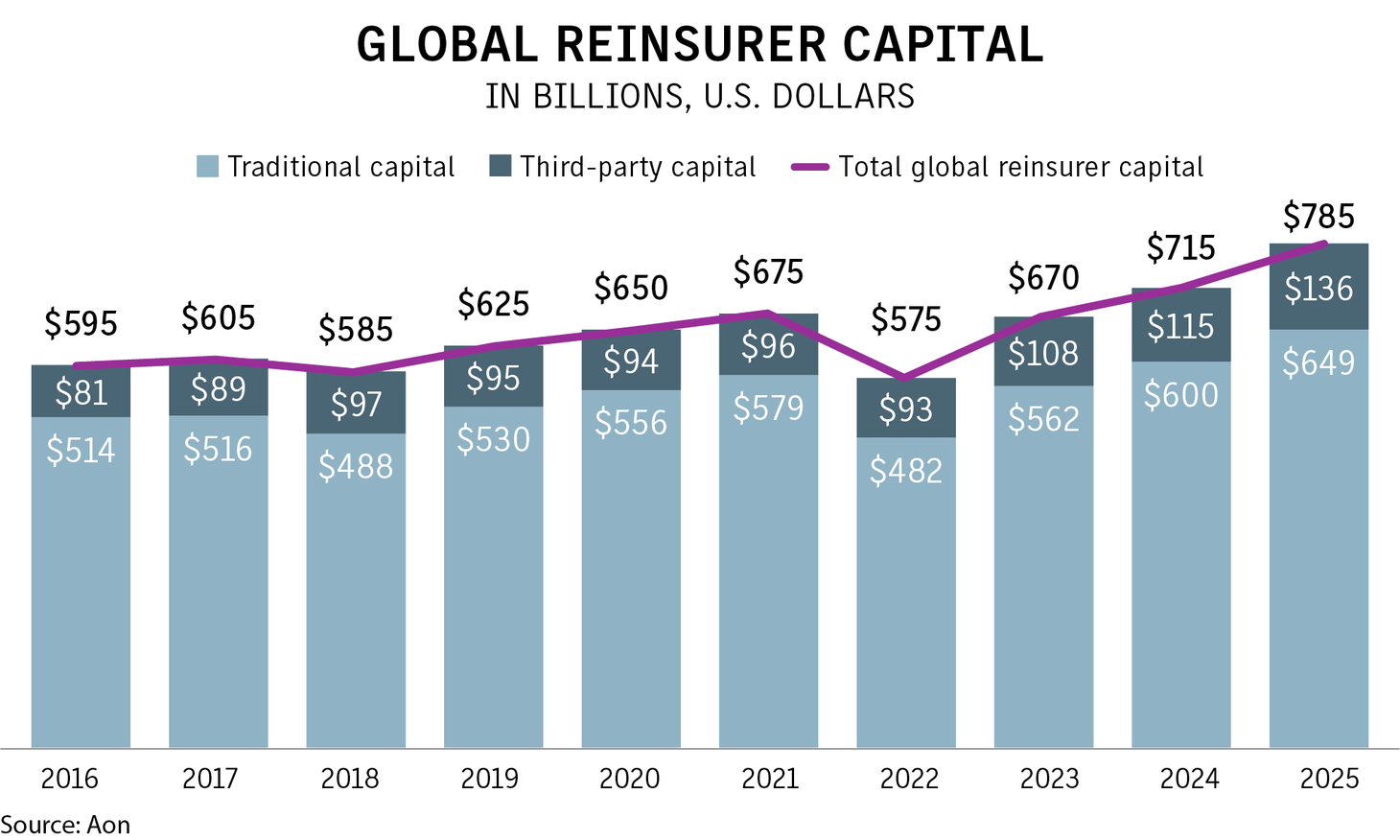
Abundant supply and a largely loss-free environment led to double-digit property rate decreases in many geographies, according to a report Wednesday from Gallagher Re.
In a separate report Wednesday, Aon said global reinsurance capital had reached a record $785 billion. The record capacity helped drive double-digit reductions across property markets, Aon said.
The broker also said that global reinsurance demand increased 10% at April 1 renewals and some cedents bought increased limits opportunistically into the property rate decreases.

Severe Convective Storm Losses Hit $208 Billion Over Three Years as Hail Emerges as Top Claims Driver
Global insured losses from severe convective storms reached $208 billion over the past three years, with 85% of losses occurring in the U.S., according to a new Allianz Commercial analysis, as reported by Risk & Insurance.
The big picture: Severe convective storms — including tornadoes, hailstorms, straight-line winds and derechos — have eclipsed hurricanes in cumulative losses, comprising nearly half of total insured natural catastrophe losses in 2025.
The shift reflects urbanization into hazard-prone areas, inflation in construction costs and climate change impacts. Organizations are turning to AI and stricter building codes to manage the escalating risk.
By the numbers: - $60 billion in SCS losses were recorded in 2025, representing nearly half of all insured natural catastrophe losses. - U.S. SCS losses in 2025 were 1.4 times higher than the 10-year average of $35.5 billion. - 39 major SCS events hit the U.S. between January and September 2025, each causing more than $1 billion in insured losses. - Hailstorms account for 50% to 80% of all SCS losses, despite tornadoes dominating headlines. - Asphalt roof replacement costs have surged 250% since 2000, with a 45% increase in the last five years alone.

Farmers launches capital-backed agency model to drive growth | Insurance Business
Farmers Insurance is introducing a new recruitment track targeting entrepreneurs with at least $500,000 in capital as part of a plan to appoint nearly 1,700 agency owners in 2026.
The initiative centers on the Elite Owner Program, a new pathway aimed at applicants who can establish agencies at scale from the outset. Participants may qualify for tiered levels—Gold, Platinum and Diamond—offering varying levels of operational support, including dedicated service channels, startup assistance and marketing resources.
Farmers said the structure is designed to support accelerated policy sales and premium growth compared with other appointment pathways, based on the combination of owner capital and company support.
The Elite program is part of a broader effort to appoint nearly 1,700 new agency owners over the next year. The company said the recruitment drive is intended to support organic growth, modernize its distribution model and increase market share while extending its presence in local communities.

NAIC issues nationwide data call
The National Association of Insurance Commissioners (NAIC)has announced a nationwide homeowners market data call, and regulators say it will be the most comprehensive collection of homeowners insurance policy data in the United States.
Insurers writing $50,000 or more in homeowners premium will be required to submit detailed information covering the 2018-2025 policy years by June 15.
Regulators are asking for policy type, premiums, claims and losses by peril, deductibles, cancellations and nonrenewals, coverage limits, replacement cost vs. actual cash value, and mitigation discounts.
The effort is meant to create a detailed look at homeowners insurance pricing and coverage across the United States at the ZIP code level. Regulators will use the data to better understand how policy terms and deductibles affect cost and access, evaluate mitigation efforts and monitor the financial strength of individual carriers.
Announcements

Global InsurTech Accelerator Kicks Off in London with 27 Startups from Around the World
The upcoming Global InsurTech Accelerator Program in London (April 27–30) marks another major milestone for the global insurtech ecosystem, as we officially introduce the fourth cohort of startups selected to represent their countries and regions.
At the heart of the program are 27 outstanding startups, each chosen by leading international partners for their innovation, relevance, and potential to shape the future of insurance. This year’s cohort includes: Insure Africa, TruNord Technologies Ltd., Navisio AI®, Figuro, PolicyCheck, Vedra AI, Confora Labs, Assuraf, Simply, Inca, AdminSE, Bindy, 7Analytics, Nivinsure, Alpi, BimaKavach, LeapForward.ai, Resoloon, SureDocs Ltd, HearAI, Cloud Workflow, XILO, FinFast, Horizon AI, Agentiv-x, and UHEALTH.
These companies represent a truly global perspective, spanning India, the Middle East, Central America, Israel, Africa, Europe, North and South America, and Australia. Each startup brings a unique approach to solving some of the most pressing challenges in the insurance industry — from AI-driven underwriting and claims automation to fraud detection, customer engagement, and next-generation distribution models.
The program is produced in close collaboration with InsurTech Israel, Insurtech UK, and BrokerTech Ventures — three leading organizations at the forefront of insurance innovation. This partnership enables direct access to top-tier insurers, investors, and industry leaders, and plays a central role in shaping both the content and the quality of engagements throughout the week.
Designed as an intensive four-day experience in one of the world’s leading insurance capitals, the program is part of a broader global journey. Each cohort is hosted in a major insurance hub: last year the program took place in Munich, the year before in Des Moines, USA, alongside activities in Tel Aviv — and this year, it arrives in London.
Telematics, Driving & Insurance
Carriers Expand Telematics Use, Integrate Device Capabilities and Accessibility Elements to Enhance Mobile Experience
Keynova Group, the principal competitive intelligence source for digital financial services firms, today announced the results of the Q1 2026 edition of its semi-annual Mobile Insurance Scorecard.
The competitive report benchmarks the mobile apps and mobile websites of the 12 largest U.S. auto and property insurance carriers, naming Progressive and GEICO as co-leaders in Overall Score for the mobile user experience.Allstate ties GEICO for the top mobile app, while Progressive once again ranks highest for mobile web.
"Carriers are making steady progress in advancing mobile insurance experiences, with telematics emerging as an expanded component of servicing, claims, and even underwriting," said Beth Robertson, managing director, Keynova Group. "At the same time, continued integration of device-native capabilities is playing an important role in improving usability, while a focus on extending accessibility enhancements and resources across mobile channels will continue to broaden adoption."
AI in Insurance

The evolving role of actuaries in the age of AI
In Quentin Tarantino’s 1994 cult classic Pulp Fiction, when a situation deteriorates beyond control, everyone knows you call The Wolf. Arriving without the slightest hint of panic, he surveys the damage with practised calm and begins issuing instructions. Within minutes, chaos has been reduced to a sequence of manageable decisions. Insurance has long relied on people capable of performing a similar role. Actuaries are the professionals insurers turn to when risk becomes too complex for instinct alone.
When this challenge arises, actuarial models are put to the test to translate uncertainty into numbers, and those numbers into decisions about pricing, capital and commitments that may stretch decades into the future.
Now the tools used to perform that translation are changing due to the relentless surge of AI.
The scale of that technological shift is substantial. Research from McKinsey suggests artificial intelligence could generate as much as $1.1tn in annual value for the global insurance industry, driven by improved risk modelling, underwriting and operational efficiency.
But the story is not simply about new technology. It is also about how a profession built on statistical rigour is adapting to a world where the speed of decisions, and the stakes attached to them, are increasing.
“Automation is taking over repetitive, manual tasks,” says Mónica Carvajal-Pinto, Head of Actuarial Data Science – International at Parisian InsurTech Akur8.
Freed from those calculations, actuarial teams are beginning to spend more time examining what lies beneath the numbers.
“Actuaries can focus on deeper risk analysis, uncovering emerging trends and driving business strategy,” she says.
The shift, she argues, is fundamentally about perspective.
“The actuarial lens has widened,” she says. “It is moving from ‘how do we calculate this?’ to ‘what do these insights mean for our business, and how should we act on them?’”

Maintaining Trust as the Claims Process Evolves : Risk & Insurance
The insurance claims landscape is rapidly transforming. Artificial intelligence is automating processes, plaintiff attorneys are deploying sophisticated data analytics to gain an advantage, and expectations around responsiveness and insight have never been higher.
Yet amid these technological shifts, a crucial question remains: How do insurance professionals maintain the human relationships that build trust and deliver genuine value?
Ron Morrison, Chief Claims Officer at MSIG USA9pictured), has spent his career navigating this balance. His approach reflects a clear philosophy: technology may change how claims are handled, but it does not replace the need for thoughtful decision-making, strong relationships, and consistent execution.
Every insurance carrier promises exceptional claims service. What separates the exceptional from the ordinary is how consistently that service is delivered and how well it integrates with the client’s broader risk management strategy.
“My whole philosophy centers on integrating our culture with our insureds and providing next-level service,” Morrison said. “Every carrier says that, but how we differentiate is through our execution.”
Morrison’s vision is for MSIG USA’s claims team to operate as a natural extension of the client’s organization, aligned not only to the claim itself, but to the client’s broader objectives and operating environment.
InsurTech/M&A/Finance💰/Collaboration

Mega M&A deals hit record in Q1 as AI race intensifies – WTW | Insurance Business
Completed mergers and acquisitions valued at US$10 billion or more reached a record high in the first quarter of 2026, according to WTW's Quarterly Deal Performance Monitor, as M&A activity surged on eased financing conditions and a race to secure artificial intelligence capabilities.
The report found 12 mega deals closed between January and March. It is the highest quarterly total since tracking began in 2008, up from just two in the preceding quarter.
Total completed deal value hit US$438 billion, a five-year high and a 155% increase from Q1 2025. Fifty-six deals exceeding US$1 billion were completed, up from 40 a year earlier. Worldwide, 215 transactions above US$100 million closed during the period, a 32% rise and the fifth consecutive quarterly increase.
The figures mark a sharp reversal from late 2025. WTW's January report on full-year results showed Q4 acquirer performance had fallen to -13.9 percentage points against the MSCI World Index, the worst single quarter on record. Valuation expansion rather than earnings growth had driven much of the late-2025 equity rally, leaving acquirers exposed.
Jana Mercereau (pictured), WTW's head of Europe M&A consulting, said capitalised dealmakers had returned to pursue mergers aimed at scaling operations, closing capability gaps and securing AI-enabling technologies.
Fraud

AI Tools Fuel New Era of Insurance Fraud, According to Verisk
More than one-third (36%) of consumers would consider digitally altering a claim image or document even if it would break insurer rules, according to a Verisk State of Insurance Fraud study. That number increases to 55% among Generation Z and 49% among millennials.
At the same time, insurers report a sharp rise in manipulated media submissions, with nearly all (98%) agreeing that artificial intelligence (AI)‑powered editing tools are fueling an increase in digital insurance fraud. Three out of four (76%) insurers say manipulated media submissions have grown more sophisticated, even as confidence lags in detecting deepfakes at scale.
“AI editing tools are changing how people interact with digital content, and insurance is feeling that shift in real time,” said Shane Riedman, president of anti‑fraud analytics at Verisk. “Our concern is that many consumers don’t see small edits as crossing a line, but when those changes make their way into claims, they can materially affect outcomes.”
AI‑powered editing tools are no longer niche or technical, which means they are often widely used, easy to access and increasingly realistic. Forty-one percent of consumers know someone who has used AI editing tools to alter or create a photo, video or document for financial gain, the report says. This figure jumps to 64% for Gen Z and 54% for millennials, compared with just 31% of Gen X and 15% of baby boomers.

AI: INSURANCE FRAUD WAKE UP CALL
Fraud is hardly a new problem, but it is a serious issue, and recent fundamental changes in societal norms are exacerbating fraudulent conduct and making detection and deterrence less of a priority than warranted. The scope and scale of fraud are truly shocking, especially among government-funded medical and social programs currently under scrutiny, where enormous costs are somehow tolerated.
Fraud not only creates significant economic loss but also undermines confidence in its public and financial institutions, including insurance. Yet preventing and combatting fraud is seemingly episodic and random.
All of this serves to bring renewed attention to the long-standing concerns about ever-expanding fraud in general – and specifically insurance fraud. Insurers need to heed the wake-up call.
COST OF INSURANCE FRAUD
Quantifying insurance fraud's impact is difficult and spans from premium fraud to claims fraud, whether opportunistic or through deliberate scheme. According to the Coalition Against Insurance Fraud (CAIF), insurance fraud costs American consumers more than $300 billion a year. This amounts to an individual policyholder $900 annual “tax,” as insurer costs are passed on in form of premiums. Claims fraud is said to occur in about 10% of property-casualty insurance losses. Medicare fraud alone is estimated to cost $60 billion every year.
Podcast
Humanizing Insurance Podcast
This week's episode of Humanizing Insurance Podcast is now live.
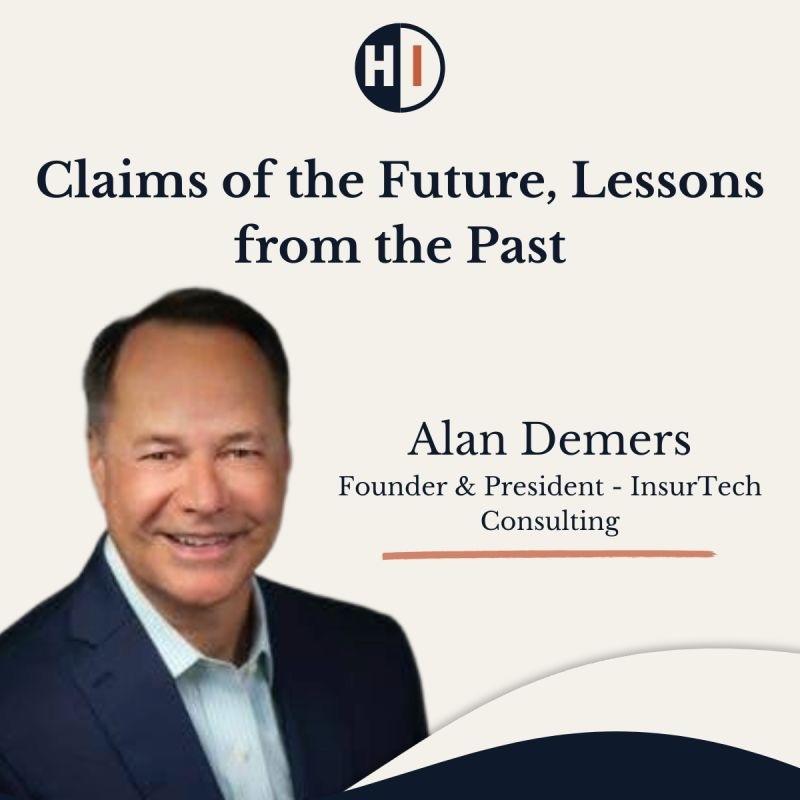
This week Daniel Grimwood-Bird sat down with Alan Demers, CPCU, AIC, Found and President of InsurTech Consulting.
Alan spent 24 years at Nationwide, so we wanted to find out:
What do you gain from the loyalty of staying in a single business for so long, and what might you miss?
We start in claims, where insurance stops being theory and becomes reality before getting into:
- why claims people see the industry differently
- what 24 years in one company actually gives you
- how leadership is really learned
- and whether insurance is genuinely innovating…or just getting better at talking about it.
This is a great episode filled with some real gems of career insight from someone who has seen both the large and small of the insurance world.