
Climate/Resilience/Sustainability

After a brutal winter, the spring equinox is finally here. What does that mean?
[Ed.note: Happy (belated) Spring despite cold temperates throughout much f the U.S. today]
The northern hemisphere will have longer daylight hours.
If this winter felt relentless — back-to-back snowstorms and sharp cold snaps, especially in the Northeast — you’re not alone. But, believe it or not, across the U.S., meteorological winter (December-February) was actually the second-warmest on record since 1895, according to the National Oceanic and Atmospheric Administration, just behind the 2023-24 season.
For those from the mid-Atlantic to New England who didn’t feel that warmth and are still thawing out from February’s “bomb cyclone,” spring is officially here.
Research

The homeowners insurance crisis is now a mortgage crisis. A federal fix is being proposed
You’ve probably felt it before you fully understood why. A purchase deal that pencils perfectly on rate and purchase price falls apart at the finish line because the borrower cannot find affordable homeowners insurance.
A preapproval that looked solid at the start of the transaction is suddenly underwater because the insurance quote came in $300 a month higher than estimated.
A first-time buyer in Florida or Colorado or Texas discovers that the monthly payment they have been planning around for six months bears no resemblance to what the actual PITI looks like once a real insurance quote is factored in.
This is not an insurance problem that occasionally brushes up against the mortgage business. It has become a mortgage problem that happens to originate in the insurance market – and a new proposal from the Brookings Institution suggests that without federal intervention, it is going to get meaningfully worse before it gets better.
The numbers mortgage brokers are living with
The scale of the insurance market disruption has been building for years, but the specific ways it is landing on mortgage brokers and their borrowers are worth stating plainly.
Home insurance premiums have risen 64% since 2019, according to data from insurance platform Matic. Even as the pace of increases slowed in 2025 – rising 8.5% year-over-year rather than the 18% seen in 2024 - premiums remain at record levels.
News

P/C Industry Loss Reserves Redundant by More Than $20B: Assured Research
The year-end 2025 carried loss reserve position for the property/casualty insurance industry is more than $20 billion redundant, according to a loss reserve analysis published this week by Assured Research.
In the report titled “P&C Loss Reserves at Year-End 2025: Signs of Improvement…Support for Distinct Pricing Cycles,” Assured Research President William Wilt indicates a big sign of improvement when comparing the overall result of his analysis based on data for year-end 2025 to one he performed a year earlier using year-end 2024 data: The $20.7 billion estimated redundancy as of year-end 2025 is 10-times bigger than the estimated redundancy at year-end 2024, which was just $2.0 billion.
The biggest improvement in reserve position was in the private passenger auto liability line of business.

Fannie Mae and Freddie Mac Roll Back Property Insurance Requirements
BY: NATHAN RIEDEL, MARCH 19, 2026
Yesterday, Fannie Mae and Freddie Mac announced they are rolling back certain property insurance requirements for condominiums and single-family homes in response to rising insurance prices and limited options for consumers.
For more than a year, the Big “I” worked constructively with Fannie Mae and Freddie Mac to revise their property insurance requirements for federally backed mortgages. While those talks were largely positive, the government-sponsored enterprises (GSEs) had been slow to act and the need for congressional oversight steadily increased.
In November, Rep. Addison McDowell (R-NC) sent a letter to Federal Housing Finance Agency (FHFA) director William Pulte, urging the agency to revisit Fannie and Freddie guidance that requires replacement cost value (RCV) insurance for federally backed mortgages, and specifically restricts the use of actual cash value (ACV).
AI in Insurance

AI with arms: What OpenClaw signals for the future of insurance
Artificial intelligence is already transforming how insurance professionals work. Tools like large language models enable insurance agents to summarize documents, draft emails, and answer questions faster than ever before.
But the next wave of AI goes further. Instead of simply providing information, it can take action.
Enter OpenClaw, an emerging tool that has captured the attention of the AI community. Rather than functioning purely as a conversational assistant like OpenAI's ChatGPT, Anthropic's Claude, or Google's Gemini, OpenClaw acts more like AI with arms. In other words, it doesn't just talk. It can take action.
This development signals where the next phase of AI is headed, and for those in insurance, understanding this shift is critical.
When AI stops talking and starts acting
Unlike chatbots and other generative AI tools that suggest what a user could do, OpenClaw can directly interact with a user's computer environment. For example, it can monitor an email inbox, read messages, and send responses without human intervention. Think of it as a digital assistant that can operate across multiple applications and workflows.
Autonomous agents have long been predicted as the next evolution of generative AI. While technology companies and research groups have been exploring this concept, OpenClaw's emergence suggests this shift may arrive sooner than many expected.
For insurance agencies, the potential implications are enormous. Administrative work that currently consumes hours each week — such as downloading policy documents from carrier portals, moving information between an agency management system (AMS) and CRM, or following up with clients — could now be done by an AI assistant.
In an industry facing persistent staffing shortages and increasing service expectations, that level of automation could dramatically improve operational efficiency.
Commentary/Opinion
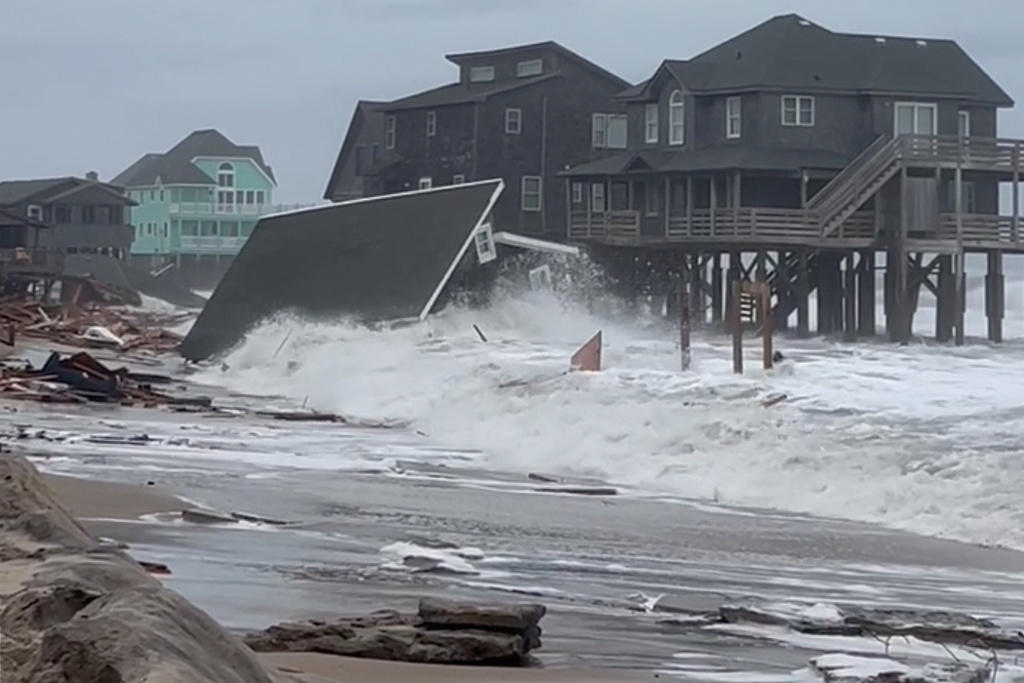
Is a Federal Reinsurance Backstop the Answer to Home Insurance Challenges?
The Brookings Institution’s Hamilton Projecthas released a proposal for a federal reinsurance backstop called US Re to leverage federal borrowing capacity and stabilize the country’s homeowners insurance market.
“Properly constructed, US Re could improve resilience while maintaining the benefits of market incentives,” authors of the plan from the think tank said.
While the idea of a federal reinsurance backstop is “well-intentioned,” Dave Snyder, vice president for policy, research, and international for the American Property Casualty Insurance Association, said it raises “serious questions.” FULL ARTICLE

Beyond Credit Scores in Home Insurance Risk Assessment
Relying solely on credit data can leave insurers with blind spots in home risk assessment and missed opportunities among thin-file homeowners.
For decades, consumer credit information has been a cornerstone of insurance underwriting and rating. While some credit information remains highly predictive of insurance loss, it does not present a complete picture. Carriers may miss profitable opportunities because certain consumers—such as long-time homeowners with little recent credit activity, or solvent individuals who avoid borrowing—fall outside the traditional scoring universe.
In states where restrictions exist on the use of credit in home insurance, this blind spot can become even wider. Several states prohibit or limit the use of credit-based insurance scores in underwriting and rating decisions.
As the U.S. home insurance market continues to face profitability pressures—and consumers seek ways to protect one of their most important assets—insurers need sharper risk assessment tools. A more holistic view of risk is possible by combining credit data with insights derived from public records, potentially expanding opportunities for segmentation, profitability and inclusion. CONTINUES
2026 Outlook/Predictions

Insurers optimistic about their investments in 2026
Insurers remain optimistic about their investments going into 2026, despite heightened market uncertainty.Insurers remain optimistic about their investments going into 2026, despite heightened market uncertainty.
This marks the fifth year in which Conning surveyed U.S. insurers about their investment focus. Two Conning analysts unpacked the 2026 findings in a recent webinar.
“Markets performed pretty well in 2025 despite Liberation Day and a lengthy government shutdown,” said Matt Reilly, head of insurance solutions at Conning. “Investment performance for insurers has been strong over the last few years.”
Insurer optimism remained high between 2024 and 2026, Conning found, with 79% of insurers surveyed saying they had a positive view of the future in 2026, down only one percentage point from 2024.
Market volatility is insurers’ biggest portfolio concern, but some risks persist, Reilly said.
Market volatility, inflation and recession risk lead the list of insurers’ portfolio concerns over the next 2-3 years. Those concerns were followed by liquidity risk, the domestic political environment and the impact of monetary policy.
The Federal Reserve’s expectation to reduce interest rates further in the next 12 months influences the investment strategy of nearly every insurer surveyed. Meanwhile, more than three-quarters of insurers surveyed said they anticipate an increase in inflationary pressures.
Most insurers expect positive equity returns in 2026, with 65% looking at returns of up to 10% and 19% expecting returns of more than 10%.
InsurTech/M&A/Finance💰/Collaboration

Berkshire Hathaway to invest $1.8B in Tokio Marine
Berkshire Hathaway Inc. *will invest 287.4 billion yen ($1.8 billion) in insurer *Tokio Marine Holdings Inc., ramping up the U.S. conglomerate's exposure to the Japanese market.
National Indemnity Company, a subsidiary of Berkshire, will make a 2.49% strategic investment in Tokio Marine, according to a recent statement. The two companies will collaborate on reinsurance and global investments including mergers and acquisitions.
The move underscores Berkshire's growing ambitions in Japan, where around six years ago — under the leadership of Warren Buffett — it revealed it had invested in the country's largest trading houses. Buffett said in an annual letter to shareholders that the firm was looking to raise ownership in Japan's five largest trading houses "over time."
The latest deal shows Berkshire is eager to win a slice of Japan's thriving insurance business, an increasingly attractive market for foreign firms. KKR & Co., Apollo Global Management Inc. and other big international players have made moves to expand in the life insurance sector, joining a rush among foreign firms to tap rising opportunities in Japan.
"The partnership with Berkshire is likely to provide an advantage by leveraging global expertise to expand the scope of operations ahead of others," said Ikuo Mitsui, a fund manager at Aizawa Securities Co.
Tokio Marine is Japan's largest property and casualty insurance company.
Lloyd’s Lab unveils Cohort 16 InsurTech innovators
Lloyd’s, the global insurance marketplace, has selected 12 companies for Cohort 16 of the Lloyd’s Lab Accelerator following its latest Pitch Day, marking the start of a ten-week programme focused on innovation across underwriting, risk and operations.
The event brought together InsurTech firms, market participants and international partners, with shortlisted companies presenting solutions before progressing into the accelerator. Selected firms will now work with managing agents, brokers and Lloyd’s to refine and scale their propositions.
Cohort 16 is structured around three themes: operational efficiency within the Lloyd’s market, development of new insurance products, and an Ireland-focused theme centred on resilience and capital. The latter is delivered in partnership with the Irish Department of Finance and targets areas including flood risk, cyber resilience, AI and export finance.
The selected companies reflect a broad range of innovation across data, automation, cybersecurity, risk modelling and climate-related risks. The 12 firms

Intelligent AI partners with Guidewire to integrate high-resolution property risk and rebuilt data
Insurtech Intelligent AI has partnered with Guidewire, a property and casualty insurance platform, to bring high-resolution property risk data directly to insurers.
The partnership will also enable insurers to rebuild cost data directly within Guidewire InsuranceSuite workflows.
Intelligent AI, originally launched through Lloyd’s Lab and recognised as Guidewire Insurtech Vanguard, provides “best-in-class” COPE (Construction, Occupancy, Protection, Exposure) and rebuild costs.
This data helps accelerate underwriting, offers a comprehensive 360-degree view of property risk, and helps resolve issues of underinsurance in a market where 40-50% of submissions arrive incomplete, which forces underwriters to spend over half of their time gathering data instead of assessing risk.
Through the partnership, insurers can seamlessly access Intelligent AI’s data across Guidewire’s platform.
Within PolicyCenter, the solution delivers accurate replacement cost estimates, enriched property attributes, and peril-specific risk indicators at key decision points (quote, bind, and renewal) to improve underwriting accuracy, risk selection, and pricing precision.
Fraud

Younger Consumers More Willing to Alter Insurance Claim Photos, Raising Red Flags for Carriers
More than half of Gen Z consumers and nearly half of millennials say they would make rule-bending edits to insurance claim photos, compared to just 12% of baby boomers, according to a new Verisk study, as reported by Risk & Insurance.
The big picture: AI-powered editing tools are democratizing insurance fraud, making sophisticated manipulation accessible to everyday policyholders. The survey reveals a generational divide in ethical boundaries around digital manipulation, with younger consumers far more willing to bend rules than older generations.
By the numbers:
- 55% of Gen Z and 49% of millennials say they are at least somewhat likely to make a small, rule-bending edit to a claim photo or document.
- 57% of consumers have used AI editing tools, primarily on smartphones, with nearly half describing results as “very realistic.”
- 98% of insurers agree that AI-powered editing tools are driving a rise in digital media fraud.
- 66% of insurers acknowledge that digital media fraud goes undetected “often” or “very often.”
- 64% of Gen Z and 54% of millennials know someone who has used AI editing tools to alter media for financial gain.
Worth noting: Carriers struggle with detection confidence — 58% feel confident spotting edits to real photos, but only 32% feel the same about identifying deepfakes. Just 27% of insurers describe cross-carrier sharing of suspicious media data as “strong and highly effective.”