
Research

Survey shows insurers using advanced analytics report strong ROI - WTW
Property and casualty (P&C) insurers in North America that invested more resources in advanced analytics and AI achieved greater profitability and premium growth, according to a new survey from WTW, a leading global advisory, broking, and solutions company.
The WTW 2026 Advanced Analytics and AI Survey reveals that insurers using more sophisticated analytics achieved combined ratios six percentage points lower and premium growth three percentage points higher compared to slower adopters between 2022 and 2024.
“ Advanced analytics and AI are beginning to yield significant payoffs, as lead carriers report measurable returns on investment.”
Laura Doddington, Head of Personal and Commercial Lines, Insurance Consulting and Technology, North America, WTW, stated: “Advanced analytics and AI are beginning to yield significant payoffs, as lead carriers report measurable returns on investment. With insurers planning to ramp up investment across personal and commercial lines, advanced analytics is shifting rapidly from competitive advantage to essential requirement to maintain market viability and drive sustainable growth.”
Financial Results

Lloyd’s posts massive profit as new strategy targets efficiency and capital advantage
Lloyd's of London has reported a strong set of full-year results for 2025, alongside the launch of a new five-year strategy aimed at sharpening underwriting performance, improving efficiency and making greater use of its capital strength.
Pre-tax profit rose 10.1% to £10.6 billion, supported by underwriting and investment returns, while gross written premium increased 4.2% to £57.9bn. The combined ratio deteriorated slightly to 87.6% (2024: 86.9%) but remained firmly within profitable territory.
Strong capital position underpins strategy shift
The market’s balance sheet strengthened further over the year, with total capital, reserves and subordinated debt rising 5.7% to £49.8bn. The central solvency ratio increased significantly to 496% (2024: 435%), while the market-wide solvency ratio edged down slightly to 200% (2024: 205%), both remaining comfortably above regulatory requirements.
Chief executive Patrick Tiernan said the results provide “a firm foundation for the challenges and risks ahead,” particularly as the market faces increasing volatility and more competitive pricing conditions.
Commercial P&C Pricing Environment Shows Mixed Trends, Chubb CEO Says
Chubb Chairman and Chief Executive Officer Evan G. Greenberg described the current commercial property and casualty pricing environment as “textured and nuanced” in a recent letter to shareholders following the company’s record 2025 results.
According to Greenberg, the broader market is moving toward a softer phase. However, he emphasized that pricing trends vary by segment rather than shifting uniformly across the industry.
Greenberg noted that pricing remains firm in certain areas, particularly in U.S. casualty lines. At the same time, conditions have weakened in other segments, including large-account and upper middle-market property across both admitted and excess and surplus lines.
He stated that while the overall market is transitioning, the changes are not consistent across all business lines. Instead, different classes and markets continue to experience varying levels of pricing strength.

Liability Insurers Face Unexpected Reserve Headwinds in Recent Years
Adverse development in 2025 concentrated in post-COVID accident years signals that loss trends are outpacing pricing assumptions industry-wide, S&P reports.
The U.S. property and casualty insurance industry recorded $7.30 billion in adverse one-year development within the other liability (occurrence) business lines in 2025 — raising new questions about reserve adequacy, according to analysis by S&P Global Market Intelligence.
Historically, other liability (occurrence) loss development flows through older accident years as claims mature over decades, the report said. Instead, 2025 data reveals a striking concentration in recent years.
Nearly $3 billion of reserve strengthening occurred in just accident years 2022 and 2023, with 2022 alone accounting for $1.45 billion in adverse movement. The trend exposes a critical problem: the industry is revising upward the ultimate loss estimates for immature underwriting years — the window where litigation dynamics and settlement trends can still dramatically expand, S&P said.
“The heavy concentration in accident years 2022 and 2023 is the most alarming, as it suggests the post-COVID underwriting years that many expected to benefit from hard market pricing are still being revised upward,” the S&P analysis noted. This dynamic creates particular concern for the business line’s most sensitive layers — umbrella and excess liability coverage — where small assumption shifts about severity can translate into billions in reserve movements.
AI in Insurance

AI is coming for insurance professionals – and women
For decades, the insurance industry has been built on a vast administrative infrastructure: the clerks who process policies, the assistants who schedule adjusters, the data-entry operators who feed information into systems, the claims processors who move paper through pipelines. These workers - overwhelmingly female, often based in smaller cities and college towns far from the coastal tech hubs - have long formed the quiet backbone of the business.
Now, a sweeping new analysis from the Brookings Institution and the National Bureau of Economic Research is putting numbers to what many in the industry have begun to sense: those workers are among the most exposed to artificial intelligence-driven displacement in the entire US economy - and among the least equipped to weather it.
The research, by Sam Manning and Tomás Aguirre of the Centre for the Governance of AI, along with Brookings senior fellow Mark Muro, does something previous analyses have largely failed to do. It does not simply measure which jobs AI can theoretically perform. It asks which workers, if displaced, would have the hardest time recovering - factoring in their savings, age, the density of local job markets, and the transferability of their skills. The resulting picture is sobering for anyone who oversees, employs, or advises workers in the insurance sector.
Cyber Risk
KYND partners Converge to scale cyber underwriting platform
KYND, a cyber risk analytics provider, has been appointed by Converge, a US-based cyber insurance MGA, to support the expansion of its digital underwriting platform and growth strategy.
The partnership will see KYND provide external cyber risk intelligence to help Converge manage high submission volumes and strengthen underwriting at scale. The move follows a technical evaluation and aligns with Converge’s broader digital transformation roadmap.
KYND’s platform enables insurers to identify vulnerabilities across internet-facing systems, supporting faster and more consistent underwriting decisions while enabling continuous risk monitoring throughout the policy lifecycle.
As part of the agreement, Converge will deploy KYND’s Signals reports, which use a traffic-light system to highlight critical vulnerabilities and prioritise mitigation actions. The reports are designed to support underwriters while providing brokers with clearer insights to share with clients.

The cyber shield: protecting high-net-worth clients from digital risks
High-net-worth families often face elevated cyber risk because of their visibility, financial resources, and complex lifestyles.
Today, almost every aspect of life is connected to the internet, from banking and investments to travel, home security systems, and even appliances. While that connectivity brings convenience, it also creates opportunities for cyber criminals.
That’s where cyber liability insurance comes in.
Just as homeowners' insurance protects our physical homes and personal belongings, cyber coverage helps shield us from financial loss and disruption caused by online threats such as identity theft, fraudulent wire transfers, ransomware attacks, and unauthorized access to personal data.
It also provides access to specialists such as digital forensics experts, identity restoration professionals, and legal advisors. These professionals provide proactive analysis, help investigate incidents, and guide the recovery process.
“Your job is to remind high-net-worth clients that prevention, cyber hygiene, zero trust, plus protection is the best strategy,” said Tamara M. Stephens, senior vice president, national client executive at Marsh Private Client Services.
Announcements

Hippo Announces Strategic Distribution Relationship with Progressive Insurance® Across Eight States
Hippo Holdings Inc. (NYSE: HIPO) today announced a strategic distribution relationship with Progressive Insurance that began earlier this year. Under an agreement with Progressive Advantage Agency, Inc., Progressive's in-house agency, Hippo's homeowners insurance products have been added to Progressive's HomeQuote Explorer® and are available both online and through Progressive's in house agents across eight states: Colorado, Georgia, Illinois, Ohio, Pennsylvania, South Carolina, Tennessee and Texas. Hippo gains access to Progressive's broad distribution by offering its home protection with potential multi-policy discounts to consumers shopping with Progressive.
"Progressive's strong focus on technology and serving the broad needs of its customers complement our proactive and tech-driven approach to home insurance," said Rick McCathron, President and CEO of Hippo. "Working with Progressive, Hippo can leverage data and technology to deliver more personalized coverage and a superior customer experience."
Commentary/Opinion

How a carrier launched an excess casualty line in 15 weeks
In the fast-moving Excess & Surplus (E&S) market, launching a new line of business typically takes anywhere between 12 and 18 months. Legacy system constraints and complex integration requirements mean that speed-to-market often remains an ambition rather than an achievable reality for most carriers.
IntellectAI, which offers AI-powered technology for wealth and insurance firms, recently released a case study showing how it helped a carrier launch an excess casualty line in 15 weeks.
When the unnamed national property and casualty (P&C) carrier identified a significant opportunity in the Excess Casualty market, however, it had no intention of waiting that long. The company set an aggressive 15-week deadline to stand up a fully functional underwriting workbench spanning five lines of business: general liability, auto, employers liability, umbrella, and excess.
Rather than following the traditional development cycle, the carrier adopted a configuration-led approach that allowed it to replace manual workflows with a unified underwriting backbone — all without compromising on functional depth. This strategy proved to be the critical differentiator that made the 15-week target not just plausible, but achievable.
Autonomous Driving/Insurance

‘Flying Cars’ Will Take Off in American Skies This Summer | WIRED
The federal government announced a new pilot program designed to get new kinds of ultralight vehicles and “eVTOLs” up and running around the country—even if they’re not fully FAA-certified.
NEW KINDS OF aircraft, sorts of “flying cars” that can take off and land with little space like helicopters but function like airplanes, will start operating in US airspace as early as June, the US Department of Transportation announced on Monday.
Eight regions across the US, including New York and New Jersey, Texas, Florida, and Albuquerque, New Mexico, will take part in a three-year pilot program that will see new aircraft designs ferrying people and cargo around the country even before they formally receive full certifications from the Federal Aviation Administration.
The companies building the tech say their aircraft are quieter, cheaper, and release fewer emissions than helicopters or airplanes. Some promise totally autonomous trips. Many involved in the project, including electric vertical takeoff and landing aircraft, or eVTOLs, and ultra-short takeoff aircraft, require way less space to operate, landing and taking off outside of traditional airports and closer to where people live and work. The companies outline futures in which regular people can zip between neighboring cities in a matter of minutes, sailing above traffic and reordering the economy as they go.
Tesla is one step away from having to recall FSD in NHTSA visibility crash probe
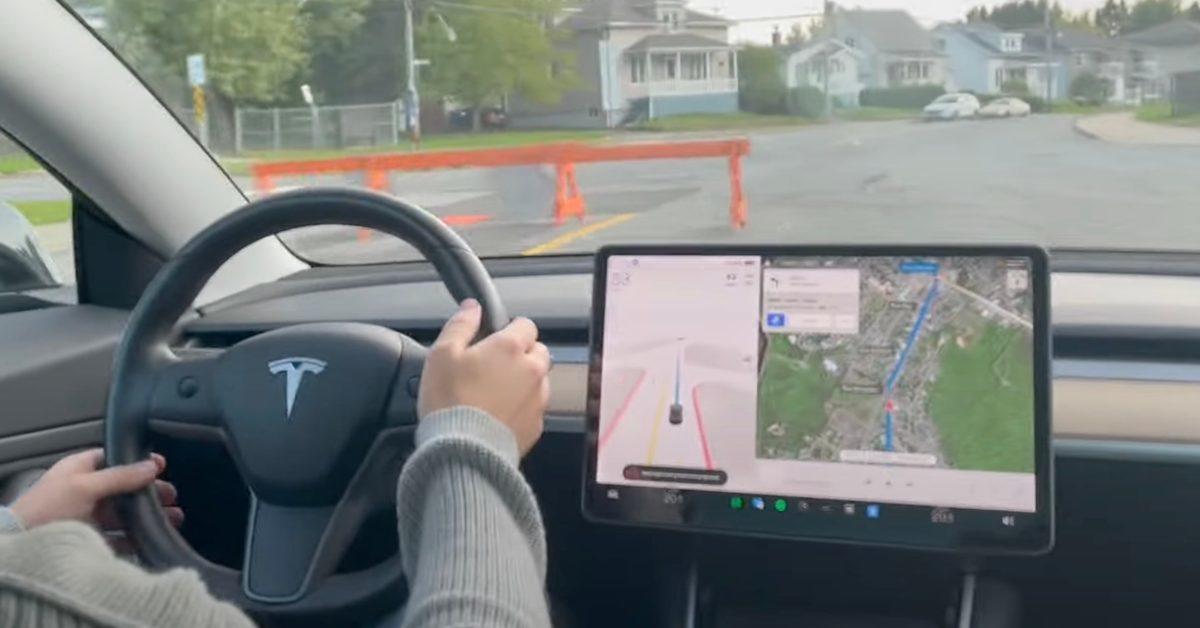
NHTSA has escalated its investigation into Tesla’s “Full Self-Driving” system’s inability to handle reduced visibility conditions, upgrading the probe to an Engineering Analysis covering an estimated 3,203,754 vehicles — the step that typically precedes a recall.
The agency found that FSD’s degradation detection system fails to warn drivers when cameras are blinded by common road conditions like sun glare and fog, and that Tesla may be under-reporting related crashes.
Third concurrent FSD investigation
The scope has since expanded to nine total incidents with one fatality and one injury. And NHTSA is now examining six additional potentially related incidents on top of those.
This makes it the third concurrent federal investigation into FSD. NHTSA is already running a separate probe (PE25012) into 58 incidents involving traffic violations like running red lights and crossing into opposing lanes, plus a separate inquiry into Tesla’s crash reporting practices..
Claims

Salvato Auctions Expands Digital Titling Capabilities with Addition of National Title Exchange
Salvato Auctions, the smarter auction for insurance vehicles, today announced a new integration with National Title Exchange (NTX), alongside its existing partnership with the National Digital Titling Clearinghouse (NDTC). Both integrations are now live for all current and new customers to benefit from, directly via Salvato Auctions’ platform.
The addition of NTX alongside the NDTC gives Salvato Auctions access to the full range of nationwide title transfer solutions — enabling Salvato's platform to select the optimal path to title the vehicle in all claim scenarios, across all 50 states.
Salvato Auctions' title decision engine now evaluates each vehicle throughout the process, routing it through the most efficient path to title the vehicle in the insurance carrier’s name. In all scenarios, Salvato Auctions’ platform continues to eliminate the need for any physical paperwork from vehicle owners, preserving the speed and policyholder experience that Salvato customers have come to expect.
For buyers, Salvato Auctions’ title process ensures regular access to 'fresh' inventory allowing vehicles to be purchased as much as 4 to 6 weeks closer to the date of loss. Once a purchase is complete, digital titles appear in the buyer's Dashboard within hours. This digital-first approach provides an unprecedented level of speed and efficiency, giving Salvato buyers a distinct competitive edge in the marketplace.
Team One Insurance Services Partners with Adjusto
Team One Insurance Services, a national provider of independent adjusting and claims services, has partnered with Adjusto to modernize the handling of contents claims through AI-powered valuation and workflow tools designed specifically for adjusters.
Contents claims remain one of the most detailed and time-consuming elements of property loss. From total-loss fires to theft and displacement events, adjusters must evaluate large volumes of personal property while balancing accuracy, speed, and policyholder sensitivity. Many adjusting teams still rely on fragmented tools and manual research that slow resolution and increase administrative burden.
Through its partnership with Adjusto, Team One is introducing a more structured approach to contents valuation that integrates directly into the adjuster workflow. The platform enables faster, defensible valuations while preserving the judgment and expertise that experienced adjusters bring to complex claims.