
Research

Hippo Releases Fourth Annual Housepower Report
Hippo (NYSE: HIPO), the technology-enabled insurance group, today released its fourth annual Housepower Report, which examines how homeowners are navigating affordability, maintenance, and protection amid rising costs and climate risk.
"Homeowners are feeling better about their homes than they have in years, but that sentiment is being tested by rising costs and growing gaps in preparedness," said Hippo President and CEO Rick McCathron. "As homes age and extreme weather brought by climate change intensifies, homeowners need better tools, clearer guidance, and protection plans that help them stay ahead of unexpected expenses. At Hippo, we use deep home expertise and property data to help homeowners protect their investment with insurance and proactive home care insights designed for today's risks."
Key Findings from the 2026 Housepower Report:
Homebuyer Satisfaction Continues to Increase
Homebuyer regret has declined from pandemic-era highs. While 63% of homeowners reported regret in Hippo's 2021 Housepower report, a majority today (56%) say they have no regrets about their purchase. For those who do report regret, top concerns are less about the home itself and more about ongoing costs, upkeep, and long-term maintenance responsibilities. Most plan to stay in their current home for at least five years (68%).
Affordability and location are now the top drivers of home selection. In 2025, one-third of homeowners cited staying within budget and proximity to work, school, or family as their most important factors. As buyers prioritize affordability and location, many are purchasing older homes bringing new maintenance and protection challenges.
News

Florida revisits no-fault repeal
The proposal returns despite past vetoes and industry warnings about higher rates
Florida lawmakers are again moving to dismantle the state’s no-fault auto insurance system, reviving a debate that has surfaced repeatedly in recent years amid concerns about costs, coverage, and litigation.
The latest effort comes with the filing of Senate Bill 522, which would repeal more than a dozen statutes that form the framework of Florida’s personal injury protection, or PIP, requirements and no-fault rules, according to the bill’s text. The measure mirrors proposals that have stalled or failed in prior sessions.
Under the bill, drivers would no longer be required to carry PIP coverage. Instead, motorists would have to carry minimum liability limits of $25,000 for bodily injury or death of one person, $50,000 for accidents involving multiple injuries or deaths, and $10,000 for property damage.
The 108-page proposal also makes a series of conforming changes to insurance law, including updates to coverage requirements and exclusions for recreational vehicle dealers, reflecting what lawmakers describe as a post-PIP regulatory environment.

Underwater car trade-ins, debts climb: Edmunds
As consumers contend with higher auto payments, new data from car website Edmunds suggests they may be falling into a cycle of negative equity — where their outstanding auto loan balances are higher than the value of their cars.
In the fourth quarter of 2025, 29.3% of trade-ins toward new car purchases were “underwater,” or had negative equity, according to Edmunds. That is the highest share since the first quarter of 2021, when 31.9% of trade-ins had negative equity, according to the data.
The average amount owed on trade-ins with negative equity rose to $7,214 — an all-time high, according to Edmunds. More than one-quarter of trade-ins had more than $10,000 in negative equity — also a record high.
Drivers trading in a car with negative equity typically need to come up with cash to pay that balance, or roll the debt into their new loan.
AI in Insurance
Travelers partners with Anthropic
Travelers has partnered with Anthropic to expand its AI-enabled engineering and analytics capabilities, rolling out personalized Claude AI assistants to nearly 10,000 employees across technology, data science, analytics and product teams.
The deployment is aimed at accelerating software development, analytics workflows and machine learning model creation. Each assistant is tailored to an employee’s role and integrated with Travelers’ internal tools, systems and institutional data, enabling faster insights, higher-quality outputs and more efficient execution of strategic initiatives tied to risk expertise, customer experience and productivity.
The initiative builds on Travelers’ broader internal AI strategy. More than 30,000 employees already have access to generative AI tools through TravAI, the company’s secure in-house agentic AI platform, which integrates multiple frontier models with internal systems. The expanded use of Claude operates within Travelers’ established Responsible AI Framework, which governs the development and deployment of AI and advanced analytics across the organization.

Generative AI in Insurance | Bain & Company
Generative AI in insurance refers to a class of artificial intelligence technologies capable of creating new content—such as text, summaries, images, code, or conversational responses—based on patterns learned from large datasets. These systems are typically powered by large language models and multimodal models that work with both structured and unstructured data.
In the insurance industry, generative AI has gained attention as an extension of earlier AI and advanced analytics capabilities. Its ability to interpret and generate natural language and images makes it particularly relevant for insurance processes that are complex, document heavy, and knowledge intensive across life, property and casualty (P&C), and health insurance.
How generative AI works in Insurance
Generative AI systems are trained on large volumes of data to learn statistical relationships between words, concepts, and visual elements. Once trained, they generate outputs in response to prompts or queries.
In insurance settings, generative AI often operates alongside traditional AI models. Inputs may include policy documents, claims files, underwriting notes, call transcripts, emails, images, and data from connected devices. Generative models synthesize or summarize this information, while traditional analytics handle prediction, scoring, or rule-based decisions. These systems are commonly embedded within existing workflows, providing assistance to employees, agents, and customers rather than making autonomous decisions. MORE
Announcements
Cambridge Mobile Telematics Launches DriveWell Fleet
Industry-leading telematics platform expands to commercial auto insurance, providing 100% telematics coverage and the most accurate risk pricing
Cambridge Mobile Telematics (CMT), the world’s largest telematics provider, today announced DriveWell Fleet, a solution that enables commercial auto insurers to strengthen pricing decisions across their entire book of business by incorporating telematics data.
DriveWell Fleet brings the benefits of CMT’s proven telematics platform to the commercial auto ecosystem, delivering normalized telematics service provider (TSP) data from connected vehicles and offers proprietary hardware solutions for unconnected vehicles, enabling 100% telematics coverage for fleets.
DriveWell Fleet is built to help insurers grow profitably while improving safety and delivering premium savings to policyholders. DriveWell Fleet addresses three key challenges for commercial insurers:
- Coverage – Achieve broad fleet coverage using CMT’s Bring Your Own Device (BYOD) platform for connected vehicles and proprietary Tag Pro and Tag Max hardware for unconnected vehicles.
- Data quality – Access normalized, high-frequency telematics data that improves risk selection, segmentation, and pricing accuracy.
- Ease of integration – Accelerate program adoption with streamlined consent flows and fleet onboarding.
2026 Outlook/Predictions

Insurance 2026: Progress Through Technology and Collaboration | Insurance Innovation Reporter
Profitability, AI adoption, climate risk, and consolidation define the forces shaping property/casualty insurance in 2026.
Looking ahead, the 2026 property/casualty insurance environment may be easier to forecast than the past several years. Most experts have suggested that 2026 will be a year of profitable growth. Fitch, for example, suggests a combined ratio of 96 percent to 97 percent, and even the volatile homeowners market is anticipated to stabilize.
At the same time, it is easy to predict another year filled with artificial intelligence in insurance, building on widespread hype and numerous announcements of large, multi-year investments by carriers such as Travelers, Nationwide, GEICO, and Chubb. Just how deeply AI will ultimately affect insurance remains less clear, although certain areas are coming into focus, including pre-binding workflows, underwriting data, and claims and FNOL analysis.
Alan Demers and Stephen Applebaum
Claims

Adjusters Launch ‘CarFax for Insurance Claims’ to Vet Carriers’ Damage Estimates
Two independent claims adjusters in the Southeast have teamed up to create what they say is a quick, low-cost way for property owners to double-check insurance carriers’ damage estimates on claims.
They’re calling it “CarFax for property insurance claims,” referring to the site that checks for accident reports on vehicles.InsuranceClaim123.com, as it’s known, is a tool that could potentially have an impact on the way insurance carriers, lawyers and public adjusters do business.
The system uses a bit of artificial intelligence along with building-permit and other records, photographs, and adjusters’ intuition to find possible oversights by insurance company adjusters, including missed property damage, inaccurate material prices and cases in which insurers offer to pay only repair costs instead of full replacement value.
People

The Jacobson Group Appoints Corey Pinkham as CEO; Greg and Rick Jacobson Transition to Board Leadership | The Jacobson Group
The Jacobson Group, a leading executive search and staffing firm for the insurance industry, is excited to announce the appointment of President Corey Pinkham to chief executive officer. Current co-CEOs Gregory P. and Richard L. Jacobson will transition from day-to-day leadership to serve on the firm’s board, with Greg Jacobson assuming the role of chairman.
This planned succession reflects the natural evolution of The Jacobson Group’s leadership team and its continued commitment to delivering exceptional talent and service to the insurance industry.
“Rick and I are proud of the legacy our father [the late David Jacobson] began more than 50 years ago and are honored to have grown The Jacobson Group into the firm it is today,” said Greg Jacobson. “This leadership transition ensures our clients, candidates and team will continue to benefit from the same dedication to excellence and partnership that has long defined the firm. We are confident Corey’s leadership will guide the organization into its next chapter of growth and success.”
Since joining The Jacobson Group in 2023, Pinkham has held leadership roles overseeing the firm’s full suite of search, staffing and corporate functions. Most recently as president, he played a central role in driving innovation, advancing operational efficiency, and strengthening both client relationships and industry engagement. Prior to The Jacobson Group, Pinkham held senior leadership positions at Randstad Technologies.
Data Privacy
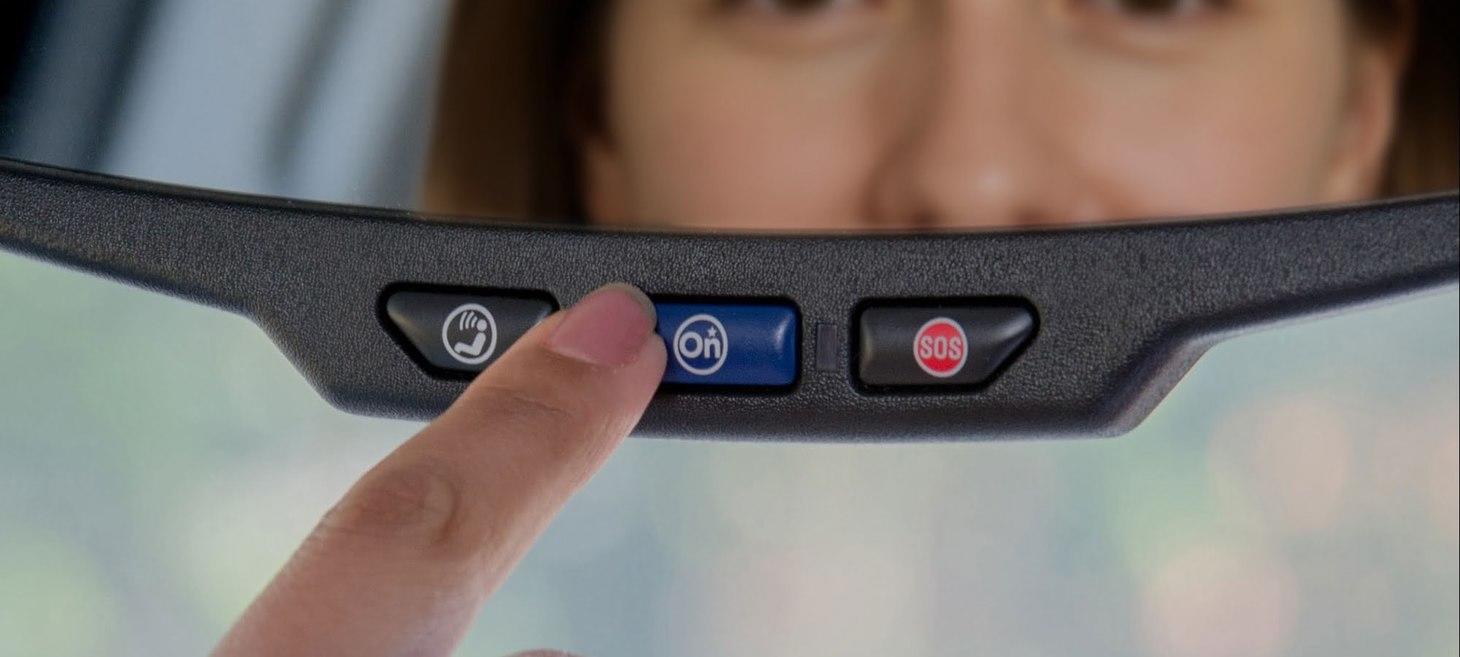
FTC Says GM And OnStar Were Watching and Selling Your Data
Today, the Federal Trade Commission slammed the brakes on General Motors’ shadowy data dealings, finalizing a sweeping 20-year order against the automaker and its OnStar subsidiary.
This action settles explosive allegations that GM secretly harvested and sold the intimate driving lives of millions, from your nightly commute to every hard brake, often as frequently as every three seconds. For affected owners, the betrayal arrived in the form of skyrocketing insurance bills.
The core of the government’s case paints a picture of deliberate concealment. The FTC asserts GM used a “misleading enrollment process” for its OnStar Smart Driver feature. Drivers believed they were signing up for a service to “assess their driving habits,” but the fine print hid a lucrative scheme.
Without clear consent, GM bundled precise geolocation and driving behavior into a product it sold to data brokers and, critically, consumer reporting agencies. This data then flowed directly to insurance companies, influencing rates and coverage decisions.

What Collision Repairers Need to Know About Proposed Vehicle Privacy Acts
Federal privacy bills could redefine collision repairers' access to vehicle data.
AVOA executive director Richard Ward III says proposed federal vehicle privacy acts would protect consumer choice and ensure repairers can access vehicle data with owner consent.
Historically, when a car was purchased by an individual or as part of a fleet, the owner controlled the data it generated, such as mileage, fuel levels, tire pressure, etc. As modern vehicles become more sophisticated, there is an increasing amount of information and data needed for them to function.
Many OEMs are claiming ownership of this data and imposing restrictive terms and fees that limit access to and control of it, according to Richard J. Ward III, the executive director of the American Vehicle Owners Alliance (AVOA).
"For too long, automakers have held the keys not just to our vehicles, but also to the data we generate by driving them,” said Ward, who is also the senior policy advisor of legislative and government affairs at Venable, a mid-size law practice in Washington, DC.
Stacey Phillips Ronak is an award-winning writer for the automotive industry based in Southern California. She has 25 years of experience and co-authored two books.
Payments

Digital Payments Drive Insurance Customer Loyalty | Insurance Thought Leadership
Fast digital claims payments create customer loyalists who stay despite premium increases, new research shows.
In an increasingly competitive marketplace, insurers are looking for every edge they can find to enhance operational efficiency and drive profitable growth. Digital payments have had a positive impact in these areas as the transition from traditional payment by check streamlines the disbursement process and reduces costs. Now, new research shows that digital payments are just as important when it comes to retaining customers in the face of rising premiums.
One Inc. commissioned industry analyst Celent to investigate key drivers of policyholder satisfaction in the claims process so insurers could better understand where to focus improvement efforts that would really move the needle. To do this, Celent polled more than 300 auto insurance claimants about their experience.
The good news is that 75% of respondents were "somewhat" or "extremely" happy with their claims experience. Moreover, a good claims experience can also create "loyalists," which Celent defined as policyholders who will stay with their insurer despite a rise in price. Nearly 40% of cat claimants and 25% of non-cat claimants in the study said they would stick with their current insurer, even if it costs them more. Impressive numbers, to be sure, but that leaves a significant majority of policyholders — both cat and non-cat — at risk with every claim.
Ian Drysdale is CEO of One Inc.