
News
Florida Homeowners Insurance Rates Are Falling – Is Your State Next? | U.S. News
Florida homeowners who have a policy with state-backed Citizens Property Insurance Corporation will start to see decreases in their home insurance premiums in spring 2026, Governor Ron DeSantis announced in January.
Statewide, Citizens’ rates will go down by 8.7% on average, and more than 150,000 Citizens policyholders will receive a reduction of 10% or more. DeSantis attributes this good news for consumers to the state’s recent tort reforms in 2022 and 2023.
Amid a high volume of insurance lawsuits and growing climate risks that have led to insurers leaving the state, Florida homeowners have been subject to a limited choice of carriers and the most expensive home insurance premiums in the country, according to a 2025 report by the Consumer Federation of America.
The state’s legal reforms aim to reduce the frequency of lawsuits against insurance companies over denied claims. As a result, 17 new insurers have entered the state’s private home insurance market, and dozens have applied for rate decreases, according to the governor’s office.
As the Florida market becomes less litigious and friendlier to insurance companies, consumers can benefit from having more provider options and coverage flexibility, says Charley Todd, founder of the Florida-based independent agency Charley Insurance.
“The reforms that have been enacted by the Florida legislature in the past few years are meant to stabilize the insurance market in Florida, which had become unsustainable due to litigation costs, insolvencies and underwriting restrictions,” Todd says.

Aon adds $1 billion to data centre insurance program amid AI boom | Insurance Business
Aon has announced a US$1 billion expansion of its Data Centre Lifecycle Insurance Program (DCLP), bringing total capacity to US$2.5 billion.
The global brokerage said the move is a response to increased investment in cloud computing, artificial intelligence and digital infrastructure.
The DCLP, first launched in 2025, is a multi-line insurance solution designed to cover data centre projects from construction through to ongoing operations. The programme consolidates traditionally separate risk classes – including construction, cyber, cargo and operational risks – into a single coordinated insurance product.
"Managing risk throughout the data centre lifecycle is a strategic imperative – these platforms drive innovation, connectivity and economic growth," said Greg Case, president and CEO of Aon. He added that building resilience into data centre infrastructure is essential as these facilities become more complex.

Improved P&C insurance Q3‘25 underwriting results driven by US personal lines: AM Best
Despite a turbulent 2025 start, marked by devastating California wildfires and multiple severe convective storms, the US property & casualty (P&C) insurance industry successfully recovered through the third quarter, driven largely by sustained momentum in personal lines, which managed to offset Q1 losses, AM Best stated in a recent report.
By the end of September, the industry’s two largest sectors, homeowners/farmowners and private passenger auto, reported year over year improvements in direct incurred loss ratios, according to the report.
Through Q3 2025, AM Best noted that the P&C industry experienced a significant surge in net underwriting income, to approximately $35 billion from $3.7 billion in the same period of 2024.
“The homeowners/farmowners and private passenger auto lines of coverage experienced smaller direct premium gains through third-quarter 2025 compared with the double-digit growth through the same period in 2024. However, the continued premium growth reflects carriers still pushing for rate adequacy where they believe it is needed,” Helen Andersen, industry research analyst, AM Best, stated.
Loss ratio results for general liability lines diverged significantly in the first three quarters of 2025 compared to the same period in 2024, the report also noted.
Announcements
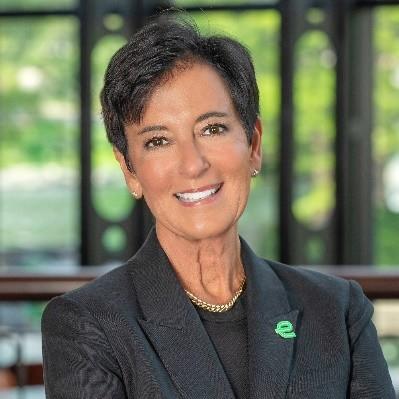
Collision Engineering Career Alliance Appoints Mary Mahoney as President
Mahoney to retire from her role at Enterprise Mobility to focus on advancing the next generation of collision repair talent
The Collision Engineering Career Alliance (Collision Engineering) today announced that industry veteran Mary Mahoney has been appointed president of the nonprofit organization. Mahoney will step into the role full time following her retirement from Enterprise Mobility, effective Feb. 1, 2026.
Mahoney brings a wealth of experience to the role, having dedicated 40 years to Enterprise Mobility before retiring from her position as vice president of the Replacement & Leisure division. In that role, she was responsible for managing industry relationships with global insurance, collision, dealer and OEM customers.
“When I started my career at Enterprise Mobility as a Management Trainee, I never imagined where the journey would lead. Enterprise Mobility’s unwavering dedication to our industry and commitment to its future are truly incredible,” said Mahoney. “The collision repair sector is evolving rapidly — vehicles are more advanced, technicians need broader and deeper skills, and traditional pathways into the field are not keeping pace. As I devote more of my time to Collision Engineering, my priority is clear: to help develop the skilled talent our industry needs and nurture the partnerships that strengthen it. To me, this next chapter is not a conclusion, but an exciting continuation of the work we have started together. I’m grateful to Enterprise Mobility and to everyone who shares this vision, and I encourage others to join us in supporting this critical need. It will take all of us to safeguard the future of collision repair.”
The Collision Engineering Career Alliance is active at partner schools across the country including College of Lake County in Grayslake, Illinois; Contra Costa College in San Pablo, California; Parkland College in Champaign , Illinois; Metropolitan Community College in Omaha, Nebraska; Sandhills Community College in Pinehurst, North Carolina; North Dakota State College of Science in Wahpeton, North Dakota; and El Camino College in Torrance, California.
Those interested in supporting the effort to develop the next generation of collision engineering professionals are encouraged to learn more by visiting this link
Telematics, Driving & Insurance

Consumer Acceptance of Telematics Widens, Says Survey
Consumer acceptance of telematics technology in auto insurance is growing, creating opportunity for insurers who can cater to tech-driven drivers who crave personalized pricing and service.
Today, 82% of policyholders view telematics apps positively, according to a recent survey by the global insurance think tank IoT Insurance Observatory in partnership with the mobility data and analytics company Arity. Sixty percent of respondents said they are open to switching to usage-based insurance, and 52% would share driving scores to receive personalized pricing.
Predict & Prevent
Insurance Shifts to Predict & Prevent | Insurance Thought Leadership
Rising loss severity compels insurers to evolve from reactive "repair and replace" models to Predict & Prevent partnerships.
For generations, the fundamental promise of insurance brokers and insurance companies has been reactive: a financial safety net designed to catch clients after they fall. We repair, and we replace.
However, as we navigate an increasingly volatile risk landscape marked by climate change, supply chain complexity, and inflationary pressures, this traditional "utility" model is under increasing strain, particularly in sectors where loss frequency and severity are on the rise.
The industry is approaching an inflection point where the frequency and severity of losses in certain sectors are threatening the viability of traditional indemnity coverage.
The most critical strategic insight for leadership today is that sustainable profitability and continued relevance will no longer come solely from sophisticated pricing of risk. It will come from reducing the risk itself.
We are witnessing a necessary paradigm shift from a reactive "repair and replace" model to a Predict & Prevent partnership.
Manjot Singh is an insurance broker with Qubit Insurance.
2026 Outlook/Predictions

The 7 Themes I'm Tracking in 2026 | Insurance Thought Leadership
While our coverage at ITL these days can feel like "all AI, all the time," there's still a massive open question: How quickly can we develop and adopt AI agents that can act on our behalf?
Most of the articles submitted to me are from enthusiasts, but there are reasons to be cautious, too. We've all seen or read about the hallucinations AI can have, about how AIs can learn to be ugly, and so on. How do we know they won't do something stupid or offensive if we cut them loose? One nasty lawsuit or loss of a major customer can outweigh a lot of efficiency gains.
Insurance will get there with AI agents. The question is just how fast. If you could tell me today what adoption would look like at the end of the year, I could tell you a lot about the state of innovation in insurance. So I'll be watching closely.
Six other areas also seem to me to be key for this year. The two other huge ones are the spread of the IoT, which is letting us monitor so many more issues in real time, and the growing adoption of the Predict & Prevent model, which helps turn that new data into ways of protecting customers. Embedded insurance and parametric insurance are also playing increasingly important roles — and have lots of potential still. And autonomous vehicles have built a launching pad that could let them take off this year, with all sorts of implications for insurers. Finally, I'll focus on the general notion of speed. Sometimes, a quantitative change is important enough to make a qualitative difference, and I think some processes in insurance, such as underwriting, may start moving so much faster that they could change the competitive landscape.
Let's have a look at the seven keys I'll be scrutinizing this year — and think you should be watching, too.
Paul Carroll is the editor-in-chief of Insurance Thought Leadership.

Allianz: Top global risks of 2026
Slideshow: Allianz: Top global risks of 2026
Artificial intelligence, cybersecurity and global political unrest are top of mind for risk executives this year, according to Allianz Commercial’s 15th annual Allianz Risk Barometer.
The rankings are based on the views of 3,338 risk experts in 97 countries and territories, including senior managers, risk managers, brokers and insurance experts.
Accelerated adoption of artificial intelligence, and the growing importance of AI to companies’ core functions, has also increased the number and complexity of risks associated with the technology. AI jumped up several spots in the risk ranking this year, though almost half of respondents said they still believe AI is bringing more benefits than risks to their industries.
“Companies increasingly see AI not only as a powerful strategic opportunity but also as a complex source of operational, legal and reputational risk,” said Ludovic Subran, chief economist at Allianz, in a statement. “In many cases, adoption is moving faster than governance, regulation, and workforce readiness can keep up. As more firms attempt to scale in 2026, they will face greater exposure to system-reliability issues, data-quality constraints, integration hurdles and skilled talent shortages. Meanwhile, new liability exposures are emerging around automated decision-making, biased or discriminatory models, intellectual-property misuse, and uncertainty over who is responsible when AI-generated outputs cause harm.”
Political unrest in multiple countries is also worrying executives, as reflected in several of the risks highlighted on this year’s list, including supply chain disruption, business interruption, political violence and legislative/regulatory changes.

Insurance top trends 2026 - Capgemini
Discover today’s most critical insurance trends and their impact on your organization.
The push for stronger engagement, innovation, and customer value is reshaping the insurance landscape. This evolution goes beyond adopting new tools – it represents a fundamental shift in how organizations operate and compete. Find the insights you need to plan effectively and lead with confidence in the year ahead in our trends book.
Claims

Couple sues Liberty Mutual, tech vendors over alleged claims underpayment scheme | Insurance Business
Lawsuit alleges vendors promised carriers "15-20% Indemnity Savings" on average
A West Virginia couple is taking aim at Liberty Mutual and several technology vendors, accusing them of running a coordinated scheme to underpay insurance claims.
Edward Patrick Ryan Jr. and Tammy Lynn Ryan filed their lawsuit on January 7, 2026, in the US District Court for the Northern District of West Virginia. The case names not just Liberty Mutual Insurance Company and Liberty Insurance Corporation, but also **CCC Intelligent Solutions Inc., Bodyshopbids Inc. (doing business as Snapsheet Inc.), Allcat Claims Service LP, Claim Assist Solutions, and Claim Assist Technologies LLC.*
The dispute traces back to an April 2025 tornado that tore through Morgantown, damaging the couple's home and five vehicles. What followed, according to the lawsuit, was a claims process the Ryans say was rigged against them from the start.
At the heart of the case are allegations that Liberty Mutual farmed out critical claims work to third-party vendors whose entire business model revolves around shrinking payouts. The lawsuit points to Snapsheet, which handled virtual appraisals for the Ryans' vehicles, and cites marketing materials that allegedly promise carriers "15-20% Indemnity Savings" on average. The filing also claims Snapsheet trains its estimators to avoid mentioning poor photo quality in their assessments, effectively hiding the limitations of remote evaluations.
For total loss valuations, Liberty Mutual turned to CCC Intelligent Solutions. The lawsuit highlights language in CCC's reports stating they reflect the company's opinion "based on information provided to CCC by LIBERTY MUTUAL PERSONAL INSURANCE COMPANY" and that "no other person or entity is entitled to or should rely upon this Market Valuation Report." The Ryans argue this shows the valuations were never meant to be independent assessments.
Then there is Claim Assist, which allegedly operates an AI-driven claims platform serving six of the top ten property and casualty carriers in the country. The company runs a network of more than 2,000 employees and approximately 17,000 licensed independent contractors. According to the lawsuit, the platform uses a scoring system that rewards adjusters who close claims quickly and cheaply, creating built-in pressure to lowball policyholders.
The numbers tell the story. Liberty Mutual's initial estimate for the Ryans' home damage came in at $24,304.44. An independent public adjuster later pegged the replacement cost at $160,126.17. The personal property portion of the claim, valued at more than $11,000, was allegedly never even reviewed. On the auto side, payments after deductibles ran as low as $212.67 for a 2019 Cadillac Escalade.
The Ryans are pursuing claims for breach of contract, bad faith, violations of West Virginia's Unfair Trade Practices Act, civil conspiracy, fraud, unjust enrichment, and negligent misrepresentation. They are seeking compensatory and punitive damages, along with an order blocking the defendants from continuing these alleged practices.
The case remains pending before Judge Kleeh, with no determination yet made on the merits.

Predicting Claims Volume in 2026: Key Factors to Watch - PartsTrader
[Ed. Note: Enlyte, a leader in technology, networks and services for the property and casualty industry, announced in December it has entered into an agreement to acquire PartsTrader, the industry's leading parts procurement marketplace. Strategic investment brings together industry-leading parts procurement marketplace with Mitchell’s premier damage appraisal platform]
As we start a new year, many in the collision repair industry wonder what the new year has in store. 2025 was an unusual year, with falling claims volume across the industry, but rising total loss frequency.
As we look at 2026, the obvious question is—will that continue? Several factors influence claims frequency, such as fuel prices, weather, and increased deductibles. So far, we are experiencing a reduction in fuel prices, which means more miles driven by the motoring public and, in turn, increased potential collisions.
Weather can be a bit more nuanced. Massive amounts of snow, such as recently seen in New York, reduce winter driving and therefore would result in a decrease in accident frequency in those areas. The key is to get enough snow to make conditions slick, but not enough to discourage driving altogether. A second weather factor to watch for is icy conditions in southern states, where most of those states do not have road salt spreading capabilities.
Increased state minimum limits, such as the newly enacted increases in Virginia, California, and Utah, cause premiums to increase, and many drivers will opt for higher deductibles or eliminate coverages in order to offset those cost jumps. This means fewer small claims being made through carriers. Some owners will still opt to pay out of pocket, and customer-pay jobs did increase in 2025 and will likely continue to increase in 2026. However, the “sticker shock” experienced by the average vehicle owner when faced with the cost of minor collision repair means that many drivers will opt to “keep the dent and pay the rent.”
Greg Horn is the Chief Industry Relations Officer at PartsTrader, the leading online collision parts marketplace
Legal System Abuse/Social Inflation

APCIA Backs Federal Bill to Require Litigation Funding Disclosure
The American Property Casualty Insurance Association (APCIA) has released a statement in support of federal legislation, up for committee discussion today, that is meant to increase the transparency of third-party financers in litigation.
APCIA’s Sam Whitfield, senior vice president of federal government relations and political engagement, said the legislation is a “positive step forward.” The bill would increase clarity by requiring all contracts for funding arrangement be submitted to the court. According to the bill’s text, parties in litigation or their counsel must disclose in writing all other parties to a civil action that will receive any payment contingent on the outcome of the case.
“We believe this will facilitate critical litigation transparency to the legal system,” APCIA said. “We will continue working with Representative Issa, the bill’s sponsors, and other stakeholders as the legislation evolves to ensure it delivers disclosure requirements for parties who engage in for profit investing though our courts.”