
Research
Anxious but Opportunistic, Investors Aren't Waiting Out Uncertainty
Inflation and market volatility have created one of the most complex financial environments in recent memory, causing more than three in four (77%) non-retired investors to be concerned about a U.S. economic recession over the next 12 months. However, recent data from the Nationwide Retirement Institute reveals that rather than retreating, a growing number of Americans are leaning in.
The study shows a notable shift from caution to action, with investor activity at some of the highest levels tracked across the study. One in three (33%) non-retired investors say they will change their retirement savings approach over the next 12 months by planning to take advantage of investment opportunities now, up from 21% in the summer of 2024. More than one in five (22%) say they plan to manage their investments more aggressively, up from 16% in 2024.
The data also shows an emerging sense of stabilization in retirement planning, even as concerns remain elevated. Just 15% of non-retired investors say they plan to retire later than planned, down from a peak of 22% in 2024. The number of investors who don't know if they will ever be able to retire (11%) is down from a high of 16% in 2024.

Insurance Distribution: Deep Dive on Broker Efficiency and AI | William Blair
Adam Klauber, CFA, partner, and group head of the financial services and technology sector, examines the impact of AI on the operating margins and profitability of core insurance brokers in Insurance Distribution: Deep Dive on Broker Efficiency and AI. Specifically, he analyzes where operating margins are today, where they could be in five to 10 years, and how they get there. Four key factors that may drive margin expansion in the next decade include:
- Revenue scale leverage 0 Centralization of middle- and back-office infrastructure
- Business mix shift
- Cyclical factors, including higher inflation and interest rates
Announcements

Kin Expands California Homeowner Focus with New Condo and Flood Insurance Options | Morningstar
Kin, the direct-to-consumer provider of insurance and home finance solutions for homeowners, today announced two new coverage options for California homeowners: condo (HO6) insurance and a flood insurance add-on to Kin home insurance policies. Both add to the diverse coverage options Kin has made available to Californians both before and after the devastating January 2025 wildfires.
Major insurers pulled back or exited California following catastrophic wildfire losses. More than 684,000 Californians now rely on the California FAIR Plan — a last-resort option that offers limited coverage at significant cost.
Kin is moving in the other direction. The company expanded to help California homeowners find coverage in the weeks following the January 2025 wildfires. Now, with condo insurance and flood coverage, Kin is deepening that commitment for two groups of California homeowners who lack sufficient options.
"We started helping Californians find coverage before the January 2025 wildfires and never retreated. And, since then, Kin's commitment has only grown. Offering flood and condo insurance options are two more ways Kin helps homeowners protect their most valuable assets, in a market where it's harder to do so," said Kin Founder and CEO Sean Harper.
Financial Results

US Insurers Rally as Stocks Shift from AI Loser to Safe Haven
US insurance-related stocks rallied Tuesday, pushing an industry gauge to a record, as artificial intelligence concerns drove traders toward defensive parts of the market.
The S&P 500 Insurance Industry Index jumped as much as 2.8%, with Erie Indemnity Co., Brown & Brown Inc. and Willis Towers Watson Plc among the top performers. Meanwhile, a measure of brokers climbed as much as 4.3%, trading at the highest intraday level since Oct. 24.
The surge comes as the tech-heavy Nasdaq 100 Index is poised to enter a correction as worries about the eventual payoffs from AI investments sours sentiment in technology giants.
"It's unsurprising to see insurers as a safe haven given their defensive nature and the possibility of higher for longer interest rates boosting investment income and pushing peak return on equities out a little further," said Bloomberg Intelligence analyst Matthew Palazola.
Shares of insurance firms have climbed in recent weeks buoyed by strong earnings and a broader market rotation away from some of the megacap tech companies amid worries about heavy AI spending. Combined with mounting geopolitical tensions, investors have increasingly gravitated toward defensive sectors like insurance, steering away from megacap stocks that have powered much of this year's stock market advance.
Cincinnati’s net income jumps 83% to $1.26bn in Q2’26
US primary insurer Cincinnati Financial Corporation reported a net income of $1.255 billion for the second quarter of 2026, up 83% from $685 million in the same period a year earlier.
Cincinnati Financial CorporationCincinnati said the result is after recognising an after-tax increase of $882 million in the fair value of equity securities still held during the second quarter of 2026.
The firm attributed the increase in net income to after-tax net increases of $657 million from net investment gains and $28 million from investment income, partially offset by a $115 million decrease from property and casualty underwriting profit.
Non-GAAP operating income totalled $224 million, a 28% decrease from $311 million, driven by an unfavourable effect of $61 million from an increase in after-tax catastrophe losses.
For the quarter, earned premiums increased 6% to $2.64 billion from $2.480 billion in Q2’25.
Falling property insurance pricing hits Brown & Brown’s organic revenue -
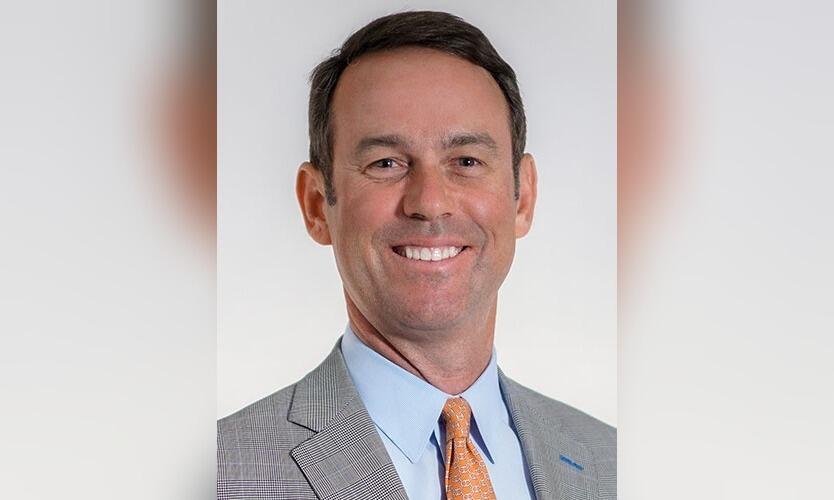
Softening commercial property rates dented organic growth at Brown & Brown during the second quarter, with some property rates falling sharply, the brokerage said Tuesday.
Commercial insurance rate changes in the second quarter were broadly consistent with the first quarter, with some additional declines in some lines, J. Powell Brown, president and CEO, said Tuesday on an earnings call with analysts.
Workers compensation and noncatastrophe property were generally flat to down 5% and property catastrophe rates continue to decrease 15% to 35%.
“Certain customers are benefiting from a lower pricing environment and capturing savings, while others are redirecting savings to change their structures, limits, or deductibles,” Mr. Brown said.
Liability pricing differed, with primary casualty and professional liability rates generally up 5% while excess liability saw more upward rate pressure, Mr. Brown said.

Aon Reports Second-Quarter 2026 Results
Aon delivered another quarter of strong performance, including 2% total revenue growth, 5% organic revenue growth and operating margin expansion. We continue to execute our Aon United strategy, accelerated by the 3x3 Plan, to meet rising client demand
Our free cash flow generation and robust balance sheet position support substantial financial flexibility. We returned $775 million to shareholders during the quarter through $600 million of share repurchases — exceeding our full-year objective of at least $1 billion — and $175 million of dividends
"Our second-quarter results demonstrate the consistency of our execution and the strength of our business model," said Greg Case, president and CEO. "We delivered 5% organic revenue growth, operating margin expansion, and 9% adjusted EPS growth, reflecting robust client demand, disciplined execution, and durable through-the-cycle performance."

Lemonade (NYSE:LMND) Beats Q2 CY2026 Sales Expectations But Stock Drops 15.1%
Digital insurance provider Lemonade (NYSE:LMND) reported Q2 CY2026 results beating Wall Street’s revenue expectations, with sales up 79.4% year on year to $294.4 million. Guidance for next quarter’s revenue was better than expected at $324.5 million at the midpoint, 0.9% above analysts’ estimates. Its GAAP loss of $0.56 per share was in line with analysts’ consensus estimates.Top Line: At $1.43 billion, In Force Premium grew 32.4%, our 11th consecutive quarter of acceleration.
Revenue grew faster still, by 79% to $294 million, reflecting the impact of our reinsurance transition and higher premium retention.
- Gross Profit: increased 76% YoY to a record $113 million, while TTM gross profit increased 98% to $404 million. Sustained notable gross profit growth reflects the combined impact of premium growth acceleration and steadily expanding gross margins over time.
The LAE ratio measures the percentage of premiums an insurer spends on claims handling. It is one of the few metrics that enable investors to compare the efficiency of different insurers' operations. Last year, when IFP surpassed $1 billion and our LAE ratiohad improved from 13% to 7% SHAREHOLDER LETTER
AI in Insurance

P&C Specialist - Insurers Turn to AI to Ease Underwriting Talent Crunch
Insurers Turn to AI to Ease Underwriting Talent Crunch
Personal lines insurers are turning to artificial intelligence to address a shortage of underwriters, using the technology to automate data gathering and free them to focus on more complex risks.
Travelers, The Hartford and Chubb are beginning to use the tools to extract information from submissions, prefill applications and accelerate quoting. That allows underwriters to spend more time on evaluating complex risks as well as new products and markets, and on expanding agent and broker relationships.
"We continue to invest in AI-enabled capabilities that enhance underwriting effectiveness by providing faster access to risk insights," The Hartford CEO Christopher Swift said on the company's Q2 earnings call last week. "Early results are encouraging, with underwriting activities being completed in a fraction of the time."
CONTINUES may require subscription
Commentary/Opinion

Your Greatest Competitive Advantage Isn’t Technology—It’s Leaders
The insurance industry has never lacked for complexity.
Markets harden and soften. Catastrophes reshape risk models overnight. Regulatory demands evolve. Technology races ahead. Artificial intelligence promises efficiency while raising new questions about talent and decision-making.
Yet amid all this change, one challenge consistently rises to the top of executive conversations: Who will lead next?
Every carrier, brokerage, MGA and agency is wrestling with some version of the same issue. Experienced leaders are retiring. High-potential employees are expected to assume greater responsibility sooner than ever before. Organizations invest millions in technology while often underinvesting in the leadership capacity needed to maximize it.
The strongest organizations recognize an important truth: Leadership is not a position to fill. It is a capability to develop.
Marsha Egan, The Egan Group
Legal System Abuse/Social Inflation

Uber Targets Litigation Funders in Rider, Driver Agreements
The big picture: Litigation funding has grown rapidly as investors seek returns disconnected from stock market performance, fueling pushback from corporations that face funded lawsuits.
Uber’s contract language is part of a broader private-sector campaign spanning Congress, state legislatures and corporate advocacy groups to restrict or expose third-party litigation investment.
The tactic also lands amid a wave of high-stakes litigation against Uber, including sexual assault claims and shareholder suits. What they’re saying: “No rational funder is going to inject themselves into a case where they have to disclose basically their due diligence and their work product,” said Maria Glover, a Georgetown University law professor.
How it works: The identical driver and rider clauses require disclosure of any funder, copies of funding agreements, and a waiver of attorney-client privilege and confidentiality over documents shared with funders. The requirement extends to arbitration proceedings.
Podcast Sponsor

Audio Version - 'Connected: The Podcast' --- Sponsored by Pulse Podcasts
The ‘Connected’ Podcast by Alan Demers and in dedication of Stephen Applebaum, is a condensed audio version of the day's ‘Connected' newsletter, a daily scan of all the happenings in the world of Insurance & InsurTech News.
Pulse Podcasts: Introduce a new way for your audience to hear your voice! We are a podcast creation service that helps businesses turn their written content, like blog posts and news articles, into beautiful podcasts. Our platform writes the script, records the voices, and mixes the audio to create engaging content for your audience. It's affordable and has super-fast turnaround!
LISTEN AND SUBSCRIBE BELOW