
News
U.S. Chamber on the Introduction of Senator Moody's Staged Accident Fraud Prevention Act
Senator Ashley Moody (R-FL) introduced the Staged Accident Fraud Prevention Act today to combat the growing number of illegal staged auto accidents. Senator Moody’s bill is the companion to H.R. 2662, sponsored by Representatives Mike Collins (GA-10) and Brandon Gill (TX-26). The legislation would restore fairness to the legal system, protect businesses and consumers, and help stop this hazardous crime.
“Staged accidents are a dangerous and costly crisis that is threatening public safety and household budgets across America. Senator Moody’s leadership on the Staged Accident Fraud Prevention Act builds on the momentum to put a stop to these organized crime rings that specifically target trucking businesses,” said Stephen Waguespack, President of the U.S. Chamber of Commerce Institute for Legal Reform.
These schemes reveal a playbook used nationwide by organized fraud rings: stage the crash, fabricate injuries, team up with willing billboard lawyers, medical accomplices, and litigation funders, and then exploit loopholes in the legal system to turn a profit.
Climate/Resilience/Sustainability

As Insurance Crisis Deepens, Home Resilience Retrofit Grants Provide Fortification Against Climate Impacts
As state policymakers face increasing pressure to stabilize insurance markets and help communities prepare for the worst impacts of climate change, a new legislative guide released today seeks to provide clarity and best practices for lawmakers considering home resilience retrofit grant programs to help homeowners cover the costs of home improvements intended to protect against disaster.
The guide, Resilient States Start with Resilient Homes, investigates state property-level resilience retrofit programs that fund fortified roof replacements and wildfire home hardening across the country to protect homes from hurricanes, wildfires, and severe convective storms.
“To stabilize property insurance markets and protect households and communities from climate change impacts, states must ramp up investments in climate resilience and mitigation,” said Elyse Schupak, climate policy advocate for Public Citizen and co-author of the report. “Establishing property-level resilience grant programs funded by the insurance industry is one solution states can adopt to tackle the growing costs households face from climate change.
Announcements
Branch Enhances its Direct Repair Program Offering with CrashBay
Branch today announced an enhancement to its direct repair program that gives its members greater access to a digital-first vetted repair network with fully managed claims coordination. The program, powered by CrashBay, was built in just under three weeks.
Most direct repair programs (DRP) take months to design, staff, and launch. But, Branch, a digital-first insurer designed to make everything about insurance more efficient, wanted a partner that could match its velocity. Working with CrashBay, it went from decision to live program in under three weeks, and members began seeing the benefit almost immediately.
CrashBay - a neutral coordination infrastructure - connects Branch's members to a vetted repair network and coordinates each repair end to end. Crashbay doesn't own any of the repair shops and does not perform repairs, but by serving as a true digital marketplace, is able to offer Branch members access to the best repair options in any marketplace they reside.
For a carrier built on automation and fast cycle times, the program adds a fully managed repair layer without adding headcount or administrative drag.
"Branch is the kind of carrier we move fastest with," said John Harvey, founder of CrashBay. "They are decisive, they are built on technology, and they wanted a repair program that could keep up. We stood it up in weeks rather than months, and it has delivered for their policyholders almost right away."
"CrashBay strengthened a direct repair program we were already proud of, integrating with our claims management system and raising the bar on coordination and execution for our members," said Charlie Wendland, Chief Claims Officer, Branch. "CrashBay integrated our managed repair program within our claims management system in under three weeks and connected our members to a vetted network with a level of coordination and execution they deserve."..
Financial Results
2026 Best's Rankings: Auto Physical Damage DPW Decline in Two of Five Top States
Automobile physical damage direct premiums written declined last year in two of the five largest states, according to a new Best's Rankings report.
Premiums increased 1.3% to $177.4 billion across the United States and its territories or commonwealths and Canada.
They declined 3.1% in No. 2 Texas to $16.85 billion. The 5.3% drop in No. 3 Florida, to $10.7 billion, was the greatest among the 50 states.
Auto physical damage DPW rose 5.4% to $24.21 billion in the top state for the line, California. It had 13.6% of the grand total DPW. DPW also rose in No. 4 New York and No. 5 Pennsylvania.
Hawaii posted the greatest increase in DPW among the states, up 9% to $541.3 million.
State Farm Group, Progressive Insurance Group and Berkshire Hathaway Insurance dominated the rankings' list of leading writer and second leader in each state, based on market share.
Cincinnati Financial earnings up next as P&C market softens By Investing.com
Cincinnati Financial Corporation is set to report second-quarter results Monday after the market close, facing investor scrutiny over how the regional property-casualty insurer navigates a shifting competitive landscape. Analysts expect earnings per share of $1.80 on revenue of $2.71 billion, representing declines from the prior quarter’s $2.10 per share and $2.86 billion, respectively.
However, recent analyst actions signal caution. Casualty lines remain the industry’s most challenging segment in 2026, as social inflation continues to push liability costs higher, fueled by larger jury awards, while the property market is experiencing meaningful rate relief following a quieter catastrophe season.
AI in Insurance

Aon's AI diagnostic targets the governance gap insurers are watching
Firms that cannot demonstrate effective AI governance are now facing a concrete commercial penalty: coverage denials at renewal.
To help organizations get ahead of that shift, Aon has launched an AI Risk Diagnostic, an enterprise-level tool that assesses AI governance maturity and risk exposure as the professional liability market moves away from silent AI assumptions.
The diagnostic was developed by Aon's Global Risk Consulting team. It evaluates AI governance, maturity, and risk exposure. The tool aligns with established frameworks: ISO standards, the EU Artificial Intelligence Act, and the National Institute of Standards and Technology (NIST) AI Risk Management Framework.
"Artificial intelligence is creating significant opportunities for organizations, but it is also introducing new and increasingly complex risk considerations across governance, compliance, operations, and resilience," said Richard Waterer, Aon global risk consulting leader. Waterer said boards and regulators now expect greater visibility into how AI is deployed, adding that organizations need a clearer view of their maturity, control environment, and exposure to respond.
Worried About AI Risk? Double-Check Your GL Policies
The evolution of AI risk coverage will mirror in some ways the evolution of cyber risk coverage.
There’s a lot of noise right now about AI liability. Insurers are calling it a massive unpriced risk. New products are being pitched. Exclusions are being drafted. If you spend any time in this industry, the whole scene feels familiar.
It should. We did this with cyber.
About 10 years ago, as cyber became more than just a data breach problem, the industry went through the same exercise: What can this peril actually cause? Where does it fall in existing policies? Who’s exposed and doesn’t know it? The answers took years to sort out, and frankly, we’re still sorting some of them.
In 2017, NotPetya hit. Maersk, Merck, Mondelez. Companies that hadn’t bought cyber tried to collect on their property policies because coverage was silent, and carriers pushed back. That’s when property underwriters started filing cyber exclusions. An exclusion to prop up a new product line. Buyers were furious. But the market had spoken.
AI is on the same track. We’re just earlier in the film.

How to find the sweet spot of AI investments in the insurance industry | Munich Re
AI systems are evolving from “assistants” to “agents”.
In our whitepaper “From OpenClaw to primary insurers”, we draw on insights from Munich Re where AI creates real added value, and what is needed to deploy it on a large scale in the insurance industry.
AI systems are evolving from “assistants” to “agents”. In our whitepaper “From OpenClaw to primary insurers”, we draw on insights from Munich Re where AI creates real added value, and what is needed to deploy it on a large scale in the insurance industry. . What you’ll find inside:
- From chat to action: How AI is evolving from conversational assistants towards more agent-based systems
- Where AI can create value: Opportunities across underwriting, claims, customer service and knowledge work
- Insurance realities that shape adoption: The role of operating models, governance and AI readiness in determining what can scale
- Building the foundations for success: Data, technology, processes, skills and controls as prerequisites for sustainable AI investments
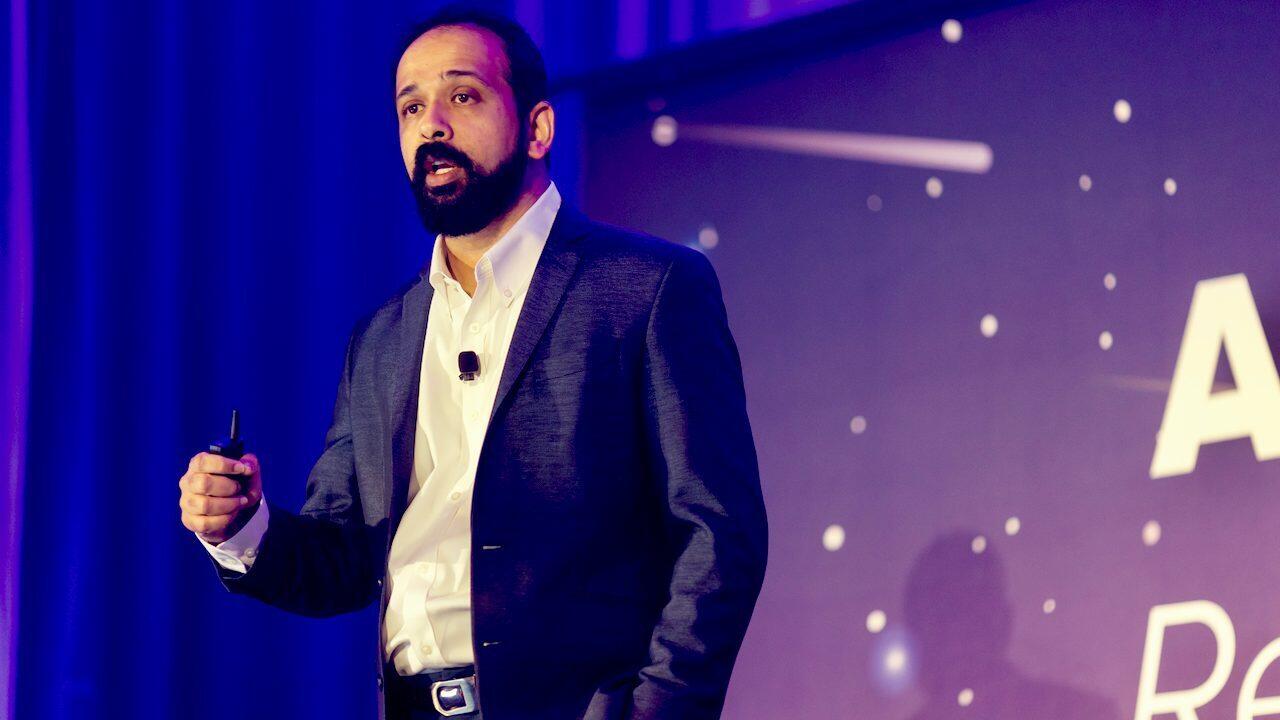
Hartford’s Insurity makes $100M AI bet as insurers race to modernize
Hartford-based insurance software company Insurity plans to invest $100 million in artificial intelligence over the next two years as insurers race to modernize aging technology, reduce costs and streamline operations.
The investment is one of the first major initiatives under new CEO Jatin Atre, who took the helm of the 40-year-old company at the end of June after serving as president. He succeeded Jeff Clarke, who remains executive chairman.
“Our whole belief is, AI matters only if it can decrease costs for carriers,” Atre said in a recent interview. “If it becomes easier to try to write insurance, if it becomes easier to try to enable carriers to do things that they weren’t previously able to do.”
AI Emerges as a Defining Force in the Broker-Client Relationship, Zywave 2026 Broker Services Survey Finds
Zywave, the leading technology provider for insurance distribution, today released the results of its 2026 Broker Services Survey, an annual study that gauges what employers expect from their insurance brokers. This year's findings, drawn from more than 1,400 U.S. respondents, show that artificial intelligence has moved from a background trend to a named factor in how employers evaluate and select their brokers, alongside a continued rise in demand for brokers who act as trusted, strategic advisors.
Zywave will host a webinar on Wednesday, Aug. 5 at 1 p.m. CDT to discuss the full research findings. To register and join, please visit our website.
"This year's data tells a clear story: AI is no longer optional infrastructure for brokers, it's becoming a visible part of how clients judge value," said Martin Simoncic, Chief Executive Officer at Zywave. "Employers aren't asking brokers to choose between technology and advice. They want both – brokers who use AI-powered tools to work faster and more accurately, and who still show up as a strategic partner. Brokers who treat those as separate tracks are the ones most likely to fall behind."
Claims

Major Insurance Company Wants More Repair-Friendly Headlight Components
A leading European insurer is calling for major changes to the way modern vehicle headlights are designed and repaired. Allianz argues that today's increasingly sophisticated lighting systems are driving up repair bills unnecessarily, turning minor accidents into expensive insurance claims.
The company wants automakers to make headlights easier to repair instead of requiring complete replacement when only a small section is damaged. It is also urging regulators to revise repair rules that currently prevent some technically viable fixes, particularly in Germany.
According to German outlet Handelsblatt, Allianz states that around 870,000 headlights are replaced every year in Germany following collisions. The insurer estimates the average price of a replacement headlight has risen from €708 in 2015 to €1,251 in 2025, while certain premium models can cost as much as €6,700 each.
Those rising costs affect more than insurance companies. Higher repair expenses ultimately contribute to increased insurance premiums for motorists, while replacing entire assemblies instead of individual components also creates unnecessary waste and higher carbon emissions.
Recommended Events

ITC Vegas | Horizon of Possibilities
ITC Vegas September 29, 2026 - October 1, 2026
The largest insurance innovation event in the world - Predict, Prepare, Progress
From the shore, the ocean can appear calm. Yet, under the surface, tectonic plates shift, pressure builds, and currents redirect—long before we detect movement. That’s insurance right now. Climate, technology, regulation, and human behavior are reshaping risk in real time. Change isn’t coming; it’s already here. The real question is how we move forward.
We set our sights on the horizon and turn insight into action.
‘Connected’ proudly sponsors ITC Vegas 2026. Rate Discounts available for ‘Connected’ followers, please contact Alan Demers