
Research

The Hidden EV Cost Nobody Talks About: Insurance | Insurify
Navigating the high cost of insuring an electric vehicle can be an unexpected challenge for many owners.
A new Insurify report shows that the average annual cost to insure an electric vehicle is $3,159. That’s about 42% higher than the average annual rate for a gas-powered car. For newer vehicles, the difference drops to 18%, but EV owners still pay about $501 more per year on average.
Higher insurance premiums are a major barrier for people thinking about buying an EV. But experts believe this gap won’t last forever. As more EV repair shops open, insurers collect more data, and new pricing models appear, EV insurance costs may start to drop. But for EV owners today, the rates can be startling.
Why are EVs more expensive to insure?
Electric vehicle owners don’t pay higher rates because EVs are riskier to drive. They pay more because repairs cost more when something breaks.
Parts such as battery packs, specialized sensors, cameras, and high-voltage systems can make repairs more expensive, even after minor accidents. In addition, many repair shops don’t yet have the training or tools to work on EVs, which means EV owners have fewer places to get their vehicles fixed, and labor costs go up.
“The cost to replace a battery can be more than the total cost of a used gas-powered car,” says Julia Taliesin, economic analyst and a licensed insurance agent at Insurify. “And then there’s a shortage of mechanics who know how to work on these cars, which contributes to high repair costs.”
How Crash Testing Has Saved 50,000 Lives (and $500 Billion)
If you want to understand how far automotive engineering has come in the last three decades, you don't look at horsepower figures, touchscreen diagonals, or zero-to-60 times. You look at a severed neck joint on a crash test dummy.
To mark the 30th anniversary of its vehicle evaluation program, the Insurance Institute for Highway Safety (IIHS) just released a bombshell study detailing the real-world impact of its crashworthiness tests since 1995. The headline figure is staggering: consumer-driven vehicle improvements spurred by IIHS testing have saved an estimated 48,352 lives over a 25-year tracking window (1999–2024).
Using the U.S. Department of Transportation's Value of a Statistical Life (VSL) metrics, that translates to a mind-boggling $538 billion saved in societal costs. Considering the insurance-backed institute operates on a cumulative budget of around $600 million for that same period, the automotive safety sandbox has yielded a nearly 900-fold return on investment.
But spreadsheets don't capture the violent reality of physics. To visually illustrate thirty years of structural evolution, the IIHS did what it does best: it smashed two vehicles together in a brutal, head-to-head offset crash.
News

Protection for a growing nation: The importance of insurance
With the United States preparing to celebrate 250 years since the adoption of the Declaration of Independence in 1776, this July 4 offers a chance to consider some of the essential building blocks that underpin a nation’s creation.
The protection of precious assets, livelihoods, and communities from hazards such as devastating fires through insurance predates independence. In 1735, the Friendly Society of Charleston, South Carolina, became the first insurance company in the US to underwrite fire insurance. Firefighter Benjamin Franklin co-founded the Philadelphia Contributionship in 1752, the oldest still-operating US insurance carrier. These early insurers embraced their role in reducing risk. In Philadelphia, properties were surveyed before a policy was issued to help set and implement early construction standards, helping the city reduce fire hazards.
Having the reassurance that risks to property, life, and health are pooled and spread across a population gives individuals and businesses the security and confidence to build, invest, and support families and communities. As of 2024, the US insurance market commanded $3.3 trillion in direct written premiums. For insurers and reinsurers, the fundamentals of the earliest insurance companies remain: the need to assess and price risks and ensure there is sufficient capital to cover policy claims.
Vehicle Repair, Insurance Costs Outpace Vehicle Prices as Inflation Driver, Cox Automotive Finds
A category of consumer costs that includes vehicle maintenance and repair, insurance, and public transportation has contributed more to U.S. inflation over the past five years than new and used vehicle prices, parts, and equipment combined, according to Cox Automotive's 2026 Mid-Year Review.
Vehicle maintenance and repair, insurance and public transportation, a category the Consumer Price Index calls "transportation services," accounted for about 11% of all U.S. inflation over the last five years, according to Jeremy Robb, chief economist at Cox Automotive.
By contrast, new and used vehicle prices, along with parts and equipment, made up only about 3% of inflation over the last five years, according to Robb.
"Much of that is driven by gains and maintenance and repair costs as it takes more time and more skilled technicians to repair vehicles," Robb said in a presentation, referring to the transportation services category. He said the category is also being driven by increases in auto insurance costs since the pandemic, though he noted the insurance component itself is down 2% over the last 12 months.
Collision repair shops have cited rising calibration and diagnostic requirements as a factor in labor time for years; calibrations were present on 35.6% of estimates in the third quarter of 2025, up from 26.9% a year earlier.

The Price of Loyalty: How Higher Premiums Are Reshaping Carrier Retention
Executive Summary
Homeowners insurance customer loyalty can no longer be assumed, according to David Seider, CCO of TheZebra.com.
In this article, he explores how rising homeowners insurance premiums are reshaping consumer shopping behavior and carrier retention. Using data on increasing rates and tightening household budgets, he shows how insurance is becoming a more active and scrutinized part of financial decision-making. He concludes with a list of five ways for carriers to pivot—adapting their retention strategies to meet more informed, price-sensitive customers.
The homeowners insurance industry has stuck pretty closely to the status quo when it comes to customer relationships for decades now. That’s because many policyholders have remained with the same insurer for years, choosing to prioritize convenience, multi-policy bundling discounts and loyalty perks over the potential savings from shopping around. But that era of dependable renewals and constancy with the same carrier appears to be on its way out.
AI in Insurance

Innovation in Insurance Starts with Operations
Across the insurance industry there is growing excitement, along with a rapidly expanding set of technology options. AI tools, automation platforms, and digital submission systems promise to make agencies faster, more efficient, and easier to do business with.
But the organizations that see the greatest impact from these tools usually have something in common. They have already invested in the way their business operates.
Technology does not transform an organization on its own. Its impact depends on the workflows, data practices, and day-to-day processes already in place.ARTICLE
From 75% to 90%: Why Risk Automation Is Now the Real Frontier for Insurance AI: By Shailendra Prajapati
For the past many years, insurance AI has had one clear job, and that is to create claims at a faster pace. FNOL went digital, fraud detection got sharper, and damage assessment moved from days to minutes. That work mattered, and it's still paying off. But it solved a problem that only shows up after something has already gone wrong.
The harder, more valuable problem stays earlier in the lifecycle, in how insurers assess risk before a policy is even written. That's the direction where the industry is heading next, and the shift from claims automation to risk automation is going to separate the insurers who simply got faster from the ones who got fundamentally better at their core business.
Claims Automation: The First Wave of Insurance AI
Claims automation was the obvious place to start, because the inefficiencies were visible and the data was already structured around a single event.

Corgi Insurance Launches Corgi Claims, the AI-Native TPA
Corgi Insurance today launched Corgi Claims, a full-service third-party administrator (TPA) that pairs a nationwide network of more than 5,000 licensed adjusters with AI that reviews every claim the instant it is reported, scoring severity, flagging coverage issues, and surfacing missing documents before an adjuster ever opens the file. Traditional TPAs make adjusters read every file from scratch— Corgi changes that. The moment a claim comes in, the platform has already evaluated severity, flagged coverage issues, and surfaced what's missing, so adjusters open every file already knowing where it stands.
Corgi Claims handles every major line of business, including commercial liability, property, catastrophe, renters, trucking, workers' compensation, and specialty programs. Licensed adjusters remain at the center of every claim decision, while AI accelerates the administrative work surrounding them...
State News
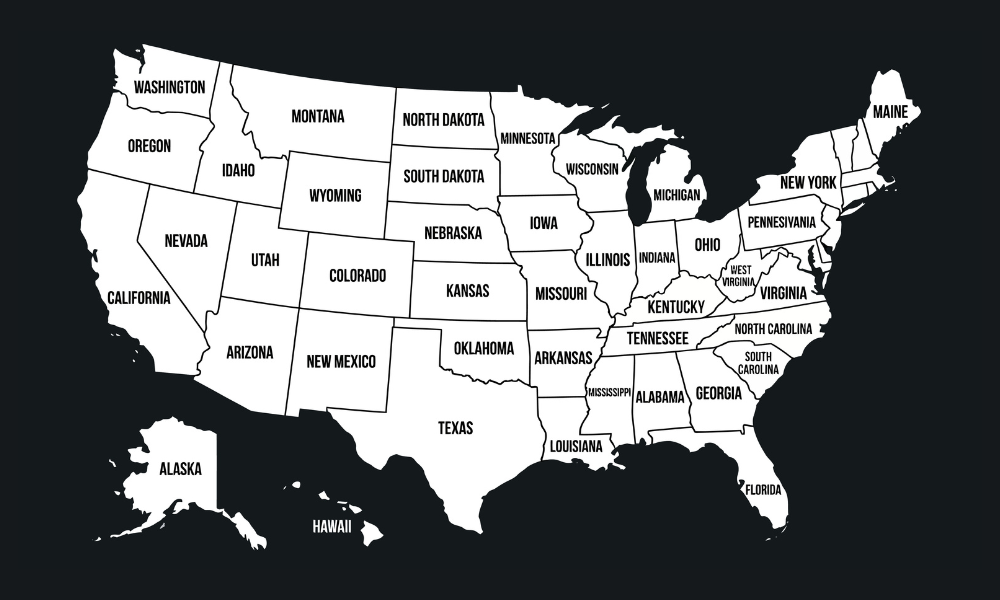
Why state reinsurance schemes keep failing
State reinsurance programs keep failing - and a senior reinsurance industry leader says that is because they are solving the wrong problem entirely.
Between 2017 and 2026, reinsurers paid out 95% of the premiums they received from US homeowners’ insurers in claims payments and operating expenses. After accounting for the reinsurance industry's costs and margin, the net cost of reinsurance to the consumer amounts to less than one cent per dollar of premium. That figure comes from Karalee Morell, executive vice president and general counsel of the Reinsurance Association of America, and it sits alongside a growing wave of state legislative proposals - in Colorado, Idaho, and elsewhere - that frame reinsurance costs as the central driver of insurance unaffordability.
"Creating state-backed pools to address reinsurance costs means developing a solution that addresses the wrong problem," Morell said. "The factors like severe weather events and legal system abuse are the actual drivers of insurance costs."
Podcast Sponsor

Audio Version - 'Connected: The Podcast' --- Sponsored by Pulse Podcasts
The ‘Connected’ Podcast by Alan Demers and in dedication of Stephen Applebaum, is a condensed audio version of the day's ‘Connected' newsletter, a daily scan of all the happenings in the world of Insurance & InsurTech News.
Pulse Podcasts: Introduce a new way for your audience to hear your voice! We are a podcast creation service that helps businesses turn their written content, like blog posts and news articles, into beautiful podcasts. Our platform writes the script, records the voices, and mixes the audio to create engaging content for your audience. It's affordable and has super-fast turnaround!
LISTEN AND SUBSCRIBE BELOW