
News
US P&C insurers return $6.2 billion to policyholders as profits rebound: Verisk and APCIA report
US property/casualty insurers returned $6.2 billion to policyholders in Q1 2026, the clearest sign yet that a two-year underwriting recovery is flowing through to consumers.
The industry posted a $15.8 billion net underwriting gain for the quarter, reversing an $864 million loss in the same period last year, according to a new data from Verisk and the American Property Casualty Insurance Association (APCIA).
The combined ratio improved to 92.4% from 99.2% in Q1 2025. Incurred losses and loss adjustment expenses fell 9.6% year over year. Q1 2025 had been weighed down by the Palisades and Eaton wildfires, which drove outsized catastrophe losses across the industry.
Net written premium growth slowed sharply to 2.9% in Q1 2026, down from 6.8% in Q1 2025 and 9.6% in Q1 2024. Net earned premiums rose 3.8%, compared to 7.8% in the same period last year.
APCIA senior vice president Robert Gordon said that when factoring in inflation and those dividends, written premiums have effectively declined in 2026. He described the shift as a direct benefit for policyholders after several years of rate increases.

U.S. P&C Insurers Post Strong 92.4 Combined Ratio as Premium Growth Slows Sharply
The U.S. property/casualty insurance industry saw a significant underwriting gain of approximately $15.8 billion in Q1 2026.
Year-over-year, the U.S. property/casualty (P&C) insurance industry’s financial performance improved through the first three months of 2026, according to Verisk (Nasdaq: VRSK), a leading strategic data analytics and technology partner to the global insurance industry, and the American Property Casualty Insurance Association (APCIA), the primary national trade association for home, auto and business insurers.
“Industry profitability improved in 2025 and the first quarter of 2026, driven largely by moderating inflation and an unusual respite from natural catastrophes over the past 12 months,” said Robert Gordon, senior vice president, policy, research and international, APCIA. “In good news for policyholders, premium increases continued to slow. Net written premium growth slowed sharply to 2.9 percent in Q1 2026, down from 9.6 percent in Q1 2024 and 6.8 percent in Q1 2025. When factoring in inflation and $6.2 billion returned to policyholders through dividends, written premiums have effectively declined in 2026.”
Climate/Resilience/Sustainability
Shedding light on uninsured loss
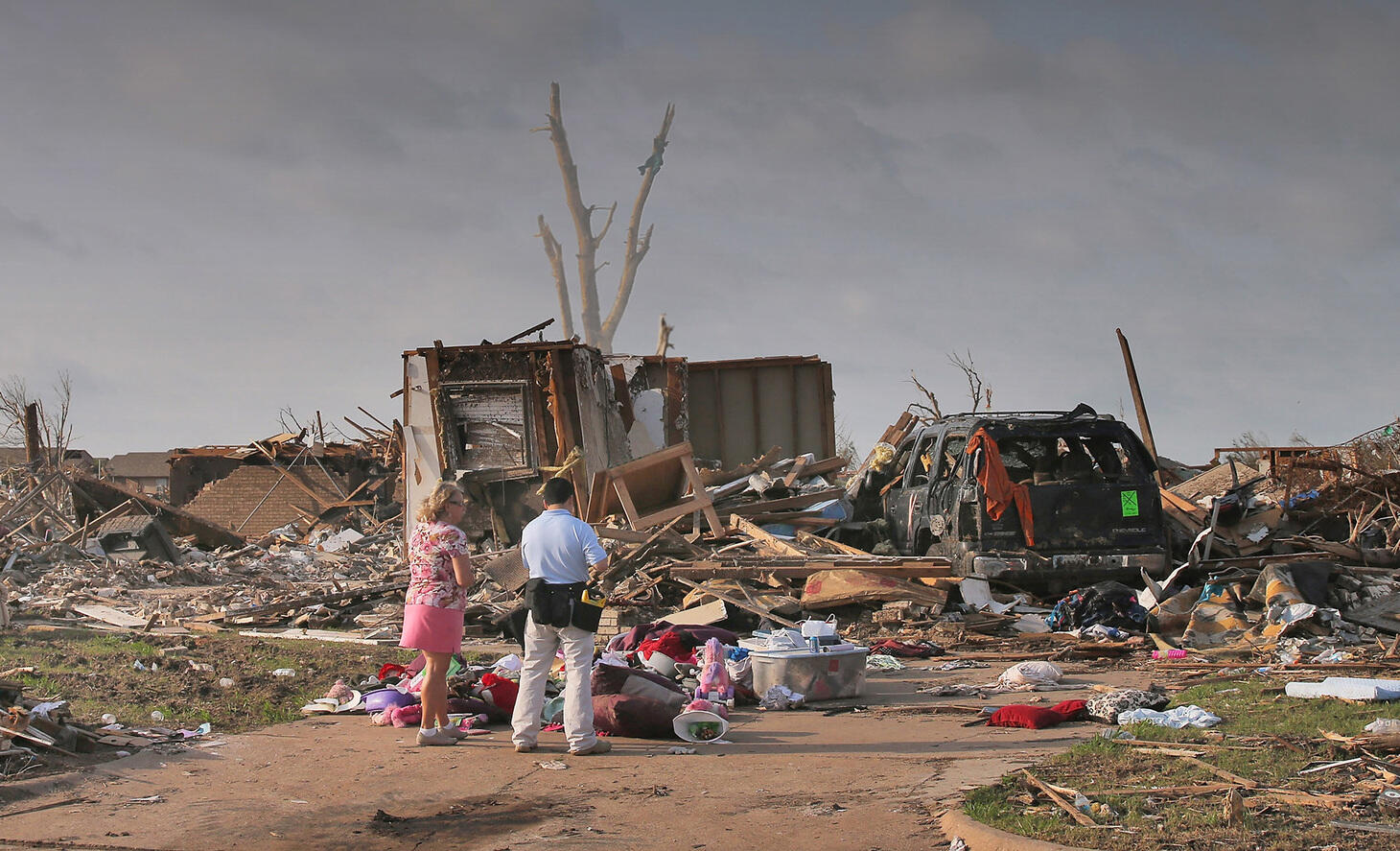
The insurance protection gap is the difference between total economic losses from insurable events and the share of those losses that is covered by insurance.
Moody’s focuses on the protection gap related to natural catastrophes, which is felt most acutely because such events inflict substantial losses at a single point in time. Estimates of the protection gap vary, but uninsured losses frequently exceed insured ones by a wide margin. For example, Moody’s estimates that less than 20% of average annual losses from earthquakes in the US are covered by insurance, with coverage levels even lower (less than 15%) in the very seismically-exposed state of California.
One obstacle to accurately measuring the protection gap is that the definition of total economic loss varies widely. Some estimates take account solely of direct catastrophe impacts, principally physical damages and business interruption. While these can be assessed accurately, they do not capture the full force of most catastrophe events.
Other estimates also include indirect losses such as emergency response costs, reductions in tax revenue, supply chain effects, migration, and health costs. These estimates better reflect the impact of catastrophes, but since many of their components are hard to measure, they are also less precise. Using this broader definition, Moody’s estimates that the global economic impact of physical risks alone could add as much as $41.4 trillion to a baseline without physical risks in 2050. Only a fraction of this is likely to be insured.

Nearmap Analysis Reveals Climate Stress Is Quietly Reshaping Property Risk Across America
Nearmap, a leading property intelligence provider, today released new research revealing that chronic climate stress is accelerating roof deterioration across the United States, creating a growing source of property risk that often goes undetected until losses occur.
The report, How climate stress is quietly reshaping America's roofs, is powered by Nearmap Roof Age, an AI-derived property intelligence dataset generated from more than 2.8 billion roof images captured across Nearmap historical aerial imagery archive. Analyzing roofs across nearly 2,100 U.S. counties, the research uncovers clear relationships between climate conditions and roof longevity, providing insurers with new insight into how risk is accumulating between major weather events.
The report's key findings include:
- Counties experiencing the largest daily temperature swings have roofs that age approximately 23% faster than those in more stable climates.
- Roofs in hot, high-humidity regions average just 8.5 years in age, compared with 11 years in cooler, drier areas.
- The geographic footprint of the most extreme rainfall conditions in the United States expanded by approximately 750% between 1980 and 2024.
- Average roof age varies dramatically across the country, ranging from 16.2 years in Nevada to 8.9 years in Louisiana – about 80% higher roof replacement frequency.
Research
75% More Pedestrians Have Been Killed Since 2009. Giant Trucks and SUVs Are a Major Reason
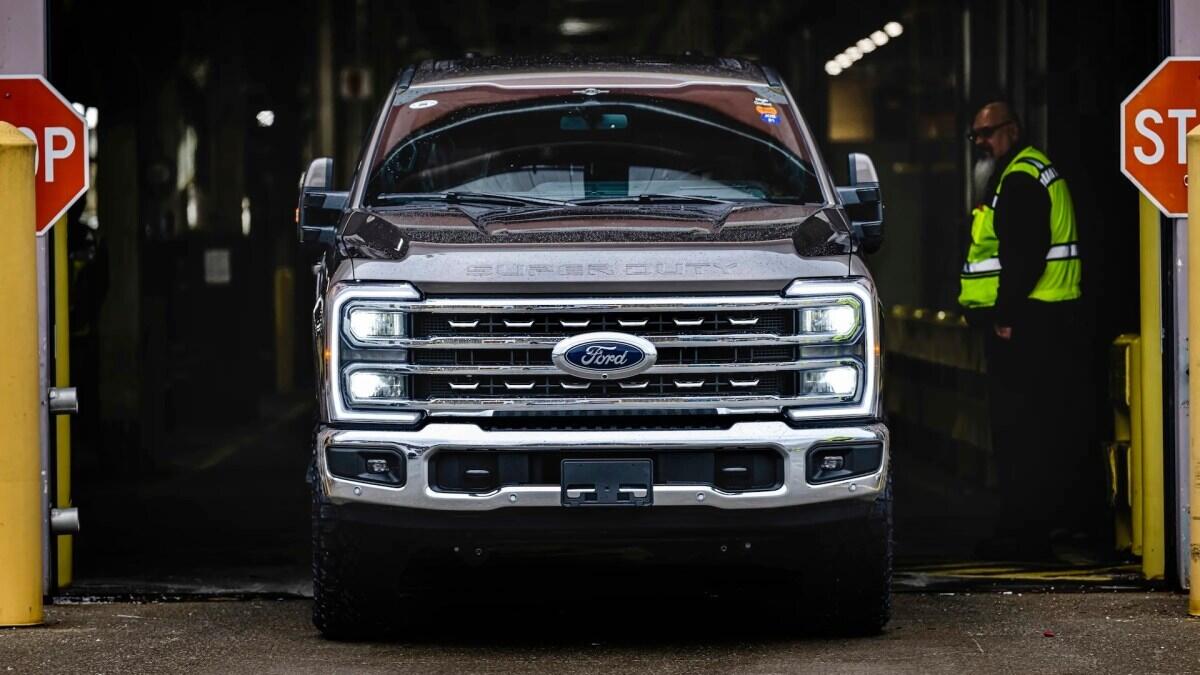
A new NYT analysis found that anyone shorter than 5-foot-6 — about half of American adults — would frequently be knocked to the ground in front of today's average vehicle.
“After analyzing federal and industry records, including never-before-examined data on vehicle dimensions, we found that the rise of large pickups and S.U.V.s is an important factor,” the Times report said.
“Our estimate is that about 200 to 400 pedestrians a year would not have died if vehicles had remained approximately the same size over the past quarter-century,” the report continued. “That represents about 10 percent of the recent increase in pedestrian deaths.”
Worse is the estimate that about 3,000 deaths from 2016 to 2024 are attributable to the shift to vehicles with higher hoods. That number is considered likely conservative by the NYT, as crashes are complex in nature and it’s hard to pinpoint every data point for each accident. The model didn’t capture crashes that took place in parking lots, driveways, or private roads as they fall outside federal crash databases.
Commentary/Opinion

How Insurance Companies Turn Their Premiums Into Billions in Profit
There's a timing mismatch in the insurance industry that is very profitable for shareholders.
Warren Buffett's insight was that he could use float in ways others didn't. His investment approach made him a household name and a Wall Street icon, but it was the float that made it all possible. There are other companies that mimic the Berkshire Hathaway model, including Markel Group (NYSE: MKL) and Brookfield Corporation (NYSE: BN), which is currently shifting its business to become what it describes as an investment-led insurance company.
That said, most insurance companies, like Progressive, take a more conservative approach. But even taking a conservative approach to the float can be highly profitable, as Progressive generated investment income of $917 million in the first quarter of 2026 alone. Annualizing that figure puts the insurance giant on pace to generate nearly $3.7 billion in investment income, which would be up from roughly $3.58 billion in 2025.
That said, there is a downside to investing the float. When markets are rising and profits are flowing, the float is a powerful wealth creator. But investing the float puts that money at risk. When a bear market occurs and/or interest rates rise sharply, the value of an insurance company's investments can decline.
Announcements
American InsurTech Council Joins NCOIL Program
The American InsurTech Council (Washington, D.C.) has joined the National Council of Insurance Legislators’ (NCOIL) Corporate Institutional Partnership Program for 2026.
The American InsurTech Council, a nonprofit advocacy organization focused on insurance innovation and regulation, says participation in the program will support its engagement with state lawmakers on insurance technology, consumer protection, market competitiveness and related public-policy issues.
NCOIL is a national organization of state legislators focused on insurance and financial-services policy. The organization writes model laws, works to preserve state jurisdiction over insurance and serves as an educational forum for policymakers and interested parties.
By joining the program, the American InsurTech Council says it will contribute its perspective on regulatory and technology issues affecting insurers, insurtechs, consumers and other insurance market participants.
Awards
IBHS Honors Industry Leaders Driving Record FORTIFIED Growth
The Insurance Institute for Business & Home Safety (IBHS) recognized the companies and organizations leading the growth of disaster-resistant construction during the 11th Annual FORTIFIED Awards. This year's awards highlight the expanding impact of the FORTIFIED program and the service providers helping more homeowners than ever build stronger, more resilient homes.
FORTIFIED is a voluntary construction and re-roofing program that strengthens the most vulnerable parts of a home against high winds, heavy rain, hurricanes, and severe storms. The program combines a research-based construction standard with third-party verification that the standard has been met and a network of certified professionals. More than 100,000 homes nationwide have now received a FORTIFIED designation, with strong adoption across the Southeast and along the Gulf Coast.
"For more than a decade, the FORTIFIED Awards have celebrated the people and companies turning resilience into reality," said Fred Malik, managing director of the FORTIFIED program at IBHS. "Every day, service providers are helping homeowners take meaningful steps to protect what matters most, and in doing so, they are strengthening entire communities."
Predict & Prevent
Predict & Prevent® Podcast Episode 28: Turning Water Damage Prevention Into a Trust Business
Water damage is the most frequent preventable cause of homeowners insurance claims, yet millions of homes with smart protection devices installed may not actually be protected at all.
That sobering reality sits at the center of a new episode of the Predict & Prevent podcast from The Institutes, where host Pete Miller, CEO of The Institutes, speaks with Paul Vacquier, founder and CEO of Beagle Services Inc.
Vacquier brings an unconventional background to the plumbing industry. A California-barred attorney by training, he spent years building the insurance and partnership strategy behind the Flo by Moen smart water shutoff valve before launching Beagle Services to address a problem he had watched develop firsthand. Getting the technology into homes, he found, was only the beginning of the challenge. Ensuring they remained connected, and monitoring for problems, were also key to protection.