
Climate/Resilience/Sustainability
Carlyle Rethinks Portfolio Risk to Give Weather Insurance a Bigger Role
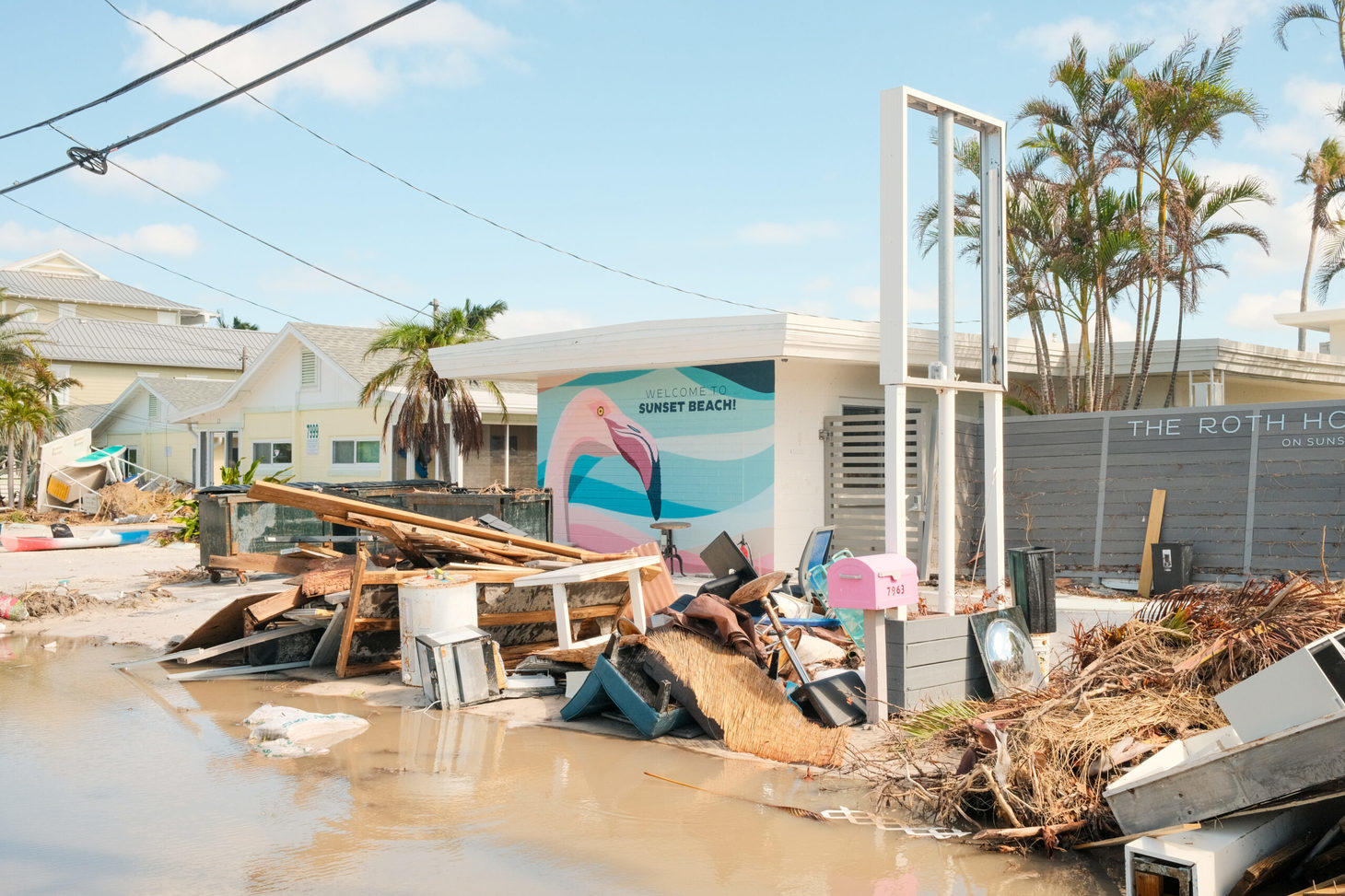
Carlyle Group Inc. is unveiling a new framework for portfolio risk so that asset values reflect the insurance implications associated with severe weather shocks.
The $475 billion Washington-based firm says the current standard — whereby money managers are reactive rather than proactive — needs to be overhauled.
“We want to flip the paradigm and de-risk it so that insurance continues to be available” to assets that are in the crosshairs, Steve Hatfield, co-head of global sustainability at Carlyle, said in an interview. But so far, there’s been “no consistent mechanism that allows insurers to recognize how asset hardening reduces risk.”
MS Amlin Hurricane Forecast 2026
MS Amlin warns against complacency as lower-risk Atlantic outlook still leaves one-in-four chance of Category 4 or 5 US hurricane landfall
- US faces a 27% chance of a Category 4 or 5 hurricane this season, down from 39% last year, but still a meaningful risk despite a calmer outlook as El Nino strengthens
- Probability of a Category 4 or 5 Gulf Coast landfall has nearly halved, though Florida remains a key hotspot with only a modest decline in risk
- Insurer’s annual hurricane forecast highlights shifting risk, with El Nino likely to drive above-average typhoon activity in the Pacific
The US still faces a one-in-four chance of being hit by a Category 4 or 5 hurricane this year despite forecasts pointing to a quieter Atlantic storm season, according to new analysis from insurer MS Amlin.
The findings suggest the threat from the most destructive storms has eased since last year, but the insurer cautioned the threat remains.
The outlook reflects the emergence of El Nino conditions in the Pacific Ocean, which typically increase wind shear across the tropical Atlantic and make it harder for hurricanes to form and intensify. NOAA confirmed the emergence of El Nino in June and expects conditions to strengthen during the second half of the year.
Sam Phibbs, MS Amlin’s Head of Catastrophe Research, said: “A one-in-four chance of a Category 4 or 5 US hurricane landfall is lower than we were seeing a year ago, but it’s still far from negligible. It only takes one storm to turn a quiet season into a costly one for communities and insurers. “While El Nino is expected to dampen hurricane activity, its influence is being partly offset by unusually warm tropical Atlantic waters, which are keeping conditions favourable for storms to form and intensify.”
News

Insurance sector braces for impact after State Farm comp changes -
State Farm’s sweeping overhaul of agent compensation may mark the beginning of a broader transformation of the property/casualty industry, observers say.
The nation’s largest property/casualty insurer, State Farm, is leaning into artificial intelligence, digital tools and performance-based sales incentives.
The Bloomington, Ill.-based insurer recently informed its roughly 19,000 agents that it plans to move to a single contract structure, revise commission schedules, eliminate some longstanding benefits and tie more compensation to production goals.
The changes have sparked backlash from agents who say the new model could significantly reduce earnings and alter the economics of operating a State Farm agency.
State Farm has framed the changes as part of its “Next Gen Good Neighbor” strategy, an effort led by CEO Jon Farney to modernize operations through technology while maintaining its agency-based distribution model. The company says it wants to create a faster, more digital customer experience while giving agents new tools to attract and serve customers.
“These updates are designed to help agents and State Farm work more effectively together to improve the customer experience, serve more customers in more ways and deliver more competitive prices,” the insurer said in a statement.
Some agents have estimated income reductions of 30% to 40%, although State Farm has disputed those figures. The company has acknowledged that the compensation structure will place a greater emphasis on growth and production rather than retaining existing business.
Research

Seven in 10 Insurers Say They Deliver Personalized Experiences; Fewer Than Half of Consumers Agree
A new TransUnion (NYSE: TRU) study reveals a significant gap between insurers’ perceptions and consumer experience. While 70% of insurers say they deliver personalized experiences, only 43% of consumers agree. The disconnect is even more pronounced among Gen Z, with just 32% reporting personalized experiences.
TransUnion presented the research at its recent Insurance Summit, which brought together 112 insurance professionals.
When customers don’t feel engaged through personalization, they’re more likely to switch providers, even for modest price differences. Insurers should be especially concerned that so few Gen Z consumers report personalization, as they represent the future of the market.
PATRICK FOY, SENIOR DIRECTOR OF STRATEGIC PLANNING FOR TRANSUNION’S INSURANCE BUSINESS
“Most insurers have a wealth of first-party data, but it remains inconsistent across departments, and few organizations operate from a unified source of truth,” said Karen Imbrogno, co-author of the study and manager of market development for TransUnion’s insurance business. “As a result, many insurers are operating with an incomplete view of the customer, and you can’t personalize to someone you can’t see.”

Uninsured driving climbs as premiums squeeze household budgets
One in three US drivers drove uninsured at some point last year, according to a Coverage Professor survey of 1,000 licensed drivers.
The findings point to a deepening affordability problem with direct implications for brokers. Clients who lapse, downgrade, or cancel coverage represent both an E&O risk and a re-engagement opportunity. Agents who identify the warning signs early are better positioned to intervene before a policy falls off entirely.
The survey found 56% of drivers delayed a renewal or missed a payment in the past year. An additional 32% canceled a policy outright to cut costs. Among those who reduced or dropped coverage, 44% cited premium increases as the primary reason.

The Hanover: Coverage Confidence Gaps Leave Homeowners Confused
The Hanover survey points to a coverage confidence gap between what consumers say they value in homeowners coverage and what they have taken the time to verify.
Homeowners overwhelmingly say they want strong insurance protection, but many remain unclear on what their policies actually include, according to The Hanover’s “2026 Home Report.”
The survey of 1,173 adult homeowners, conducted by The Harris Poll in March, points to a coverage confidence gap between what consumers say they value and what they have taken the time to verify.
Consumers say strong insurance protection is valuable to their peace of mind. The vast majority—96%—say that personal property replacement cost coverage is important, with another 90% saying identity fraud protection is important. Another 90% say water backup coverage is valuable to them, and 89% say service line coverage is important.
But those coverages can vary by carrier and policy tier, and many have not confirmed whether those coverages are part of their policies, despite their importance.
AI in Insurance

Celent Model Insurer Winners Show Innovation’s Operational Turn
Celent’s (Boston) 2026 annual Model Insurer Awards point to a maturing phase of insurance innovation—one in which AI, cloud modernization and digital experience initiatives are increasingly judged by their ability to change operating models rather than by novelty alone.
The awards, recognized financial institutions demonstrating excellence in the use of technology across banking, insurance, risk management, wealth management and capital markets. Celent, a GlobalData (London) company, said the awards program, now in its 20th year, evaluates initiatives according to demonstrable business benefits, degree of innovation relative to the industry, and excellence in technology or implementation.
“In uncertain environments, innovation becomes less about ‘doing something new’ and more about building the ability to adapt repeatedly—without breaking your business or losing trust,” said Juan Mazzini, Global Head of Celent. “That’s what we see reflected in many of this year’s Model Award winners: not just creativity, but repeatable execution. Innovation with operational discipline.”

The AI Measurement Gap Nobody Talks About
[Ed. note: This comprehensive article raises key questions about measuring, monitoring and testing for desired AI output. Insurers have famously developed checkers to check checkers for human performance with many of the same dark spots acknowledged. No doubt AI is and will be held to a higher standard]
Current AI governance frameworks — SR 11-7, the NAIC Model AI Bulletin, the EU AI Act, and ISO 42001 — share a structural assumption: The task of governance is to verify whether an AI system performs as intended. They measure outputs. They assess model drift. They require explainability documentation and bias testing.
Few, if any, measure whether the trust that humans and institutions have placed in a given system is calibrated to its actual reliability in context. This is a different question — and in practice, a far more consequential one.
Ask any chief risk officer this: are your claims handlers trusting your AI system too much, not enough, or at the right level for the decisions being made? The honest answer, in almost every institution, is the same. We do not know. There is no instrument for this.
The harm did not accumulate because the institution ignored the system. It accumulated because the institution trusted it completely — while nobody was measuring whether that trust was warranted. Rachel Hor is a doctoral candidate at Saint Mary's University
State News
Florida Citizens renews $2.82bn catastrophe program amid up to 30% rate decline
Florida’s Citizens Property Insurance Corporation has revealed it has placed its 2026 private risk transfer program of $2.82 billion.
Of the total, approximately $691 million is in the traditional reinsurance market and $2.13 billion in the capital markets, resulting in an overall weighted-average net rate-on-line (ROL) of 9.52%.
The program comprises $1.29 billion of new 2026 placement and $1.53 billion of multi-year coverage carried forward from 2025.
The new placement includes $691 million in traditional reinsurance and $600 million in capital markets, and carries a net ROL of 8.46%, down 29.2% from the 11.95% achieved on the 2025 new placement.
“For the total program including existing coverage, the price is approximately 20% lower than the 2025 program and for new coverage placed in 2026, the price is approximately 30% lower than it would have cost for similar coverage in 2025,” Citizens explained.

Higher auto insurance rates in store if Gov. McKee signs these bills • Rhode Island Current
Rhode Island families grapple with skyrocketing inflation, Gov. Dan McKee has made affordability a signature priority – and rightly so. But two bills currently sitting on his desk, H7866 and S3115, would significantly impact Rhode Islanders by increasing auto repair costs and insurance premiums. We urge the governor to protect Rhode Island families by vetoing these bills.
Just this week, the Governor’s Insurance Council, appointed to advise governors on precisely these issues, called on McKee to veto this costly legislation. The council was joined in their veto request by a chorus of state and national voices, including the Rhode Island Insurance Federation.
Specifically, the legislation would increase the total-loss threshold for automobiles from 80% to 85% in Rhode Island. Supporters proclaimed it a consumer-protection measure, but it would actually raise costs for families in our state and undermine McKee’s affordability agenda.
The total-loss threshold is the maximum percent or dollar amount repair costs can reach before insurers are required to declare the vehicle a total loss, or “totaled.” Just last year, Rhode Island lawmakers reached a compromise that increased the state threshold from 75% to 80%.
InsurTech/M&A/Finance💰/Collaboration

Insurance Platform Gets $3 Million Seed Round
The round was led by ResilienceVC, with participation from Sure Ventures, South Dakota First and Gener8or.
“Tugboat creates massive value for its users, supporting them through a moment of extreme vulnerability as they struggle to navigate an extremely complex insurance claims process that is often incentivized to delay or deny payments,” said Tahira Dosani, general partner and co-founder of ResilienceVC, in a statement.
For $99 a year, Tugboat gives homeowners the same analytics used by insurance carriers to help them better understand how they can get more out of their policy. The platform uses an agentic AI layer to analyze a host of 10,000 real claims patterns. It combs over carrier notes, documents and denial letters and formulates denial disputes, and provides guidance for policyholders on what to expect and how to get more money.
“We don’t have to advise them about their policy, but we can let them know the data that we have about that carrier,” Cameron said. “How do they respond to water claims? Or what is their wildfire coverage like when it comes to smoke damage and you live in the hills?”
Podcast Sponsor

Audio Version - 'Connected: The Podcast' --- Sponsored by Pulse Podcasts
The ‘Connected’ Podcast by Alan Demers and in dedication of Stephen Applebaum, is a condensed audio version of the day's ‘Connected' newsletter, a daily scan of all the happenings in the world of Insurance & InsurTech News.
Pulse Podcasts: Introduce a new way for your audience to hear your voice! We are a podcast creation service that helps businesses turn their written content, like blog posts and news articles, into beautiful podcasts. Our platform writes the script, records the voices, and mixes the audio to create engaging content for your audience. It's affordable and has super-fast turnaround!
LISTEN AND SUBSCRIBE BELOW