
News

Hurricane forecast softens to below normal: Colorado State
Researchers at Colorado State University on Wednesday reduced their forecast for the 2026 Atlantic hurricane season, citing increased confidence that a moderate to strong El Niño will develop during the peak of the season.
In their updated outlook, CSU researchers said they now forecast 11 named storms, five hurricanes and two major hurricanes, down from their April forecast of 13 named storms, six hurricanes and two major hurricanes.
The probability of a major hurricane making U.S. landfall is 24%, well below the average of 43% from 1880 to 2020.
CSU said the anticipated moderate to strong El Niño is likely to drive well-above-normal levels of vertical wind shear across the tropical Atlantic and Caribbean, conditions that typically suppress hurricane development.
“Coastal residents are reminded that it only takes one hurricane making landfall to make it an active season for them. Thorough preparations should be made for every season, regardless of how much activity is predicted,” CSU said.
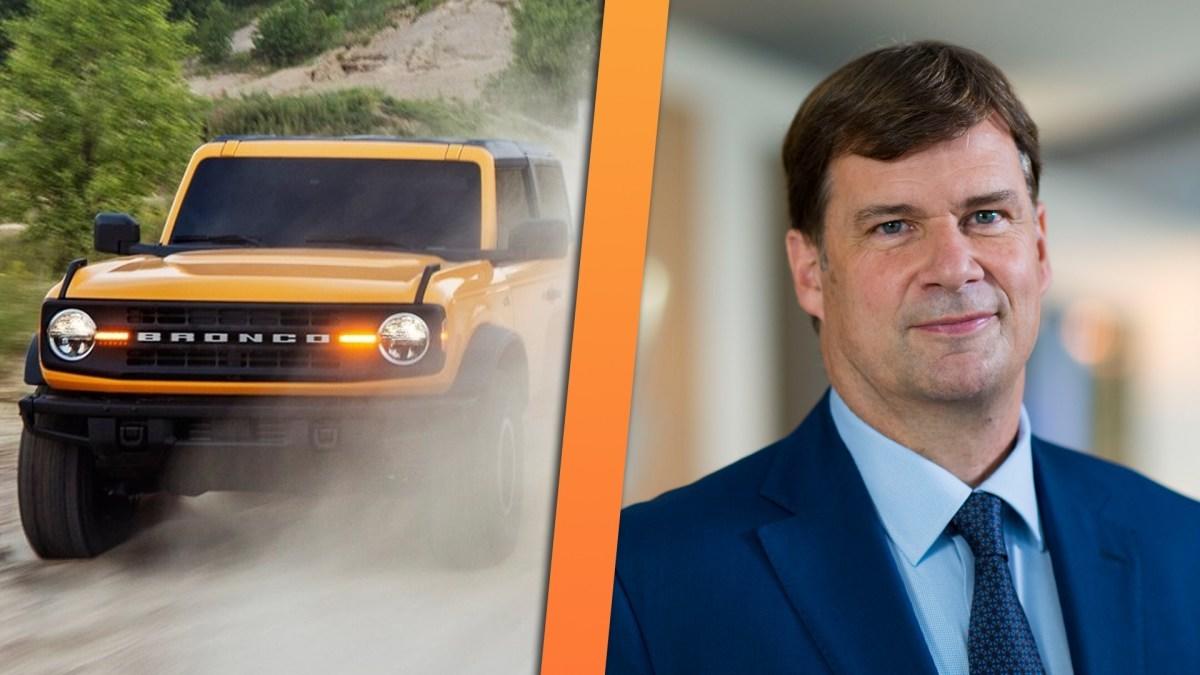
Ford CEO Jim Farley’s Right To Repair Comment Should Make Every Car Owner Uncomfortable
Farley says modern cars are too complex for DIYers. The bigger danger is what happens to independent mechanics if automakers win this fight.
Just days ago, President Trump met with auto execs from Ford and GM to discuss “Right to Repair,” a critical concept that will ultimately affect every car owner in America. The exact outcome of that mini-summit remains murky. But one follow-up comment from Ford CEO Jim Farley should raise your eyebrows.
Basically, having the Right to Repair means consumers should be allowed to choose their own mechanics. There’s been a long-standing debate in government regarding whether or not to codify legislation around this. Big corporations typically want to own all servicing rights exclusively for that sweet, sweet recurring revenue. Small business owners and consumers don’t want to be under the heels of monopolies.
It’s important to understand that Right to Repair is not just about dudes like me tinkering on old trucks in our driveways. If automakers are allowed to wall off auto repairs to a corporate-only business, independent mechanics will get squeezed out of existence. If that happens, your only option for service will be dealerships. And if you think their hourly labor rates are high now, what do you think’s going to happen when there’s literally no alternative?
Financial Results

US P&C Industry Posts $16.3 Billion Underwriting Gain in Q1 2026, Reversing Year-Ago Loss
The U.S. property & casualty industry posted a dramatic first-quarter turnaround, flipping from an underwriting loss to a multi-billion-dollar gain, according to an AM Best report on Q1 2026 financial results, reported Risk & Insurance.
The big picture: The reversal reflects how sharply the California wildfires distorted the prior-year baseline, making this quarter’s improvement as much a story about catastrophe timing as underlying industry strength.
By the numbers:
- Net underwriting gain reached $16.3 billion in Q1 2026, compared with a $1.0 billion loss in Q1 2025.
- Net premiums written grew 2.9% to $250.9 billion.
- Combined ratio improved seven points to 92.0.
- Net income surged 107.7% to $41.8 billion, with pre-tax operating income climbing 97.0% to $39.5 billion.
- Net investment income rose 10.3% to $22.9 billion; net realized capital gains jumped 141.5% to $8.7 billion.
- Policyholder surplus grew to $1.258 trillion, up 2.2% from year-end 2025.
Lockton Fiscal Year 2026 Revenue Increases to $4.5 Billion
Lockton, the world's largest privately held, independent insurance brokerage, today reported strong financial results for fiscal year 2026, with global revenue increasing 12% year over year to approximately $4.5 billion, including 11% organic growth, reflecting sustained momentum across the business and continued investment in talent, technology, and global capabilities.
This performance marks Lockton's sixth consecutive year of double‑digit organic growth, underscoring the strength of its client relationships, diversified business model, and long-term investment strategy.
Despite a mixed insurance market, Lockton achieves sixth straight fiscal year of double-digit organic growth.
"Fiscal year 2026 was another exceptional year for Lockton," said Ron Lockton, chairman and chief executive officer. "Our results reflect the trust our clients place in us, the quality of our people, and the advantages of our private and independent model. Our structure allows us to invest with a long-term horizon, adapt quickly to emerging client and market needs, and continually reinvest in the capabilities, insights, and innovations that help clients navigate an increasingly complex risk environment."
AI in Insurance
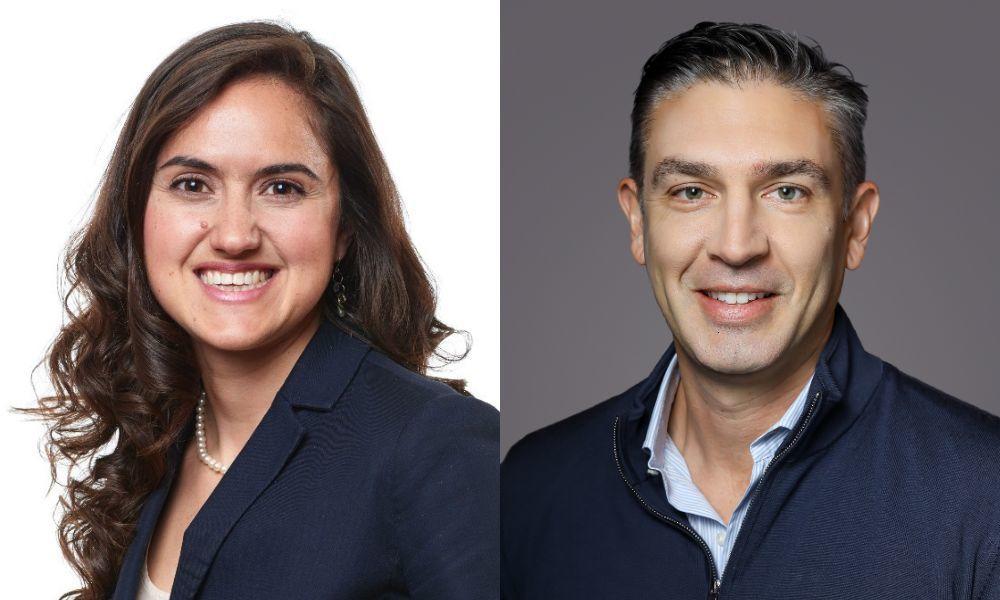
Inside the AI technology redefining flood insurance | Insurance Business
Flooding is intensifying across the United States, both in frequency and financial impact. At the same time, structural changes to the Federal Emergency Management Agency (FEMA) and the National Flood Insurance Program (NFIP) are expected to place more responsibility on state, local, and private stakeholders.
Despite being the most common natural disaster, only a small percentage of US homeowners carry flood insurance. Meanwhile, nearly every US county has experienced flooding in recent decades, and losses continue to climb.
“Roughly 83% of global economic losses from flood are uninsured,” said Alex Kaplan (pictured on the right), executive vice president of Alternative Risk at Amwins. “Even in the United States, the majority of flood-related economic loss remains uncovered.”
A new way to indemnify flood risk
This growing protection gap is forcing a rethink of how flood risk itself is measured and understood.
DXC, Anthropic Form Global AI Alliance
DXC Technology (Ashburn, Va.) has formed a multiyear global alliance with Anthropic (San Francisco) to bring Claude models into enterprise systems operated by DXC for large companies and government agencies. DXC has become a Global Premier partner in the Claude Partner Network, according to the companies.
. The companies say they will train a dedicated workforce of forward-deployed, Claude-certified engineers and builders to work in customer environments. The engineers will be selected from DXC’s existing engineering workforce and trained through the Anthropic Partner Academy.
DXC says Claude is already used in its operations, including DXC OASIS, the company’s AI-native orchestration platform for managed services. DXC says Claude is the default foundation model for OASIS agentic workflows, and the platform is in production with more than 50 customers.
Zurich launches data center insurance solution in Germany
Zurich Germany has launched an insurance and risk management solution for data center projects, targeting growing demand driven by digitalization and the expansion of artificial intelligence.
The offering combines construction all-risks insurance with optional coverage for commissioning delays, operational coverage during the transition phase, and business interruption, aiming to address coverage gaps that can emerge during the phased commissioning of large data centers.
Zurich said it supported more than 245 data center construction projects in the US in 2025 and plans to expand the solution beyond Germany to markets including Brazil and Italy, with additional countries expected to follow in 2026. The insurer’s Zurich Resilience Solutions unit will also provide risk engineering and consulting services throughout the project lifecycle. MORE
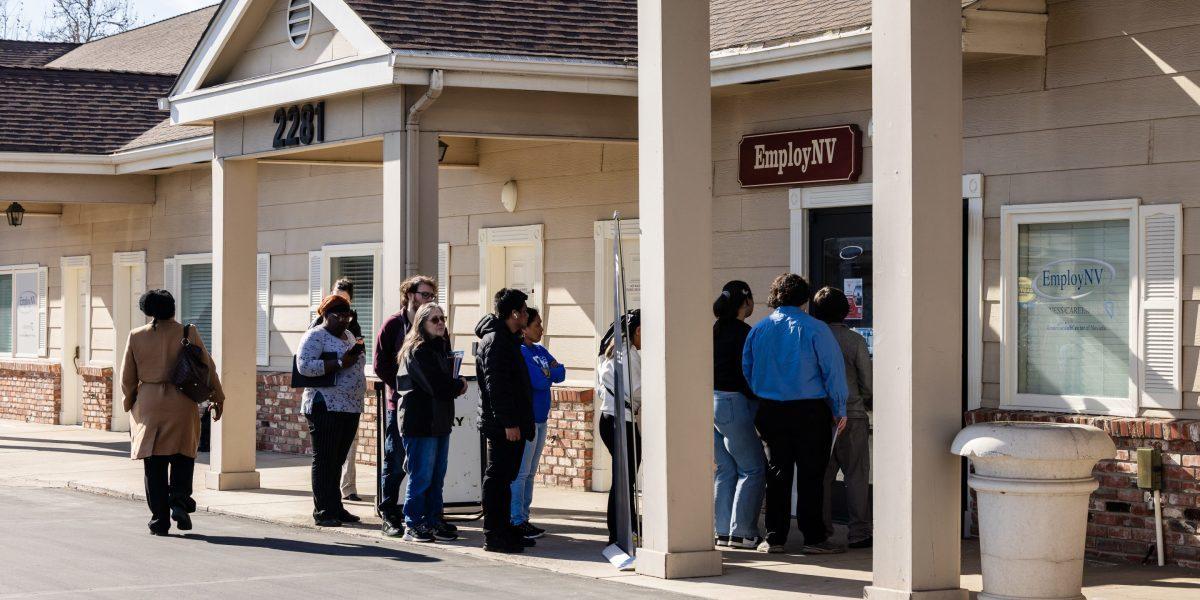
AI job disruption may be compounded because nearly 75% don't apply for unemployment benefits | Fortune
Many don’t apply because they don’t believe they will be eligible for benefits.
It’s been a tough year for tech workers as the industry has been hit a record number of layoffs. Nearly 120,000 tech workers have been let go this year as companies slim down their staffs in the name of AI productivity. As consensus grows in Silicon Valley and Wall Street about an incoming artificial intelligence “job apocalypse,” there are few answers on what comes next.
OpenAI CEO Sam Altman and Anthropic CEO Dario Amodei have recently tempered their previous apocalyptic predictions for the future of white-collar work, but Wall Street and their fellow Silicon Valley
CEOs are holding fast to their predictions that AI will reshape how people work forever. Regardless of which predictions are correct in the long term, AI layoffs are creating looming economic uncertainty for newly unemployed workers in a volatile job market. Many could turn to unemployment insurance benefits designed to tide workers over while they find new work, and Amodei has repeatedly called on the government to prepare for high unemployment.

Beyond wonderland: how Swiss Re is using AI to boost contract clarity | Swiss Re
Beyond wonderland: how Swiss Re is using AI to boost contract clarity
In the famous satire Through the Looking-Glass, Humpty Dumpty tells Alice: “When I use a word, it means just what I choose it to mean, neither more nor less.” His approach may have worked in Wonderland, but in the real world of insurance and reinsurance contracts, words must mean exactly what all parties intend them to mean, in advance.
Even so, agreements on paper do not always translate into agreement in practice. Disputes can turn on the interpretation of a single term or clause, while wording ambiguity can obscure risks accumulating across portfolios. This is why proactive contract management and greater contract certainty are so important.
After many years of working to improve insurance wordings in our industry, Swiss Re is now strengthening these efforts by deploying artificial intelligence tools to improve contract clarity, accelerate wording reviews and underwriting decisions, and enhance contract management throughout the lifecycle of our in-force business.
This initiative supports Swiss Re’s broader adoption of AI technology, as we reimagine core insurance processes end to end within a robust governance framework that includes keeping human expertise at the centre of decision-making. Clearly, AI is not an experiment at Swiss Re – for our contract professionals, it offers a means of improving how our wordings are reviewed, understood and managed, adding value to our core businesses.
Claims

Auto Claims Modernization Needs Better Data | Insurance Thought Leadership
The auto insurance industry today is facing many new challenges, including elevated repair costs, evolving fraud risk, and policyholders still expecting fast, almost immediate answers when a vehicle claim disrupts their lives.
In fact, the CCC Intelligent Solutions reported that total-loss claim share reached a record, with vehicles seven years or older accounting for more than 72% of total-loss valuations as aging vehicles and rising repair costs continue putting additional pressure on claims operations. Average total repair costs were above $4,730 in 2024, a 3.8% increase year-over-year, with costs rising a further 1.4% during the first half of 2025.
CLAIMS LEAKAGE OFTEN STARTS WITH SMALL DATA FAILURES
It’s very rare that claims leakage happens due to just one dramatic error. It usually builds through repeated friction across thousands of files. For example, a delayed lienholder confirmation adds handling time, and a late title issue creates settlement rework. Each of these issues may look manageable individually, but across the total claims book, those small failures add up to real cost.
Claims leaders already track macro severity drivers such as repair inflation and litigation exposure. Operational leakage deserves the same attention because it sits closer to the daily work of claims teams. It affects cycle time, adjuster capacity, policyholder satisfaction, and payment accuracy.
The cost environment makes those small breakdowns harder to absorb. But it’s better data that gives carriers a direct way to reduce friction inside the claim, rather than only reacting to severity after it shows up in the file.
State News
Rhode Island bill puts auto insurers on a four-day inspection clock
Rhode Island wants to put auto insurers on a four-day clock - miss it, and they lose the right to inspect the damaged car.
That's the centerpiece of S 3560, a bill introduced on June 06, 2026 by State Senator Hanna M. Gallo and referred to the Senate Judiciary Committee. It rewrites the state's Motor Vehicle Appraisal Provision, the law that governs what happens when an insurer and a policyholder can't agree on how much a damaged vehicle's loss is worth.
For carriers writing auto in Rhode Island, the mechanics matter. When the two sides disagree on the loss amount, the insured or claimant gains the right to trigger an independent appraisal. Each side then selects its own "disinterested Rhode Island licensed appraiser at their own expense." From there, the bill puts the pressure on the insurer's side first.
The insurer's appraiser "shall inspect the damaged motor vehicle within four (4) business days after the written demand is received," provided the vehicle is on the premises of the repair shop when the request is made. Blow that window, and the consequence is steep. Under the bill, if the appraiser fails to inspect in time, "the insurer shall forfeit its right to inspect the damaged vehicle prior to repairs," and negotiations are limited to labor and the price of parts. The insurer also loses the ability to dispute whether damage exists or how the car should be fixed, unless it provides "objective evidence to the contrary."
Predict & Prevent

CompScience Releases New Whitepaper on Modernizing Safety Training for a Multi-Generational Workforce
Today, CompScience, a business insurance provider pairing coverage with AI-powered risk mitigation, released its new whitepaper, "From Boomers to Zoomers: Rethinking Safety Training for a Multi-Generational Workforce."
As organizations face rising operational complexity, labor shortages, shifts in technology, and evolving workplace expectations, the whitepaper argues that traditional "one-size-fits-all" safety training programs are no longer effective. Instead, companies must adopt adaptive, personalized training strategies that reflect the distinct communication styles, learning preferences, and work values of each generation. CompScience based their analysis on successful implementations at leading industry companies such as GE, IBM, Johnson & Johnson, and more.
"Workplace safety practices are a matter of life and death," said Josh Butler, CEO and Founder of CompScience. " It's critical that organizations account for generational dynamics in their approach to safety training. Companies can harness the unique strengths of a multi-generational workforce to unlock untold potential, but a failure to do so can lead to inconsistent behaviors, lower engagement, and ultimately increased workplace risk."