
News

An AI-Driven Jobs Apocalypse? Yeah, Maybe Not | Insurance Thought Leadership
With major companies such as Meta and Amazon announcing huge layoffs that they tie to the efficiencies AI is making possible, you might be thinking that you, too, should be looking to cut head count.
Maybe belay that thought, at least for the time being.
Many of the layoffs actually stem from a whole series of factors, even if companies choose to use AI as the blanket explanation. Meanwhile, economic data suggests that AI has not led to widespread job cuts, and companies are increasingly reporting great successes by using AI to make employees' jobs easier and to enhance customer service.
Insurance, as the ultimate digital industry, stands to benefit from generative AI's efficiencies as much as any, but let's look at what's realistic and what isn't.
Elon Musk said earlier this year that AI will take on so much work that in 10 to 20 years jobs will be optional. If you don't want to work, you can just sit at home and let the AI and the money it generates take care of you. But Musk says a lot of things, including that he would land humans on Mars by 2025 and have them start building a colony for 1 million people and that he would have 1 million fully autonomous robotaxis on the road in 2020. (The total currently stands at two or three dozen.)
Meanwhile, OpenAI CEO Sam Altman has retracted his claim that generative AI will massively reduce the number of entry-level jobs, and Anthropic CEO Dario Amodei has withdrawn his prediction that AI would eliminate 50% of white-collar jobs. Amodei now says, “If you automate 90% of the job, then everyone does the 10% of the job. And the 10% kind of expands to be 100% of what people do and kind of 10-times their productivity.” FULL COMMENTARY
Paul Carroll, Editor-in-Chief Insurance Thought Leadership

AM Best: Insurance rate hikes ease as market conditions improve
Large premium increases approved during 2023 and 2024 were largely a response to rising claim frequency and severity.
After several years of steep premium increases, homeowners and auto insurance customers may be seeing signs of stabilization, according to a new report from AM Best.
The firm's insurance industry researchers found that approved rate increases for both homeowners and private passenger auto insurance moderated significantly in 2025, reflecting improved underwriting performance and a more balanced market environment.
For homeowners insurance, the average approved rate increase declined to 8.3 percent in 2025, down from the higher levels seen a year earlier. Auto insurance experienced an even sharper slowdown, with average approved increases falling to 3.7 percent, compared with 9.7 percent in 2024.
Industry analysts attribute the change to insurers regaining profitability after years of elevated claims costs, weather-related losses and inflationary pressures.
"The improvement experienced by U.S. homeowners' insurers has been driven by both aggressive rate increases and enhanced pricing sophistication in states that had been generating the most adverse results," said David Blades, associate director at AM Best, in the press release. He added that underwriting results for both homeowners and auto insurers have improved in part because of efforts to ensure premiums more accurately reflect risk.
Reinsurance rates fall further at June renewal
Reinsurers weigh abundant capacity against rising global risks
Property-catastrophe reinsurance prices fell at a faster pace at the June 1, 2026, renewal than at any point earlier in the year, according to a new report by Howden Re, the reinsurance and strategic advisory arm of global insurance group Howden.
The report found that risk-adjusted pricing eased more rapidly than at the Jan. 1 and April 1 renewals, driven by record levels of dedicated reinsurance capital and sustained growth in alternative capacity. The catastrophe bond market is on track for its second-largest first half on record, Howden Re said.
Capacity outpaced demand across all attachment points, while cedents secured more favorable terms, structures, and signed lines through the close of the placement window, which extended later than in recent years.
Research

Enlyte’s 2026 Envision Trends Report
Enlyte’s 2026 Envision Trends Report Explores Forces Driving Claim Complexity
Annual publication analyzes structural shifts reshaping claims management, including litigation, workforce transformation and evolving medical and vehicle challenges
As claims across workers’ compensation, auto casualty and auto physical damage become increasingly interconnected, insurers and employers face mounting pressure from rising severity, lengthier claim durations and expanding operational demands.
“Claims today are no longer defined by a single injury or event,” said Alex Sun, Enlyte CEO. “Across workers’ compensation and auto, we’re seeing increasing overlap in medical complexity, behavioral health, litigation exposure, regulatory change and technology-driven pressures. Our 2026 Envision Trends Report helps organizations better understand these factors and identify opportunities to improve outcomes through earlier intervention, stronger coordination and data-informed decision-making.”
Announcements

Fenris Expands Real-Time Vehicle and Property Intelligence for Insurance Workflows | Markets Insider
Today, Fenris is releasing a series of new vehicle and property intelligence capabilities that support earlier decisioning across quoting, underwriting, and distribution workflows for property and casualty (P&C) carriers, agencies, and managing general agencies (MGAs).
By expanding the data available through Fenris’ real-time prefill and enrichment infrastructure with these new capabilities, Fenris is strengthening the intelligence layer insurance organizations use to support predictive artificial intelligence (AI) models and downstream insurance workflows.
“Insurance workflows rely heavily on incomplete, manually entered information at intake by default,” said Jen Linton, CEO of Fenris, a provider of real-time insurance data and predictive intelligence. “When access to accurate intelligence comes earlier in the workflow, carriers and distributors naturally improve quoting experiences, enhance downstream decision-making, and reduce friction.”
Honda SRS Recall, Ford Do-Not-Drive Advisory, and More on Stellantis' Chrysler and Dodge Lineup - Autobody News
The recalls may come up during collision repair for affected vehicles, as both could be related to crash damage.
HONDA RECALLS 98,892 VEHICLES OVER SEAT WEIGHT SENSOR SRS DEFECT
Honda has recalled 98,892 modelyear 2016–2026 Honda and Acura vehicles under NHTSA campaign 26V332 because a capacitor in the front passenger seat weight sensor may crack and short-circuit. The recall spans 23 Honda and Acura model entries and expands a 2024 recall of more than 750,000 vehicles.
According to the Part 573 report Honda submitted May 21, the defect can cause the front passenger airbags to deploy in a crash despite the presence of an occupant for whom deployment should be suppressed. The warning sign is an illuminated SRS indicator paired with a passenger airbag indicator that stays off.
Honda dealers will replace the seat weight sensor, and owner notification letters are scheduled to begin July 6. Honda reported 228 warranty claims and no injuries.
Cyber Risk
Warning over new AI insurance scams
Insurance fraud in the United States costs consumers an estimated $308.6 billion a year, and artificial intelligence is making it worse – and harder to detect.
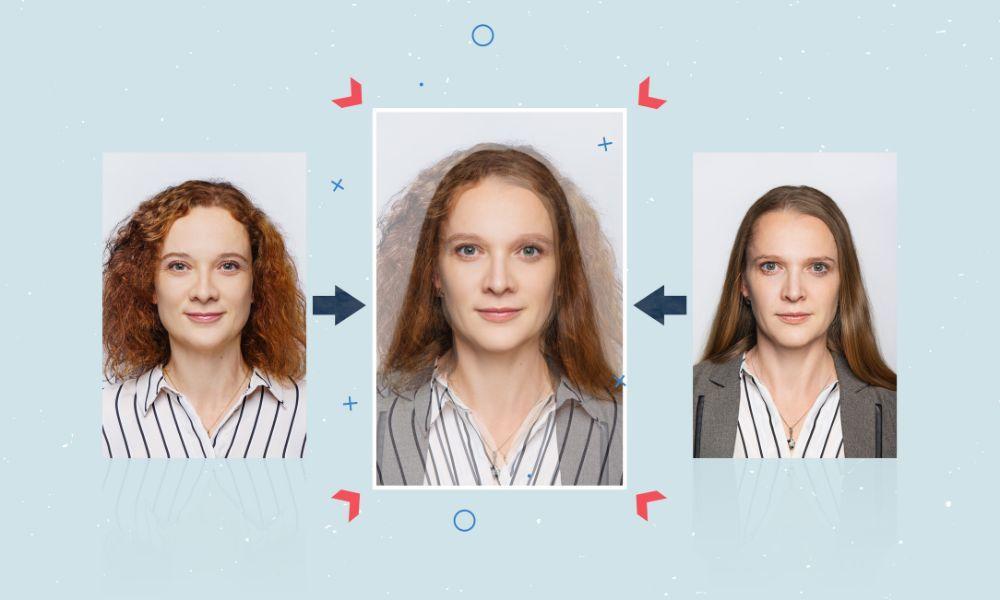
Data and AI firm SAS warned in a report that generative AI tools now allow virtually anyone with a computer to create or alter images for the purpose of filing fraudulent insurance claims. Fake photos depicting crash scenes, damaged furniture, and altered receipts are among the materials fraudsters can produce in seconds, the company said.
About one in 10 property-casualty insurance losses already involves fraud, SAS said. The growing accessibility of AI image-generation tools threatens to push that figure higher by lowering the technical skill required to fabricate convincing evidence.
Insurance fraud specialist Adam Hall conducted a demonstration showing how generative AI could be used to produce believable crash scenes almost instantly – closely mirroring tactics that fraudsters and organized crime groups are already using against insurers.
Claims
44% of Home Insurance Claims Unpaid: How to Protect Your Property in 2026
Homeowners are paying more than ever for insurance coverage. And a growing number are finding that filing a claim doesn't always result in a payout.
A recent Wall Street Journal analysis found that the nation's five largest home insurance groups – Allstate, Farmers, Liberty Mutual, State Farm and USAA – didn’t pay out on more than 44% of homeowner claims resolved last year.
That marks a significant increase from 36% a decade earlier, highlighting the growing challenges homeowners face as insurance costs rise and weather-related disasters become more frequent.
Why Insurers Aren't Paying on Claims
The findings come as insurers continue to grapple with post-pandemic losses, rising rebuilding costs and mounting losses from severe weather events.
The number of weather and climate disasters causing more than $1 billion in damage increased fivefold between 2018 and 2022, as compared to the 1980s, according to a Treasury Department report released in 2025.
Climate change has contributed to more frequent and severe natural disasters, often causing damage not covered by standard homeowners insurance policies. Flooding, in particular, has become a major source of concern and confusion for many homeowners.

Triple-I challenges 'misleading' framing of unpaid claims data
The trade body says deductibles, duplicate filings and coverage determinations, not bad faith, account for many claims closed without payment
The Insurance Information Institute (Triple-I) has issued a statement pushing back against what it described as a misleading interpretation of claims closed without payment data.
The statement comes in the wake of a Weiss Ratings report published in April 2026 that identified 15 large US insurers that closed at least half of homeowner claims with no payment in 2025, framing the findings as evidence of a "sharp rise in homeowner claim denials."
The report followed a social media post from President Trump calling for greater transparency in homeowner claim denials. The Triple-I does not dispute the underlying figures but challenges how they are being characterized and used.
What "closed without payment" actually means
According to the trade body, claims closed without payment cover a wide range of outcomes that have nothing to do with bad faith or improper claims handling. These include situations where damages fall below a policy's deductible, losses are not covered under policy terms, duplicate claims are submitted, or an investigation determines no payment is owed.
Autonomous Driving/Insurance
Lockton and Nexar Introduce Human-Benchmark Framework for Autonomous Vehicle Safety
Lockton, the world's largest privately held insurance brokerage, and Nexar, the real-world intelligence platform for the Physical AI era, today introduced a human-benchmark framework for evaluating autonomous vehicle (AV) safety against real-world human driving behavior.
The framework addresses a longstanding gap in the AV ecosystem: the absence of an independent, widely recognized standard for measuring AV safety relative to how humans actually drive.
Why a Human Benchmark Matters
Without a standardized benchmark, insurers, regulators, and AV companies face structural challenges. Insurers struggle to differentiate risk across AV systems, leading to blunt underwriting approaches or restrictions on capacity. Regulators lack a consistent reference for assessing safety claims. AV developers have no third-party-validated way to demonstrate performance against the standard the public most readily understands.
"For autonomous vehicles to scale, safety has to be measured against a credible, independent benchmark built on real-world driving. This framework provides that benchmark," said Preet Gill, EVP and Leader of Lockton's Global Technology Risk Practice. "As autonomy is adopted across logistics, mobility, and commercial fleets, even insurers who don't directly underwrite AVs will carry exposure, and our role is to help evaluate that risk before it becomes systemic."
InsurTech/M&A/Finance💰/Collaboration
Insurance tech specialist Sapiens gets investment from ADIA
Sapiens International Corporation N.V., a global provider of software solutions for the insurance industry, has announced that a wholly owned subsidiary of the Abu Dhabi Investment Authority (ADIA) has invested in the company and become a significant minority shareholder.
The investment marks a further step in Sapiens’ growth following its acquisition by Advent last year, and helps accelerate its AI strategy for the insurance sector.
Sapiens has also announced the relocation of its headquarters to central London, with its new offices located in Holborn’s Space House.
The move reflects the company’s growing focus on one of the world’s leading insurance markets. The new office will serve as both its global headquarters and an AI Customer Experience Lab, where insurers can work directly with Sapiens’ teams to explore and test AI applications tailored to the industry.
The location will also strengthen Sapiens’ ability to attract and access AI talent, as it continues to expand its forward deployment group, which works with customers to deploy and scale agentic systems responsibly.
Recommended Events

Joel Adcock from Revv to present at June 18 CIECA Webinar
Joel Adcock from Revv to present during the June 18 CIECA Webinar:
"ADAS Calibration Issues, Challenges and Opportunities"
11 am PDT/1 pm CDT/2 pm EDT
Joel Adcock from Revv to present at June 18 CIECA WebinarDuring the webinar, Joel Adcock will break down the disconnect between OEM procedure data, estimate data, and diagnostic data.
He will also discuss why ADAS failures trace back to systems integration, rather than technology.
In addition, Adcock will explore why calibration execution and documentation compliance don't always line up.