
News

Americans Pay $150 Billion More Than They Should on Home and Auto Insurance, Study Says. Here's What You Can Do.
[Ed.Note: Industry opinions about this study may say; thought provoking, debatable or flawed, especially suggesting an 80% homeowner loss ratio is sound. However, sentiment about record high P&C profits and tandem high premiums strikes a harmonious tone with the study's conclusions. Read on and opine]
Insurance companies are charging $150 billion more than they should be for home and car insurance every year, a new study claims.
The amount insurers pay out on home and car insurance claims has plummeted while the cost of your premiums have soared, according to a recent analysis by the Vanderbilt Policy Accelerator.
At a time when insurance companies are warning of the need for further rate hikes amid worsening climate change and the rising cost of home and auto repairs, this study says that they may already be charging most Americans far more than they need to remain solvent.
For every dollar earned in premiums in 2024, the study says, companies paid out just 62 cents on claims on average. That's down nearly 20 cents since the 1990s, when companies averaged about 80 cents per dollar in claim payouts.
If the loss ratio in 2024 had instead been at that 80 cent level from years prior, Americans would have saved a combined $150 billion in that year alone.
According to the study, that $150 billion per year is going toward "corporate perks, corporate jets, stock-buy backs, excessive executive compensation, excessive dividends, excessive advertising, and excessive agent commissions.”
Financial Results

Tesla Premiums Soared in ’25; Loss Ratios 40 Pts. Worse Than Industry: Analysis
Tesla Premiums Soared in ’25; Loss Ratios 40 Pts. Worse Than Industry: Analysis
While auto insurance leaders reported premium growth percentages in the single digits last year, with sprinters like Progressive and Root up in the low-to-mid teens, premiums at Tesla’s insurance operations skyrocketed 40.7%, according to a new analysis.
S&P Global Market Intelligence reports that total direct premiums across Tesla’s insurance business topped $1 billion last year, coming in at nearly $1.4 billion, compared to $970.8 million in 2024.
But while Tesla’s premiums soared—particularly in California, where a whopping 585% jump brought the state’s premiums to $725 million, compared to just over $100 million in 2024—loss ratios for one of the Tesla insurers, Tesla Insurance Co., continued to look worse than an industrywide combined ratio in 2025.
According to a chart included in the S&P GMI report, the direct loss ratios for Tesla Insurance Co. exceeded 115 in both 2025 and 2024.
Commentary/Opinion
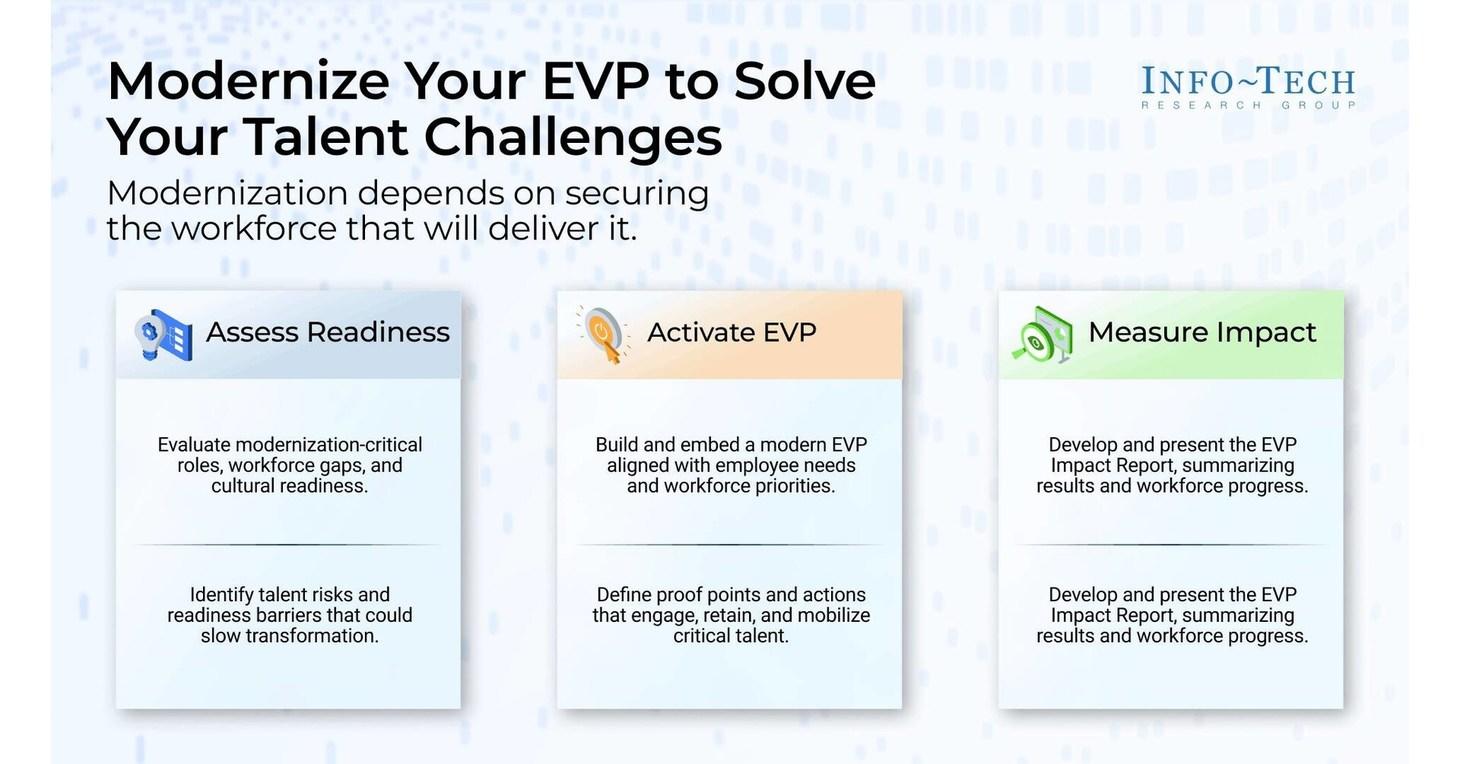
Insurance Modernization at Risk as Workforce Strategies Fall Behind, Says Info-Tech Research Group
Insurance modernization is increasingly being constrained by the people and capabilities required to deliver it, according to Info-Tech Research Group. The global research and advisory firm's newly published blueprint, Rebuild Your Talent Engine: Attract and Retain IT Talent in Insurance, provides a structured approach to help insurers attract, retain, and mobilize the IT talent required to support digital transformation.
The firm's research indicates that many insurers are trying to advance core system modernization while facing shortages in cloud, data, AI, and cybersecurity roles. At the same time, experienced legacy system experts are retiring, creating knowledge gaps that can slow delivery, increase operational risk, and deepen dependence on external partners.
"Insurance modernization cannot succeed if the workforce strategy behind it remains outdated," says Vidhi Trivedi, senior research analyst at Info-Tech Research Group. "Insurers need an employee value proposition that reflects what both digital and legacy talent value today: flexibility, growth, purpose, and belonging. When organizations connect those expectations to the technology roadmap, they are better positioned to retain institutional knowledge, attract new capabilities, and move transformation forward with confidence."
Announcements

LexisNexis Risk Solutions Launches AI-Driven Location Intelligence for U.S. Home Insurance Carriers to Improve Property Risk Assessment
LexisNexis® Risk Solutions today announced the launch of LexisNexis® Location Intelligence for Home, an AI-driven predictive model that is redefining how U.S. home insurers assess property risk.
Using advanced neural network modeling, LexisNexis® Location Intelligence for Home gives U.S. home insurance carriers a decisive advantage in assessing property risk with more accuracy and efficiency at new business and renewal. There is a growing interest across the market in utilizing location intelligence, in addition to existing underwriting practices, to pinpoint potential risks before claims occur and investigate and mitigate those risks during the underwriting process.
Location Intelligence is now available via LexisNexis® Smart Selection, the automated data service that delivers inspection flags and customizable business rules to better identify and segment the property risks that require a higher probability of action.
"Rising loss costs and shifting risk patterns are making it harder for home insurers to rely on traditional underwriting approaches alone," said George Hosfield, vice president, home insurance, LexisNexis Risk Solutions. "By bringing Location Intelligence into Smart Selection, we're giving home insurers a more consistent way to assess personal property risk using deeper, location-based insights within the workflows they already use. Understanding where claims are more likely to occur also provides carriers an opportunity to partner with consumers to mitigate those risks in advance. We'll continue to invest in these capabilities, so insurers can keep pace with changing risk and make more informed decisions over time."
Telematics, Driving & Insurance

Severe Collisions Decline While Distraction and Midday Risk Rise for Commercial Fleets
Commercial fleet collision rates climbed 4% in 2025, but severe crashes fell as safety technology and driver coaching programs gained traction, according to Lytx’s 2026 Road Safety Report.
The big picture: The findings, drawn from more than 341 billion miles of driving data across 6.3 million drivers in 90-plus countries, signal a meaningful shift in fleet safety outcomes — more crashes are happening, but they are becoming less catastrophic.
Inattentiveness surged 168% year over year, emerging as a growing threat even as traditional risks like handheld device use and tailgating showed improvement.
The report estimates Lytx clients collectively saved approximately $1.9 billion in claims costs in 2025. By the numbers:
Overall collision rates rose 4% in 2025, a sharp deceleration from the 24% surge recorded between Q3 2023 and Q4 2024.
- Higher-severity collisions fell 3% as fleets invested in coaching and safety programs.
- Near collisions dropped 23% from 2024's historical high.
- Construction industry collision rates jumped 28%, leading all industries.
- Inattentiveness incidents surged 168% year over year.

TRUCE® Software and Appogee Announce Partnership to Deliver AI Video Telematics on iOS for Enterprises
TRUCE and Appogee turn iOS devices into AI video telematics platforms, helping enterprises improve driver safety while cutting fleet costs by 50%.
TRUCE Software, the leader in mobile safety and productivity solutions for enterprise workforces, and Appogee, today announced a partnership that positions iOS as a complete AI video telematics platform.
iOS devices already deployed across mobile workforces have the sensors, processing power, and on-device intelligence required for enterprise-grade AI video telematics. TRUCE provides the software to turn those same iOS devices that already power communication, navigation, and productivity into a solution that also delivers distraction prevention, video, driver scoring, real-time coaching, and worksite location and escalation.
"The iOS devices used by enterprises are incredibly powerful. Such a device, a small camera which connects to it wirelessly and our software, that’s the whole system," said Erik Hällström, CEO, TRUCE Software. "TRUCE adds AI video telematics at half the cost of legacy systems because the expensive part is already in their pocket. And with Appogee, every device arrives configured, enrolled, and ready to work out of the box."
AI in Insurance

From AI pilots to AI powerhouse: Building the insurance enterprise of tomorrow - Capgemini
Artificial Intelligence (AI) initiatives are being deployed at an accelerated speed across insurance organizations.
Yet many carriers are discovering that experimentation alone doesn’t produce real transformation. Without a single, organization-wide AI strategy, initiatives multiply faster than they deliver value, creating a new form of operational risk known as AI debt.
Just about every division within an insurance organization is being tasked to investigate the impact of AI, and plan for its adoption. Underwriting teams are experimenting with document summarization, claims departments are piloting automation initiatives, IT groups are evaluating enterprise AI licenses, and business intelligence teams are deploying models to improve reporting and analytics. It’s estimated that generative AI alone could unlock $50 billion to $70 billion of insurance industry revenue1, with the highest impact on marketing and sales, customer operations, and software engineering dimensions. The goal is clear: improve efficiency, reduce manual work, and enhance customer experience.
But the Return on Investment (ROI) for AI can be diluted without a solid strategy in place. That’s because AI experimentation is following the same fragmented path laid down by legacy insurance systems – and life insurers recognize it all too well.

AI push puts human judgment ‘back at the center’ of insurance - new CEO study
Global insurance chiefs increasingly see artificial intelligence (AI) as a catalyst for rebalancing – rather than replacing – the role of people in the industry, according to a new cross‑market CEO study.
That’s the central finding of CEO Voices Report 2026: AI and the Human Impact from Sollers Consulting, which drew on in‑depth interviews with CEOs and senior leaders at carriers across Europe, North America and Asia‑Pacific.
According to the leaders interviewed, AI is now touching almost every part of the insurance value chain but they argued that human judgment, empathy and strategic decision-making are set to become more important alongside automation, not less.
From hype to day‑to‑day operations
While many executives acknowledged the ongoing hype around AI, they reported a rapid shift from experimentation to day-to-day operational use.
AI-Powered Wholesale Insurance Broker Novella Announces $21 Million Capital Raise to Expand Across the United States and Develop AI Agents to Create ‘Super Producers’
Novella, the artificial intelligence (AI)-powered wholesale insurance broker, has announced it raised $21 million to recruit a team of brokers, continue developing its proprietary AI platform to help brokers become ‘super-producers’, and open a series of regional offices across the United States.
In 2026, New York-based Novella - which has a research and development facility in Tel Aviv, Israel - has opened offices in Miami, Florida, and Houston, Texas, and it plans further US openings, including in southern California in Q2.
Founder and Chief Executive Officer Max Kane said Novella’s AI agents handle placement, binding, form comparison, policy review, subjectivity collection, inspections, billing, endorsements, renewals, and more. This allows producers to focus 100% of their time on building client relationships and growing their books.
“We believe pairing world-class producers with world-class AI is the recipe for success,” said Mr. Kane. “AI will make the best producers far better at their job, enabling them to better serve clients and focus on building bigger, more profitable books of business.”
He said Novella believes that AI won’t replace insurance producers - it will turn the best ones into super-producers, and the industry will concentrate around the people and firms that use AI to empower the best human capital. Novella sees this as a template for how AI transforms other relationship-driven legacy industries: don’t replace the human, automate the back office that surrounds them.

Most P&C Insurers Stuck in AI Pilot Mode as Top 10% Pull Ahead on Revenue and Share Price
Only about 10% of P&C insurers have moved AI beyond pilots to scalable systems, and they achieve higher revenue growth and share price gains than peers, according to Capgemini.
The property and casualty insurance industry’s AI ambitions are running well ahead of its results. While 40% of P&C insurance leaders say AI is meeting their expectations, those expectations started low, gains have been largely marginal, and 42% of insurers are not tracking AI metrics at all, according to the World Property and Casualty Insurance Report 2026, published by the Capgemini Research Institute.
The report, based on surveys of more than 2,200 insurance employees, executives and policyholders across 20 markets, found that 60% of carriers remain stuck in exploration or proof-of-concept phases.
The report identifies what it calls an “architecture mismatch” — a structural ceiling created by fragmentation across business units and a lack of organizational expertise to drive innovation at scale.
The mismatch manifests across three dimensions simultaneously, the report said.

Insurance CEOs stress AI should not erode personalisation & face-to-face interaction: Sollers report -
Insurance leaders emphasised that artificial intelligence (AI) is fundamentally changing how insurers interact with people, stressing that the technology
The report is based on insights from 11 CEOs of leading insurance companies worldwide. It features interviews with insurance leaders from Germany, France, the UK, the US, Australia, Canada, and Slovenia. It explores the impact of technological developments on the insurance industry over the past 25 years, as well as what the next 25 years may bring.
The report found that insurance leaders view AI as the most influential technology shaping the industry today, followed by the Internet of Things (IoT), core systems, and cloud technology. However, several CEOs also highlighted AI’s potentially disruptive impact on the sector.
According to the report, AI is transforming insurance not only operationally, but also in how insurers work with people.
A central theme of the report was the human impact of AI, with CEOs repeatedly stressing that AI should enhance, not erode, empathy, personalisation, and face-to-face interaction.
InsurTech/M&A/Finance💰/Collaboration

ManageMy Integrates with Snowflake to Deliver Actionable Data & Reporting for Insurance Carriers
ManageMy, the Deep Front-End for insurance carriers, today announced an integration with Snowflake, the AI Data Cloud company. This out-of-the-box capability gives insurance carriers direct, self-service reporting and data access across policy, billing, claims, and distribution — turning the time and cost between having data and acting on it into lower cost to serve, stronger retention, and smarter growth decisions.
Traditionally, carriers that want access to meaningful operational data typically would require IT involvement, vendor support, or working around disconnected systems. ManageMy's Snowflake connection simplifies that by giving business users full control of their data, on their own terms. Carriers using this connected environment now have access to a connected front-end and back-end data engine — embedded within the platform and accessible across their workflows.
Podcast Sponsor

Audio Version - 'Connected: The Podcast' --- Sponsored by Pulse Podcasts
The ‘Connected’ Podcast by Alan Demers and Stephen Applebaum, is a condensed audio version of the day's ‘Connected' newsletter, a daily scan of all the happenings in the world of Insurance & InsurTech News.
Pulse Podcasts: Introduce a new way for your audience to hear your voice! We are a podcast creation service that helps businesses turn their written content, like blog posts and news articles, into beautiful podcasts. Our platform writes the script, records the voices, and mixes the audio to create engaging content for your audience. It's affordable and has super-fast turnaround!
LISTEN AND SUBSCRIBE BELOW