
Financial Results
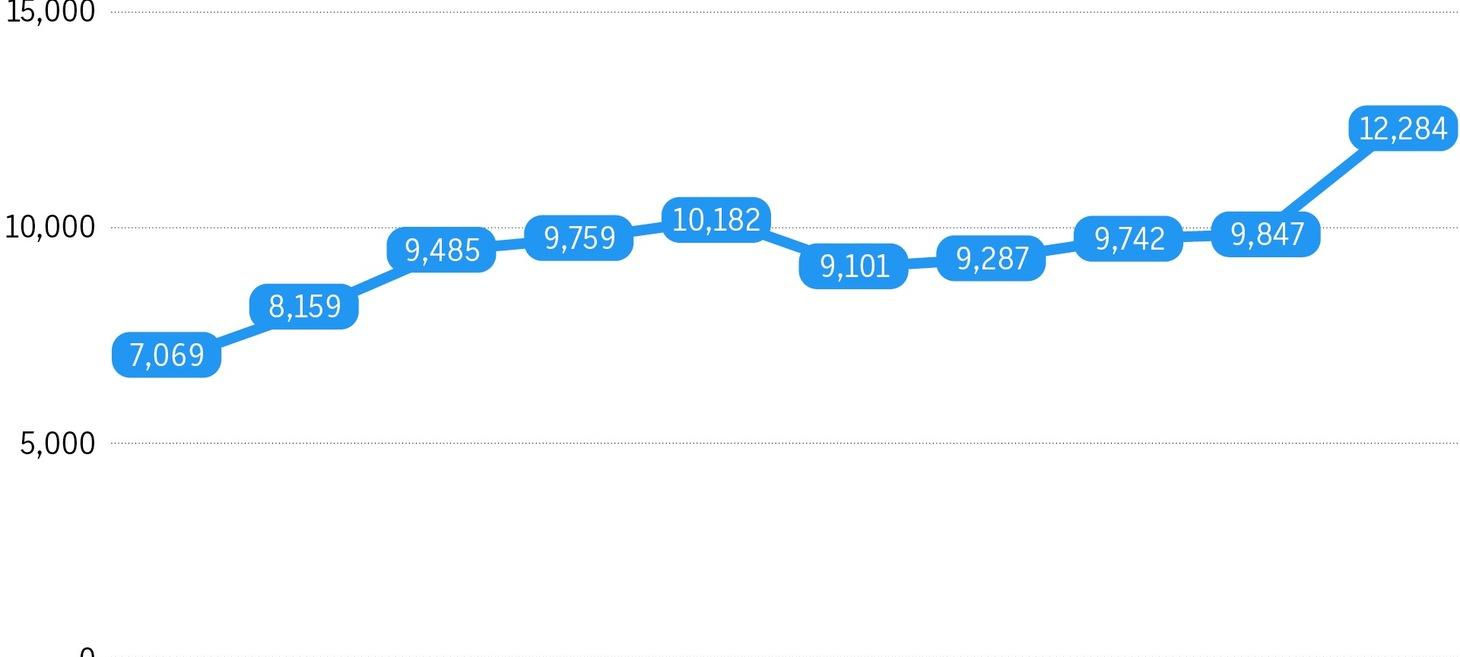
Class action filings spike 25%, led by consumer protection
Class action case filings surged 25% in 2025 after nearly a decade of relative stability, according to a report released Thursday by Lex Machina.
Consumer protection filings led the way, growing by 50% last year. They comprised more than 60% of all filings.
The consumer filings reflect “the expanding footprint of digital commerce and heightened attention to data and privacy concerns, especially at the state level,” according to the report. Lex Machina is the legal analytics unit of data company Lexis Nexis.
A small number of plaintiffs and plaintiff law firms accounted for a large share of filings, while major national corporations dominated as defendants. The top five defendants are Walmart, Amazon Services, Apple, Meta and Amazon.com, the report stated.
Three attorneys represented more than a thousand cases each from 2023 to 2025 – and all came from one firm, Gottlieb and Associates. Four other firms handled more than 1,000 cases each over that period: Milberg, Stein Saks and the Law Offices of Jibrael S. Hindi.
The top five plaintiffs filed more than 90 cases each during that period. All five are visually impaired individuals claiming that the defendants’ websites are not accessible as required by the Americans with Disabilities Act.
“This concentration indicates a maturing ecosystem in which specialized firms deploy high-volume litigation strategies and large enterprises consistently face class exposure across multiple jurisdictions,” says the report, written by attorney Adam Mills Masarek. “Together, these trends illustrate how class action practice is becoming more specialized and more shaped by institutional actors than ever before.”

Travelers profit rises on stronger underwriting, lower catastrophe losses | Reuters
Property and casualty insurance giant Travelers (TRV.N), opens new tab reported a jump in first-quarter profit, buoyed by robust underwriting gains and lower catastrophe losses than a year earlier when results were severely hit by the Los Angeles wildfires.
Shares of the company, whose earnings often serve as a bellwether for the sector as well as broader underwriting trends, were down marginally in volatile trading on Thursday.
Global insurance spending remained resilient in the first quarter of 2026, as heightened geopolitical risks spurred demand for protection even as a military escalation in the Middle East led to a spike in energy prices and worsened inflation.
Its underwriting gain came in at $1.17 billion, compared with an underwriting loss of $305 million in the year-ago period.
"Catastrophe losses for the quarter totaled $761 million pre-tax, with the largest events being the winter storm that impacted much of the country in January and a large tornado-hail event in March," said CFO Dan Frey on a call with analysts.
Announcements
Collision Engineering Career Alliance Partners with AmFam
The Collision Engineering Career Alliance announced today that American Family Insurance, a leading insurer providing auto, home, life and commercial coverage, has partnered with the organization to support its industry-leading Collision Engineering program at partner schools nationwide. The innovative hybrid apprenticeship model, recognized by the Department of Labor, was designed to help address the demand for highly skilled collision repair technicians with the more than 100,000 job openings expected through 2028.
“Our industry partners are critical to developing the next generation of talent,” said Mary Mahoney, president of the Collision Engineering Career Alliance. “We couldn’t be more grateful to American Family Insurance for its leadership and vision in supporting our program that provides students with hands-on experience, access to the latest repair procedures and clear pathways into rewarding careers in collision repair.”
The donation will give Collision Engineering the flexibility to prioritize key initiatives, including expanding electric vehicle education and scaling the program at existing and new partner institutions.
“We are proud to support the continued growth of the Collision Engineering program and its impact on students and partner schools across the country,” said Ben Bilkey, Claims Director at American Family Insurance. “This investment reflects our commitment to supporting programs that inspire communities and make a meaningful difference within our industry.”
Climate/Resilience/Sustainability
Canadian insurers fortify homes, urge Carney to put climate first as wildfire season kicks off | Reuters
- Canada expected to face among hottest years on record this summer, increasing risk of wildfires
- Insurers invest in resilient homes, urge stricter building codes and limits on risky construction
- Industry leaders warn federal government's housing plans may overlook severe weather risks
- Government says climate remains a priority
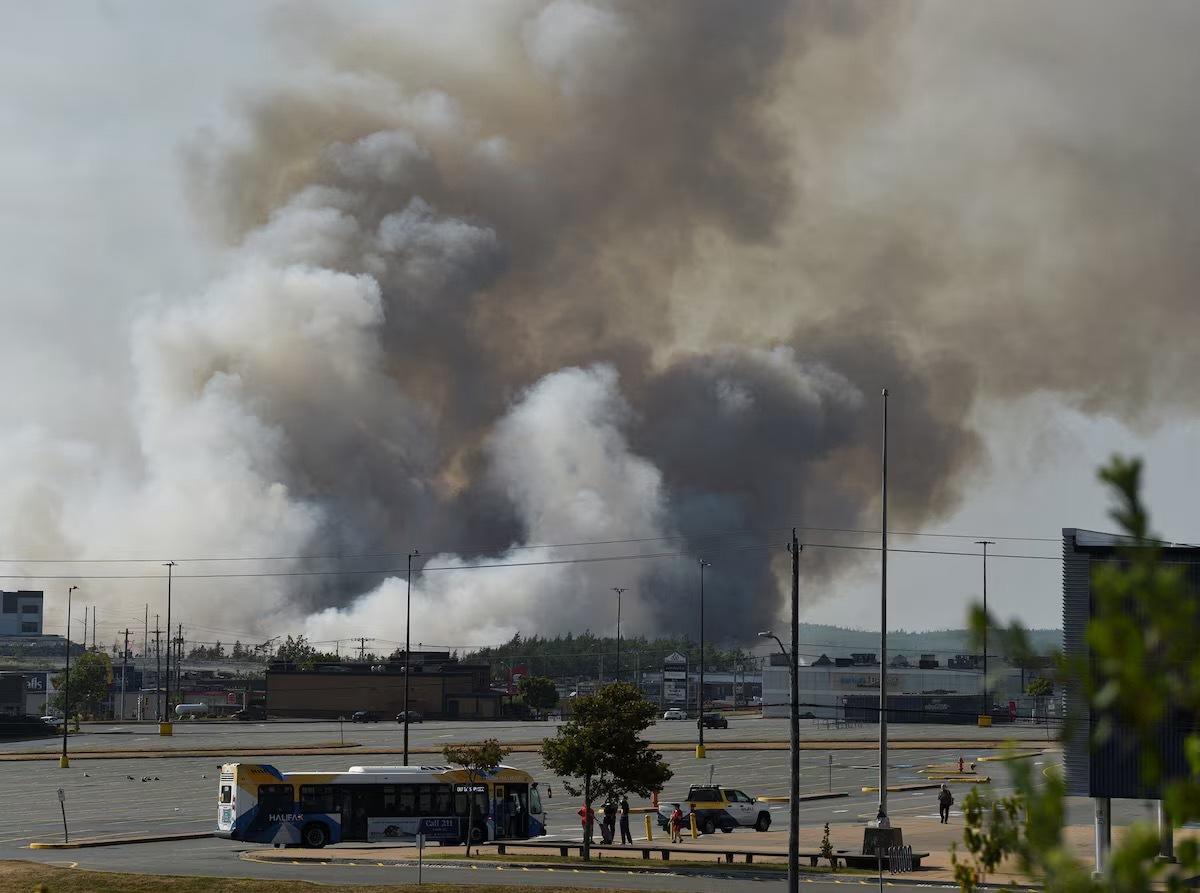
Worried about wildfires sending claims soaring this year, Canada's property and casualty insurers are pushing owners to flood- and fire-proof homes and urging the government to take climate issues more seriously despite economic turmoil.
Insurers Intact Financial, TD Insurance, Wawanesa and Definity Financial face financial pressure as claims surge and in turn push up home-insurance premiums, which rose about 6% last year in Canada.
Cyber Risk
Fake regulators are targeting insurance producers
Cyber thieves have learned something about insurance regulation and are trying to use that knowledge to steal money from insurance agents and brokers.
Officials at the Nebraska Department of Insurance warned insurance producers about the "phishing" campaign in a new notice.
The thieves are creating emails that look as if they come from the domains of trusted insurance regulatory organizations, such as the National Insurance Producers Registry's nipr.com domain.
The thieves refer in the emails to invoices for payment that are past due and ask the recipients to click on links to submit payments.
"These messages are fraudulent and were not sent from an official NIPR email address or account," Nebraska department officials said in the email.
Officials at NIPR and insurance departments in other states, such as Delaware and Oklahoma, are sending out similar warnings.
AI in Insurance

Legacy Architecture Blocks Insurers' Agentic AI
KEY TAKEAWAYS
- Legacy system fragmentation remains the primary barrier to ROI rather than the AI technology itself.
- Agentic systems replace rigid "if-then" logic with dynamic reasoning to navigate complex underwriting and claims.
- Poor data quality in autonomous loops creates a feedback cycle of bad decisions and financial liability.
- Scaling requires an escalation tier where humans verify AI confidence scores to maintain fiduciary responsibility.
- Insurers without real-time API connectivity risk total disintermediation as brokers and aggregators shift to AI-native ecosystems.
The insurance industry is currently captivated by the promise of agentic AI. Unlike the static "if-then" logic of traditional RPA, agentic systems reason, use tools, and pursue goals. They promise a world of touchless claims, autonomous underwriting, and a fraud defense that evolves in real-time.
For insurers operating under sustained combined ratio pressure, volatile catastrophe (CAT) exposure, and shrinking distribution margins, this shift is strategic. Agentic AI appears to offer operating leverage at scale, compressing expense ratios while improving loss performance and portfolio steering.
Yet, as pilot programs move toward production, a frustrating pattern is emerging: enterprise architecture was built for human-centered silos, not autonomous orchestration. Most global carriers still operate across regionally fragmented cores and vendor-locked policy administration systems (PAS) designed for human-mediated workflows and batch reconciliation.

Lawmakers Gather to Talk About AI; Angst and Fears of ‘Destruction’ Follow
A congressional subcommittee on April 16 held a roundtable discussion on the potential of artificial intelligence, which took a turn toward the existential as each lawmaker aired their anxieties about the rapidly evolving technology.
Rep. James Walkinshaw, D-Va., expressed alarm that federal workers may be using AI chatbots to handle sensitive government data. Rep. William Timmons, R-S.C., asked whether it should be illegal for AI systems to use someone’s likeness to create pornographic images.
Rep. John McGuire, R-Va., expressed concerns that AI systems could deny U.S. military forces from taking lethal actions due to a model’s conclusion for “moral” behavior. And Rep. Yassamin Ansari, D-Ariz., raised concerns about the Trump administration’s use of AI in the war with Iran, the technology’s intensive energy usage and its potential effects on the climate.
Claims
How the Rise of Software-Defined Vehicles Will Change the Collision Industry - Autobody News
As automakers move toward centralized computing platforms and over-the-air updates, collision repairers face new demands in tooling, training, and data management.
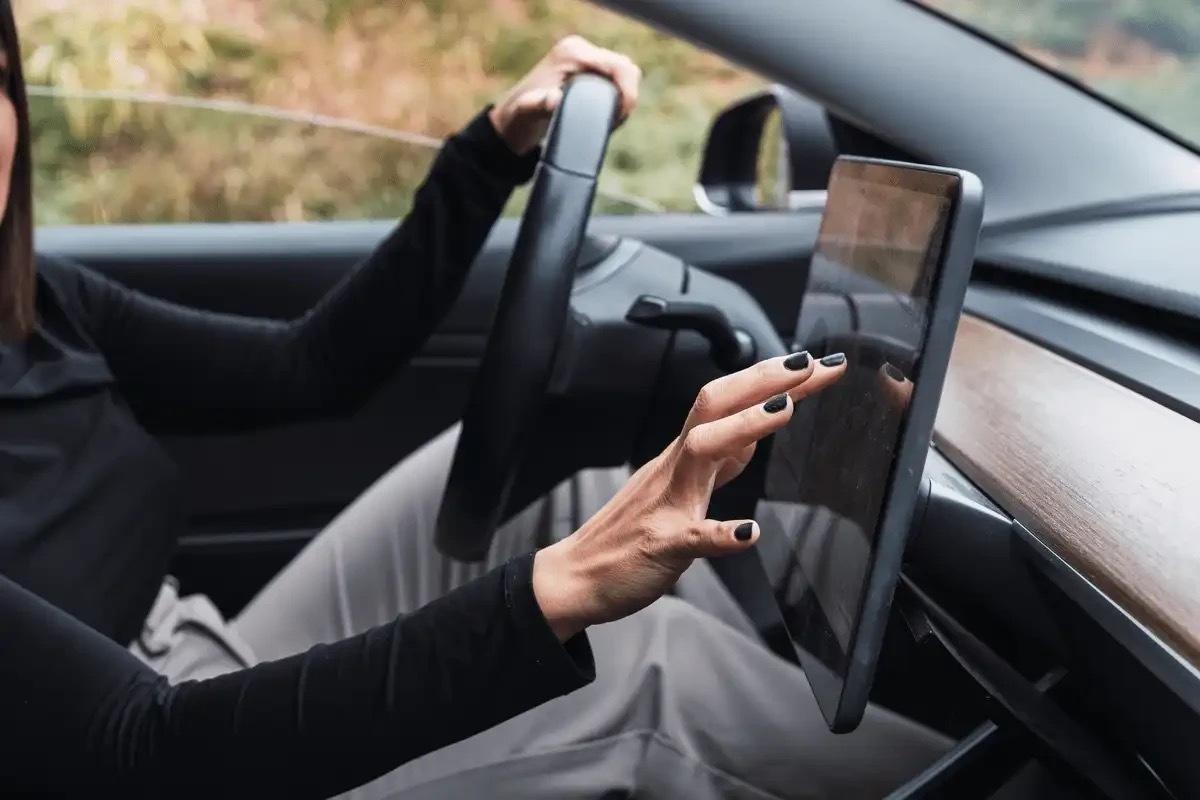
Software-defined vehicles rely on centralized computing platforms that can be updated remotely through over-the-air software updates, presenting new repair and calibration challenges for collision repairers.
In the continually evolving vehicle landscape, a fundamental change is taking place. Whereas traditional vehicles relied on fixed hardware systems, modern vehicles are being controlled and updated through software. Many contend that software-defined vehicles (SDVs), which enable over-the-air (OTA) updates similar to a smartphone, are the next evolution of automobiles.
As part of this shift, collision repairers will need to adapt and learn new skills to repair modern vehicles. This includes considerations with new tooling and equipment, training, and how to handle data and documentation.
"A modern headlight or taillight isn't just a bulb anymore; it's a software-driven module,” explained Sonatus CMO John Heinlein. “As these systems become more pervasive, repair shops will need to understand the verification and calibration steps required to restore full functionality, not just the physical part."
Stacey Phillips Ronak is an award-winning writer for the automotive industry based in Southern California. She has 25 years of experience and co-authored two books.
State News
Consumer Watchdog Claims New Regulations from Commissioner Lara Will Silence Consumer Voice in Insurance Rates
Ignoring the protests of 32 consumer protection, labor, senior, immigrant, low-income, and public advocacy organizations, Insurance Commissioner Ricardo Lara has issued regulations that will make it nearly impossible for members of the public to scrutinize and challenge increases in home, auto and business insurance premiums.
"As in so many of Lara's actions as Commissioner, only the insurance industry will benefit from Lara's directive," said Will Pletcher, Consumer Watchdog's Litigation Director. "Severely limiting the ability of consumers to independently monitor insurance companies and the insurance commissioner's compliance with Proposition 103 will lead to higher insurance rates and more abuses by insurance companies. Consumers will end up paying billions more in premiums than needed."
Indeed, the protections targeted by Lara recently produced a landmark result for California homeowners, renters and condo owners. Consumer Watchdog's intervention in State Farm's pending rate cases resulted in a settlement that is expected to save California policyholders approximately $530 million compared with the insurer's original requests.
Lara's proposal targets one of the most effective and unique provisions of Proposition 103, the 1988 insurance reform law. 103 requires insurance companies to justify changes in rates and premiums before they take effect.
InsurTech/M&A/Finance💰/Collaboration

Hashgraph and The Institutes RiskStream Collaborative Launch Property Data Solution
Hashgraph (Las Vegas) has partnered with The Institutes RiskStream Collaborative (Malvern, Pa.) to develop a property risk data solution designed to support underwriting and data sharing across the property/casualty insurance industry.
The solution is designed to create a shared, verifiable source of property data using a hybrid distributed ledger model. The companies say the platform is intended to improve data accuracy and reduce fragmentation in underwriting and risk analysis processes.
The platform combines Hashgraph’s private ledger technology with the Hedera public network, enabling insurers, brokers and reinsurers to manage sensitive data while maintaining a shared reference layer for verification and tracking.
“The process of gathering and sharing data for insurance placement and underwriting today is tedious, highly manual, and inefficient,” says Pat Schmid, President, The Institutes RiskStream Collaborative.
“There are multiple parties within the insurance experience—carriers, brokers, reinsurers, data providers, and so on—that routinely duplicate the same work, with no standardized way to verify, track, or maintain this critical data over time. By strategically partnering with Hashgraph on this solution, we’re aiming to leverage emerging technologies to improve this process.”
Idaho-Based Gem State Insurance to Merge with Ohio Mutual Insurance Group – Ohio Mutual Insurance Group
Ohio Mutual Insurance Group today announced that it has reached an agreement to merge Gooding, Idaho-based Gem State Insurance as a subsidiary under Ohio Mutual Insurance Group’s mutual holding company structure, following unanimous votes by both organizations’ boards of directors.
Founded in 1910, Gem State currently serves nearly 13,000 policyholders across Idaho through a network of more than 60 independent agencies.
“Gem State is a well-respected mutual company with deep roots in its communities, and it aligns well with Ohio Mutual’s long-term vision and values,” said Mark C. Russell, Ohio Mutual President and CEO. “We’re looking forward to collaborating with the Gem State team and agent partners, and to adding Idaho as our ninth state of operation.”
Fraud
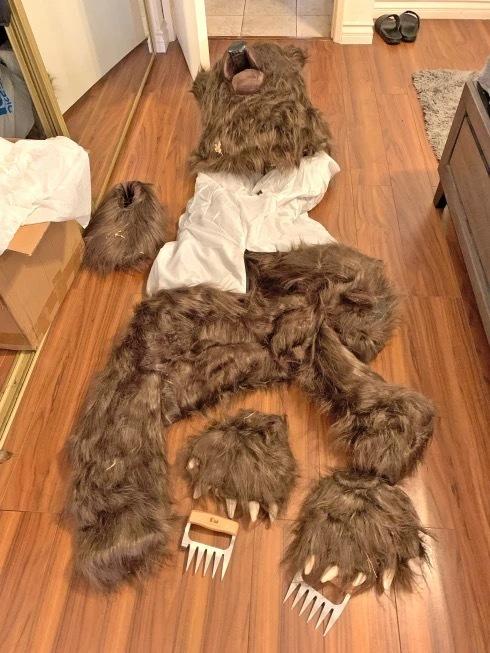
3 sentenced after bear costume used in $142K luxury car insurance scam | AP News
Three people in California have been sentenced for insurance fraud in a bizarre scam that involved someone dressed in a bear costume damaging luxury cars.
The California Insurance Department said the three used a person in a bear suit to stage fake attacks inside a Rolls-Royce and two Mercedes in 2024, then submitted fraudulent claims seeking nearly $142,000 in payouts from insurance companies. The department called it “Operation Bear Claw.”
Two Los Angeles-area men and a woman pleaded no contest to felony insurance fraud and were sentenced to a weekend jail program, followed by probation, the department said in a news release Thursday. Two of them were ordered to pay over $50,000 in restitution.
A fourth person faces a court hearing in September.