
Announcements
Cloverleaf Analytics Unveils 2026 Insurance Decision Intelligence Platform
Cloverleaf Analytics, a leader in insurance intelligence decisioning, today proudly announces the launch of its 2026 Insurance Decision Intelligence Platform.
This purpose-built solution is designed to optimize data processing and analytics operations for the insurance industry, delivering an end-to-end automated data pipeline from source ingestion to Snowflake, powered by advanced artificial intelligence (AI) capabilities.
This product announcement represents a significant advancement in insurance technology, transforming processes that previously took days to generate meaningful insights into mere minutes.
Climate/Resilience/Sustainability

Severe storm losses stay above $50 billion for third year
Severe storms are now driving the largest share of insured disaster losses in the United States, with damages holding above $50 billion for a third straight year, according to new data from the Insurance Information Institute (Triple-I).
The report said insured losses from tornadoes, hail, straight-line winds, and severe thunderstorms reached $51 billion in 2025. Total economic losses were higher, at more than $68 billion, making last year the third costliest on record for this type of disaster.
Rising losses about more than weather
The rising losses are not just about the weather. The report pointed to broader pressures that have made storm damage more expensive to insure over time. Citing data from Gallagher Re, Triple-I said as much as 90% of loss growth since 2000 has been driven by non-weather factors such as population growth in high-risk areas, legal system abuse, and higher labor and construction costs.
“Severe convective storms are no longer a ‘secondary’ regional or seasonal concern as recent years have proved they are a year-round, record-setting insured loss challenge. The data shows addressing rising losses requires more than tracking the weather. We need coordinated action on legal system reform, smarter land use, resilient building standards, and innovative coverage solutions if we are to keep insurance accessible for the communities most at risk,” Triple-I CEO Sean Kevelighan said.
Telematics, Driving & Insurance
As telematics scales in US auto insurance, carriers face a new strategic question
Telematics in the US insurance market has now entered a new phase of maturity.
What began as a niche innovation has evolved into a core component of underwriting, pricing and customer engagement. Smartphone-based solutions have removed many of the early barriers to adoption, data volumes have expanded significantly, and advances in AI-driven modelling are delivering tangible improvements in risk selection – even if also asking questions around regulatory explainability.
In short, telematics is no longer experimental. It is becoming part of the insurance infrastructure.
And with that shift comes a change in how carriers should think about it. The news that Cambridge Mobile Telematics (CMT) has announced a significant investment round involving global Allianz, alongside State Farm (an existing investor), suggests that some carriers have already been thinking about it, and are now acting.
Until recently telematics solution providers (TSPs) were evaluated on capability: the accuracy of their models, the quality of their data capture, the strength of their customer experience. Those factors still matter. But as the market evolves, they are no longer enough to differentiate between leading providers.
Recent developments in the market, such as greater investment, increasing scale and signs of consolidation have introduced a new dimension. Insurers are beginning to look beyond performance and ask a more strategic question: how is my provider’s platform structured, and how does that structure influence outcomes over time?
Cyber Risk

Average data breach cost hits $10.2 million
The average cost of a data breach in the U.S. hit $10.2 million in 2025, according to a new report from Chubb.
That's twice the global average of $4.4 million per data breach, the report said.
Cyber insurance claims are also on the rise. For businesses with $1 billion or more in revenue, the average claim was $4.4 million in 2025, up from an average of $2.2 million in 2024 and up 586% from 2021.
While AI tools are allowing organizations to detect threats faster, they're also allowing cyber criminals to attack more quickly. Using malware that incorporates agentic and autonomous AI, they can compromise multiple systems in minutes.
Cyber criminals are increasingly deploying malware strains that are able to rewrite themselves to evade detection and using AI-optimized deepfakes to impersonate executive voices to authorize fake fund transfers.
Phishing is still the most common access tactic for ransomware incidents, representing 41.4% of cases.
In addition to dealing with more advanced cyber crime tactics, executives and organizations are increasingly facing litigation related to breaches. Companies can sometimes pay millions of dollars in administrative fees for a mass arbitration case before it's even reviewed.
The litigation environment is a big reason why the U.S. is seeing higher average data breach costs than other parts of the world, the report said.
AI in Insurance
Insurtech Vertafore Introduces 6 AI Agents
Last week, Vertafore introduced its Velocity AI Platform and six AI agents for everyday insurance workflows.
The Vertafore Velocity AI Platform
Purpose-built for insurance, Velocity AI brings artificial intelligence directly into the core systems agencies, MGAs and carriers already use.
The platform serves as the innovation foundation behind Vertafore’s portfolio of AI agents, powering secure and scalable AI development across the company’s core product sectors: AgencyOne, MGA solutions and Sircon. Velocity AI enables Vertafore to design, build and deliver new AI capabilities faster, accelerating the pace of innovation.
Vertafore focuses on reducing distribution drag across the value chain to help agencies, MGAs and carriers achieve Distribution Velocity—speed with intentional outcomes—within and across insurance workflows. Velocity AI is key to the company’s focus, underpinning AI innovation that helps the industry adapt faster and grow smarter.
“Insurance is a relationship-driven business, but too much of the work behind it is still manual and fragmented, slowing down growth and service,” said Amy Zupon, CEO at Vertafore. “What we’re delivering with Velocity AI is a practical way to bring AI into the workflows that drive this industry forward, so our customers can move faster, make better decisions and focus on relationships and the activities that matter most.”

AI for the Defense: Should Insurers or Law Firms Pay?
Litigation strategies that ultimately drive insurance company claims payouts is not new to Carrier Management readers.
Nor is the suggestion that defense firms need to try to catch up with similar ammo.
But a study commissioned by the Claims and Litigation Management Alliance (CLM) and conducted by Suite 200 Solutions probes a related topic that Carrier Management reporters hadn’t thought to ask our insurance industry sources in any of our previously published articles: Who should pay to even the score?
The claim and litigation executives who responded to more than 100 questions captured in the recently published “2026 CLM Litigation Management Study” were split right down the middle on two choices available to answer that particular question.
- Exactly 50% of executives said they believe law firms should pay for AI tools they use in defending liability insurance policyholders.
- The other 50% selected the choice, “Honestly, we are still figuring this out and have yet to arrive at a policy.” FULL ARTICLE
Claims

Progressive escapes class action over total-loss vehicle valuation method
Progressive just dodged a class action over how it values totaled cars – a ruling worth watching for insurers that rely on third-party valuation tools.
On April 15, 2026, a federal judge in Illinois denied class certification in a lawsuit that accused Progressive Universal Insurance Company of systematically shortchanging policyholders on total-loss vehicle claims. The case centered on a pricing mechanism used in Progressive's claims process for valuing totaled vehicles.
The dispute traces back to September 2020, when Normanda Holmes and Sherry Citchens-Wright each had their vehicles damaged in separate accidents. Both held policies with Progressive, which declared the cars total losses and set out to compensate them for actual cash value. To arrive at that number,
Progressive turned to Mitchell International, a third-party valuation firm that identifies comparable vehicles in a claimant's area and adjusts their prices for factors like mileage and equipment. For vehicles that were listed for sale but had not yet sold, Mitchell applied what it calls a Projected Sold Adjustment – essentially a markdown meant to account for the assumption that buyers negotiate prices down from the sticker. The reductions were not small. Mitchell knocked between $695 and $818 off comparable vehicles in Holmes' case, and between $488 and $549 in Citchens-Wright's.

Nearly 1 in 4 Auto Claims Is Now a Total Loss — What That Record Means for Your Coverage » Live Insurance News
Here is something most drivers do not know about their car insurance right now: the claims that are getting filed are getting harder to handle, more expensive to resolve, and more likely to result in your car being declared a total loss.
All of that is happening at the same time that many drivers have raised their deductibles, dropped coverage, or started avoiding claims altogether because of costs.
The car you’re driving is getting harder to repair
Modern vehicles are packed with sensors, cameras, and driver assistance systems — lane keep assist, automatic emergency braking, blind spot monitoring, adaptive cruise control. These features improve safety. They also mean that when your car gets into a fender-bender, the repair is no longer just about metal and paint.
According to the CCC report, 28.3 percent of all repairable auto estimates in 2025 included at least one sensor calibration — a procedure where a technician recalibrates the car’s camera or radar system to make sure it functions correctly after a repair. That number was 21.8 percent the year before. It jumped nearly 6.5 percentage points in a single year. That calibration adds time, cost, and technical complexity to what might otherwise look like a routine claim.
The vehicles on the road are also getting older. The average age of light vehicles in the United States hit 12.8 years in 2025, and the CCC report projects it will reach 13 years in 2026. There are now 12 million fewer vehicles six years old or newer on the road compared to 2020. Older vehicles break differently, parts can be harder to source, and the interaction between aging mechanical systems and modern technology creates repair scenarios that shops are still building the expertise to handle.
State News

Trade orgs speak out against Calif. insurance bill
Eight insurance trade organizations are speaking out against a California bill that would expand the authority of the state's Department of Insurance.
Senate Bill 1209, introduced in February, would give the California Department of Insurance the ability to require insurers to address violations identified during regulatory examinations. Currently, department examiners can identify problems with an insurer's practices, but they have to pursue separate enforcement action to make insurers comply with their recommendations.
The bill would require insurers to comply with Report of Examination directives and would allow the department to assess penalties if violations aren't corrected within a specified time frame.
This week, trade organizations, including the American Property Casualty Insurance Association, the National Association of Mutual Insurance Companies and the Insurance Information Institute, sent a letter to the bill's sponsor, Sen. Bill Allen.
The organizations voiced concern that the bill would allow the department to bypass regulatory procedures. The letter said examination recommendations "are often advisory in nature and reflect an examiner's perspective rather than the law."
Regulation & Public Policy
US NAIC Spring 2026 National Meeting Highlights: Innovation, Cybersecurity and Technology (H) Committee Update
The Innovation, Cybersecurity, and Technology (H) Committee (“H Committee”) of the US National Association of Insurance Commissioners (“NAIC”) and certain of its working groups met at the NAIC’s Spring 2026 National Meeting in San Diego, California.
ADOPTION OF WORKING GROUP AND SUBGROUP REPORTS
The H Committee received and adopted reports on the recent activities of its working groups. Highlights of those meetings and reports are included below.
BIG DATA AND ARTIFICIAL INTELLIGENCE (H) WORKING GROUP Most of the meeting was used to discuss how to operationalize the NAIC’s Model Bulletin on the Use of Artificial Intelligence Systems by Insurers (the “Model Bulletin”) and holding a panel discussion on trends in artificial intelligence (“AI”) governance.
The AI System Evaluation Tool (“Tool”) is a tool developed by the BDAI WG to help regulators understand how insurers use AI and machine learning models and systems (“AI Systems”) across business operations and to assess the insurers’ governance practices regarding such AI Systems.
The Pilot Process involves a small group of 12 state insurance regulators using the Tool with a small pilot group of insurance companies. The goals of the Pilot Process are to:
- Determine whether the Tool helps insurers clearly explain their AI governance systems to regulators;
- Determine whether the Tool helps regulators better understand how companies use AI systems and how those companies apply standard governance practices;
- Support the ongoing improvement and development of the Tool;
- Help create long-term recommendations for market conduct and financial risk assessment review - processes; and
- Identify what additional regulator training may be needed in the future.
Webinars/Podcasts/Interviews
May 7 CIECA Webinar: The Evolution of Blockchain and How Insurers Are Leveraging the Technology
The Collision Industry Electronic Commerce Association (CIECA) will host its next webinar, “The Evolution of Blockchain and How Insurers Are Leveraging the Technology,” on Thursday, May 7, at 11 a.m. PDT/1 p.m. CDT/2 p.m. EDT.
The free, one-hour live broadcast will feature Eric Phillips, senior director of product operations for The Institutes RiskStream Collaborative®.
During the webinar, Phillips will provide an overview of blockchain and its evolution. He will also discuss how insurers are leveraging blockchain and provide insight on how it could be used with other technologies in the future.
“It's incredibly exciting to see blockchain technologies move beyond concept and into production, solving real-world business challenges that the industry has long faced,” said Phillips. “As the collision industry increasingly recognizes the power of trusted data exchange, the ability to share claims data in real time is a game changer—enabling proactive claim identification, streamlined claims data exchange, and a host of downstream business values that were previously out of reach.”
“Innovations like these are unlocking tremendous value and building greater confidence across the ecosystem,” he added. “We look forward to exploring how this evolution is reshaping the future at the upcoming webinar.”
People
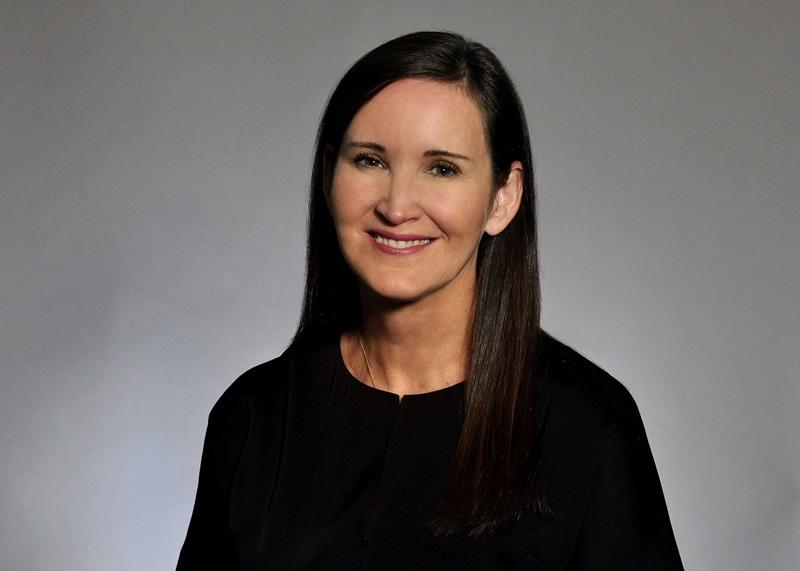
Industry veteran Heather Masterson announces next role
Canadian property and casualty insurance industry veteran Heather Masterson has announced she will be stepping into the role of president and CEO of Équité Association in September.
Masterson says she spent an “incredibly rewarding” decade as president and CEO of Travelers Canada. Most recently, she served as executive advisor to the president and CEO of Definity Financial Corporation, Rowan Saunders.
In May 2025, Definity entered into a $3.3-billion merger agreement to acquire Travelers’ Canadian business, adding about $1 billion of personal insurance business to its portfolio. The deal closed in January and makes Definity a Top 5 P&C insurer in Canada. Saunders said in an earnings call in February Definity is aspiring to become a Top 3 insurer in Canada.
“It has been a true privilege to work alongside one of the best teams in our industry,” Masterson says in a LinkedIn post Thursday. “Together, we built a high-performing organization grounded in a strong culture of care, accountability, and excellence. I am deeply proud of what we accomplished and confident in the team’s continued success at Definity.”
Following the Definity-Travelers transaction, Masterson says she took on a short-term advisory role to support the transition and ensure her team was well-positioned.
“With that work now complete, the timing feels right to step forward,” she writes. “This summer, I’ll be taking time to focus on family — something that has always been a core priority for me.”
On Sept. 8, 2026, Masterson will step into the role of president and CEO of Équité Association. The industry association’s mandate is to prevent insurance fraud and crime.
Podcast Sponsor

Audio Version - 'Connected: The Podcast' --- Sponsored by Pulse Podcasts
The ‘Connected’ Podcast by Alan Demers and Stephen Applebaum, is a condensed audio version of the day's ‘Connected' newsletter, a daily scan of all the happenings in the world of Insurance & InsurTech News.
Pulse Podcasts: Introduce a new way for your audience to hear your voice! We are a podcast creation service that helps businesses turn their written content, like blog posts and news articles, into beautiful podcasts. Our platform writes the script, records the voices, and mixes the audio to create engaging content for your audience. It's affordable and has super-fast turnaround!
LISTEN AND SUBSCRIBE BELOW