
News

Are ‘Moderate’ Hurricanes Getting Squeezed Out of the North Atlantic?
The final tally for the 2025 North Atlantic hurricane season ended up including eight tropical storms, one category 4 hurricane (Gabrielle) and three category 5 hurricanes (Erin, Humberto, Melissa). Only one event, Hurricane Imelda, fell into the intensity classes sometimes described as “moderate” hurricane (categories 1, 2 and 3).
Executive Summary
Scott St. George from WTW Research Network and James Done of the National Corporation for Atmospheric Research look at the "disappearing" of moderate hurricanes in 2025, as warming oceans supercharge small storms to rapidly intensify into larger, more dangerous hurricanes — and what this means for this year's hurricane season.
Is the near absence of moderate hurricanes in 2025 part of a long-term trend of changing storm intensities? ARTICLE
Announcements
Sedgwick launches new 24/7 Accident Response Team to transform commercial trucking claims
Sedgwick, the world's leading risk and claims administration partner, has launched their new Accident Response Team nationally. The 24/7 rapid accident response service is available for commercial trucking accidents. By deploying adjusters directly to the scene to provide early intervention and proper management, commercial fleets and carriers are provided the confidence to manage any incident, anywhere, at any time.
Commercial trucking accidents can escalate quickly, resulting in longer cycle times, lost evidence, increased litigation, and higher claim costs. Accident Response Team's adjusters are trained to move fast, intervene early, preserve critical evidence, document real-time conditions, and engage all parties involved to set claims on the right track before small issues become costly disputes.
"No two trucking accidents are the same, and the difference between a well-managed claim and a costly dispute often comes down to what happens in the first few hours," said David Armstrong, Executive Vice President of Property Americas at Sedgwick. "The Accident Response Team reflects Sedgwick's commitment to being there when it matters most by bringing our deep transportation expertise and national adjuster network directly to the scene and giving all those involved the on-the-ground support they need to take control of a claim from the very first moment."
AI in Insurance

Your competitors are doing this – are you?
The window for employers to get ahead of the AI transformation is closing. Here is exactly what you need to do - right now
Stop reading articles about AI. Start doing something about it.
That may seem like a strange opening for an article about AI. But the single most damaging thing happening in boardrooms and corner offices across America right now is not ignorance about artificial intelligence. It is the peculiar paralysis of people who understand perfectly well that this technology is transforming their industry and have spent eighteen months attending webinars, commissioning reports, and forming working groups - without actually changing anything.
The window for a considered, unhurried approach to AI transformation has closed. It closed some time ago. McKinsey's 2025 State of AI report found that 92% of companies plan to increase their AI investment - but only 1% have achieved full operational integration. Your competitors are almost certainly in that 91% who are spending money and generating noise without generating results. Which means this is your moment to be different. Not eventually. Now. READ ON
Gartner forecasts surge in AI-related legal claims and urges stronger insurance strategies - Reinsurance News
Gartner, a research and advisory company specialising in business and technology insights, has projected that more than 2,000 legal claims linked to so-called “death by AI” incidents will be brought worldwide by the end of 2026.
The prediction reflects a growing awareness of the legal and financial consequences associated with the increasing deployment of artificial intelligence across industries.
According to Gartner, General Counsel should begin incorporating dedicated AI insurance products into their wider risk management frameworks.
The firm maintains that as organisations scale their use of AI, legal leaders need to understand the implications of these policies in detail, including how they are priced, what protections they offer, and where their limitations lie.
This understanding is seen as essential for managing the broader financial, operational and legal exposure that AI technologies may introduce.
AI won’t solve the workforce crisis; here’s what will
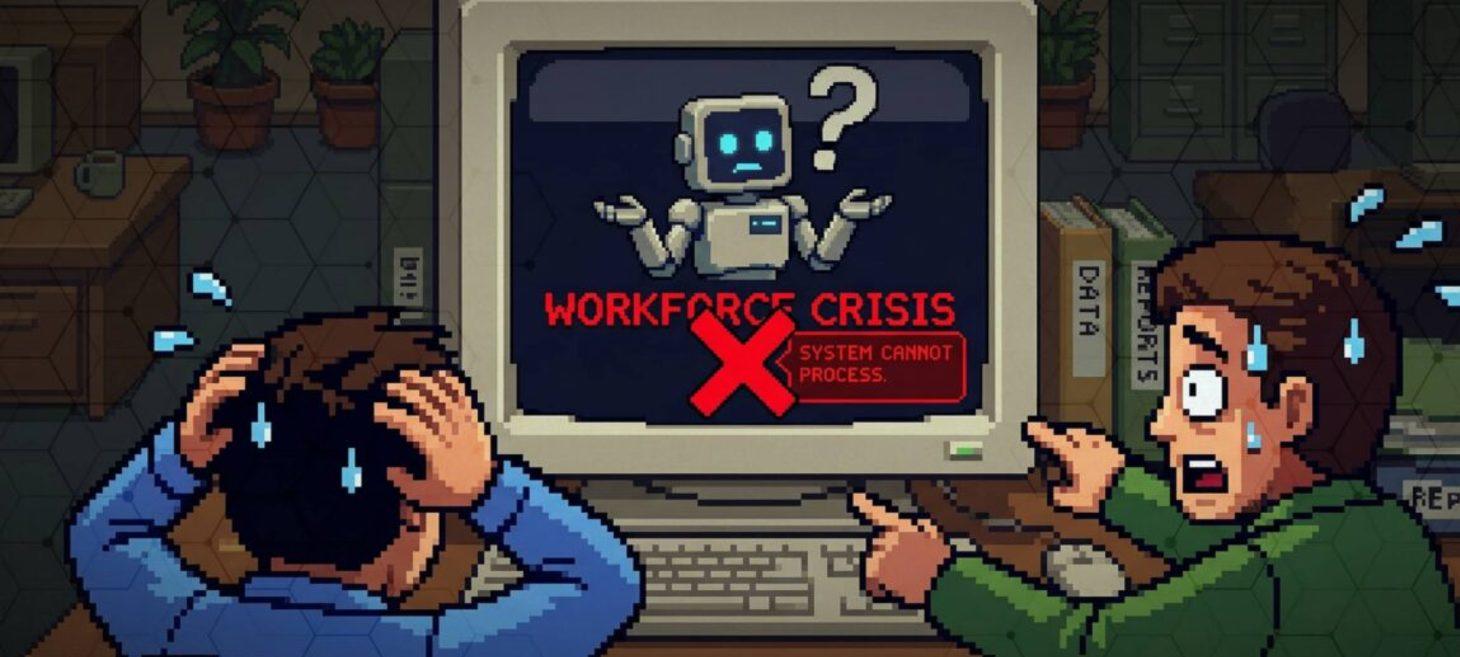
Those who rely on artificial intelligence and automation to solve the impending workforce crisis in the insurance industry should reposition their strategy and start taking steps to address the issue, suggested a 30-year industry veteran and founder of an independent insurance business process outsourcing agency.
The crisis is that thousands of insurance professionals are expected to retire from the industry in the next 10-15 years.
“We call it the silver tsunami; it’s coming and I think everybody has sightline to that. What I’m seeing in the industry, broadly speaking, is people are kind of ignoring it. They think the automation AI journey will be enough to outrun the talent deficit, but it won’t catch up. It’s not going to be meaningful enough to be able to do it,” Norm Hudson, CEO of Staff Boom, said.
In his view, a better strategy is to rethink priorities so that businesses are positioned to create dedicated training programs and invest appropriately in the areas where they can offer competitive earning opportunities.
“This needs to be a high priority for executives, in my opinion,” Hudson said. “They’re going to run aground.”
Data Centers Offer a Potential $10 Billion Windfall for Insurers - Bloomberg
Soaring demand for insurance coverage related to data center construction is creating a “meaningful growth opportunity” for the industry, outstripping some traditional insurance markets, according to S&P Global Ratings.
The market for such coverage could reach $10 billion in premiums in 2026, analysts led by Charles-Marie Delpuech and Patricia Kwan said in a note published Monday. In comparison, annual premiums for the global aviation market are estimated at around $5 billion. (subscription required)
AI Talent Lab: Underwriters | Bain & Company
By prioritizing tasks with both high automation and augmentation potential and strong strategic value, meaning that they are critical to the function and can materially improve performance, insurers can accelerate productivity gains while preserving human judgment at the core of underwriting and regulatory compliance.
How AI saves underwriters’ time
Nearly one-third of an underwriter’s time can be reclaimed through GenAI automation and augmentation in areas such as compliance, reporting, and policy generation.
With this freed capacity, underwriters can deepen client engagement and focus on nuanced risk evaluation where human judgment can create a competitive advantage.
As automation and augmentation reduce transactional work, the talent profile of a successful underwriter is shifting. Employers increasingly value expertise, relationships, and strategic judgment over manual processing or routine negotiating skills. Bain’s analysis of approximately 5,000 job postings shows rising demand for certain skills.
Human skills in high demand:
Specialty underwriting: By freeing them from routine tasks, AI creates the opportunity for underwriters to deepen their expertise in niche products and in handling risks requiring human judgment. Broker relationships: As AI helps manage data preparation and first-level queries, underwriters can focus on building trust with brokers, understanding their needs, and negotiating complex terms.

From buzzword to business tool: How independent agents are putting AI to work
For years, AI in insurance was more buzzword than business reality. Conversations about it felt like they were happening in a different room, one reserved for large carriers or enterprise IT teams with the budget and bandwidth to run multi-year technology initiatives. If you were running an independent agency and trying to grow your book, the AI conversation didn't feel like it was built for you.
That's changed. Tools that once required significant infrastructure and technical investment are now far more accessible, and agents are increasingly making use of them. According to the Big "I" Agents Council for Technology Tech Trends Report, two-thirds of independent insurance agencies plan to ramp up their use of AI in the next 12 months.
Two activities where AI can make a real difference for your agency are staying ahead of renewals and preserving the client knowledge that drives your business.
From chasing renewals to getting ahead of them
It's no secret that renewals are a heavy operational lift. Tracking expiration dates, navigating multiple carrier portals, comparing policy changes, and identifying which clients are most likely to shop around takes time that compounds quickly across a growing book. The agencies managing this well tend to be the ones that have systematized the process, not the ones simply working harder.
Claims
Report: Auto Claims and Repair Becoming More Complex
Auto claims and repair are becoming more complex and evolving with advanced vehicle technology, embedded sensors, calibrations, diagnostics and labor dynamics, according to a new report.
CCC Intelligent Solutions released its annual report for 2026. Although the year in review looks stable at a glance, the structure of auto insurance risk is changing, including consumers downgrading full coverage insurance to liability, the report notes.
“The share of repairable appraisals now that include a calibration increase by 6.5% in the fourth quarter alone is now like 28.3%,” said Kyle Krumlauf, director of industry analytics at CCC.
Commentary/Opinion
Hippo’s CEO: InsurTech Grew Up, the Progressive Deal Proves It
Ask most people about their homeowners insurance and you’ll get a shrug. It’s not exactly a dinner-table conversation starter. But behind that ho-hum product sits one of the most structurally complicated, climate-rattled and technologically disrupted markets in financial services. And right now, it’s at a genuine inflection point.
That’s the terrain Karen Webster navigated in a sharp Monday Conversation with Rick McCathron, the CEO of Hippo, a company that has been through its own very public reckoning with what it means to be an InsurTech in 2026. McCathron didn’t come to the conversation with spin. He came with evidence: a turnaround story, a new strategic partnership with Progressive Insurance and a pretty clear-eyed view of where the industry goes from here.
For decades, the insurance model remained largely unchanged. Policies were written through agents, underwriting cycles stretched across weeks, and customer relationships were mediated through paperwork and intermediaries.
As McCathron noted, the industry often focused inward. “Insurance companies didn’t even call customers ‘customers’ until recently,” he said, recalling an era when they were referred to as “insureds” or “policyholders.”
That inward focus now collides with a more complex operating environment. Climate-related losses have introduced volatility that makes pricing and risk selection more difficult. Insurers must price policies without knowing when claims will occur, a dynamic McCathron described pretty directly.
“Insurance is the only product I can think of that you don’t know what the cost is to manufacture until years down the road.”
Predict & Prevent
The Marie Pattern: Why Your Safest Employees Are Suddenly Getting Hurt : Risk & Insurance
Let’s talk about Marie. Marie is rock solid — 15 years without a single injury. But then something changed. Marie had three recordable injuries in eight months. The injuries weren’t serious, but the pattern certainly was.
In post-incident interviews she’d shrug and say she just slipped or bumped into something. Drug tests? Negative. “There was just nothing we could see that had changed about her,” they said. Nothing they could see. How could they possibly see that Marie had been diagnosed with Fibromyalgia 18 months prior and was distracted by pain?
This industry runs on data analytics — trends and patterns reveal opportunities. But there’s still a pattern that’s hazy: the connection between invisible chronic conditions and comp claims.
I’m talking about conditions like MS, Crohn’s disease, chronic depression and anxiety, ADHD, migraines, long-COVID and more. These conditions ride on the group health side, but they don’t stay in their lane.
Consider the effects: Cognitive fog slows reaction time, fatigue compromises attention, pain affects concentration. In safety-sensitive environments, these are bad news.
Research has clearly connected chronic health conditions with higher injury rates and slower recovery times. Yet few are connecting the dots between claims and underlying health issues.
Michelle Kerr is Workers’ Compensation Editor and National Conference Chair for Risk & Insurance
Fraud

Unconnected Dots: Why We Don’t Prevent Fraud
Like any business, the business of fraud has a founding moment, a growth story, and sometimes an ending. We hope none of those are "happily ever after."
Every large fraud scheme with tens of millions or more started with their first dollar. Whether it is a single dollar or over hundreds of million dollars, insurance companies don't hand out cash money, they issue checks.
While the form of money dispersed nowadays may include all manner of e-payments, credits, drawdowns, gift cards even, or other mechanisms, typically our follow-the-money gumshoeing types go from account to account to follow the flow. But in a world where any business can have multiple accounts, and any business can have multiple business names with multiple accounts, isn't it time to resolve "who is the who" we are making payments to?
Some of these shards of identity are our own fault and not fraud at all – let's presume that is the case for most of our unconnected data.
Let's just put that in the story book bucket of honest mistakes and rotten data control. That is the state of data entry into free text fields across multiple systems and applications. We know we don't know "who is who" just by watching our daily data work and all the errors and uncertainty of our work processes. (See, "What Would You Do With $1 Trillion?")
We are starting to get a handle on run of the mill missing and misspent money with entity resolution breakthroughs. These breakthroughs come on a use case basis. Government programs, healthcare, life insurance, property and casualty insurance are trillions upon trillions of annual dollars transacting as you read this. And we are making progress.
Podcast Sponsor

Audio Version - 'Connected: The Podcast' --- Sponsored by Pulse Podcasts
The ‘Connected’ Podcast by Alan Demers and Stephen Applebaum, is a condensed audio version of the day's ‘Connected' newsletter, a daily scan of all the happenings in the world of Insurance & InsurTech News.
Pulse Podcasts: Introduce a new way for your audience to hear your voice! We are a podcast creation service that helps businesses turn their written content, like blog posts and news articles, into beautiful podcasts. Our platform writes the script, records the voices, and mixes the audio to create engaging content for your audience. It's affordable and has super-fast turnaround!
LISTEN AND SUBSCRIBE BELOW