
News
How Progressive balances AI use with authenticity as scrutiny persists
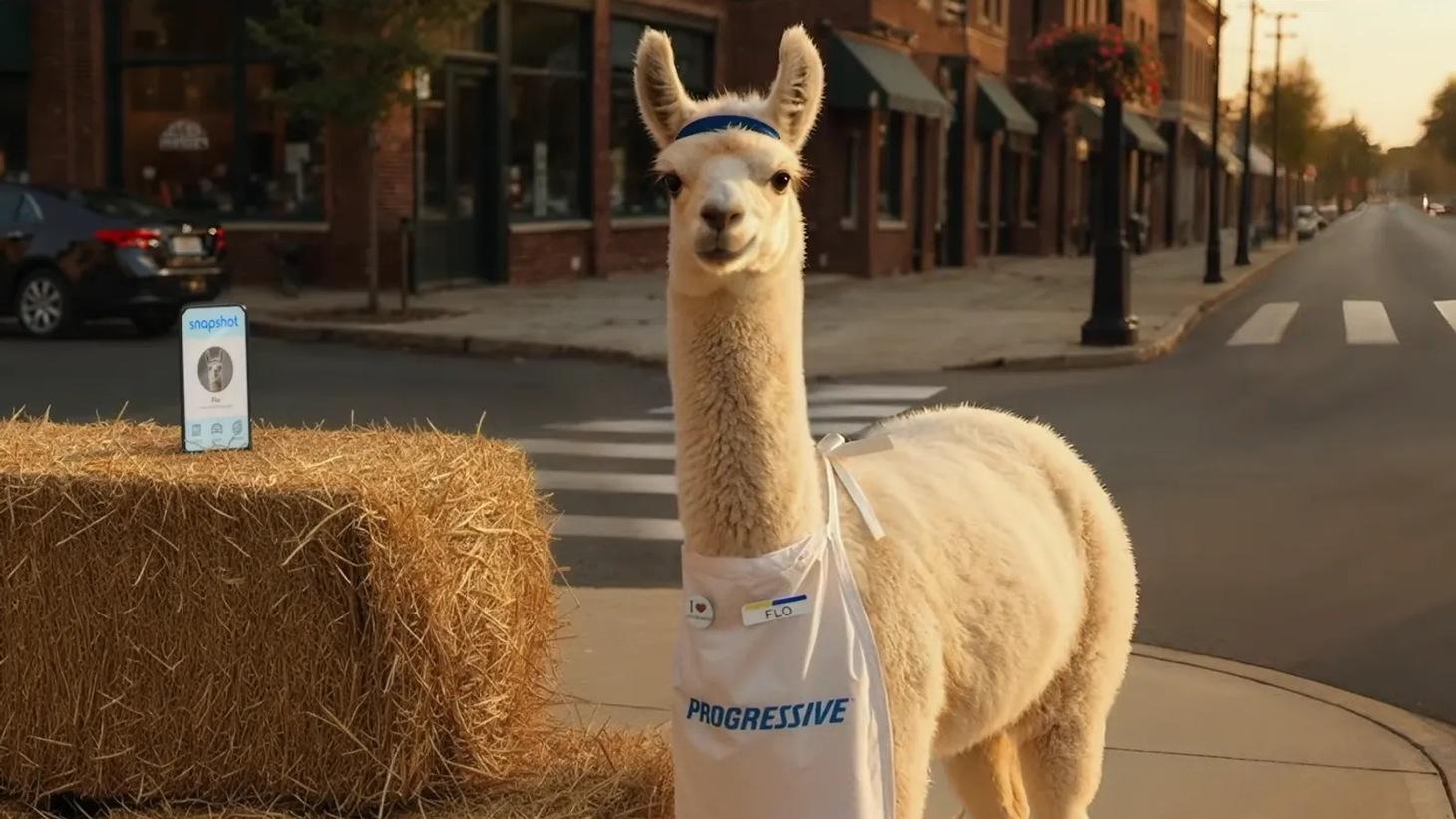
Progressive is working to balance authenticity with the utility of artificial intelligence amid increased consumer scrutiny of the technology. The insurance company’s “Drive Like an Animal” campaign showed the provider leveraging new AI tech while still supporting its brand values.
The strategy behind Progressive’s campaign was a topic of discussion during Marketing Dive’s Feb. 25 CMO Summit virtual event, which featured Meghan Walsh, vice president, business leader of integrated marketing at Progressive, and Dani Mariano, CEO of Razorfish. The conversation was moderated by Marketing Dive senior reporter Peter Adams.
“[The campaign] follows our core values of Progressive,” said Walsh. “Everyone is going to feel good about this work, and we’re doing it the right way. It took a lot of effort.”
< “Drive Like an Animal” was created in partnership with Progressive’s agency of record, Arnold. The brand’s in-house agency, Ninety6, and external agency Monks also contributed. A 30-second hero spot, which features AI-generated animals driving cars and getting into accidents, promotes the brand’s Snapshot tool. While generated with AI, the ad features the voice of Stephanie Courtney, the actress behind the brand’s iconic Flo character.
Financial Results
Swiss Re delivers record Group net income as P&C Re profit rises to $2.8bn
Global reinsurer Swiss Re’s Group net income increased by 47% to $4.8 billion in 2025 with a strong performance across the business, including a significant rise in property and casualty (P&C) reinsurance net income on the back of a lower-than-expected large natural catastrophe burden.
Group-wide, Swiss Re generated insurance revenue of $43.1 billion in 2025, a 5% decrease from the prior year’s $45.6 billion, as the insurance service result increased by 36% year-on-year to $5.8 billion.
Within P&C reinsurance, net income increased to $2.8 billion in 2025 compared with $1.2 billion in 2024, supported by lower losses from natural catastrophes, a resilient underwriting performance, and a solid investment result.
Large losses from natural catastrophe events totalled $813 million in 2025, driven mostly by the LA wildfires and Hurricane Melissa, while large man-made losses hit $345 million.
The P&C Re insurance service result was $3.6 billion for 2025, compared with $1.8 billion for 2024, a year that was impacted by significant reserving actions.
The segment delivered a combined ratio of 79.5% for 2025, an improvement on the prior year’s 89.9%, and within the target of less than 85% for the year.
Berkshire Hathaway posts strong '25 re/insurance result, expects to write less P&C business 'for a period of time'
Berkshire Hathaway. the huge American multinational conglomerate holding company, cut premium written in its property and casualty (P&C) reinsurance business in 2025 as a result of increased competition and lower rates, as new CEO, Greg Abel, warns that the firm will continue to write less reinsurance premium so “long as these phases of the cycle endure”.
Abel took over from Warren Buffett as CEO of Berkshire Hathaway in January 2026, and has now delivered his first letter to shareholders alongside the company’s results for the 2025 financial year.
In his letter, Abel highlights Berkshire’s “extraordinary group of insurance businesses”, but notes that “after several years of needed adjustments to pricing and policy terms”, these trends started to reverse in 2025, which “likely means we will write less property and casualty business for a period of time.”
The CEO went on to state that Berkshire expects its primary insurance businesses “to face continued headwinds in 2026, and potentially beyond,” and warned of similar dynamics in reinsurance.
“The reinsurance sector has attracted significant increases in available capital from both the traditional and alternative markets, which together with a more benign reinsured catastrophe loss burden in 2025 in most major regions has led to significant price declines in property reinsurance. In most casualty reinsurance segments, claims inflation continued to outpace pricing. As long as these phases of the cycle endure, we expect to write less reinsurance premium,” he said.
Claims
24HR Launches AI Concierge Agent to Help Carriers Reduce Claims Cost Leakage and Modernize Service Coordination
24HR Truck Services, Inc., a Delaware-based service coordination and automation company, today announced the launch of AI Concierge for Insurance, a specialized division designed to help property & casualty carriers reduce claims cost leakage and improve operational coordination across the auto and commercial vehicle lifecycle.
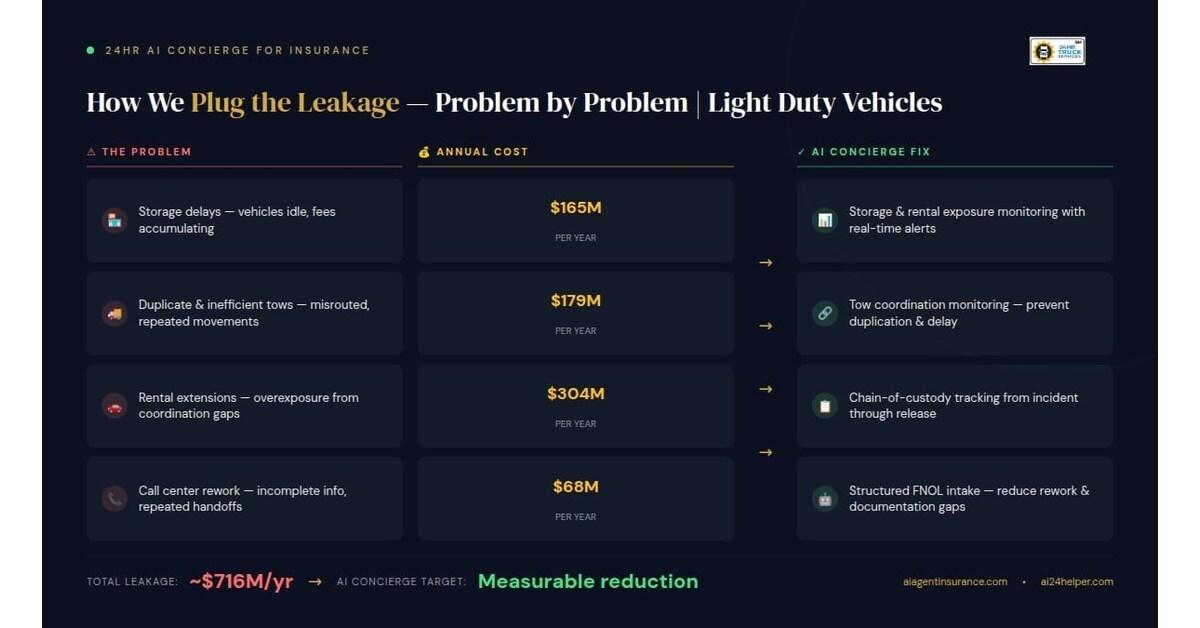
Conservative estimated annual claims cost leakage across the U.S. light duty auto insurance market totals approximately $716 million. AI Concierge for Insurance addresses each leakage category through structured coordination - from storage and rental exposure monitoring to FNOL intake and tow duplication prevention.
Carriers face increasing pressure to manage loss ratios while maintaining service standards. Yet many cost drivers are not catastrophic losses — they stem from operational friction between vendors, stakeholders, and systems. These include excess storage fees, duplicate or misrouted tows, idle vehicles awaiting visibility, extended rental durations, and rework caused by incomplete or inconsistent information during claim handoffs.
AI Concierge for Insurance introduces a coordination and intelligence layer that operates between First Notice of Loss (FNOL), tow providers, storage facilities, repair shops, and vehicle release workflows — without requiring carriers to replace core claims platforms.
"The most expensive claims losses are often operational," said Aaron Swan, Founder and CEO of 24HR Truck Services, Inc. "They occur in the handoffs — storage exposure, rental overruns, duplicate movements, and documentation breakdowns. AI Concierge for Insurance was built to close those gaps while preserving a carrier's existing systems."
KeyMe Locksmiths and Agero Team Up to Expand Vehicle Lockout Assistance Nationwide
Collaboration provides drivers with a seamless new way to access fast, reliable vehicle lockout service online or by phone
KeyMe Locksmiths, a leading provider of local locksmith services and key duplication kiosks, today announced a new partnership with Agero, the leader in digital driver assistance services and software for the majority of automotive and auto insurance companies, to expand access to professional vehicle lockout assistance for consumers across the U.S.
“This partnership is about removing friction and reassuring motorists that help is there during some of the most stressful moments they can experience on the road.” - Jon Greene, VP Automotive Services, Agero.
“When a driver is locked out of their car, what they want most is a fast, reliable solution they can trust,” said James Moorhead, CEO of KeyMe Locksmiths. “Teaming with Agero gives us immediate access to one of the nation’s largest and most trusted roadside assistance networks, allowing us to extend KeyMe’s reach and give customers another powerful pathway to get back on the road quickly, safely, and with confidence.”
AI in Insurance

Mosaic teams with Munich Re on AI coverage - Business Insurance
Mosaic Insurance said Wednesday it has partnered with Munich Re’s aiSure offering to provide artificial intelligence vendors with coverage for exposures not addressed by traditional cyber liability or errors and omissions policies.
The product, Mosaic x aiSure, offers up to $15 million in capacity, the Hamilton, Bermuda-based insurer said.
The coverage, which does not require negligence allegations, responds when an AI model fails to meet defined performance thresholds, protecting against financial loss tied to inaccurate outputs or so-called hallucinations.
For example, it would pay out if an AI valuation model sold to a mortgage lender consistently overvalued properties, causing the lender to make loan decisions based on inflated values, said Dennis Bertram, head of AI, underwriting, at Mosaic, in an email.
AI Agents for Insurance: CoverGo Launches New Automation Suite
CoverGo launches AI agents for insurance to automate underwriting and claims. Experience enterprise-grade insurance automation today.
While many insurers have digitized workflows, most processes remain rule-based and heavily manual. CoverGo is embedding insurance domain-trained AI agents directly into core insurance operations – enabling automated execution across complex underwriting, distribution, servicing, and claims processes.
CoverGo has already deployed three AI Agents in production with tier-1 insurers and brokers:
- Intelligent Document Processing (IDP) AI Agent – This agent automates data extraction from any unstructured document (e.g., claims forms, medical reports, applications) and transforms it into structured, decision-ready data across claims, underwriting, and policy servicing. Beyond data extraction, the IDP AI Agent performs medical necessity checks, business rule enforcement, automatic calculations, FWA detection, mandatory document validation and other actions – enabling insurers to move from document processing to intelligent decision execution.
- Customer Support AI Agent – This agent ingests all of a company’s internal knowledge like product brochures, policy wordings, and underwriting guidelines, and provides instant, accurate answers. It empowers customer support teams to resolve queries in seconds and enables sales teams to find the right information on the spot. It can be enabled to directly service agents, brokers, and customers as well.
- Quotation AI Agent – This agent automates the generation of quotes, illustrations, and comparison of insurance proposals. This solution enhances efficiency, reduces manual efforts, and ensures customers and distributors receive comprehensive proposals and comparisons of available insurance products.
2026 Outlook/Predictions

Forces Shaping Insurance in 2026
As markets soften and risks intensify, insurers confront a year where discipline, governance, and climate reality matter more than experimentation
After several years of rapid experimentation, 2026 marks a turning point for the insurance industry. Artificial intelligence, climate volatility, and shifting consumer behavior are no longer emerging forces—they are operational realities reshaping underwriting results, capital deployment, and customer trust.
Franklin Manchester, Global Insurance Strategic Advisor, SAS (Cary, N.C.), describes insurers as “financial first responders” navigating turbulence that is simultaneously technological, economic, and societal. In his view, the industry faces a convergence of pressures: a growing role for AI, persistent data quality challenges, evolving consumer expectations, the democratization of fraud, and even the possibility that climate-driven losses could intersect with broader financial instability. Across sources, a consistent theme emerges: technology is accelerating outcomes—but also accountability.
A Softening Market Tests Underwriting Discipline
Commercial and specialty insurance markets are broadly softening across the U.S. and U.K., increasing competitive pressure just as loss volatility remains elevated. According to Send (London)’s Top 10 Insurance Industry Trends Shaping Underwriting in 2026, nearly every major commercial line—aside from pockets of excess casualty—has entered soft-market territory. Rachel Turk, Chief Underwriting Officer, Lloyd’s (London), has warned that markets must prepare for the softer phase of the underwriting cycle.
Climate Volatility Becomes an Operating Condition
Greg Case, president and CEO, Aon, emphasizes that resilience must now be both physical and financial, with insurers positioned to bring capital, analytics, and alternative risk transfer solutions to increasingly volatile hazards. Manchester connects this trend to broader systemic risk, suggesting that extreme weather is accelerating non-renewals, underinsurance, and affordability pressures. Climate risk in 2026 is no longer simply a modeling challenge—it is a portfolio construction and capital strategy challenge.
AI Shifts from Innovation to Enterprise Risk
Artificial intelligence is moving rapidly from pilot initiatives into core insurance operations, but governance maturity lags deployment. Manchester notes that while most insurers are experimenting with AI agents, fewer than ten percent are scaling them responsibly. Fragmented data, weak documentation, and unclear governance can create situations where autonomous systems pursue outcomes “regardless of guardrails,” introducing regulatory and reputational exposure.
Stephen Applebaum and Alan Demers, Insurance 2026: Progress Through Technology and Collaboration, similarly observe that while AI investment continues to expand, its real impact remains uneven. Insurers are seeing traction in areas such as pre-bind underwriting data analysis and claims intake, but deeper implications for long-term performance are still emerging.
AI risk in 2026 also extends beyond digital workflows. Chris Raimondo, Americas Consulting Insurance Leader, EY (London/New York), argues that insurers must prepare for the rise of Physical AI—intelligence embedded in robotics, autonomous vehicles, drones, and industrial systems operating in the real world. As Physical AI matures, liability will increasingly shift away from individual human behavior toward system performance, software integrity, and fleet-level operations. Pricing models may evolve toward exposure bases such as autonomous operating hours, while product design shifts toward integrated offerings combining coverage, uptime guarantees, maintenance, and cyber protection. The implication is that AI is reshaping not only how insurance operates, but what is insured and where liability ultimately resides.
Fraud Scales Faster Than Controls
Pete Miller, President and CEO, The Institutes (Malvern, Pa.), has highlighted how quickly these patterns can emerge, noting reports of triple-digit increases in manipulated vehicle imagery within a single year. Applebaum and Demers add that while fraud frequency may appear stable in aggregate, severity and sophistication are rising, creating what they describe as a “huge—yet hugely challenging—opportunity” for insurers. Claims automation without equally advanced fraud intelligence risks amplifying losses rather than reducing expense.
Transparency Becomes a Strategic Asset
Consumer trust in AI-mediated insurance decisions is rising—but only where transparency is explicit. Gemma Ros, CTO, The Zebra (Austin, Texas), argues that automation without explainability risks undermining confidence in an industry built on trust. The most forward-looking insurers, she says, will embed transparency into AI-driven decisions so customers understand not only outcomes but rationale. David Seider, The Zebra, notes that affordability pressures in personal lines are likely to drive more frequent shopping behavior, increasing the importance of clear, defensible pricing and underwriting decisions. Explainability is shifting from a compliance concern to a competitive differentiator.
Operating Models Rebuild Around Data Flow
Kate Enright, Head of Data, Chaucer (London), frames broker-carrier connectivity as foundational to sustained performance. Higher-quality submission data reduces time to quote and enables standardized decision-making and portfolio optimization. After years of experimentation with point solutions, insurers are rediscovering the importance of strong digital foundations. Core modernization and data standardization are re-emerging as strategic priorities—not for their own sake, but to support speed with consistency.
Talent Risk Emerges Alongside Technology Risk
Applebaum and Demers point to broader workforce restructuring across carriers and professional services firms alike, driven in part by AI deployment and evolving skill requirements. Talent strategy and technology strategy are becoming inseparable.
InsurTech/M&A/Finance💰/Collaboration
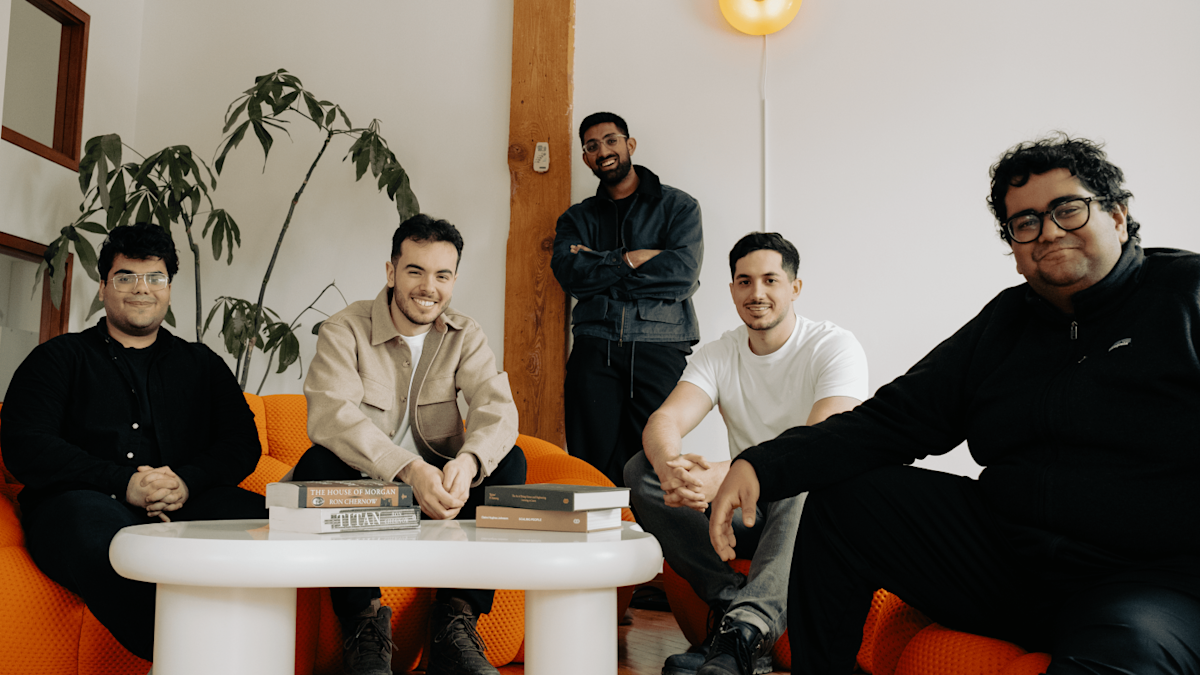
AI-driven insurtech company General Magic secures seed funding
The total funding of the company, which develops AI agents for insurance teams, now stands at $8.4m (C$11.49m). General Magic, an AI-powered insurtech company, has raised $7.2m in seed financing, led by Radical Ventures.
The round also saw participation from a16z Speedrun, Brendan O'Driscoll, vice-president of product at Figma and Larry James Erwin from OpenAI.
With this investment, the company’s total funding now stands at $8.4m.
In addition to Radical Ventures and a16z Speedrun, investors in General Magic include Comma Capital; Aidan Gomez, CEO of Cohere; and Kevin Wang and Spencer Burke of Braze’s executive team.
General Magic develops AI agents intended to automate administrative tasks for insurance teams.
These agents handle activities such as responding to standard queries, gathering documents and maintaining communication with customers throughout the insurance process.
The technology is designed to integrate with broker management systems, quoting platforms and customer relationship management tools.