
Research

Federal data breaks down insurance lobbying spends for 2025
The insurance industry spent $172 million on federal lobbying last year, ranking it fourth overall in lobby spending, according to data collected by Open Secrets.
Open Secrets includes a variety of insurance companies in the sector, including medical, life, commercial, and property and casualty insurance.
Medical led the spending, with Blue Cross/Blue Shield spending more than $20 million on lobbying last year. However, eight property and casualty insurance companies or organizations were in the top 25 spenders for the insurance sector last year.
Within the insurance industry sector, the American Property and Casualty Insurance Association (APCIA) was six highest spender with $5.8 million dedicated to lobbying last year.
The top 10 spenders for the sector included Nationwide, spending $3.6 million in the eighth position. Liberty Mutual and Allstate tied for 10th place with $3 million spent each.
Other property and casualty companies in the top 25 for the insurance sector include:
- Travelers Companies, $3 million
- Chub INA, $2.8 million
- State Farm, $2.7 million
- USAA, $2 million
Open Secrets uses data from Jan. 1 to Dec. 31 from the Senate Office of Public Records.

The largest global P&C insurers in 2026
Despite challenges presented by the global economy, the property and casualty insurance market continues to grow, surpassing $2.5 trillion in 2025. Experts predict the global market will grow to nearly $2.7 trillion this year.
By 2030 — with a predicted compound annual growth rate of 6.6% — the P&C market could hit almost $3.4 trillion by 2030, according to data from The Business Research Company.
The Business Research Company attributes this market growth to rising urbanization and asset ownership, the expansion of mortgage and auto financing, the growing demand for risk protection products, and the increasing number of customers using brokers to purchase coverage.
Countries with the highest gross written insurance premiums, across all lines, include the United States, China, Germany, Japan and France.
Current global leaders in the overall insurance market are in the health and life space, with UnitedHealth leading the way with over $257 billion in net written premium, followed by Centene Corporation and Elevance Health. However, there are a plethora of property and casualty insurers that also rank among the largest around the globe. In the slideshow above, we feature the five largest global property and casualty insurers by premium, according to Beinsure
Announcements
Assurant Launches Home Warranty Offering Through Compass International Holdings Brands
Assurant, Inc. (Atlanta) has launched a new home warranty product through a long-term relationship with Compass International Holdings (New York), extending its protection offerings to six real estate brands operating under the CIH umbrella. The program, branded Assurant Home Warranty, will be available to approximately 300,000 affiliated agents at Coldwell Banker, CENTURY 21, Better Homes and Gardens Real Estate, ERA, Corcoran, and Sotheby’s International Realty.
Keith Demmings, President and CEO, Assurant.
The initiative marks Assurant’s entry into the real estate channel and reflects its broader strategy to unify device, auto, and home protection under one portfolio. The product is designed to streamline home warranty coverage with digital tools, simplified claims processes, and a national service provider network.
“Assurant’s expansion into the real estate channel marks a pivotal milestone in the evolution of our home protection portfolio,” comments Keith Demmings, President and CEO, Assurant. “Our relationship with CIH is grounded in a shared commitment to empower brokers and agents while redefining what homeowners should expect from protection. Our ambition is clear: to become America’s leading home warranty provider by making home buying, selling, and ownership more seamless, reliable, and worry-free.”
Financial Results
CNA FINANCIAL ANNOUNCES Q4 2025 NET INCOME
Our Property & Casualty segments recorded core income of $1,664 million for the full year 2025, an increase of $115 million compared to the prior year attributed to improved current accident year underwriting results and higher net investment income partially offset by unfavorable net prior period development in the current year compared to favorable net prior period development in the prior year. P&C segments generated net written premium growth of 5%, due to renewal premium change of +4% and written rate of +3%.
Douglas M. Worman, Chairman & Chief Executive Officer of CNA Financial Corporation
- Record high net income of $1,278 million versus $959 million in the prior year, which included a $293 million after-tax loss from pension settlement transactions. Core income of $1,342 million, which is the best on record, versus $1,316 million in the prior year.
- P&C core income of $1,664 million versus $1,549 million, reflects improved current accident year underwriting results and higher net investment income partially offset by unfavorable net prior period development.
- P&C combined ratio of 94.7%, compared with 94.9% in the prior year, including 2.3 points of catastrophe loss impact compared with 3.6 points in the prior year. P&C underlying combined ratio was 91.8% compared with 91.5% in the prior year. P&C underlying loss ratio was 61.7% and the expense ratio was 29.7%.

Cincinnati Financial Reports Fourth-Quarter and Full-Year 2025 Results
Resiliency Led to Insurance Profitability
Stephen M. Spray, president and chief executive officer, commented: "After beginning the year with the worst catastrophe loss in our company's history, it took persistence and focus to record a 4% increase in full-year net income of $2.393 billion and $1.254 billion in full-year 2025 non-GAAP operating income – a 5% increase compared with 2024.
"For the fourth quarter, our insurance operations produced a combined ratio of 85.2% – one of our best fourth quarters in the last decade. On a full-year basis, our combined ratio of 94.9% is comfortably within our long-term annual average goal of 92% to 98% and marks 14 consecutive years of achieving an underwriting profit.
"Importantly, we continued seeing steady progress in our current accident year combined ratio before catastrophe losses. That measure improved 0.4 percentage points to 86.1% for 2025, even with the unfavorable effects of $52 million in reinsurance reinstatement premiums related to the California wildfires.
Insurance Operations Highlights
- 85.2% fourth-quarter 2025 property casualty combined ratio, up from 84.7% for the fourth quarter of 2024. Full-year 2025 property casualty combined ratio at 94.9%, with net written premiums up 9%.
- 5% growth in fourth-quarter 2025 net written premiums, including price increases, premium growth initiatives and a higher level of insured exposures.
- $331 million fourth-quarter 2025 property casualty new business written premiums. Agencies appointed since the beginning of 2024 contributed $33 million or 10% of total fourth-quarter new business written premiums.
Majesco Delivers Record FY25 and Emerges as the Catalyst for Insurance Industry AI Innovation, Business Optimization, and Customer Growth in 2026
Majesco’s industry recognized AI Leadership and growing customer base accelerate the shift to a new era of intelligent insurance operations
Majesco, the insurance industry’s foremost innovator in cloud-native, AI-native software, today announced exceptional fiscal year 2025 results, marked by strong financial performance, rapid customer adoption, new customers, record go-lives, accelerated innovation and prominent market leadership that reinforces Majesco’s position as the AI Leader and most profitable and scalable InsurTech in the world.
Majesco is off to a fast start for 2026. First, as of January 2026, Majesco customers now process over $100B in DWP on Majesco core platforms, reflecting exceptional growth as compared to $36B in 2024, demonstrating the accelerating shift toward AI and cloud-native core insurance platforms. Second, the acquisition of Vitech strengthens our leadership momentum in the L&AH segment and creates a new segment of growth in the Pension & Retirement and Pension Risk Transfer markets.
“FY25 was a defining year for Majesco, not only in terms of financial performance, but in how decisively we advanced the industry into the Intelligent Era of Insurance,” said Adam Elster, CEO at Majesco. “With Cloud-and AI-native platforms, GenAI and Agentic AI capabilities, rapid upgrades, and enterprise-scale delivery, we are uniquely positioned to help our customers not just keep pace with change but thrive in it. Our intelligent solutions are the catalyst for business transformation and optimization in an industry that demands continuous innovation, and our momentum and market leadership empowers our customers to keep setting the standard for what’s next in the market.”
AI in Insurance

OpenAI approves first insurer-built AI app on ChatGPT
OpenAI has approved the first AI app from an insurance provider on ChatGPT, built by Tuio, one of Spain’s leading digital insurers, and powered by WaniWani’s AI distribution infrastructure, enabling users to receive a personalised home insurance quote, and soon, purchase a policy, entirely within the conversation.
Citing a 2025 Express Legal Funding study, OpenAI observed that 33% of U.S. adults have already used ChatGPT for financial advice.
The firm continued, “Until today, AI could only provide generic answers drawn from static web page content. It could not quote a real price for a real person or business. For the first time, an insurance provider can distribute its products and offer quotes directly inside an AI platform where hundreds of millions of insurance buyers are already performing their research.
“For businesses or consumers, buying insurance coverage requires filling out forms, making calls, or going through different layers of intermediaries. AI is now changing that by removing these friction points.”
OpenAI explained that Tuio’s AI app understands the user’s intent, collects the right information through natural conversation, and returns an accurate, personalised quote from a regulated carrier, in real time, without leaving the AI interface.

AI and human-in-the-loop: Applied Systems' smarter model for insurance data accuracy
'We're embedding AI across the full digital roundtrip of insurance'
As the insurance sector confronts intensifying demands for operational efficiency, data accuracy and regulatory compliance, one industry leader is meeting these changing expectations head-on thanks to a recent strategic acquisition.
Applied Systems’ integration of AI startup Cytora could be seen as reflective of a broader shift in the market toward end-to-end automation - as well as an emphasis on data integrity and business agility.
“The acquisition and rapid integration of Cytora is a direct response to a classic industry problem - insurance workflows generate vast amounts of documents, including SBCs, declarations pages, schedules and proposals, with unstructured data that is not easily consumable by modern systems,” Anupam Gupta, chief product officer at Applied Systems, said.
“By embedding Cytora’s risk-digitization and document-ingestion capabilities into Applied’s ecosystem, we’re turning that messy input into structured, authoritative data that can connect the entire policy lifecycle from application and quoting, to submissions and underwriting, and servicing and renewals. That shift, from manual, error-prone data entry to automated extraction and enrichment, mirrors an industry-wide movement toward automation that both improves data quality and compresses cycle times for brokers and carriers.”

Agentic AI adoption in insurance: scaling efficiency and operations - Microsoft Industry Blogs
This blog post is co-authored by Patrick Keating of Cognizant
The insurance industry stands at a pivotal moment in its digital transformation journey. With deep data reserves, a tradition of analytic decision-making, and a workforce skilled in actuarial and underwriting practices, insurers are uniquely positioned to benefit from the ongoing advances in AI.
However, despite early enthusiasm and pilot projects, only 7% of insurers have successfully scaled AI initiatives across their organizations.1 The adoption of increasingly powerful AI agents—systems that can support autonomous tasks, help make decisions, and take action under human oversight—offers a promising path forward. By embedding intelligent agents into workflows, insurers can tackle legacy constraints, talent shortages, and operational inefficiencies to unlock transformative value.
The broad adoption of agentic AI in insurance is hindered by several entrenched challenges.
First, a persistent talent shortage affects specialized roles such as actuarial analysis and underwriting, which limits the industry’s ability to leverage data effectively. Adding to the challenge is legacy infrastructure, including outdated systems and fragmented data architectures, which can impede integration and scalability.
Financial strain across the insurance sector is another major factor, with catastrophe losses exceeding $100 billion annually for six consecutive years, making high-frequency property losses a structural issue.2
Organizational resistance also plays a significant role; siloed teams, unclear priorities, and a conservative corporate culture slow the pace of AI adoption.
State News

Senate Bill 876: Speeding up recovery after the LA wildfires
Recovery has been prolonged by disputes over habitability and reduced living-expense benefits.
One year after the Los Angeles wildfires, California lawmakers introduced Senate Bill 876 (SB 876), the "Disaster Recovery Reform Act," authored by Senator Steve Padilla and sponsored by Insurance Commissioner Ricardo Lara.
Why this bill matters For many smoke-damaged households, recovery has been prolonged by disputes over habitability and reduced living-expense benefits, even where independent testing found lingering heavy metals and other toxins.
Reporting also indicates that a large share of survivors remain displaced, contributing to a "K-shaped recovery" where wealthier households move forward while others await claim resolutions. SB 876 targets these delays and gaps by tightening claims-handling rules and coverage obligations during declared emergencies.
Stronger claims handling and oversight SB 876 requires insurers to maintain a written disaster response plan, update it every two years, and provide post-disaster reporting to the Department of Insurance. During a declared emergency, carriers must proactively communicate with claimants and report aggregate losses within 15 days of the emergency declaration.
To ensure continuity when adjusters change, the bill requires insurers to designate a primary claims adjuster and provide a written status report within five business days after assigning a subsequent adjuster. MORE
InsurTech/M&A/Finance💰/Collaboration
North American insurance M&A decline in 2025 as deal value surges in Q4 | S&P Global
The aggregate value and total number of North American insurance deals in 2025 fell short of 2024 levels, despite a surge in deal values in the fourth quarter.
Insurance underwriters and brokers were involved in 166 deals totaling $18.88 billion in the fourth quarter of 2025, compared to 194 deals totaling $5.60 billion in the third quarter; 153 transactions totaling $9.97 billion in the second quarter; and 139 transactions totaling $6.68 billion in the first quarter, according to an analysis by S&P Global Market Intelligence.
Despite a notable rise in aggregate deal value for the quarter, the total remained below the fourth quarter of 2024 and 2023, which were $21.70 billion and $23.48 billion, respectively.
In 2025, both the total number of deals and aggregate transaction value were lower than in 2024. There were 652 deals totaling $41.17 billion in 2025, compared to 674 deals totaling $59.32 billion in 2024.
Insurance M&A trends largely mirrored broader North American M&A markets, which saw a surge in total valuation in the fourth quarter of 2025, but a decline in deal volume.
People
Verisk names president of claims solutions
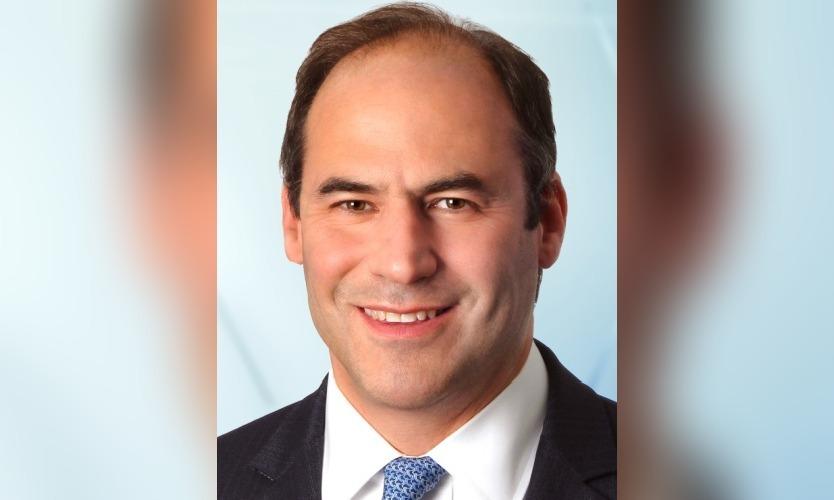
Technology and data analytics company Verisk on Monday named former Ernst & Young executive Steven Kauderer president of its claims solutions business.
Based in New York, Mr. Kauderer reports to Lee Shavel, president and CEO of Verisk.
Most recently, Mr. Kauderer was a senior partner at EY-Parthenon, one of Ernst & Young’s four global service lines, where he led the enterprise reimagined practice. Prior to that, he was a senior partner in the global insurance practice at McKinsey and Co.
Mr. Kauderer succeeds Maroun S. Mourad, who left Verisk in July 2025 to become president of intellectual property at Clarivate.
Verisk CFO Elizabeth Mann, who had held dual roles as interim president of claims solutions and CFO since July 2025, will continue in her role as CFO.