
Climate/Resilience/Sustainability

Severe Convective Storms Dethrone Tropical Cyclones as the Costliest Global Peril
High-frequency catastrophes reshape insurance landscape and widen protection gaps, Aon reports.
Severe convective storms have surpassed tropical cyclones to become the costliest insured peril of the 21st century, driven by escalating high-frequency, high-severity outbreaks predominantly in the United States, according to Aon’s 2026 Climate and Catastrophe Insight report.
The changing risk profile reflects a fundamental reorganization of natural hazard patterns. Severe convective storms (SCS) also generated $61 billion in insured losses globally in 2025 alone—the third-highest on record—from 61 events, underscoring how frequently these events now strike. SCS also was the largest source of economic losses in 2025, with 82 events resulting in $82 billion of losses.
Research

Homeowners Are Falling Behind on Their Mortgages
Late-stage mortgage delinquencies—defined as payments at least 90 days past due—increased 18.6% in December compared with a year earlier, a new report has found.
The share of mortgages in that stage of nonpayment increased to 0.2%, up from just under 0.17% in December 2024, according to new research from credit scoring firm VantageScore.
"This growth is occurring at a faster pace than for delinquencies involving other types of consumer credit, including auto loans, credit cards, and personal loans," Atif Mirza, senior vice president and head of credit insights at VantageScore, tells Realtor.com®.
As of the third quarter of 2025, total mortgage delinquencies represented 1.78% of outstanding home loans, according to the Federal Reserve Bank of St. Louis.
According to LendingTree, Americans owed $13.07 trillion on 86.67 million mortgages as of the third quarter of 2025.
Based on these figures and the Federal Reserve Bank of St. Louis' delinquency data, the number of delinquent mortgages could be about 1.5 million, reports CNBC.
"I’ve had several people contact me because they’re falling behind on their mortgage," real estate agent and investor Ron Myers, of Ron Buys Florida Homes, tells Realtor.com. "Some sellers just want out before things get worse, and that’s when they call me to help them sell fast for cash."
News
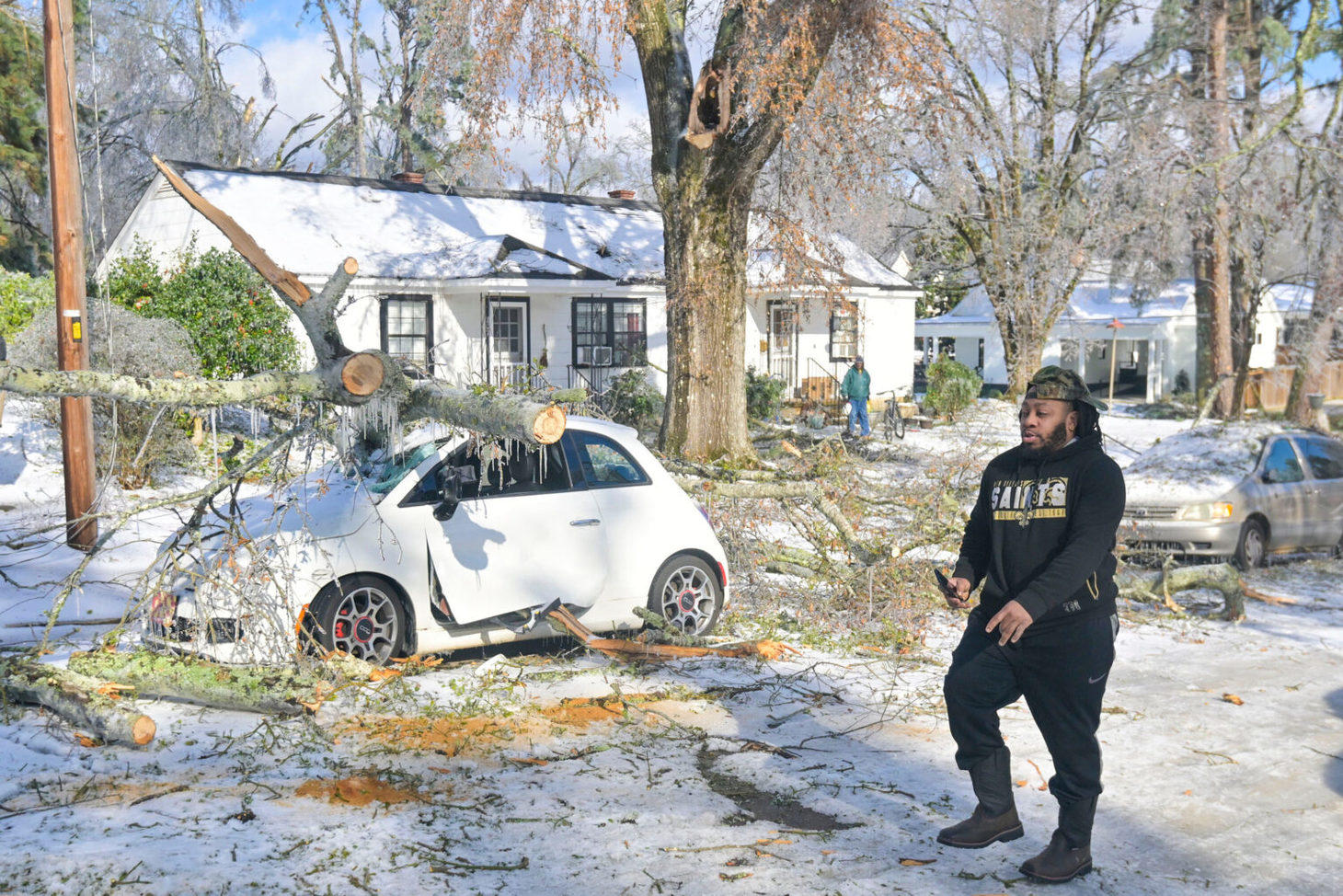
Winter Storm Fern to Cost $4B to $6.7B in Insured Losses: KCC, Verisk
January’s Winter Storm Fern caused insured losses of $6.7 billion, making it one of the costliest winter storms since 1950, according to catastrophe modeler KCC.
The tally includes privately insured losses from damage to residential, commercial and industrial properties from the snow, ice, wind and deep freeze that engulfed more than half of U.S. states, affecting about 200 million people starting on Jan. 23 and lasting until Jan. 27.
Meanwhile, Verisk estimates insured losses to property and auto from the storm could reach $4 billion, according to an initial analysis by the company’s Catastrophe and Risk Solutions group. Freeze impacts are expected to be the largest driver of losses, with supplemental losses from wind and snow.ARTICLE
AI in Insurance

AI Neo-Insurer MGT Partners with Amwins to Modernize E&S Underwriting
MGT, the vertically integrated AI-native carrier modernizing commercial property and casualty insurance, today announced a partnership with Amwins, the largest independent wholesale distributor of specialty insurance products in the United States.
The collaboration brings MGT’s proprietary AI-driven underwriting and pricing platform to select risks in the rapidly expanding Excess & Surplus (E&S) market, dramatically improving how specialty insurance is underwritten, priced, and placed across the country.
"Amwins is relentlessly focused on innovation and continuous improvement," said Ben Sloop, President and Chief Operating Officer of Amwins. "This collaboration with MGT, as one of the industry’s leading digital-forward carriers, is a bold step forward. It reflects our commitment to streamlining the small commercial E&S space and investing in AI-enabled platforms that improve outcomes for our retail clients and their insureds."
Announcements
Agentech Launches Dynamic AI Document Routing to Streamline Claims and Eliminate Manual Triage
Claims operations are constantly seeking ways to accelerate handling and reduce administrative drag. One of the most significant and persistent bottlenecks is the manual triage of documents arriving via shared inboxes- a process involving downloading, renaming, classifying, and manually re-uploading files into the Claims Management System (CMS).
These repetitive workflows inflate operating costs, increase the potential for errors, and ultimately slow down claim resolution.
Today, we are thrilled to announce the launch of Document Routing, an AI-driven document management portal built specifically to eliminate this operational drain. In production now, Document Routing automatically ingests email and attachments, leverages classification and extraction expertise to understand and categorize the content and intelligently routes the files to their final destination.
Commentary/Opinion

Property And Casualty Insurance Premiums Set To Fall
After years of high property-and-casualty insurance premiums globally, the rate reductions multinational companies saw in 2025 are anticipated to continue this year, especially for those willing to revisit their current carrier relationships.
“Nuclear” jury verdicts in corporate liability lawsuits will likely continue to push up casualty premiums in the US, and the trend is spreading to other countries. But these appear to be an outlier.
“With the exception of US casualty, for all other lines of business the starting point is double-digit percentage reductions,” between 10% and 20%, says Simon Delchar, global head of placement at Willis Towers Watson. And for companies willing to look beyond their current carriers, “the decrease could be significantly more than 20%.”
That’s in part because premiums have rested at high levels over the last half dozen years while insured losses, despite several major catastrophic events over that period, have remained relatively modest in aggregate. Consequently, global insurers’ profits have soared, as reflected in the stellar third-quarter earnings of giants such as AIG, Allianz, and Chubb, and many are releasing reserves from previous years. Reinsurers providing capital to primary insurers successfully renewed commitments at the end of 2025, further bolstering the industry.
With the wind at their backs, insurers are now anxious to grow their businesses.
“The impact is a big feeding frenzy,” says Delchar, putting further downward pressure on rates.
Global wildfire, flood, and typhoon events were milder than anticipated last year. That impacts the current pricing reductions, because weather is the primary driver of price.
That could quickly change, of course, notes Nadine Moore, managing director and senior partner at Boston Consulting Group. Even with recent reductions, “we’re nowhere near the trough we were in five years ago,” she says. “We can’t predict the weather, but there’s a view we’re going into a deep soft market.”

Why insurers’ increased use of AI is sparking concerns for policyholders - Fast Company
William May’s home in Pacific Palisades was destroyed in the L.A. wildfires in January 2025. He’s still haunted by the memory of the “fireball burning everything in its path” on that hellish day. And all he wants to do is rebuild his beautiful home, where the retired pediatrician lived with his wife.
Since then, he’s been fighting with State Farm, his property insurer, to get the money he said he needs to rebuild his home. Back in 2017, when he bought the two-story home, he said it was valued at $1.7 million. But the insurer gave him an estimate of only $1.35 million after the fire, and May said he’s driven himself into debt trying to rebuild the couple’s home while they wait for State Farm to reassess their claim. Property values in the neighborhood have increased 50%, from $2.1 million on average in December 2017 to $3.076 million in December 2025, according to Zillow’s Home Values Index.
“How can it be worth less now than it was when it was new?”
May blames State Farm’s use of an AI-powered software called Xactimate, which the insurer employs to estimate property repair, rebuilding, and cleaning costs. “They use this reductive method. It’s a phony way of calculating every screw, every bolt, and coming up with a profit for State Farm by undervaluing the house.”
May considers himself lucky, since he has the resources to rebuild, noting that many of his neighbors can’t afford to do that and face similar problems with their insurers. He also blames Verisk, the data analytics company that makes Xactimate.
“I’m pretty sure these companies make these programs just to sell to insurance companies so that they can lowball people because the insurers are interested in squeezing people for profit,” he said.
InsurTech/M&A/Finance💰/Collaboration
Experian Acquires Own Up to Expand Mortgage Access and Consumer Home Loans in the Experian Marketplace
Integration adds more AI capabilities and a licensed, tech-enabled shopping service to the Experian platform that helps ensure consumers do not overpay for mortgages
Experian® today announced it has entered into a definitive agreement to acquire Own Up®, an AI-powered mortgage shopping platform that helps consumers seeking to purchase, refinance a home, or obtain home equity loans at a time when landing an affordable home loan has become increasingly complex for many Americans. The acquisition will strengthen the Experian Marketplace, adding expert homebuying guidance and proven loan capabilities to Experian’s existing ecosystem of credit cards, personal loans and auto insurance offers.
Advancing its mission of Financial Power to All™, this move expands Experian’s presence in the mortgage industry—helping lenders reach more qualified shoppers while enabling consumers to find the right products to help achieve their homebuying goals. The integration brings together Experian’s established B2B mortgage capabilities, consumer services reaching more than 80 million Experian members, and deep data and analytics with Own Up’s proprietary AI-powered technology and 40+ lender network, which will create meaningful value for both lenders and consumers strengthening the overall lending ecosystem.

Radian completes $1.67 bn acquisition of Lloyd’s re/insurer Inigo
Radian Group, a U.S.-based mortgage and specialty insurance holding company whose core heritage is private mortgage insurance and related risk, and title services, completed its acquisition of Inigo, a London-based specialty insurance and reinsurance group underwriting through Lloyd’s, for $1.67 bn, finalising a transaction first announced last year.
The M&A deal cleared all regulatory approvals before year-end and closed using existing liquidity and excess capital from Radian’s mortgage insurance subsidiary, Radian Guaranty. The acquisition reshapes Radian’s business profile. The group moves from a US-focused private mortgage insurer into a global, multi-line specialty insurance platform with underwriting operations at Lloyd’s of London.
Management framed the deal as a way to broaden product capability while deploying surplus capital more efficiently.
Radian expects the transaction to lift earnings meaningfully.
The company projects mid-teens percentage accretion to earnings per share and roughly 200 basis points of return on equity accretion during 2026, reflecting both diversification benefits and capital optimisation. The purchase price at closing, net of adjustments, totaled $1.67 bn. Radian funded the acquisition without external equity issuance, relying instead on internal liquidity and excess capital held within its mortgage insurance operations.
Inigo will continue operating from London as a standalone business unit within Radian. The group retains its brand, underwriting model, and senior leadership structure, maintaining continuity across its Lloyd’s platform.
Aurora Launches Lead Algorithmic Underwriting as a Service
Aurora, a lead algorithmic insurance platform, has announced the launch of its new Lead Algorithmic Underwriting as a Service capability, marking a significant step forward for algorithmic underwriting in complex commercial and specialty insurance.
While the market has made progress with smart follow and workflow automation, true lead algorithmic underwriting, where pricing, risk selection, and underwriting decisions are made algorithmically at scale, has remained out of reach. The challenge has not been intent, but execution: building production-grade models, embedding them into underwriting operations, and governing them effectively has proven too complex, slow, and costly for most insurers.
Aurora’s new platform capability addresses that gap directly. Lead Algorithmic Underwriting as a Service enables insurers to deploy live, governed lead underwriting algorithms across complex commercial and specialty risks, without changing how brokers trade today. Submissions continue to arrive by email, while Aurora’s algorithms automate risk assessment, pricing, and underwriting decisions from submission to bind.
Claims

Reaffirming the Meaning of Claims Work in the Age of AI
As insurers adopt AI, leaders must ensure automation deepens judgment, collaboration, and human value rather than diminishing professional meaning.
A claims examiner who watched her inbox clear itself of repetitive tickets suddenly found herself free to focus on complex claims requiring judgment, empathy, and negotiation. A colleague down the hall, now reduced to approving a chatbot’s recommendations, wondered what purpose remained in a job that no longer required his judgment. Finding purpose in the age of AI depends on how organizations empower insurance professionals to focus on the parts of their roles that matter most.
A recent survey of 4,475 working adults by Gallup and Stand Together found that employees with a strong sense of purpose were 5.6 times more engaged at work than those with a low sense of purpose. The study measured whether employees believed their work contributed to something important, positively impacted others, and provided meaning in daily tasks. Other research consistently shows that engagement predicts productivity, job satisfaction, reduced turnover, and broader organizational success. Managers also report that a sense of purpose is a strong indicator of new-hire success.
With the rapid adoption of AI across insurance operations, a natural question arises: how is AI affecting employees’ sense of purpose at work? As with many questions about AI’s impact, the answer depends on context.
John C. Peters, PhD, is Co-founder and Chief Science Officer of Gain Life.
Webinars/Podcasts/Interviews
Customers Are Getting Tetchy. What to Do? | Insurance Thought Leadership
Many customers are dissatisfied with how insurers treat them and are increasingly shopping around. It's time to rethink the problem.
Paul Carroll, editor-in-chief, Insurance Thought Leadership interviews two industry leaders on the issue of insurance customer experience
Based on what I’m seeing at ITL, customer experience has become a truly hot issue in the insurance industry, especially as customers are more willing to shop around. Is that what you’re seeing, too?
Sean G. Eldridge is the Co-founder and CEO of Crosstie, a venture-backed insurance technology company that helps P&C carriers, TPAs, and self-insured organizations modernize claims and service workflows through configurable AI and automation
Emily Cameron is the Head of Product and Customer Success at Crosstie, where she leads the development and adoption of technology that improves claims and service outcomes for P&C carriers and TPAs.