
News

Former Swiss Re executive faced internal harassment probe before exit, report alleges
Russell Higginbotham, a former member of Swiss Re's Group Executive Committee, was reportedly the subject of an internal harassment investigation prior to his departure from the company, according to a report from Zurich-based publication Inside Paradeplatz.
Higginbotham had been with Swiss Re for three decades, having joined the company in 1994. He was named CEO of Swiss Re Solutions in 2022.
Despite the announced departure, Inside Paradeplatz highlighted that Higginbotham's profile remained on Swiss Re's website for an extended period. When asked, Swiss Re said, "The leadership change took effect at the beginning of 2025," adding that "the corresponding entry on the website was outdated and has since been corrected."
A source cited by the publication alleged that an internal investigation had been conducted into harassment claims against Higginbotham following a complaint made in early 2025. The source reportedly described the allegations as involving "sexual misconduct."

InsurPac Closes the Books on Historic Fundraising Year - IA Magazine
InsurPac, the Big “I” political action committee (PAC), raised over $1.3 million during the 2025 calendar year, its second-highest fundraising year in its history.
InsurPac, the Big “I” political action committee (PAC), raised $1,303,715.93 during the 2025 calendar year, its second-highest fundraising year in its history. A total of 3,053 donors invested an average of $427 per person.
Last year, 422 “major donors” gave $1,000 or more, 93 of those stepped up with investments of more than $2,500, and 38 invested the maximum amount of $5,000.
Leading the charge of state associations was South Carolina, which defended its title of InsurPac National Champion by raising $106,940. Rounding out the top five in total dollars raised was Illinois ($70,293), Texas ($65,170), Georgia ($62,518) and New York ($61,149). Overall, a total of 45 states achieved their InsurPac goal.
New York reclaimed the Big “I” Presidents Cup, given annually to the state whose past and current state presidents or chairs contribute the most money to InsurPac, raising a total of $30,051.
During the fundraising campaign, a record 23 states became InsurPac Eagle states by contributing an average of $100 or more per agency member. South Carolina led the charge by averaging approximately $359 per agency. Other states to achieve Eagle status were Alabama, Alaska, Arkansas, Connecticut, Georgia, Indiana, Kentucky, Maine, Maryland, Michigan, Mississippi, Montana, Nebraska, Nevada, New Hampshire, New Jersey, North Dakota, Rhode Island, South Dakota, Tennessee, Wisconsin and Wyoming.
Research

Insurance CEOs bullish on growth but flag cyber as top constraint - KPMG
KPMG’s Insurance CEO Outlook shows strong deal appetite and rapid AI investment - but cyber risk, workforce readiness and ESG reporting are the biggest operational headaches
Insurance chiefs are upbeat about growth prospects for 2026 even as they confront a squeeze from claims inflation, cyber threats and an accelerating regulatory burden, according to KPMG’s 2025 Insurance CEO Outlook.
The report, based on a focused slice of KPMG’s broader CEO survey of 1,350 executives, presents views from 110 insurance CEOs across life, non‑life, reinsurance and broking groups.
Confidence and M&A appetite
KPMG reports that 82% of insurance CEOs are confident in their company’s growth prospects for the year ahead (up from 74% in 2024), and 78% are confident about industry growth. That optimism is matched by a notable appetite for consolidation: 50% of insurance CEOs expect to undertake high‑impact M&A in the next three years — a higher proportion than in any other sector covered by the global survey. KPMG says deals are being pursued to achieve scale, diversify product mix and acquire tech and data capabilities.
AI: funding, deployment and trust
Artificial intelligence is now a boardroom priority. According to KPMG, 73% of insurance CEOs rank AI as a top investment priority and 67% plan to allocate 10–20% of their budgets towards it. CEOs expect returns from AI investments within one to three years — a marked acceleration from 2024 — and 44% judge agentic AI capable of having a significant or transformational impact on operations.
Announcements

Reminder: Subscribe for Free/ Changing email Address
To our valued 'Connected' newsletter followers:
We've noticed that subscribers change organizations through career growth, promotions and new opportunities and likewise extend our congratulations.
Don't miss out. Be sure to re-subscribe for free with your new email address or reach co-curator Alan Demers
AI in Insurance

How Liberty Mutual Insurance Is Using Data And AI To Deliver Value To Its Customers And Employees
Liberty Mutual Insuranceis using data and AI to deliver value to its customers and employees.How are data and AI being used to deliver value to customers and employees in the insurance industry? This is among the questions that I recently posed to Monica Caldas, Global Chief Information Officer (CIO) of Liberty Mutual Insurance. Founded in Boston, Massachusetts in 1912, Liberty Mutual today is the sixth largest property and casualty insurance company in the world and ranks 87th on the Fortune 100 list of largest U.S. corporations.
Caldas, who has served in a CIO capacity at Liberty Mutual since 2018 previously held CIO roles at General Electric (GE). Today, as Global CIO at Liberty Mutual, Caldas leads a global technology organization of more than 5,500 employees across 27 countries. Caldas explains, “Our mission is to unify our technology ecosystem into one cohesive, high-performing enterprise. This structure enables us to accelerate innovation, strengthen our competitive advantage, and deliver consistent value across markets.” Core to this mission are data and AI.
Embracing Data and AI as a Business Strategy
At Liberty Mutual, technology is designed to operate as a unified enterprise engine—owning IT operations, engineering, AI and GenAI capabilities, and the data ecosystem that enables intelligent decision-making at scale. This model reflects a deliberate choice: to embed data and intelligence directly into the fabric of how the company operates, rather than treating them as standalone functions. FULL ARTICLE

Reaffirming the Meaning of Claims Work in the Age of AI
A claims examiner who watched her inbox clear itself of repetitive tickets suddenly found herself free to focus on complex claims requiring judgment, empathy, and negotiation. A colleague down the hall, now reduced to approving a chatbot’s recommendations, wondered what purpose remained in a job that no longer required his judgment. Finding purpose in the age of AI depends on how organizations empower insurance professionals to focus on the parts of their roles that matter most.
A recent survey of 4,475 working adults by Gallup and Stand Together found that employees with a strong sense of purpose were 5.6 times more engaged at work than those with a low sense of purpose. The study measured whether employees believed their work contributed to something important, positively impacted others, and provided meaning in daily tasks. Other research consistently shows that engagement predicts productivity, job satisfaction, reduced turnover, and broader organizational success. Managers also report that a sense of purpose is a strong indicator of new-hire success.
With the rapid adoption of AI across insurance operations, a natural question arises: how is AI affecting employees’ sense of purpose at work? As with many questions about AI’s impact, the answer depends on context.
When AI Undermines Purpose
AI can challenge an employee’s sense of competence, a core psychological need. When technology replaces work in which individuals have developed mastery, it can undermine their sense of worth and relevance. Claims professionals who experience AI as augmenting their expertise often feel their purpose reinforced, while those whose role is reduced to “checking the machine’s work” may experience a real erosion of meaning.

Insurance pros are satisfied with AI but most aren’t scaling it responsibly
Until companies reimagine how they operate with AI, true financial impact is out of reach.
The bulk of insurance professionals have not fully scaled AI but nearly half think it will reach full maturity within the next two years, according to a study by Genpact.
Only 2% of insurers have fully scaled AI, the data showed, despite 49% predicting the technology to be fully integrated by 2028. According to Genpact, the gap reflects insurers’ challenges to align the components, data, workflows and culture that make AI fully operational at scale.
“Insurers have an enhanced intent and interest in leveraging and driving AI solutions across the enterprises,” Adil Ilyas told PropertyCasualty360.com, global business leader for insurance at Genpact.
“However, they are short of the foundational capabilities critical to scaling it responsibly,” he added. “For P&C insurers, the barriers are regulatory or compliance challenges, skills gaps, and technology limitations. By modernizing architectures and oversight mechanisms and expanding AI fluency and trust, insurers can move AI beyond pilot mode and turn it into a reliable driver of underwriting accuracy, claims efficiency and long-term resilience.”
Claims

Why Claims Experience Is the Real Differentiator | Insurance Thought Leadership
Customer acquisition costs have surged 222%, and one poor claims experience can destroy trust and trigger churn.
Acquiring a new insurance customer takes effort. Well-thought-out advertising campaigns, cold sales outreach, and personalized discounts are primary levers for building trust and expanding the customer base. This is a time-consuming and costly affair. That's why, over the last few years, customer acquisition costs have risen by 222%. And brands today lose an average of $29 per new customer, up from $19 a decade ago.
While the exact figures may vary, especially for a highly variable expense such as insurance, one thing is clear. All that effort can be undone by just one negative claim experience. A recent policy research report by Which? exploring consumers' experiences of the insurance claims process found that:
48% making a claim experienced at least one issue 28% consumers felt their insurer's actions were unjust 24% said they didn't understand why their claims got rejected The message is clear: a single bad claim experience can erode trust, trigger churn, and damage a brand's overall reputation, especially in health insurance. A claim denial can occur due to errors in paperwork, missing documents, undisclosed pre-existing conditions, or other technical reasons. But there's no question that denial is brutal.
In this article, we explore why claims experience often matters more than customer acquisition, especially in health insurance, and how insurers can prioritize it.
Commentary/Opinion

David Sampson: Florida insurance reforms deliver relief as litigation drops and rates ease
Legal reform curbs lawsuits, stabilizes insurers, and finally delivers relief.
Florida has long been a national leader in many areas — and today it stands out for its remarkable progress in repairing a property insurance market that had been spiraling under the weight of excessive litigation and legal system abuse.
By taking decisive action to curb unnecessary lawsuits and restore fairness to its legal system, Florida stabilized its property insurance market and delivered real benefits to consumers.
The 2022–2023 reforms enacted by Gov. Ron DeSantis and the Legislature are driving down rates, providing premium relief, and expanding coverage options while preserving consumer protections.
This is a far cry from where Florida was just a few short years ago at the height of the state’s insurance crisis. More than a dozen companies had gone insolvent or stopped writing new policies, insurance rates were skyrocketing, and the state-run insurer of last resort, Citizens, had ballooned to more than 1.4 million policies.
Today, the Florida insurance market is experiencing strong growth and stability, and Floridians are benefiting from improved affordability. Seventeen new companies have entered the market to offer coverage since the reforms were passed. More competition in the marketplace means consumers have more options to shop around for the best policy at the best price.
2026 Outlook/Predictions
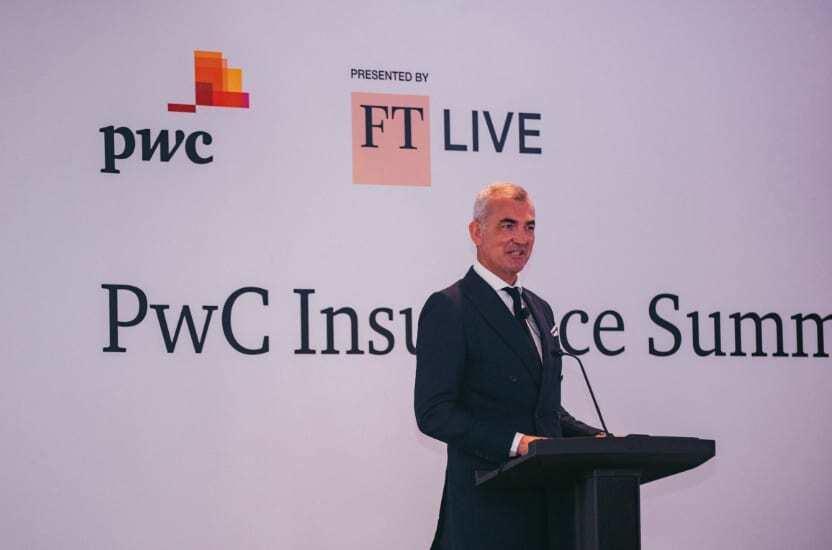
Insurance CEO confidence in revenue growth down 18% for 2026: PwC
PwC’s 29th Global CEO Survey has revealed that just 46% of insurance CEOs are confident about their company’s prospects for revenue growth over the next 12 months, an 18% dip from 56% in 2025.
The company’s latest CEO survey is based on responses from 4,454 CEOs across 95 countries and territories, and is useful way to gauge the sentiment of leaders across various industries.
About 30% of CEOs across all industries in the survey are confident about revenue growth in 2026, the lowest level in five years, compared with 38% in 2025 and a high of 56% in 2022. This is due to most companies struggling to turn AI investment into tangible returns.
Despite widespread experimentation, only 12% CEOs say AI has delivered both cost and revenue benefits. Additionally, business leaders are also grappling with rising geopolitical risk, intensifying cyber threats, and a constant need for reinvention, according to the report.
Overall, 33% report gains in either cost or revenue from AI, while 56% say they have seen no significant financial benefit to date. Around 42% cite the increasing pace of technological change as a concern, as they are uncertain if companies are able to match this. There are 29% in the group who cite innovation capability or medium to long-term viability as concerns.
InsurTech/M&A/Finance💰/Collaboration

AIG Announces Strategic Investment Partnership of Up to $3.5B With CVC
American International Group (AIG) announced a strategic partnership with global private markets firm CVC.
The partnership, announced Jan. 19, includes the establishment of large-scale separately managed accounts (SMAs) across CVC’s credit strategies, for which AIG will allocate up to $2 billion. An initial $1 billion will be deployed this year, AIG said.
The partnership also includes the launch of CVC’s private equity secondaries evergreen platform with AIG as a cornerstone investor, contributing up to $1.5 billion from its existing private equity portfolio to provide scale and a seed portfolio for the strategy. It also “enables AIG to efficiently manage and transition its legacy private equity exposures.”

Repairify, Opus IVS Announce Intent to Combine Diagnostics Businesses
Merger aims to expand OEM-compatible coverage, speed remote diagnostics and simplify ADAS calibration workflows for shops while keeping brands intact.
Repairify’s diagnostics brands, asTech and BlueDriver, and Opus IVS have announced their intent to combine to accelerate innovation across the automotive diagnostics industry.
The combination brings together complementary technologies, technical expertise and a commitment to helping repairers efficiently service today’s increasingly complex vehicles.
As automotive technology evolves and demand for accurate diagnostics and ADAS calibrations grows, the combination of Repairify’s diagnostics brands and Opus IVS creates a foundation for delivering solutions with expanded coverage and capabilities.
“Diagnostics and calibrations are becoming central to every repair,” said Srisu Subrahmanyam, CEO of Repairify. “By bringing together asTech’s remote service excellence, Opus IVS’s advanced hardware engineering and software platform capabilities, and BlueDriver’s broad mechanical repair presence, we can innovate faster and deliver more value to our repairer customers. Following the close of the transaction, our talented, collective diagnostics leadership teams will remain intact, with Brian Herron as the CEO of the diagnostics business comprised of asTech, Opus IVS and BlueDriver.”
Podcast Sponsor

Audio Version - 'Connected: The Podcast' --- Sponsored by Pulse Podcasts
** The ‘Connected’ Podcast by Alan Demers and Stephen Applebaum, is a condensed audio version of the day's ‘Connected' newsletter, a daily scan of all the happenings in the world of Insurance & InsurTech News**.
Pulse Podcasts: Introduce a new way for your audience to hear your voice! We are a podcast creation service that helps businesses turn their written content, like blog posts and news articles, into beautiful podcasts. Our platform writes the script, records the voices, and mixes the audio to create engaging content for your audience. It's affordable and has super-fast turnaround!
LISTEN AND SUBSCRIBE BELOW