
Research

Supply Chain Losses Hit 86% of Companies, but Most Lack Adequate Coverage: Gallagher
A global survey of business leaders exposes a widening gap between supply chain risk awareness and financial protection, according to Gallagher.
A staggering 86% of companies suffered supply chain losses in the past year, yet only one in three carried full coverage for those losses, according to Gallagher’s Redrawing Global Supply Chains report, as reported by Risk & Insurance.
The big picture: Rising material costs, geopolitical instability and tariff disputes are hammering global supply chains simultaneously — and companies’ financial protections haven't kept pace. Many firms now treat geopolitical disruption as a permanent operating condition rather than a one-off shock, but only one in four rate their mitigation strategies as very effective.
By the numbers:
- 86% of companies experienced supply chain losses in the past year.
- More than 70% of business leaders express concern over rising material costs, geopolitical instability and trade disputes.
- 40% of respondents say tariff volatility is stalling investment decisions.
- Nine in 10 businesses are stockpiling goods or actively considering it.
- Six in 10 companies report limited or no visibility beyond their direct suppliers.

Home Insurance Premiums Up 24% As Coverage Gaps Widen Nationwide – NMP
A new report from the Natural Resources Defense Council (NRDC) warns that millions of Americans are being priced out of homeowners insurance as climate-driven disasters drive premiums higher, creating an escalating insurability crisis.
The report, An Uninsurable Country: States Must Take Action to Fend Off the Looming Home Insurability Crisis, highlights early warning signs of coverage shortages and offers practical steps for state governments to address the problem.
“Insurance premiums are skyrocketing as severe weather and disasters become more frequent and more severe,” said Rob Moore, NRDC’s director of climate adaptation and the report’s author. “If states don’t address the root causes, we’re headed for a full-blown insurability crisis, leaving people without a safety net and undermining housing markets nationwide.”
Data cited in the report underscore the urgency: the number of uninsured homes in the U.S. more than doubled from 2019 to 2023, with 7% to 13% of homes currently uninsured. Meanwhile, typical homeowners’ premiums rose 24% between 2021 and 2024, outpacing inflation, and enrollment in state-run insurers of last resort (FAIR plans) jumped 61% from 1.5 million to 2.7 million policies between 2020 and 2024, signaling growing coverage constraints.
Announcements
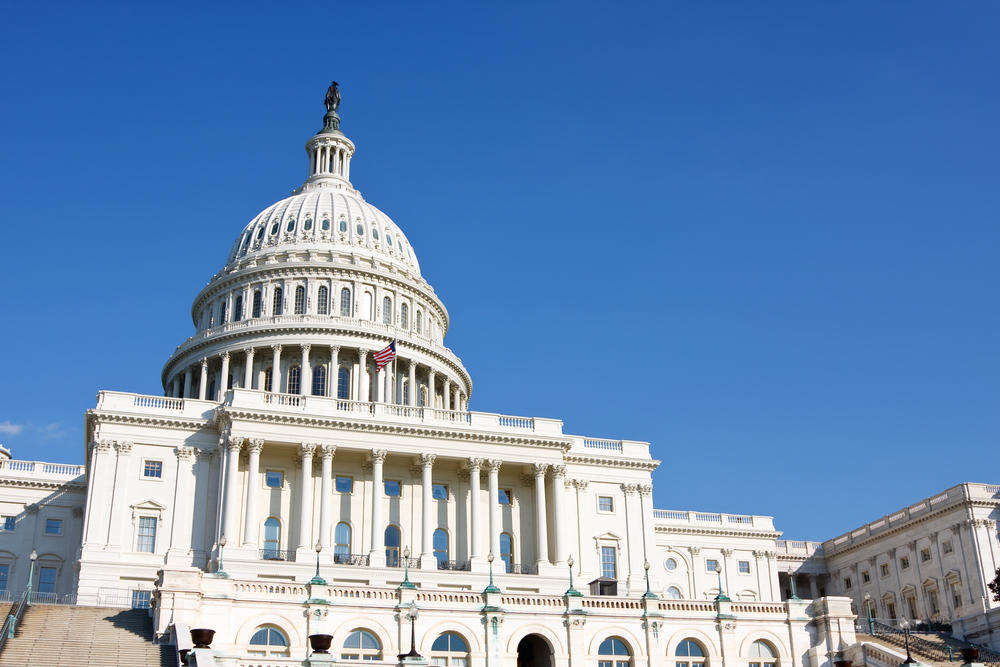
5 Issues Independent Agents Will Address at the 2026 Big ‘I’ Legislative Conference - IA Magazine
Get up to speed on the five key issues that will be the focus of the 2026 Big “I” Legislative Conference taking place April 22–24 in Washington, D.C.
The 2026 Big “I” Legislative Conference will take place April 22–24 at The Westin Washington, D.C. Downtown Hotel. During the conference, independent insurance agents and brokers from across the country will share their perspectives with legislators on issues important to the independent agency system.
This year’s conference will focus on timely issues that could affect every agency’s bottom line, making your participation crucial.
Here are five issues that will be a focus at this year’s conference:
1) Protect Our Courts By Cracking Down On Lawsuit Abuse Abuse of the legal system is a significant problem and adds considerable costs to the insurance industry, which are then passed along in the premiums that consumers pay.
An especially troubling trend is the unchecked manner in which foreign entities and governments finance and subsidize litigation in American courts. In most jurisdictions, defendants are required to disclose insurance agreements in litigation but litigation funding agreements are not subject to such disclosure. Lawmakers can protect plaintiffs by passing legislation to make sure they are aware when attorneys have committed to share their recovery with a third-party funder. In many cases, third-party litigation funders (TPLF) pay a more favorable tax rate on their share of a court award when compared to the actual injured plaintiff. The profits of domestic funders currently get treated as capital gains for tax purposes. At the same time, foreign investors operating through shell companies pay no U.S. taxes on their litigation profits since they are not subject to capital gains. This perversely incentivizes foreign and domestic investment in more U.S. litigation. Top 5
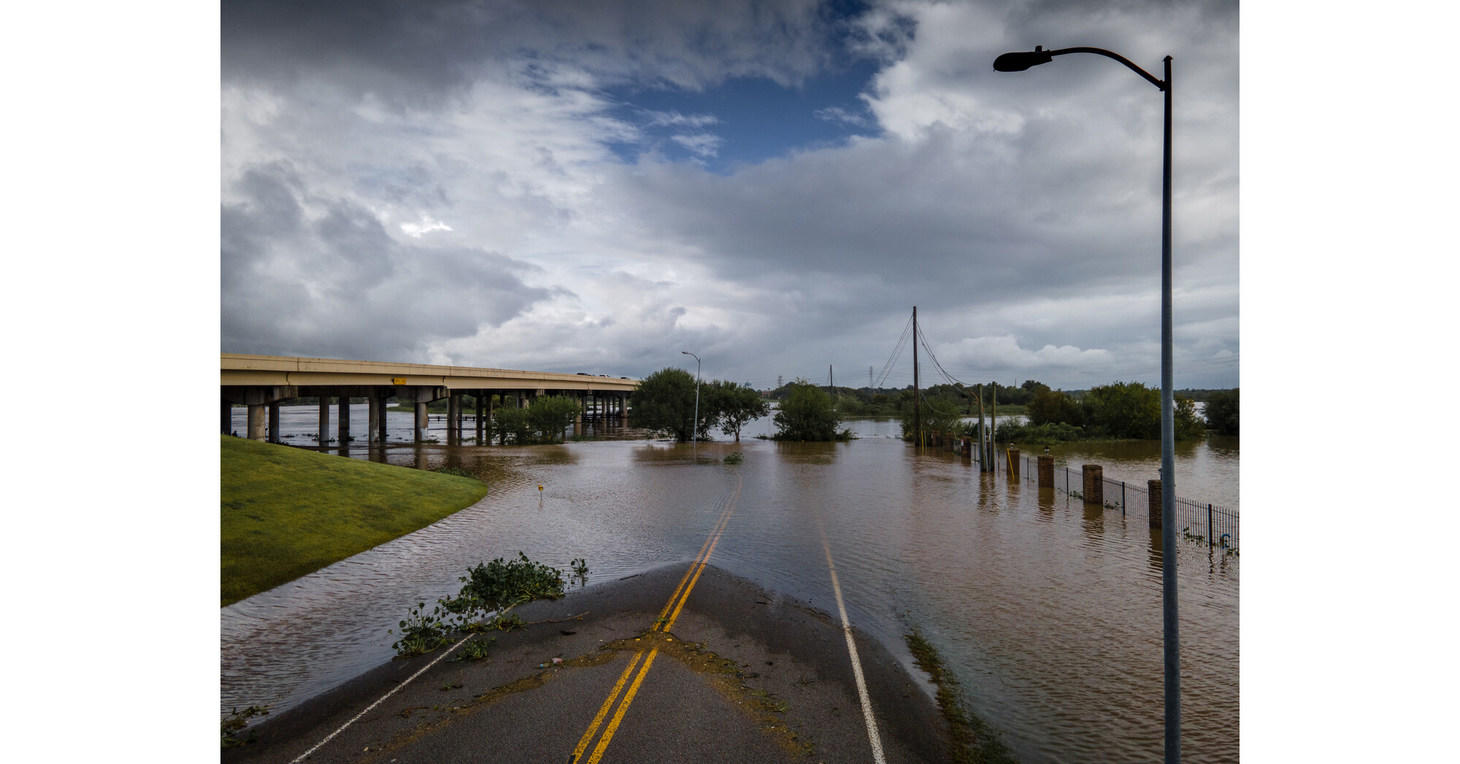
Automatic and Scalable Parametric Flood Quoting Opens Next U.S. Growth Frontier for Insurers & Distributors
Floodbase, the leading parametric platform for insuring flood risk, today unveiled its Floodbase Quote API. The new platform capability enables insurers and MGAs to collapse weeks-long manual quoting cycles into instant workflows that dramatically accelerate distribution and offer new portfolio flood solutions for the historically underserved U.S. flood market.
Until now, the bespoke and manual nature of large area parametric flood quotes has restricted underwriting capacity and in turn brokers' ability to serve small- and mid-sized markets. The lengthy submission-to-quote cycle meant brokers couldn't get an option in front of all relevant clients. The result? Significant value has been left on the table: Clients remain exposed to significant flood protection gaps, brokers are unable to service their entire book, and carriers have left substantial premium untapped.
That dynamic is now changing. With the Floodbase Quote API, carriers can equip brokers with tools that instantly generate standardized quotes for parametric flood covers. Leading the shift toward self-serve broker distribution, Liberty Mutual recently announced an instant large-area parametric flood quoting application for brokers and MGAs, powered by the Floodbase API. The automated quoting and rating workflows makes it viable to distribute at scale across small- and mid-sized commercial markets where speed, consistency, and standardization are essential.
Financial Results
AmFam Reports Underwriting Profit, Top-Line Decline for 2025
*American Family Insurance *reported $2 billion more underwriting profit in 2025, compared with 2024—pointing to “deliberate customer-driven strategic actions and a lower level of catastrophe losses to explain the favorable result.
The actions meant declines on the top line, the Madison, Wisc.-based mutual holding company reported Monday, also reporting lower customer retention.
In a media statement, American Family reported that a net underwriting gain of $2.6 billion in property/casualty lines for 2025, compared to a net underwriting gain of $603 million in 2024, was driven primarily by reduced catastrophe and non-catastrophe losses year-over-year.
The combined ratio improved 12 points to 84.6 in 2025 from 96.6 in 2024 in the prior year. Most of the decline reflected roughly 11 points of improvement in the loss and loss adjustment expense ratio. The company said that fewer large catastrophe losses helped to offset losses from January wildfires and early spring wind and hailstorms. MORE
AI in Insurance

Swiss Re’s transformation playbook: redesigning risk for the AI era
Artificial intelligence has become a fixture of insurance conference agendas. At Swiss Re, however, transformation is not being framed as experimentation or digital ambition. It is being treated as operating model redesign.
For Pravina Ladva (pictured), group chief digital and technology officer, the distinction matters. “We are not implementing AI for AI’s sake,” she said. “We’re really trying to understand how we’re going to drive value from it.”
In a reinsurance business defined by risk selection, capital discipline and long-cycle returns, that value must be operational, measurable and embedded into the mechanics of underwriting and claims.
Redesigning processes, not automating them
Ladva describes a two-pronged approach. The first focuses on core insurance processes - underwriting and claims, where vast volumes of structured and unstructured data have historically been underutilised.
“One of the things we have in the insurance industry is a bucket load of data,” she said. The challenge has always been extracting actionable insight from it at scale.
Advances in AI now allow Swiss Re to analyse unstructured material in ways that were previously impractical. In its Corporate Solutions business, an AI-powered platform streamlines the processing of over 40,000 claims annually, accelerating triage and improving decision-making.

AI Reduces Submission Friction for P&C Insurers
AI appears in headlines across many industries. In property/casualty insurance, however, its impact is showing up in a series of practical operational improvements, including faster quoting, sharper appetite screening, lower acquisition costs, and more profitable portfolios.
Across the industry, insurers are already using predictive models to qualify submissions in milliseconds and flag misaligned risks before underwriters ever open a file. These gains often come from combining third-party data enrichment with behavioral scoring in ways that streamline distribution without requiring a core-system overhaul. For insurers and managing general agencies (MGAs) with decades invested in legacy IT, that distinction matters.
Accelerating Quote-to-Bind and Eliminating Friction
AI’s most visible impact today is in the quote-to-bind process. According to a 2025 report from Boston Consulting Group, insurers using AI in complex P&C lines achieved underwriting efficiency improvements of up to 36 percent and realized loss-ratio gains of about three percentage points through data enrichment and faster risk assessment.
Manual data entry, redundant forms, and time-consuming reviews continue to create bottlenecks across quoting and underwriting workflows. Insurers applying AI at intake—through lead scoring, data enrichment, and intelligent routing—are reporting improvements in both speed and accuracy.MORE
Commentary/Opinion
Regulatory Pressures Shape InsurTech Priorities in 2026
Regulatory pressure is becoming a central factor shaping the insurtech sector as it continues to mature. According to an article published in FinTech Global, compliance, transparency, and capital discipline are emerging as defining forces influencing innovation and operational strategy across the industry in 2026.
The article draws on perspectives from several leaders in the insurtech ecosystem, who identified governance, regulatory frameworks and capital requirements as key challenges shaping the year ahead.
Governance Built Into Technology Systems
Simha Sadasiva, co-founder and CEO of Ushur, said regulatory readiness must be integrated directly into technology architecture rather than addressed solely through compliance teams.
“Compliance, data privacy, and how you underwrite risk and interact with customers are all key governance pillars in insurance,” Sadasiva said in the FinTech Global article.
Sadasiva explained that insurers should embed governance safeguards directly into their technology stacks. These safeguards can include deterministic risk prediction models, detailed audit trails that document how automated decisions are made and fallback mechanisms that ensure human involvement when necessary.
According to Sadasiva, regulated industries require systems that are verifiable and auditable. As regulatory scrutiny increases, the ability to demonstrate that technology systems are trustworthy, traceable, and controllable has become increasingly important when working with enterprise clients.
State News

Mike Yaworsky says top auto insurance companies in Florida drop rates
'The historic legislative reforms continue to drive auto insurance rates down.'Insurance Commissioner Mike Yaworsky says the top five auto insurance groups in the state have lowered their car coverage premiums for 2026.
The average decrease for those companies — including *Progressive, GEICO, State Farm, Allstate and USAA *— was about 8%. Those firms account for about 78% of the auto insurance market in Florida.
Gov. Ron DeSantis signed legislation in March 2023 that eliminated risk-free litigation and otherwise reduced legal battles surrounding insurance claims. The move came after both property and auto insurance premiums skyrocketed in the early part of the decade before the stipulated changes.
Yaworsky credited those overhauls for the latest auto insurance rate decreases.
“The historic legislative reforms continue to drive auto insurance rates down with nearly 80% of Florida’s auto policyholders seeing lower rates for 2026,” Yaworksy said in a news release.
Property insurance companies have also been lowering rates in the past three years since the industry reforms.
2026 Outlook/Predictions

US claims market enters 2026 with CAT pressure, digitization and cost squeeze - Crawford
US insurers and claims providers are preparing for a more volatile operating environment in 2026, with catastrophe losses, automation, customer expectations and cost pressures emerging as the dominant forces shaping the claims landscape.
Those themes were highlighted in a new industry analysis from Crawford & Company, which examined how carriers, TPAs and brokers may need to adapt their claims operations as market conditions continue to evolve.
Catastrophe readiness moves to the forefront
Catastrophe recovery and resilience are expected to remain a central focus for the US claims sector as loss activity continues to trend upward.
The analysis points to a shift away from purely reactive catastrophe response toward more proactive preparedness. That includes building surge-ready staffing models, using catastrophe analytics to prioritise adjuster deployment, and working more closely with contractor and repair networks to secure capacity ahead of major events.
Podcast Sponsor

Audio Version - 'Connected: The Podcast' --- Sponsored by Pulse Podcasts
** The ‘Connected’ Podcast by Alan Demers and Stephen Applebaum, is a condensed audio version of the day's ‘Connected' newsletter, a daily scan of all the happenings in the world of Insurance & InsurTech News**.
Pulse Podcasts: Introduce a new way for your audience to hear your voice! We are a podcast creation service that helps businesses turn their written content, like blog posts and news articles, into beautiful podcasts. Our platform writes the script, records the voices, and mixes the audio to create engaging content for your audience. It's affordable and has super-fast turnaround!
LISTEN AND SUBSCRIBE BELOW
Recommended Events

Insurtech America Symposium – A conference for insurance innovators, by insurance innovators
The InsurTech America Symposium (IAS 2026) marks the evolution of our flagship event into a truly national gathering. April 13 & 14
Formerly known as the InsurTech Hartford Symposium, the rebrand reflects the scale of today’s audience—bringing together insurance and insurtech leaders from across the United States for meaningful connection, collaboration, and innovation.
Hosted at the Connecticut Convention Center, IAS 2026 takes place in a strategically located venue that offers easy access, walkability, and proximity to major airports—making it simple to arrive, connect, and make the most of your time at the event.