
News

Insurance jobs slashed | Insurance Business
Claims adjusting employment fell by 2,500 jobs from October to November, the steepest decline among insurance segments tracked by the US Bureau of Labor Statistics.
Other insurance categories also reported job reductions over the same period, based on the BLS’ unadjusted industry segment data. Direct life and health insurers posted 1,700 fewer jobs, while direct property/casualty insurers cut 1,500 positions. Agencies and brokerages reported 800 fewer roles, and reinsurers lost 100 positions.
Some segments recorded gains. Pharmacy benefit managers and other third-party administrators added 500 jobs from October to November, the largest increase among the insurance categories measured by the BLS. Direct title and other direct insurance carriers recorded the second-largest increase, adding 300 positions.
The segment-level changes preceded a decline in overall insurance employment in December. The US insurance industry lost 1,800 positions in December compared with the month prior, according to preliminary BLS figures. Total industry employment in December was 3.02 million. The BLS compared that with 3.01 million in December 2024.
California Bill Would Require Insurer Claims Handling Plans, And Double Penalties
A bill that promises legislative reform in California to speed up disaster recovery for homeowners and renters through improved insurance coverage and expanded consumer protections was introduced on the anniversary of the Los Angeles wildfires.
The Disaster Recovery Reform Act, Senate Bill 876, would also require a disaster recovery plan from insurers for handling claims effective in emergency situations and it would double penalties during declared emergencies for violations of insurance fair claims practices and settlement law. SB 876 was introduced by California Insurance Commissioner Ricardo Lara Senate Insurance Committee Chair Steve Padilla. The proposed legislation is a response to wildfire disaster survivors’ calls for swifter claims payments.
Climate/Resilience/Sustainability
Homeowners file groundbreaking lawsuit over insurance costs: '[These companies have] lied for decades'
The plaintiffs claim the industry withheld information from the public.Two homeowners in Washington state have filed an unprecedented lawsuit against Big Oil over skyrocketing home insurance premiums that they say are climate-related.
According to Inside Climate News, the case was filed in late November in the U.S. District Court in the state's Western District and is the first of its kind to target dirty fuel companies over unreasonable home insurance costs.
The plaintiffs say oil companies downplayed the impacts of burning oil and gas on the climate, which has led to more frequent extreme weather events that have contributed to the insurance crisis.
In Washington, insurance premiums have risen by more than 50% since 2019. Resident Richard Kennedy, one of the homeowners involved in the lawsuit, said his premiums have more than doubled since 2017. Margaret Hazard, the other plaintiff, reported similar spikes in home insurance rates.
The class-action lawsuit they filed covers all homeowners who have or plan to buy insurance after 2017 nationwide. Homeowners insurance premiums have increased nationwide, with a January report from the Department of the Treasury showing that average premiums rose 9% faster than overall inflation from 2018 to 2022.
According to Program Business, many homeowners near dense forests are experiencing reduced or severely limited coverage, particularly in wildfire-prone areas. A 2016 report by Climate Central found that the number of large fires burning annually has increased fivefold in Washington since the 1970s.
Financial Results
Progressive Reports 13% Growth in Net Premiums Written to $63.7 Billion
Strong Business Growth: Progressive reported net premiums written of $63.7 billion for the first nine months of 2025, reflecting a 13% year-over-year increase, indicating the company's sustained appeal and expanding customer base in the insurance market.
Increase in Policies: As of Q3, Progressive had a total of 38.1 million policies in force, up 12% year-over-year, demonstrating the company's success in attracting new customers and retaining existing ones.
Underwriting Profit Performance: The company achieved a combined ratio of 89.5% in Q3, indicating an underwriting profit in its insurance business, which further solidifies its leadership position in the U.S. auto insurance market.
CNA Financial Reports Strong Q3 2025 Earnings
CNA Financial Corp ( (CNA) ) has released its Q3 earnings. Here is a breakdown of the information CNA Financial Corp presented to its investors.
CNA Financial Corporation reported strong financial results for the third quarter of 2025, achieving a net income of $403 million, or $1.48 per share, and a record core income of $409 million, or $1.50 per share. This marks a significant increase from the previous year’s quarter, driven by improved underwriting results and higher net investment income.
Key highlights from the earnings report include:
40% increase in core income to $409 million, with the Property & Casualty segments contributing $456 million in core income due to lower catastrophe losses and higher net investment income.
The P&C combined ratio improved to 92.8% from 97.2% in the prior year quarter, reflecting a reduction in catastrophe losses.
The company also declared a quarterly cash dividend of $0.46 per share.
Commentary/Opinion
Flood Risk Demands New Insurance Approach
A $255 billion flood protection gap exposes outdated risk models, pushing the industry toward parametric insurance and captive structures.
Flood risk is no longer a peripheral climate concern. It is fast becoming one of the most underestimated balance-sheet threats facing businesses and insurers globally. Over the last five years alone, flooding has caused an estimated $325 billion in economic losses worldwide, yet only $70 billion was insured (source: Munich Re), exposing a widening protection gap that the industry can no longer ignore.
This is not merely a story of rising water levels. It is a story of outdated assumptions.
Traditional flood models, rooted in historical event catalogues, are increasingly unfit for purpose in a world of volatile weather patterns, rapid urbanization, and climate-driven extremes.
As Hamid Khandahari of Descartes Underwriting says, historical data "cannot fully account for events beyond anything previously recorded." The implications for underwriting, pricing, and capital allocation are profound.
THE NEW REALITY: UNPREDICTABLE, UNDERINSURED, UNPREPARED
The scale of the challenge is stark. In the U.K. alone, surface-water flood risk could affect 6.1 million properties by 2050—a 30% increase compared to previous projections (source: NaFRA). In the U.S., flood events jumped nearly 30% year-on-year between 2022 and 2023, with several states seeing events quadruple (source: Lending Tree).
Jonathan Jackson is CEO at Previsico
Legal System Abuse/Social Inflation

Liability Claims Crisis: Non-Economic Inflation Reshapes Insurance Markets - Risk & Insurance : Risk & Insurance
Litigation funding, evolving legal systems and shifting public attitudes are driving liability claims to record levels, according to Swiss Re Institute.
Liability excess inflation—the acceleration of insurance claims costs driven by legal system changes, litigation funding, and evolving social attitudes rather than traditional economic factors—has become a defining challenge for the insurance industry, accounting for an estimated 60% of liability claims growth over the past decade in the United States alone, according to analysis by Swiss Re Institute.
The data paints a striking picture of how American attitudes toward corporate accountability and compensation have transformed in less than a decade, according to the report.
In 2016, 58% of U.S. consumers believed that damage awards were too low. By 2025, that figure had jumped to 76%, signaling a fundamental recalibration of what the public considers fair compensation. This attitudinal shift has concrete consequences: the number of so-called “nuclear verdicts”—awards exceeding $10 million—more than quadrupled between 2020 and 2024, while the median value of these verdicts more than doubled in the same period. By 2024, more than 130 nuclear verdicts were recorded, representing a 50% increase from the previous year, the report said.
AI in Insurance
Harnessing Agentic AI: Transforming The Property And Casualty Insurance Landscape
The P&C industry has spent the last decade modernizing core systems and automating repetitive work, and many of us have seen the benefits firsthand. Policy administration, billing and claims workflows that once ran on fragmented legacy stacks now sit on modern, cloud-based platforms.
Yet as I look at current transformation roadmaps, it is clear we are hitting the ceiling of what traditional automation can do. Agentic AI is the next step in that journey, because it allows software to take end-to-end actions and make bounded decisions, not just move data between screens.
In my own work across P&C modernization and InsurTech initiatives, I am seeing a shift in the questions leaders ask. Instead of, “Can we automate this task?” they are starting to ask, “Which decisions are we comfortable delegating to an AI agent, under what conditions and with which guardrails?” This shift from task automation to decision delegation is what makes agentic AI both exciting and risky for insurers.
How Agentic AI Shows Up In Day-To-Day Operations
In underwriting, agentic AI can gather external data, synthesize submissions and present a risk summary before an underwriter ever touches the file. Rather than chasing missing information, the underwriter can focus on portfolio fit, terms and appetite. Similar ideas are already appearing in underwriting workbenches and vendor solutions.MORE
Srinath Chandramohan is a leader in property and casualty transformation and cloud-native and AI technologies in the InsurTech sector.
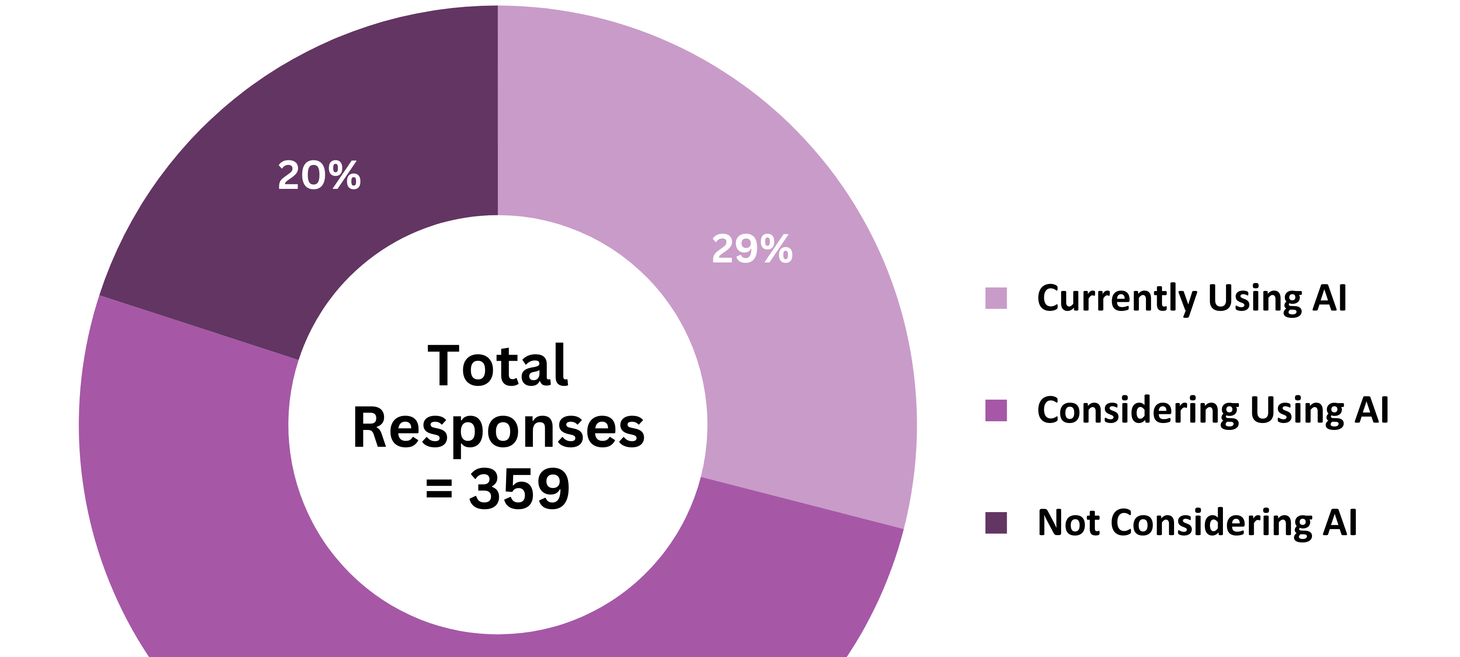
Only 20% of insurance execs are not considering AI for their firms
Only 20% of insurance execs are not considering AI for their firms
- 359 senior insurance professionals were surveyed, managing over $13tn in assets on their balance sheets
- Only 20% of respondents haven’t considered AI, whereas 29% of insurers have adopted AI, while the remaining 51% are exploring its implementation
- 73% use or plan to use AI to cut operational costs, while 39% apply it to underwriting risk
359 senior insurance professionals were surveyed, managing over $13tn in assets on their balance sheets
Goldman Sachs Asset Management’s 13th annual Global Insurance Survey: Risk and Resilience gathered insights from 359 senior professionals, including 296 Chief Investment Officers (CIOs), 42 Chief Financial Officers (CFOs), and 21 individuals holding both roles.
The survey provides a comprehensive outlook on key industry trends, covering topics such as economic conditions, asset allocation, return expectations, and portfolio construction.
With the surveyed insurance companies collectively managing over $13tn in balance sheet assets—representing nearly half of the global insurance sector—the findings offer a valuable perspective on the evolving role of artificial intelligence (AI) in the industry.
Only 20% of respondents haven’t considered AI, whereas 29% of insurers have adopted AI, while the remaining 51% are exploring its implementation
A key focus of the survey was the adoption of AI in the insurance sector.
While 29% of insurers reported currently using AI, a significant 51% are actively considering its implementation, reflecting strong industry-wide interest in AI-driven solutions.
Only 20% stated they were not considering AI at this time.
The widespread adoption and interest in AI highlight its perceived value in enhancing efficiency and decision-making.
Insurers see AI as having multiple applications, from automating administrative tasks to improving predictive modelling, ultimately supporting better risk assessment and customer service.
73% use or plan to use AI to cut operational costs, while 39% apply it to underwriting risk
The survey further revealed that insurers are prioritising AI for operational efficiency and risk management.
Among those already using or considering AI, 73% are leveraging the technology to reduce operational costs, while 39% are integrating AI into underwriting processes to improve risk evaluation.
As AI adoption continues to rise, insurers are expected to refine their strategies to harness its full potential, balancing innovation with regulatory compliance and ethical considerations.
The findings suggest that AI will play an increasingly central role in shaping the future of insurance, driving both efficiency gains and strategic decision-making across the sector.
2026 Outlook/Predictions
Good Times for U.S. P/C Insurers May Not Last; Auto Challenges Ahead
In their latest report on the U.S. auto insurance market, analysts from S&P Global Market Intelligence predict the strongest overall U.S. property/casualty insurance underwriting results in 18 years for 2025, driven by favorable private passenger auto outcomes.
Still, while their 2025 projected combined ratio across all lines is now 96.2, three points better than a midyear projection of 99.2 estimated for the year in August, “success is anticipated to be temporary due to various market dynamics and challenges,” S&P GMI said in a December media statement.
The media statement announced the publication of the firm’s 2025 U.S. Auto Insurance Market Report, which stresses the significant weight that auto insurance has on overall P/C insurance industry results.
CES Las Vegas 2026

7 Smart Home Gadgets From CES 2026 That Actually Make Life Easier
These products promise practical home upgrades, including control and safety sensors that don’t require setup, a self-charging lock, and blinds that automatically block the sun from your eyes.
CES is always a showcase for wacky smart home devices, but our favorites this year combine cool technology with practical upgrades. The best products don't just add features but expand how useful their respective categories can be. In some cases, they lower the barrier to entry for either setting up, connecting, or maintaining your smart home. It’s an interesting shift, and one that excites me. For years, companies have talked about building a seamless smart home that just works, and now, we might actually be getting there. Here are the best smart home products I saw at CES.

Fears of an AI bubble didn’t exist at CES in Las Vegas
Robots took over the floor at the biggest technology show of the year: I watched a towering humanoid robot march forward, spin its head and wave at an excited crowd. Then I almost bumped into a four-legged doglike robot behind me.
They’re just a couple of the many robots I encountered this week designed for a range of purposes, from playing chess to performing spinal surgery. These are common occurrences on the Las Vegas Convention Center’s show floor during CES, which wrapped on Friday. Every January, companies from around the world gather to flaunt new technologies, products and services.
The show is just as much spectacle as it is substance; many of the most eye-catching wares either haven’t come to fruition (like flying cars) or are wildly expensive and impractical (think TVs that cost tens of thousands of dollars). But CES provides a glimpse into the bets being made by industry giants like Nvidia, Intel, Amazon and Samsung.
AI once again dominated the conference. Companies showed off everything from humanoid robots they claim will staff factories to refrigerators you can open with your voice to the next-generation chips that will power it all. CES, in some ways, turned the Strip into a bubble of its own, shielded from AI skepticism.