
News

P&C Market Enters Correction Phase With Significant Rate Relief and Emerging Challenges
Property rates soften amid competitive capacity while social inflation and emerging risks pressure casualty lines, creating a bifurcated market in 2026: USI.
The property and casualty market faces a pivotal transition in 2026, with softening property rates and competitive capacity creating opportunities for commercial insurance buyers even as social inflation and emerging risks continue to pressure underwriting profitability across multiple lines, according to USI Insurance Services’ 2026 market outlook.
The P&C landscape in 2026 presents a study in contrasts, according to the USI report. The property market, buoyed by a quieter-than-expected 2025 hurricane season and the arrival of record amounts of reinsurance capital, is experiencing meaningful rate relief.
While global insured catastrophe losses reached an estimated $107 billion in 2025—significantly lower than the projected $200 billion—competitive momentum continues to build, with shared and layered placements seeing rate decreases of 10 to 30% or more compared to expiring terms, USI said. Excess catastrophe policies for flood and earthquake are seeing even steeper reductions of 25 to 35%.

Citizens property insurance policies plummet in 2025; offloads over 500M policies in 2025
The state’s Citizens Property Insurance Corp. started 2026 with about 541,000 fewer policies than it had a year earlier.
Citizens had 395,144 policies on Friday, down from 936,182 policies as 2025 started, according to data posted on its website.
Friday’s total was the lowest since at least 2012. Citizens was created as an insurer of last resort but saw explosive growth starting in 2020 and 2021 because of financial problems in the private market. It became the state’s largest insurer, with as many as 1.4 million customers in 2023.
The number of policies steadily declined over the past two years, at least in part because of what is known as a "depopulation" program designed to move policies into the private market.
Also, officials say private insurers have been willing to write coverage after passage of a 2022 law that helped shield carriers from costly litigation.
Research
Nearly $1 Trillion in California Homes Labeled "Low Risk" Despite Elevated Wildfire Danger
One year after the Palisades and Eaton fires devastated Los Angeles County, a new analysis of 11.8 million California residential properties finds that approximately $1 trillion in residential property value is classified as low wildfire risk despite elevated fire danger across California, including parts of Los Angeles County affected by the January 2025 fires.
The statewide analysis examined property-level wildfire risk for every residential structure in California using ZestyAI's Z-FIRE™ model and compared the results with FEMA's National Risk Index, which assesses wildfire risk at the census-tract level. The findings reveal that 1.2 million California homes are designated as 'Very Low,' 'Relatively Low,' or 'No Rating' for wildfire risk under federal assessments, despite AI models identifying elevated wildfire danger at the property level—a classification gap that persists across the state.
The same classification gap is visible within the LA fire zones themselves. In the areas impacted by the Palisades and Eaton fires, the analysis identified 3,045 properties, worth an estimated $2.4 billion, that remain designated as low or nonexistent wildfire risk under federal classifications, despite property-level AI models flagging elevated wildfire danger in these neighborhoods before the fires occurred.
Palisades fire zone (Pacific Palisades, Malibu):
- 1,430 properties flagged as elevated wildfire risk by AI models but classified as low or no risk under federal wildfire assessments
- $1.14 billion in estimated residential property value at risk
- 229 homes rated very-high to extreme wildfire risk despite low-risk federal classifications
Commentary/Opinion

Where Insurance Communications Win—or Lose—Customer Loyalty
Nobody switches insurers on a whim. They switch because something small becomes frustrating, then opaque, then exhausting. A renewal notice arrives with no explanation of a premium increase. A claim goes silent. A request for additional information is needlessly complicated. Over time, these moments accumulate.
When routine interactions feel difficult, customers leave.
In a world where fast, easy, and customizable experiences are expected across nearly every aspect of daily life, insurers face a widening loyalty gap. While carriers cannot control natural disasters, inflation, or demographic shifts, they can control how they communicate with policyholders. If customer loyalty is being lost at the point of interaction, the more pressing question is why communication is not treated as a core operational priority.
The link between insurer communications and customer retention is direct. When expectations are not met—when information is unclear, delayed, or confusing—policyholders are unlikely to stay. Improving outcomes begins with a basic but consequential question: how can insurers communicate more clearly and consistently at every touchpoint?
Eileen Potter is VP of Marketing for Insurance at Smart Communications
AI in Insurance

Insurance Consumers Divided Over AI Use, Want Agent Involvement
Insurance consumers are divided over AI use, but value modern digital tools and the human expertise of agents.
Insurance consumers value the speed and convenience of modern digital tools but have mixed feelings about their insurance agents’ use of artificial intelligence (AI)—meaning that transparency, trust and agent involvement are key to customer service in 2026, according to a new survey from Vertafore.
Vertafore’s “Policyholder Expectations for Independent Agents” report found that clients place significant value on the human expertise offered by their independent agent, with nearly 90% of policyholders wanting agent involvement when managing their policies.
Also, 85% of policyholders prefer an agent-assisted search when shopping for insurance. Of those, 62% want to work only with an agent when comparing coverage options. At the same time, 23% want an approach that combines agent support with online resources such as quote calculators, customer review forums and policy comparison sites.
Almost half of respondents—48%—say they prefer to manage their policy through an agent, and another 41% prefer a mix of agent involvement and digital tools such as online account portals, mobile apps, and digital claims filing systems.
However, despite mixed feelings about AI, customers increasingly want faster service. Eighty-three percent expect their agent to respond to inquiries within one business day, and 35% expect a response in an hour or less. And despite a desire for touchpoints beyond renewals and transactions, only 21% of policyholders report receiving proactive updates or outreach from their agent.
Predict & Prevent
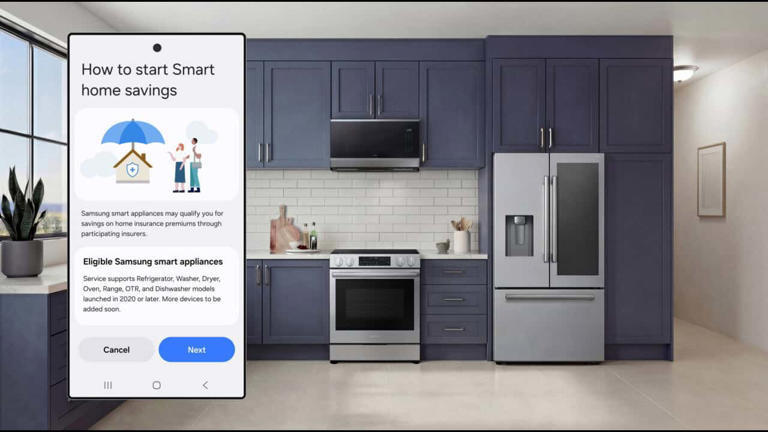
Samsung to partner with Hartford Steam Boiler to save money on insurance
Samsung Electronics has started working with Hartford Steam Boiler, which is part of Munich Re, to bring a new Smart Home Savings program to users of Samsung SmartThings. This program is focused on helping people save money on their home insurance by using smart home technology. With this approach, homeowners can get discounts on insurance when they use select Samsung smart devices that help lower risks like water leaks, fires, and theft.
The Smart Home Savings program is available to people living in the United States who have the SmartThings app and certain Samsung smart home products. The program uses the features of connected devices to watch for things like leaks or open doors. If the system finds a problem, it sends an alert to the homeowner. This can help prevent bigger issues that might lead to expensive insurance claims. As a result, insurance companies may offer lower rates to people who use these devices because they are taking steps to reduce risks.
Hartford Steam Boiler is the insurance provider working with Samsung on this program. They are known for their experience in insurance and risk management solutions. By bringing together Samsung's smart devices and HSB's insurance knowledge, the program aims to benefit both homeowners and insurance companies. Homeowners can save money and possibly avoid damage, while insurance carriers may see fewer claims.
2026 Outlook/Predictions

Insurance 2026: Progress Via Technology, Collaboration | Insurance Thought Leadership
P&C insurers face a more predictable 2026 landscape with profitable growth expected amid AI transformation.
The 2026 P&C insurance environment may be much easier to forecast compared with the last several years. Many experts have already said 2026 will be a year of profitable growth. Fitch suggests a combined ratio of 96% to 97%, and even the volatile homeowner market is anticipated to "stabilize." Similarly, it is obvious the new year will be filled with AI in insurance, building off widespread hype and numerous announcements of huge, multi-year investments by the likes of Travelers, Nationwide, GEICO, and Chubb. Just how much and deeply AI will affect insurance remains far less visible, with some areas of attention coming into focus, e.g., pre-binding, underwriting data, claims/FNOL analysis.
LOOKING BACK TO "SEE" FORWARD
We also know that each year can bring some unexpected and unwelcome surprises, such as the record-setting $40 billion-plus Palisades wildfires burning some 23,000 acres and everything in its path a year ago. On the flip side, not a single hurricane hit the U.S. Atlantic coastline in 2025. Global CAT losses still amounted to $107 billion in 2025, per SwissRe, but to put things in perspective, Hurricane Katrina in 2005 was around $105 billion alone. Severe CAT exposure has become more visible and thus accepted. In turn, risk models have presumably adjusted over the recent years, and, optimistically, the industry is better prepared.
Throughout 2025, M&A remained vibrant, with insurtech funding just over $1 billion per quarter and an increase in early-stage funding toward the end of year, per Gallagher. A closer look at some specific trends:
- Commercial rate softening, with much variation, e.g., property lines down, commercial auto up and workers' compensation flat
- New car sales slumping by 7.5% at year-end
- Car loan terms elongating beyond 60 months and car loan payments reaching a record of $760 monthly average, per JD Power
- Total loss auto rates rising, to 23%
- Overall auto claim repair volumes declining roughly 8%
- Deductibles for both auto and home climbing, shifting the financial burden from insurer to consumer. According to a study by MATIC, home deductibles are up 22%
InsurTech/M&A/Finance💰/Collaboration
Jewelers Mutual acquires EventGuard
Jewelers Mutual announced the acquisition of EventGuard, a division previously part of the licensed insurance agency Indemn, specializing in event insurance coverage in the event and wedding space.
JM Insurance Agency Partners will operate the program through insurance carrier Markel. The addition of EventGuard enhances JM Insurance Agency Partners’ core capabilities and supports its strategy to diversify, grow profitability, and ensure sustainability by entering adjacent verticals.
EventGuard sells coverage using an AI chatbot developed by Indemn
Xceedance Acquires Agency Service Provider Marble Box
Xceedance acquired Marble Box, a provider of operational support and process optimization services to independent insurance agencies and brokers.
This acquisition is Xceedance’s entry into the agent and broker ecosystem.
Marble Box supports agency processes for agents and brokers, delivering millions of transactions annually through a team based in Kolkata, India.
Xceedance plans to build on Marbel Box’s services and to introduce workflow standardization, data integration across systems, and automation and artificial intelligence.
Xceedance provides business services to the global insurance industry. The company has more than 5,500 employees across the world.
Fraud
Court revives $22.9 million fraud lawsuit alleging lawyer helped deceive GEICO
A California court has revived a $22.9 million fraud lawsuit alleging an attorney helped clients deceive GEICO with fake injuries and fabricated business losses.
The Court of Appeal's decision on January 6 reverses a lower court's dismissal and clarifies a thorny issue in California's Insurance Frauds Prevention Act: when does a fraud complaint rely too heavily on information that's already out there?
The case involves a 2009 car accident that eventually led to a $22.9 million verdict against GEICO Indemnity Company. But according to the lawsuit, that eye-popping award was built on a foundation of lies.
Jerilyn Henggeler, a former neighbor of policyholder Omar Dauod, filed the fraud complaint after reading about the verdict. She was stunned. Henggeler had known the Dauod family for years. Their daughters had been playmates. And what she'd witnessed firsthand didn't match what a jury had apparently believed.
According to court documents, Henggeler saw Omar playing basketball, swimming, and appearing perfectly healthy in the years after his accident. Yet he'd convinced a jury he was severely injured and emotionally devastated. He'd testified that he lost a real estate development business. But Henggeler knew him as a real estate salesman, not a developer.READ ON
People
Insurity Names Jatin Atre President
The appointment formalizes expanded responsibility for product and AI as Insurity deepens investment across core systems.
Insurity (Hartford) has appointed Jatin Atre as president, formalizing responsibility for product, engineering, marketing, customer success, and support as the company expands its use of artificial intelligence across its core platforms.
Atre, who has been with Insurity for about five years, has most recently served as chief business officer, overseeing business unit general managers, P&L, product strategy, R&D engineering, and customer-facing functions. In his new role, he is charged with leading Insurity’s growth strategy and the integration of AI into its policy, billing, claims, and analytics systems.
The appointment comes as Insurity commits approximately $50 million to AI and R&D, plans to hire more than 100 AI and machine-learning specialists, and adds roughly 80,000 hours of customer support capacity. The company says the investment is aimed at embedding AI directly into core insurance workflows rather than positioning it as a standalone capability.
CES Las Vegas 2026
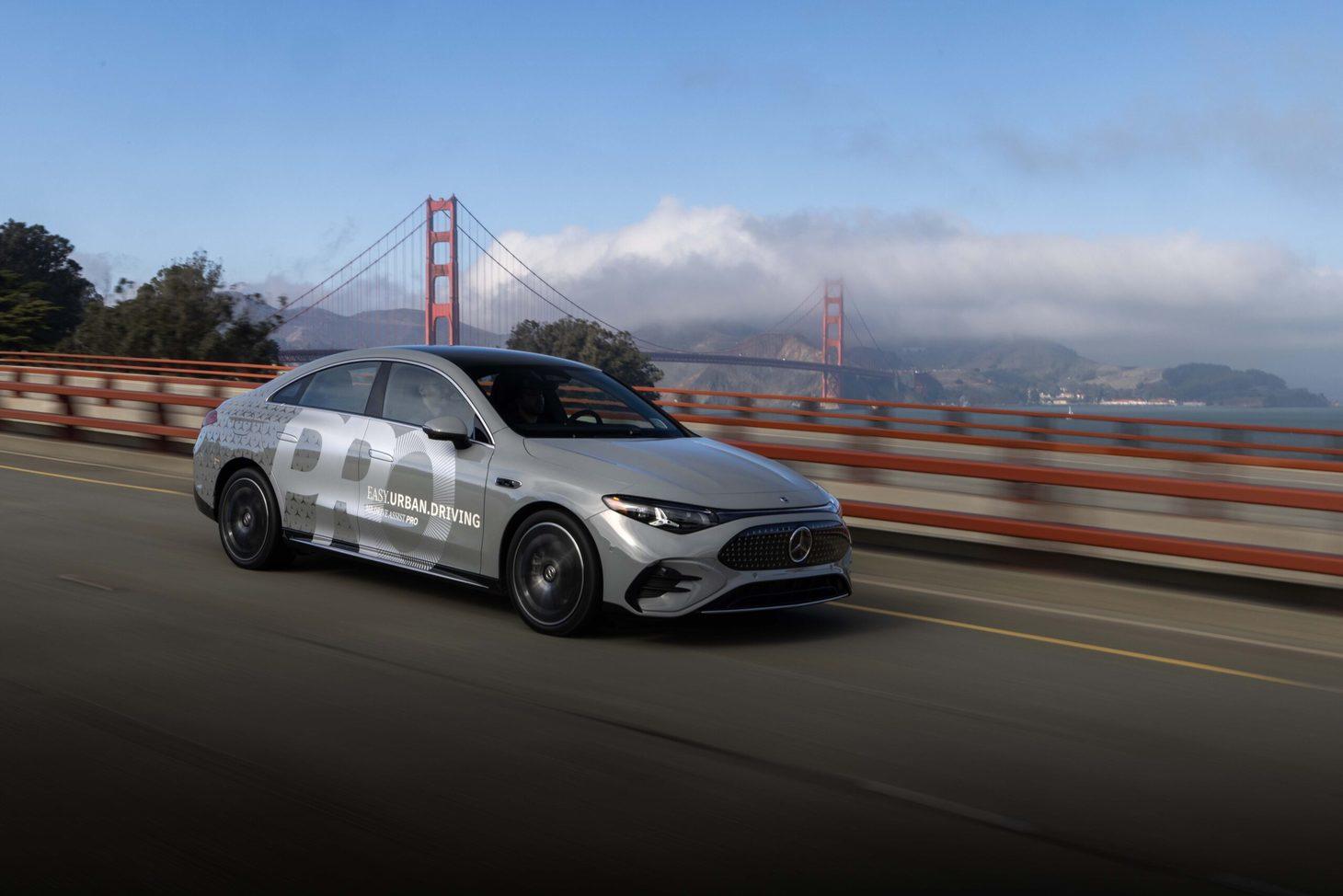
Mercedes-Benz plans roll-out of its automated driving feature in U.S. | Repairer Driven News
The Drive Pilot also was announced during CES in 2023. The feature is available in specific S-Class and EQs Sedan models in California and Nevada.
Mercedes-Benz plans to roll-out its MB.Drive Assist Pro in the U.S. later this year, according to a recent press release.
The driving assistance with advanced SAE-Level 2 assistance has been available in China since the end of last year.
“At the press of a button, the vehicle can help navigate through the city streets – from the parking lot to the destination,” the release says.