
News

USAA Members Benefit from ~$3.7 Billion in Financial Rewards in 2025
USAA members are receiving approximately $3.7 billion in financial rewards in 2025 — the largest amount returned to members in USAA’s 103-year history. Last year, members received $2.2 billion in financial rewards.
The announcement follows USAA’s initiative to provide its members with nearly $450 million in zero-interest loans, payment extensions and fee waivers during the recent government shutdown. In November, the Association also launched Honor Through Action, a five-year, $500 million initiative to support military family resiliency by bringing together public, private, and nonprofit partners to drive systemic change around three key pillars: meaningful careers, financial security, and overall well-being.
. “We are committed to putting our members at the center of all we do and every decision we make,” said Juan C. Andrade, President and CEO of USAA. “Sharing our financial results with our members reflects our responsibility to deliver strong value and exceptional service for the military community. We are taking action every day to help keep costs down and protect the long-term value of membership. Our members have sacrificed for our nation, and they deserve our very best.”
This record amount in financial rewards is possible because of USAA’s financial discipline, which ensures the Association remains financially sound while continuing to deliver value to members. It is also a result of proactive steps USAA and members have taken to prevent losses.
“Ensuring our members benefit from our financial strength is critical.” Andrade added. “We will continue to push for reforms that address the broader factors increasing insurance costs for consumers.”
Progressive Insurance® and Best Egg Enhance Access to Personal Loans
Progressive Insurance, the nation's second largest personal auto insurer, and Best Egg, Inc., a leading fintech that drives financial confidence, are proud to announce Best Egg as Progressive's newest personal loan provider.
The announcement marks an evolution in collaboration between the two companies, which are focused on driving broader customer engagement, as well as making it easier for millions of consumers to access flexible personal loan solutions as they work towards achieving their financial goals.
"We're thrilled to deepen our collaboration with Progressive and bring our financial solutions to an even broader audience," said Stephen Ovadje, Chief Marketing Officer at Best Egg. "By combining our expertise with Progressive's trusted brand and extensive reach, we're creating a powerful opportunity to connect with millions of customers in a more meaningful and effective way."
Through this offering, consumers will gain access to a wide range of flexible financial solutions, including both unsecured and secured personal loans, designed to meet them where they are in their financial journeys. Best Egg loans can be used to better manage everyday expenses, unexpected costs, or larger financial milestones, while helping individuals stay on track with their goals. By offering convenient access to funds when they're needed most, paired with the flexibility and choice consumers deserve, Best Egg's personal loan solutions aim to reduce financial stress and empower more people to take control of their financial well-being with confidence.
"We're constantly looking for ways to bring value to customers by providing them innovative offerings designed to meet their individual needs," said Erwin Raeth, Business Leader at Progressive. "By expanding our relationship with Best Egg and working to bring their personal loan solutions to more people, we can help customers tackle their unique financial goals."
Research

Property Insurance Faces Claims Volume vs. Severity Paradox in Q3 2025
The property insurance industry experienced its lowest third-quarter claim volume in five years at just over 1 million assignments, even as individual claim costs are projected to reach between $17,258 and $18,431 once fully matured—potentially making it one of the most expensive quarters on record, according to Verisk’s Q3 2025 Quarterly Property Report.
Total claim assignments fell 28.5% in Q# 2025 compared to Q3 2024, marking the continuation of a three-year downward trend that began in 2023, according to the report. Both catastrophe and non-catastrophe claims declined, with CAT claims dropping 32.7% and non-CAT claims decreasing 26.1% year-over-year.
The mild 2025 hurricane season in North America played a significant role, contributing to a 95% decrease in hurricane-related claims in the third quarter compared to the previous year. Wind and hail perils dominated the quarter, accounting for 51% of all claims combined.
Through the first three quarters of 2025, the industry processed approximately 3.5 million claims, putting the year on track to record between 4.3 and 4.5 million total claims—the lowest annual figure in the past five years, Verisk said.

Despite rate hikes, study finds California home insurance costs are middle of the pack nationwide
Even as devastating wildfires drive up home insurance costs across California, premiums overall remain relatively low compared to many other states, a new UC Berkeley report finds. But that could change as state regulators phase in new reforms allowing insurers to set rates based on the growing threat of climate change.
In 2023, California’s median home insurance cost of about $1,200 a year ranked in the middle among all states, according to an analysis of U.S. Census Bureau data by UC Berkeley’s Terner Center for Housing Innovation. Current data from personal finance sites show a similar comparison.
The states with the most expensive insurance are prone to hurricanes or tornadoes, including Florida ($1,887 a year), Louisiana ($1,793), Oklahoma ($1,793), Colorado ($1,769), and Texas ($1,769).
The report found that in California, homeowners typically spend about 1% of their income on home insurance. But households in the bottom quartile — those earning less than $66,000 a year — pay around 3% of their income on average.
IBHS findings on LA County's Palisades and Eaton Fires reinforce systems-based mitigation dramatically improves home outcomes during wildfires
The Insurance Institute for Business & Home Safety (IBHS) released findings today from its post-event investigation of the 2025 Los Angeles County Fires, illustrating the necessity of a systems-based approach to wildfire resilience.
Using new quantified data, the report, The 2025 LA Conflagrations, shows homes were more likely to avoid damage in conflagration conditions when there was greater spacing and lower connective fuel density, including vegetation, allowing noncombustible building materials to perform as intended.
The findings are based on IBHS's on-the-ground assessment of the Eaton and Palisades Fires —California's second and third most destructive wildfires — conducted January 13-19, 2025, during which researchers assessed more than 250 properties. Findings from the study are consistent with other suburban conflagrations, including the Camp and Lahaina Fires, and quantify for the first time the major role a complete system of mitigations plays in preventing zip code-level destruction.
"This study underscores a critical truth: in densely built communities like Los Angeles where we can't change structure spacing, only a system of mitigations can keep wildfires from cascading into block-by-block destruction," said Roy Wright, president and CEO of IBHS. "Home hardening and a noncombustible Zone Zero are essential to remove the weak links fire looks to exploit. When homeowners take these actions, we dramatically increase the chances that people can return to their homes after a fire. That's hope grounded in science."

LexisNexis® Insurance Demand Meter
Insurance Demand Meter - A quarterly report from LexisNexis Risk Solutions that provides insights into auto insurance shopping and switching behavior.
Benchmark your auto shopping data against the industry.
In the latest edition of the LexisNexis® Insurance Demand Meter, a quarterly look at U.S. consumer auto insurance shopping and new business trends, U.S. auto policy shopping increased 6.4%, while new policy growth rose 2.8%. The 66+ consumer segment saw the highest increase in shopping growth compared to younger cohorts, 15 states and the District of Columbia achieved a growth rate higher than in the previous quarter and the annual shop rate remained at 46.5%.
About the Insurance Demand Meter
To help inform insurer business strategies tied to acquisition and retention trends, LexisNexis® Risk Solutions is pleased to offer the Insurance Demand Meter, a report based on billions of shopping transactions that compiles data on actual consumer activity to offer the most comprehensive view of shopping in the U.S. auto insurance market.
Insurance decision makers can draw on this information to benchmark their performance against macro trends pertaining to:
- Shopping rates
- Shopping volume
- New policy growth
Announcements

Industry Veterans Launch ClaimsSquare, Delivering Fast, Accurate Contents Valuation for Personal and Commercial Claims
Founded by industry veteran** Scott Nelson, with operations led by Laura Meininger, ClaimsSquare** brings decades of combined valuation and insurance experience to an industry demanding greater speed, transparency, and accuracy in the claims process.
"We blend advanced technology and AI with our many years of human expertise to deliver fast, accurate and cost-efficient valuations all with a personal client-centric focus," said Scott Nelson, President of ClaimsSquare. "ClaimsSquare differentiates itself by uniting seasoned valuators, specialty partners and innovative technology to create a powerful combined approach for superior claim resolution for insurers."
"We are excited to bring ClaimsSquare to market," said Laura Meininger, VP and Director of Operations. "Our deep valuation expertise, relationships with specialty experts, and technology-driven workflow will create significant value for clients across the insurance ecosystem."
adoro, a New Kind of Pet Insurance, Launches in 28 States
adoro Pet Insurance Services LLC, a new pet insurance company founded by industry experts, has officially launched in 28 states across the country. adoro is currently live in AL, AR, AZ, CO, CT, DC, DE, GA, ID, IL, IN, MD, MI, MN, MO, NE, NV, NH, NM, NC, OH, OR, PA, TX, TN, UT, VA, and WI, with more coming soon. adoro plans to offer policies across the country.
Co-founded by industry veterans and pet owners themselves, Gavin Friedman (CEO) and Tricia Plouf (President & COO), adoro delivers what pet owners want: clear coverage of things that matter most (including exam fees and rehabilitation), more stable premiums, and fast claims with payment options via Venmo or direct bank transfer.
"Pet owners deserve insurance that covers what matters most without needing to buy confusing add-ons" said Gavin Friedman. "We believe pet insurance should fit each customer's budget and priorities."
adoro is majority-owned by Griffin Highline Capital LLC and Badger Equity US LLC. Its underwriting capacity will be provided by Crum & Forster (C&F), a market-leading company with significant experience underwriting pet insurance programs.
Commentary/Opinion
Firms aren’t lagging on AI because of tech - it’s mindset holding them back
There are three key areas where progress is being made
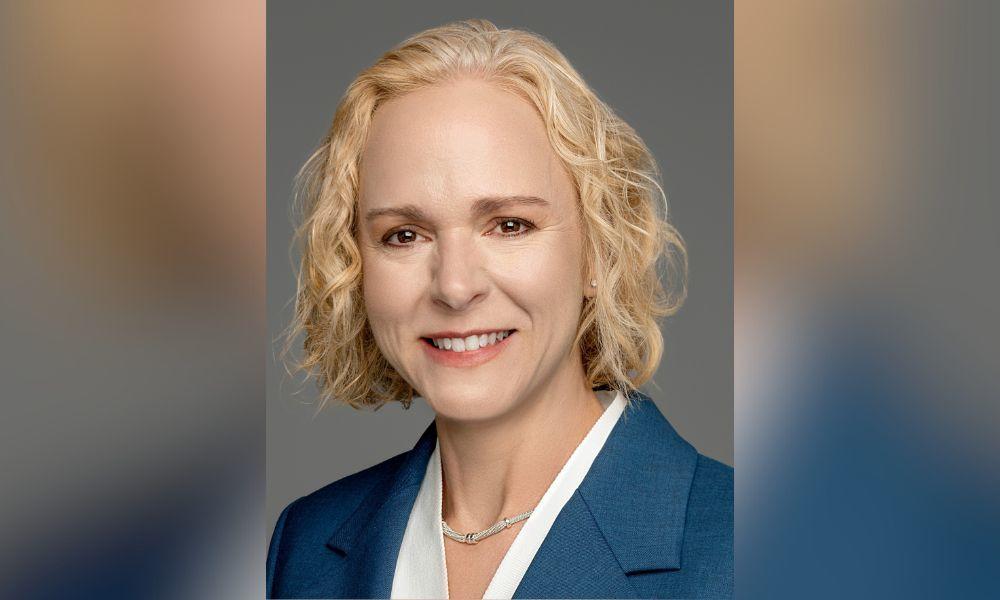
“Firms don’t need to radically overhaul their systems to realize the benefits of AI,” said Meghan Anzelc (pictured), global leader of transformation solutions at Aon’s Strategy and Technology Group. “They often already have the tools, but just need some guidance and to be made aware of the use cases.”
That mental hurdle - more than cost or infrastructure - is what’s holding some re/insurers back. While the industry is beginning to integrate AI into core functions like underwriting, claims and risk modeling, adoption is uneven.
Anzelc pointed to three key areas where re/insurance firms were making real progress. The first was layering in additional data sources to refine underwriting and claims processes. The second was unlocking unstructured data that had been previously ignored. “Every organization has documents that are filed and forgotten - submissions, bordereaux, client files,” she said. “The cost of extracting value from them is much lower now than it was even a few years ago.”
The third area of traction was use of AI features already embedded in existing tools - CRMs, ERPs, and productivity software.
“Many companies are already paying for these AI capabilities through their existing contracts. It’s just a matter of activating them,” she said.
2026 Outlook/Predictions

2026 Insurance Industry Outlook: Key Trends & Insights for Future Growth - West Monroe
5 key trends shaping the insurance industry in 2026
- Cyber threats test insurers’ own defense Carriers face the dual challenge of underwriting more cyber policies while defending their own systems against increasingly sophisticated AI-enabled attacks that threaten operations and trust. Customer expectations prompt insurers to evolve products in real time
- Demand for personalized, flexible products is pushing insurers to deliver dynamic offerings that adjust with customers’ lives and integrate seamlessly across digital ecosystems.
- Insurers are rebuilding technology that can change as fast as the market After years of failed overhauls, carriers are embracing modular, composable systems that evolve with market shifts—reducing risk while speeding innovation.
- Weather, social, and AI risks are breaking old actuarial rules Converging risks—from catastrophic weather to social inflation and AI liability—are forcing insurers to rethink pricing models and turn data into foresight.
- M&A is leveraged to buy tech, not territory Consolidation is accelerating as digitally advanced carriers acquire legacy-burdened competitors, using technology capability—not geography—as the new growth currency.
THE YEAR CONSTANT EVOLUTION BECOMES COMPETITIVE ADVANTAGE
InsurTech/M&A/Finance💰/Collaboration

Top insurtech funding rounds, November 2025 | Digital Insurance
There were about 50 funding events in the insurtech sector in November 2025, according to a review by Digital Insurance. What follows is a selection of these, focusing on those in the insurtech and property & casualty sectors that are part of the venture-capital financing model. (Other funding events, such as private-equity infusions, are included in the overall count.)
A portion of the data was sourced from Crunchbase. Other information, including quotes from investing VCs, comes from company announcements. For our previous edition, which covered October, click here. These updates will continue monthly.
These summaries were crafted using AI and then reviewed by the Digital Insurance editorial team. Federato - Funding: $100 million Series D, Nov. 18, 2025 - Type of company: the AI-native platform that changes the way insurance work gets done - Investors: Growth Equity at Goldman Sachs Alternatives, Emergence Capital, Caffeinated Capital, StepStone Group, Pear VC
"Our diligence in P&C insurance revealed that Federato's AI-native platform delivers a step change in ROI and efficiency compared to prior generations of core systems," said Jade Mandel, managing director, growth equity at Goldman Sachs Alternatives. "Federato has built the full policy lifecycle solution the market has been waiting for, and we're excited to invest in a company whose domain and AI expertise are already delivering measurable results for insurers."
Pibit.AI - Funding: $7 million Series A, November 20, 2025 - Type of company: a company rethinking underwriting - Investors: Stellaris Venture Partners, Y Combinator, Arali Ventures
"Pibit.AI was built around one idea: that AI should empower underwriters, not replace them," said Akash Agarwal, founder and CEO "Too many systems prioritize speed over trust. We're building something that's transparent, explainable, and decision-ready – a system that gives underwriters confidence in every output while helping them move faster than ever before."
People
Clark Plucinski, Collision Repair Industry Leader, Passed Away at 75 - CollisionWeek
Over a 50+ year career in the collision industry, multi-shop owner later led CREF and CAPA. Clark Plucinski, a collision repair industry veteran who spent five decades advocating for workforce development and education, passed away Nov. 29, after a long battle with cancer. He was 75.
Clark Plucinski passed away Nov. 29.
Plucinski served as executive director of the Collision Repair Education Foundation (CREF) from 2012 until his retirement in 2020. He also served as chairman and executive director of the Certified Automotive Parts Association (CAPA).
Born June 16, 1950, in Washington, D.C., Plucinski served in the U.S. Navy and received an honorable discharge in 1973. He earned an associate degree from Montgomery College and began a 50+ year career in the collision repair industry.
Plucinski began his collision repair career in 1970 as a technician at a General Motors dealership. He co-owned and served as president of BCP Auto Body Inc., a four-location collision repair business in the Washington, D.C., metropolitan area, from 1973 to 1996.
He was a co-founder of True2Form Collision Repairs and served as executive vice president, helping build a multi-state network of collision repair facilities. True2Form was subsequently acquired by the Boyd Group, where Plucinski served as vice president of sales at Gerber Collision & Glass.
Throughout his career, Plucinski held board positions with CREF, CAPA, I-CAR and the ASA Collision Division Committee. He also served as president of the Washington Metropolitan Auto Body Association.
In 2018, Plucinski received I-CAR’s Chairman’s Award, which recognizes individuals whose contributions have been significant or extraordinary.
Other honors included the I-CAR Founder’s Award, ASA Special Achievement Award and being named Collision Shop Executive of the Year for 1996 by BodyShop Business.
Plucinski was inducted in the Hall of Eagles, the collision industry’s Hall of Fame, in 1993.