
News
Fitch maintains ‘neutral’ outlook for US P&C insurance sector amid strong profitability - Reinsurance News
Fitch Ratings maintains a ‘neutral’ fundamental sector outlook for the US property/casualty (P&C) insurance sector in 2026, as well as for both commercial and personal lines.
This assessment is based on the sector’s solid starting position for the year, which is supported by strong overall statutory performance, continued favourable personal auto insurance results, a mild hurricane season, and higher reserve releases.
Fitch expects the industry combined ratio to improve by nearly three percentage points in 2025, reaching 93.7%.
The rating agency also forecasts an improvement in statutory net earnings compared to the previous year, after adjusting for unusual realised investment gains from Berkshire Hathaway.
According to the report, industry performance is likely to remain stable in 2026, achieving a slightly lower underwriting profit with a combined ratio between 96% and 97%.
Brit Re - Experienced underwriting backed by strong capital This stability will be underpinned by continued strong results in both personal and commercial lines, despite challenges that may limit top-line growth, Fitch stated.
“We expect general stability across personal and commercial lines in 2026,” said Senior Director Tana Marcom. “But macro risks—including increasing competition, geopolitical uncertainty, slowing economic growth and a difficult legal environment—could pose challenges for pricing discipline, reserve adequacy, and claims management.”
Berkshire Hathaway Announces Leadership Appointments
Berkshire Hathaway Inc. today announced the following leadership appointments across its non-insurance and insurance operations, as well as in corporate:
Insurance Operations
Nancy L. Pierce has been appointed CEO of GEICO, effective immediately. Ms. Pierce currently serves as Chief Operating Officer of GEICO and, since joining the company in 1986, has held leadership roles across claims, underwriting, product management and regional operations. “Nancy knows the business inside and out. She’s practical, decisive and focused on results. I have full confidence in her ability to move GEICO forward,” said Ajit Jain, Vice Chairman – Insurance Operations.
As part of this transition, Todd A. Combs will conclude his tenure at Berkshire Hathaway and join JPMorgan Chase & Co., where he has served as a Director of its Board since 2016. Warren E. Buffett, Berkshire’s Chairman, added: “Todd A. Combs, CEO of GEICO since 2020, has resigned to accept an interesting and important job at JPMorgan, which they describe in a press release that will be available very soon on their website. Todd made many great hires at GEICO and broadened its horizons. JPMorgan, as usually is the case, has made a good decision.”

P&C industry's Q3 profits up from last year, but are they sustainable?
Canada’s federally regulated property and casualty insurers reported an overall net profit of $7.88 billion in the third quarter this year.
What a difference a year makes.
Canada’s federally regulated property and casualty (P&C) insurers reported an overall net profit of $7.88 billion in the third quarter this year, up from $6.53 billion in 2024 Q3.
Driving that result was a $3.6-billion drop in Insurance Service Expenses between 2026 Q3 and the same time last year – from $56.59 billion to $52.96 billion.
After a year in which Canada’s P&C insurance industry paid out a record $9.1 billion in catastrophe claims in 2024, this year Cat claims are more within the range of “the early 2020s,” as Catastrophe Indices and Quantification Inc. (CatIQ) recently told Canadian Underwriter.
That would be somewhere between $1 billion and $3 billion.
And that’s reflected in the industry’s bottom line in 2025 Q3, according to the latest data from the Office of the Superintendent of Financial Institutions (OSFI).
Despite heated competition in commercial lines, in which brokers are reporting substantial rate reductions, the industry turned an $8.77-billion underwriting profit in this quarter. That’s a significant increase from the $6.53-billion underwriting profit reported this same time last year.
Net investment income stands at $3.13 billion in 2025 Q3, an uptick from $2.77 billion during the same time last year. It’s almost triple of where net investment income stood at this same point two years ago, in 2023 Q3, when the industry’s total net investment income was just $1.29 billion.
Many P&C execs have told CU that these profits may not be sustainable given the rate cuts happening in several commercial lines. And several observers have commented the rate cuts in some commercial lines do not correspond with the claims experience.
Enterprise Mobility Announces Acquisition Expanding Mobility Portfolio
Family-founded industry leaders combine to offer robust range of services, enhanced network and fleet to meet customer mobility needs
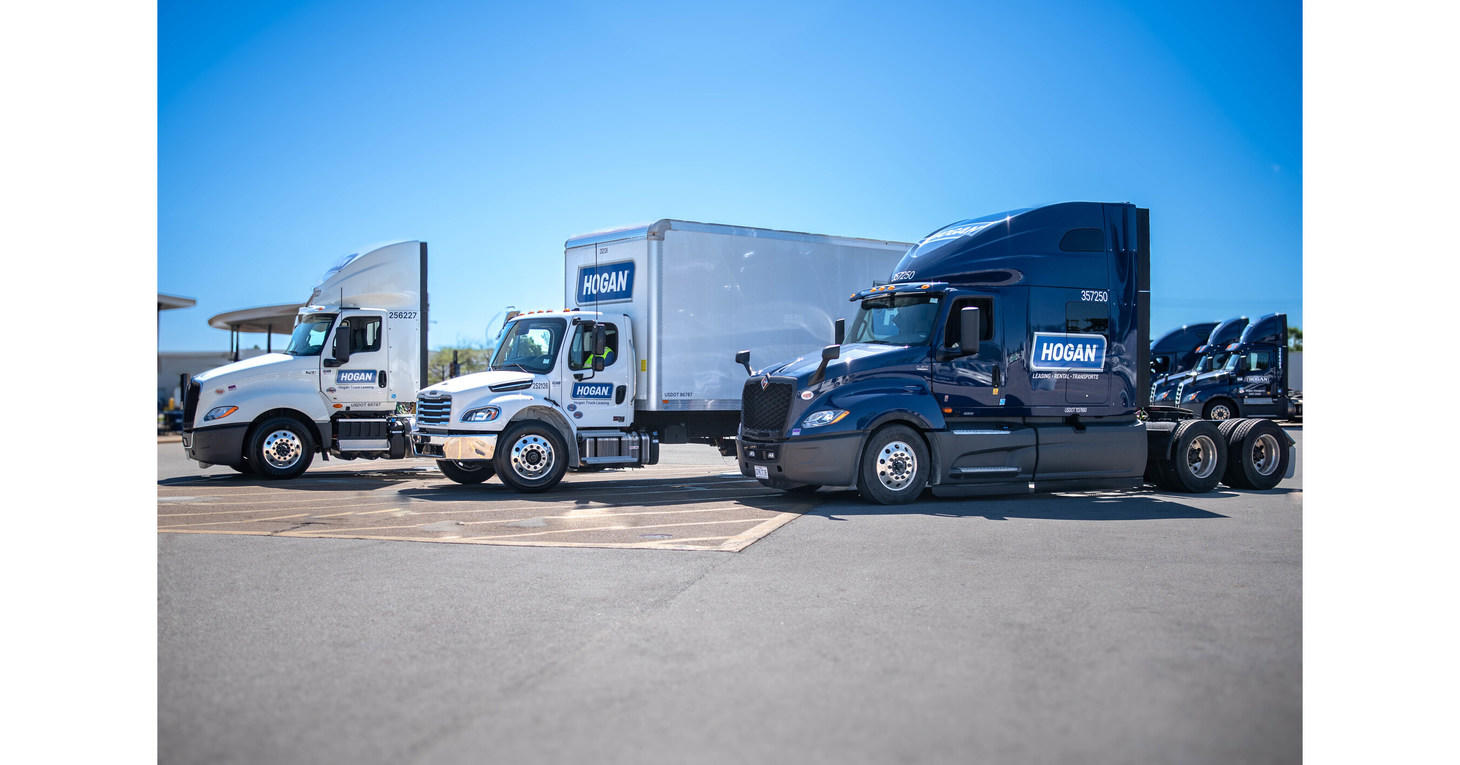
Enterprise Mobility announced it has completed the acquisition of Hogan, one of the most trusted providers of commercial transportation services in the United States. The combination brings together the complementary strengths of two St. Louis-founded, family-owned and privately held companies with a legacy of exceptional customer service and dedication to team members.
Enterprise Mobility has announced acquisition, expanding its portfolio of mobility services and fleet offerings.
"Recognizing the complementary networks, talented workforces and respective industry expertise, this marks an exciting next chapter for two leading providers of transportation solutions," said Chrissy Taylor, President & CEO of Enterprise Mobility. "It also reaffirms our mobility ambition and commitment to continued investment to meet customer needs today and in the future."
Commercial Portfolio Expands Reach and Offerings
Hogan has a proven track record of success over its more than 100 years in business. Today, the company has approximately 3,000 team members and operates 10,000+ pieces of equipment at more than 50 locations in the United States through a broad portfolio of commercial transportation services. This includes full-service truck leasing, truck rental, dedicated transportation services, and other custom-designed transportation and logistics solutions.
Enterprise Mobility has a diverse fleet of Class 1-6 vehicles and a broad portfolio of mobility offerings, including a leading offering in fleet management and light and medium-duty truck rental. Adding the Hogan business provides an expanded portfolio of services and fleet, including Class 7 and Class 8 heavy-duty trucks and specialized equipment such as refrigerated trucks and trailers, flatbeds, automotive haulers, livestock trailers and more, to serve current and potential new commercial customers.
Climate/Resilience/Sustainability
Crawford Survey Shows Sustainability Becoming A Bigger Factor in Claims Decisions
Corporate sustainability is an important topic in business and particularly insurance, but it turns out that sustainability is also becoming a bigger topic of interest for claims leaders.
Most (77%) of claims leaders report that sustainability is explicitly addressed in their company’s corporate strategy, vision or values—and 76% of claims leaders in a recent survey state that sustainability is an important decision criterion in partner or vendor selection processes, according to Crawford’s new Sustainability Report.
A cross-section of global claims leaders from Crawford’s carrier and broker partner organizations completed a survey to assess the importance of sustainability in their companies and the claims industry. The data from their responses served as the framework for the report.
The report shows that sustainability has a strategic importance in claims and is increasingly driving business decisions.
Among claims leaders surveyed, 70% reported that sustainability considerations impact their adjudication and resolution process. Eighty percent of those surveyed reported that sustainability considerations impact their decisions about the products and services they develop. FULL ARTICLE

Extreme Weather Risk Is Growing—While Disclosures Drop | Insurance Innovation Reporter
A new U.S. Securities and Exchange Commission climate disclosure rule, adopted in 2024, aimed to bring transparency to both transition risks (emissions exposure, policy shifts, stranded assets) and physical risks (extreme weather events, sea level rise, and shifting climate patterns). The rule states that public companies have to report “the financial effects of climate-related risks on a registrant’s operations and how it manages those risks while balancing concerns about mitigating the associated costs of the rules.”
Since the rule went into effect, extreme events continue to dominate the news. NOAA and the EU’s Copernicus both confirmed 2024 as the hottest year on record, and 2025 has largely kept pace. Worldwide disaster damages in 2024 were costlier than the 20-year average, accordingto EM-DATs most recent report, with droughts, floods and U.S. tropical storms leading the way.
Still, businesses are issuing fewer reports about extreme heat and other weather risks this year than they did in investor filings in the first half of 2024. A Wall Street Journal analysis showed filings containing terms related to droughts, floods, wildfires and extreme heat dropped 31 percent in the first five months of 2025 from the year-before period. This follows a 22 percent rise in documents containing climate-risk terms between 2022 and 2024.
For risk leaders, the silence could carry consequences. Extreme weather is no longer a long-tail scenario—it’s a near-term operational hazard. Supply chains are vulnerable to disruption from hurricanes and floods. Utilities face grid instability from heatwaves and ice storms. Insurers are recalibrating coverage and pricing due to rising catastrophe losses. And every one of these disruptions directly affects liquidity, capital allocation, and continuity of operations.
Research

Digital Insurance Claims Foster Satisfaction But Not Exclusivity: Study | Crowdfund Insider
According to the J.D. Power 2025 U.S. Claims Digital Experience Study, customer satisfaction surges when the claims process is managed digitally, but most customers still find themselves needing to go offline to manage key steps along the way.
“Across the insurance claims workflow, from first notice of loss to the estimate and ongoing status updates, customer satisfaction scores are highest when customers can manage the process via their insurers’ digital apps and websites,” said Mark Garrett, director of global insurance intelligence at J.D. Power. “However, the study reveals several key moments in the claim journey when customers need to move across channels to get more detailed explanations from claim representatives or seek status updates. The more insurers can anticipate the information customers will need and proactively deliver it digitally, the more satisfied—and brand loyal—their customers will become.”
Key findings
Customers look for more proactive digital updates: Receiving adequate digital updates is one of the top drivers of customer satisfaction with the digital insurance claims process, but insurers deliver on this key performance indicator just 22% of the time.
Apps underutilized for delivering status updates: Overall satisfaction scores are highest when customers receive status updates via their mobile apps. However, just 36% of auto insurance customers and 31% of homeowners insurance customers currently receive status updates this way. Most customers still receive updates via email, calls from insurer claim staff or text messages.
Disconnected customer experience: Despite widespread industry efforts to promote digital-first notice of loss and claims management, 22% of customers still rely on multiple channels to find answers to the same question.
Digital experience directly linked to customer loyalty: Among auto and homeowners insurance customers who rate their digital claim experiences as “poor” or “just OK,” 52% are likely to leave or not renew with their current carrier. Among those who rate their digital experience as “excellent” or “perfect,” just 4% are at risk of attrition. MORE
Commentary/Opinion

Continuous Underwriting Wants to Scale | Insurance Thought Leadership
Ten years ago—has it been that long?—I was working with the largest insurer of churches and religious institutions in the US when we discovered they were incurring an average of $70 million in annual losses from frozen pipes.
It makes sense. Many houses of worship sit empty most of the time, and in the northern half of the country—where most of this carrier's book was concentrated—a power outage or failing furnace leads to frozen pipes, burst lines, and substantial water damage claims.
So we built an IoT service that monitored furnace activity and water pipe temperatures, complete with a call center to alert policyholders before problems escalated. It worked so well that it survives today: insureds receive annual premium discounts for enrolling, and frozen pipe claims have dropped over one-third.
That experience in continuous risk management sparked my fascination with the next frontier: continuous underwriting. In my view, there's no reason insurance premiums shouldn't fluctuate daily—like stock prices or utility bills—as new risk data emerges.
Frustratingly, there are exactly two reasons they don't: regulation and reinsurance.
Announcements
Guidewire Olos Release Powers Intelligent Pricing, Drives Faster Rate Changes, and Enhances Workers’ Compensation Performance
Guidewire (NYSE: GWRE) today announced Olos, its latest release, designed to help P&C insurers modernize their pricing strategies, accelerate rate changes, optimize underwriting processes, and strengthen workers’ compensation performance.
Faster, Smarter Pricing and Rating with Guidewire PricingCenter Guidewire PricingCenter unifies the entire pricing and rating lifecycle, eliminating manual handoffs across actuarial, pricing, and IT teams. The platform supports dynamic price modeling and impact analysis, AI-assisted pricing insights, as well as seamless integration with other Guidewire applications and services, enabling faster rate changes and greater agility.
“PricingCenter gives insurers a single platform to model, test, and deploy pricing changes with speed and confidence,” said Dawid Kopczyk, Senior Director, Pricing and Rating, Guidewire. “By unifying workflows, it empowers actuaries, rating developers, and IT teams to build advanced models and accelerate rate changes from months to days to deliver the best possible pricing to insurance customers.”
AI in Insurance

Insurers sound the alarm on AI voice cloning's growing liability risks
As artificial intelligence-powered voice cloning technology rapidly gains traction across marketing, customer service, and digital media, insurers and risk professionals warn that businesses remain underprepared for the legal and operational risks it entails.
While adoption is accelerating in the global AI voice synthesis market, estimated at $3.3 billion, legal frameworks are evolving unevenly, claims activity remains limited, and insurance policies are only beginning to adapt.
“The main concern is that this is a new, emerging risk,” said Erlisa King (pictured), director of product liability at Tokio Marine HCC. “What we’re finding is that our insureds aren’t necessarily prepared, so they may not have the quality controls in place to mitigate this exposure.”
AI voice cloning: Emerging regulatory and litigation exposures
AI voice cloning creates a digital replica of a person's voice using machine learning to mimic their unique pitch, tone, and speech patterns from limited audio, enabling synthetic voices for content, customer service, and accessibility. Commercially, it's used for voiceovers, localized content (e.g., dubbing in other languages), personalized digital assistants, and restoring speech for those with impairments, revolutionizing media production and customer engagement.
Voice cloning poses distinct challenges compared to other forms of AI, particularly because it intersects with intellectual property, privacy, right of publicity and fraud risks. That complexity is amplified by regulatory uncertainty in the US. California’s recently enacted AI Transparency Act (SB 53) addresses AI accountability more broadly, but leaves voice cloning and biometric voice replication in something of a gray area.
For insurers, that ambiguity raises the likelihood of future litigation.
InsurTech/M&A/Finance💰/Collaboration

Verisk adds Carpe Data insights to streamline claims
Carpe Data, a leading provider of next-generation data solutions for the insurance industry, has announced a collaboration with Verisk, a global provider of data analytics and technology for insurers.
The partnership brings Carpe Data’s injury claim insights directly into Verisk’s ClaimSearch® platform, giving insurers faster access to fraud detection tools including Online Injurhttps://fintech.global/wp-content/uploads/2025/12/pexels-zainab-aamir-236100-751099-8-scaled.jpgy Alerhttps://fintech.global/wp-content/uploads/2025/12/pexels-zainab-aamir-236100-751099-8-scaled.jpgts and Investigative Reports, according to Insurance Edge.
The integration aims to streamline claims workflows, reducing delays caused by siloed systems. Carpe Data’s insights allow property and casualty claims professionals to quickly identify potential fraud, saving both time and money while maintaining consistent, reliable processes across all claims.
Insurers using ClaimSearch can now access Carpe Data’s Online Injury Alerts, which provide meaningful updates on open injury claims while filtering out irrelevant data to help adjusters focus on real risks.
In addition, Investigative Reports can be ordered with a single click and include social connections, screenshots, and citations, exported directly into existing claim systems and ready for courtroom use. Carpe Data’s tools also ensure repeatable, arms-length checks across all claims, supporting fair handling and cost management.
Max Drucker, CEO of Carpe Data, said: “Many insurers struggle with a patchwork of siloed systems, leaving IT teams overextended with integration backlogs that can drag on for months. As the cornerstone of the claims ecosystem, Verisk’s ClaimSearch platform enables insurers to tap into innovative solutions like Carpe Data with speed and confidence. Through our collaboration with Verisk, property & casualty claims professionals can more easily access and benefit from Carpe Data’s all-signal, no-noise insights.”

bolt partners with Roamly to expand specialty RV insurance nationwide
bolt, the insurtech that runs what it calls the world’s largest tech-enabled insurance exchange, has teamed up with Roamly to plug dedicated RV cover into its platform.
The partnership brings Roamly’s recreational-vehicle products to thousands of agents using bolt, widening the specialty shelf and giving policyholders in every state more pointed protection for how they actually travel.
The timing lines up with continued strength in the RV sector. Progressive and Harvest Hosts research suggests 92% of RV owners expect to travel as much or more in 2025.
And 2026 looks even busier, with the FIFA World Cup stretching across 11 host cities, the Route 66 Centennial pulling enthusiasts onto the road, and America’s 250th anniversary prompting a spike in long-haul trips.
According to Beinsure analysts, agents already report heightened interest in coverage tailored to extended journeys rather than conventional auto policies patched to fit RV use.
Nicole Sivieri, SVP of Insurance Capital Solutions at bolt, says the partnership deepens the specialty bench and arms agencies with cover shaped for real-world RV risks.
She points to underwriting depth on Roamly’s side as a key draw at a moment when customer questions get more complex and travel plans grow more ambitious.
Our partnership with Roamly adds specialty RV coverage backed by deep underwriting expertise, giving agents more ways to support customers on the road as demand increases Nicole Sivieri, Sr. Vice President, Insurance Capital Solutions at bolt
“By expanding our specialty portfolio with dedicated RV protection, we are helping agencies meet a real and growing need with coverage designed specifically for how RV owners travel,” said Nicole Sivieri.
Brad Simmons, Roamly’s general manager, says the tie-up gives the brand immediate reach through bolt’s national distribution network.
Podcast Sponsor

Audio Version - 'Connected: The Podcast' --- Sponsored by Pulse Podcasts
** The ‘Connected’ Podcast by Alan Demers and Stephen Applebaum, is a condensed audio version of the day's ‘Connected' newsletter, a daily scan of all the happenings in the world of Insurance & InsurTech News**.
Pulse Podcasts: Introduce a new way for your audience to hear your voice! We are a podcast creation service that helps businesses turn their written content, like blog posts and news articles, into beautiful podcasts. Our platform writes the script, records the voices, and mixes the audio to create engaging content for your audience. It's affordable and has super-fast turnaround!
LISTEN AND SUBSCRIBE BELOW