
News
National Pearl Harbor Remembrance Day, 2025
BY THE PRESIDENT OF THE UNITED STATES OF AMERICA A PROCLAMATION
On December 7, 1941, a peaceful Sunday morning on the Hawaiian island of Oahu was shattered by an unprovoked attack by the naval and air forces of the Empire of Japan on the United States Pacific Fleet at Pearl Harbor and the aircraft and hangars at Kaneohe, Ford Island, Barbers Point, and Hickam Field. The surprise offensive claimed the lives of 2,403 American service members and civilians and propelled our Nation into the Second World War.
The Japanese mission was designed to cripple our military assets and obliterate the American spirit, but instead, the fatal attacks rallied our shattered citizenry and fueled our resolve. Young men from every corner of our country put their lives and futures on hold and were thrust into bloody and brutal battles of historic consequence that would forever change the world. Although untested in battle, these patriots, still reeling from horror and disbelief, united in a singular mission: to defeat tyranny. The exceptional courage and immeasurable sacrifices of the Greatest Generation secured our way of life and the blessings of freedom for future generations.
In the decades since the “date which will live in infamy,” the aggressor has become our loyal ally and trusted friend. Japan is one of our closest security partnerships, and our military forces work together every day to defend our common interests. We are united by commerce, history, culture, and mutual respect. Our strong alliance is a testament to the transformational power of peace, diplomacy, and democracy.
The lessons learned 84 years ago on that fateful day still resound with America’s exceptional fighting force. We must remain ever vigilant and prepared to annihilate any foe who dares to threaten our liberty. This annual day of remembrance must be held in the highest esteem and reverence as we honor the Americans who laid down their lives to defend our homeland on the island of Oahu and in the battles of World War II.
The Congress, by Public Law 103-308, as amended, has designated December 7 of each year as “National Pearl Harbor Remembrance Day.”
NOW, THEREFORE, I, DONALD J. TRUMP, President of the United States of America, by virtue of the authority vested in me by the Constitution and the laws of the United States, do hereby proclaim December 7, 2025, as National Pearl Harbor Remembrance Day. I encourage all Americans to observe this solemn day and to honor our military, past and present, with appropriate ceremonies and activities. I urge all Federal agencies and interested organizations, groups, and individuals to fly the flag of the United States at half-staff in honor of those American patriots who died as a result of their service at Pearl Harbor.
IN WITNESS WHEREOF, I have hereunto set my hand this fifth day of December, in the year of our Lord two thousand twenty-five, and of the Independence of the United States of America the two hundred and fiftieth.
DONALD J. TRUMP
Polar vortex shift poised to unleash more bitter cold across the US through mid-December
More Arctic air is building over northern Canada and will be directed into the United States, courtesy of the polar vortex. How long will the cold waves last? Will it stay cold through Christmas?
As one blast of Arctic air pushes out to sea, a new surge of cold air, driven by a breakdown of the polar vortex, is already likely to expand from central Canada and through the midwestern and eastern United States by early next week.
The Arctic blasts won't stop there, as more cold waves could follow before the cold waves diminish past the middle of the month, AccuWeather long-range meteorologists say.
The polar vortex is a large upper-level, low-pressure area or circulation that typically resides above the Arctic Circle. When this storm is strong, it tends to keep the coldest air in the Northern Hemisphere locked up over the pole. However, when it weakens or stretches, frigid air can move south.
Berkshire Hathaway shakes up management with Buffett handover
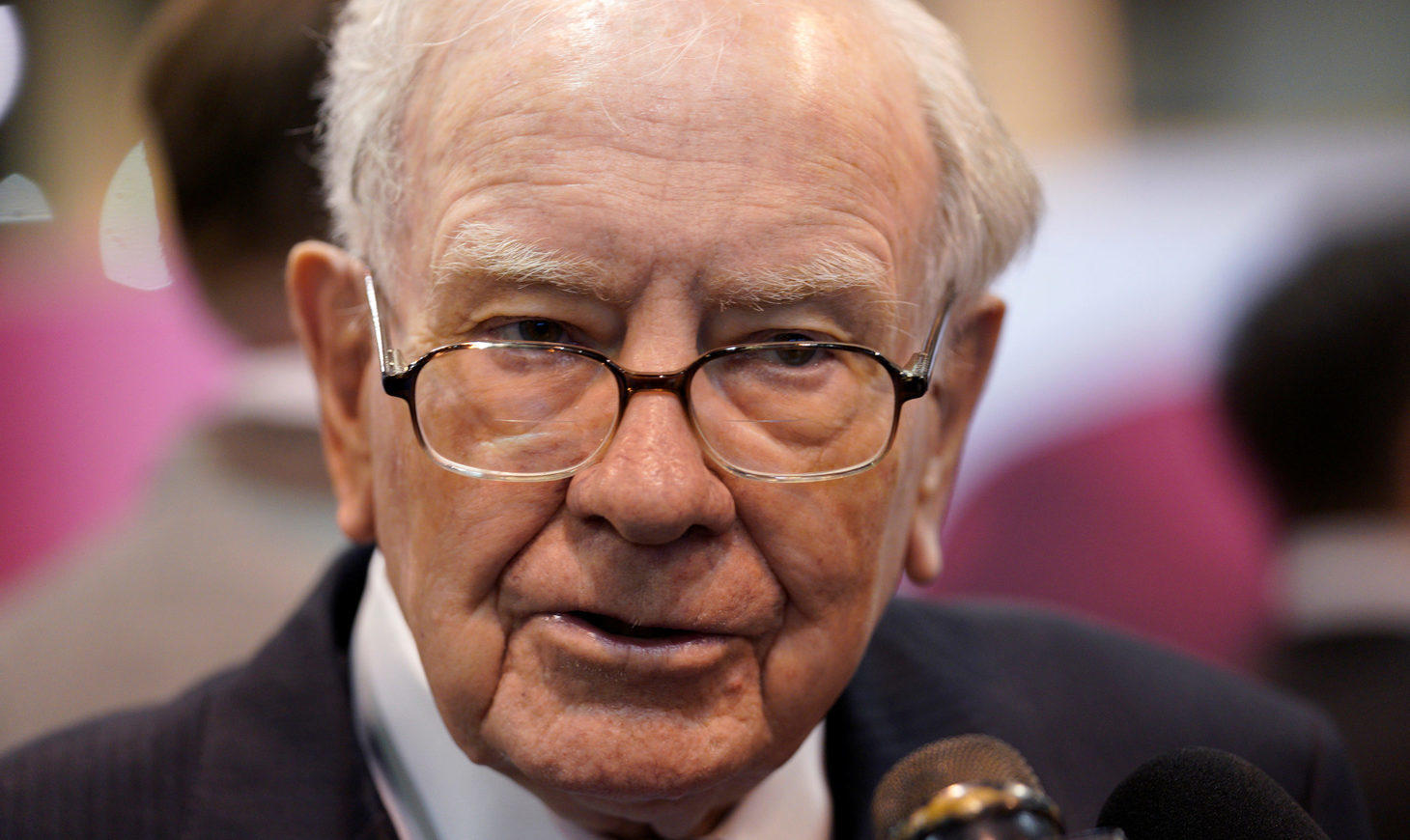
Berkshire Hathaway announced a shakeup of its top management team on Monday, just weeks before Warren Buffett hands over the reins of the company to Greg Abel.
The company’s longtime finance chief Marc Hamburg, who joined in 1987, will retire on June 1, 2027, after four decades at the conglomerate, while Todd Combs will leave for JPMorgan Chase, Berkshire Hathaway said.
Charles Chang, CFO of Berkshire Hathaway Energy, will succeed Mr.Hamburg next year.
“Marc has been indispensable to Berkshire and to me. His integrity and judgment are priceless,” Mr. Buffett said in a statement.
Mr. Abel’s transition to CEO on January 1 closes Mr. Buffett’s extraordinary six decades heading Berkshire Hathaway, where he became a household name, a multi-billionaire and an American success story.
Mr. Combs and another Berkshire investment manager Ted Weschler were once expected to take over the company’s equity portfolio, having helped Mr. Buffett invest in stocks, but the CEO had in recent years said Mr. Abel could handle it.
The appointments underscore Berkshire’s tradition of choosing leaders who uphold its culture, show strong business judgment and support its distinctive operating model, the company said, adding it remains well positioned for the future.
Berkshire Hathaway also announced changes in its insurance and noninsurance operations and named Michael O’Sullivan as the general counsel, marking the creation of a new position at the company.
US probes reports Waymo self-driving cars illegally passed school buses - Business Insurance
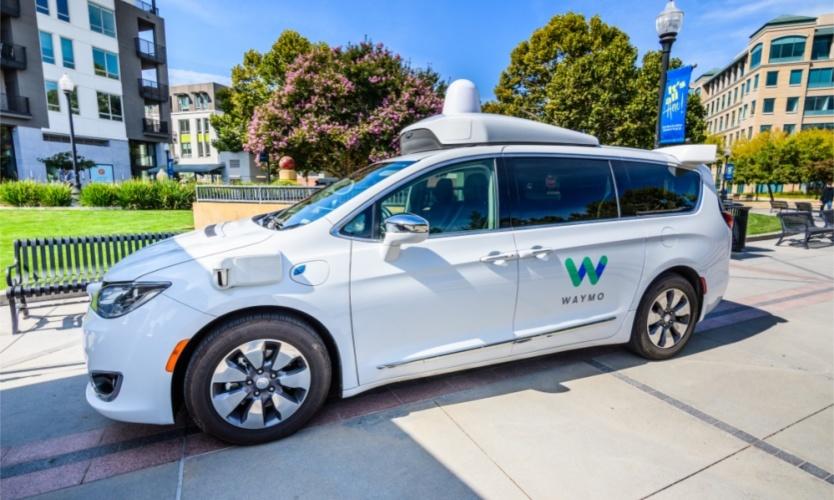
A U.S. agency said on Thursday it has asked Waymo to answer more questions after Texas officials said the Alphabet unit’s self-driving vehicles had illegally passed school buses 19 times in recorded incidents since the start of the school year.
The National Highway Traffic Safety Administration opened a probe in October after an incident in Georgia in which a Waymo car did not remain stationary when approaching a school bus with its red lights flashing and stop arm deployed.
In a November 20 letter posted by NHTSA, the Austin Independent School District said five incidents occurred in November after Waymo said it had made software updates to resolve the issue and asked the company to halt operations around schools during pick-up and drop-off times until it could ensure the vehicles would not violate the law.
“We cannot allow Waymo to continue endangering our students while it attempts to implement a fix,” a lawyer for the school district wrote, citing one incident involving a Waymo that was “recorded driving past a stopped school bus only moments after a student crossed in front of the vehicle, and while the student was still in the road.”

Mitsui Sumitomo Insurance acquires at least 12.5% of W. R. Berkley shares
Mitsui Sumitomo Insurance Co., Ltd. (MSI), a Japanese property and casualty (P&C) insurance carrier, has acquired beneficial ownership of at least 12.5% of W. R. Berkley Corporation’s common stock.
This move follows MSI’s agreements with the Berkley Family, which includes a company and trusts owned by Berkley family members.
None of MSI’s shares were purchased from the Berkley Family or the Company.
According to the announcement, under these agreements, “MSI’s shares will be voted pursuant to the recommendations of the Berkley Family, except in limited circumstances where the MSI shares will be voted in the same proportion as all of the non-MSI shares are voted.”
The transaction is expected to be completed in the first quarter of 2026.
The agreements between MSI and the Berkley Family are fully described and qualified by the complete text of those agreements, which are attached as exhibits to the Company’s Form 8-K filed in March, the firm noted.
It was previously announced that once the acquisition was completed, the Berkley Family will recommend the nomination and election of a MSI director designee to W. R. Berkley’s Board of Directors, subject to review and approval by the Board’s Nominating and Corporate Governance Committee.
It was also confirmed that the agreements between MSI and the Berkley Family will not have any effect on the day-to-day operations of W. R. Berkley, and will not reduce the Berkley Family’s commitment to the company.
Research
Rebuilding Trust in AI: Using Human-Assisted Intelligence for Enterprise Claims Transformation, Free Wisedocs Guide
The insurance industry is lagging when it comes to AI adoption. Years of "AI fatigue" from failed autonomous solutions have slowed progress. This guide introduces a smarter way forward: human-assisted intelligence to transform claims processing, increase trust, and boost efficiency.
The promise of AI in claims processing has been met with skepticism due to a history of failed autonomous solutions—creating an "AI fatigue" that leaves the industry behind. While 75% of claims professionals see AI's potential, 58% are not yet using it. To stay ahead, enterprises must look for a smarter way to integrate AI into their practice.
This guide details a smarter way forward: combining advanced AI with expert human oversight to achieve true transformation. You’ll gain insight into what’s feeding the adoption gap, the history of AI in claims, and how you can leverage human-assisted intelligence to gain a competitive advantage.

Research Report Shows Cyber Insurance Growing 15% in 2026 on AI And Data Threats
Written cyber insurance premiums will rise 15% in 2026 as new artificial intelligence threats and data demands emerge.
In a new report, analysts at Forrester Research anticipate that the widespread adoption of AI will reverse the cyber market’s recent deceleration. When asked why, Rohit Makhijani, a principal analyst at Forrester, said that implementing AI increases threat surface area.
“If you’ve got a bigger house, you’re going to need more insurance,” he explained in a phone interview. “Because there’s more to lose.”
Makhijani added that AI is enabling malicious actors to become more sophisticated.
The tech has become “a weapon for bad actors” and a target itself, he said. AI’s potential to create and accelerate new threats from cybercriminals is outpacing the defensive capabilities of many organizations, the report’s authors concluded, leading to an increase in successful attacks.
AI in Insurance

‘Garbage in, garbage out’: Insurance leaders fear junior underwriters who can’t think without AI
As AI tools seep into every corner of insurance, senior leaders are becoming less worried about the technology itself – and more worried about what it might do to junior talent. Those concerns surfaced during a recent industry event in Toronto.
Asked whether she worries about early‑career staff becoming too reliant on AI, CFC Underwriting CEO Kate Della Mora (pictured centre right) didn’t hesitate. “Yes, 100%,” she said.
For Della Mora, the concern isn’t that AI will replace junior underwriters, but that it will blunt the critical thinking skills they’re supposed to be developing.
“I think that critical thinking is going to be incredibly important for us as leaders to continue to foster within our organizations, because, again, it’s garbage in, garbage out,” she said.
She said she has already seen large language models confidently produce wrong answers – and warned that younger users may not have the experience to spot the errors.
Her concern extends to how AI might handle reputational information about insurers themselves. She noted that if enough people were to publish false or skewed reviews about a competitor online, a naïve AI system might later surface those as “facts” – simply because that’s what the internet shows.
Commentary/Opinion
US Auto Insurance Faces Affordability Crisis | Insurance Thought Leadership
Rising claims severity and affordability pressures create a perfect storm forcing auto insurers to rethink traditional models by 2026.
Auto insurance in the United States is under immense pressure. As 2026 approaches, auto insurers face a perfect storm of rising repair costs, increased claims severity, inflationary pressures, and shifting consumer expectations. Many consumers are questioning the value of their policies, while insurers are struggling to maintain profitability.
This evolving crisis presents both a challenge and an opportunity—one that requires bold innovation, operational agility, and a renewed focus on customer-centric strategies.
Abhishek Peter is an assistant manager at Fecund Software Services.
2026 Outlook/Predictions

WC and GL Outlook 2026: The Hidden Force Influencing Profitability | Insurance Innovation Reporter
As WC and GL remain profitable, slowing growth, shrinking reserves, and regulatory pressure make exposure accuracy increasingly critical to results.
The outlook for Workers’ Compensation (WC) and General Liability (GL) insurance in North America remains generally resilient, with profitability supported by several favorable conditions. Despite persistent economic uncertainty and rising regulatory pressure, data from AM Best indicates that fundamentals remain comparatively strong. In 2024, the WC line posted a combined ratio of 88.8 percent—the most profitable among major property/casualty (P&C) lines—even as net premium written declined by nearly 7 percent amid rate reductions and pricing pressure. AM Best expects similar dynamics to continue into 2025, with sustained profitability alongside ongoing rate softening.
Robert Sherman is an insurance professional with a 20-year career during which he has acquired product knowledge, extensive experience in managing client accounts, and a history of propelling business growth.

Predictions 2026: A Transformational Year for the Contact Centre -
This piece is part of IE’s Predictions 2026 series. So let’s look at call/contact centres and assess the likely trends next year;
As we head into 2026, the contact centre is about to take a major leap forward. Customer expectations are rising, digital channels continue to multiply, and companies are waking up to something we’ve been saying for years: service isn’t a cost centre but a strategic differentiator and a genuine driver of growth.
From our vantage point at AnywhereNow, and working with organisations navigating this shift every day, five themes stand out as indicators of what’s next. Here’s how we see 2026 reshaping the industry.
By Jurgen Hekkink, Head of Product Marketing, AnywhereNow

Revealing the paths to 2040: four possible scenarios for insurance | SAS
**From extreme weather events and natural disasters to geopolitical volatility and shifting demographics, insurers face increasing numbers and varieties of disruptions and uncertainties. At the same time, longstanding risk models are upended by rapid technological advances and evolving market needs. **
Opportunities abound – but the future is unclear. This Economist Impact report, informed by expert interviews and an analysis of megatrends, presents insurers with four possible scenarios for the world in 2040.
Each path forward describes a potential future, reflecting two main drivers of change:
- Pace of technological evolution.
- Level of global cooperation. How will insurance evolve?
Challenge your assumptions as you delve into these scenarios, considering along the way how you should prepare. WHITE PAPER
InsurTech/M&A/Finance💰/Collaboration

It's a Bold Move From Bold Penguin -
Bold Penguin recently announced a partnership with Adaptive Insurance, expanding coverage options available through the Bold Penguin Placement Desk. Adaptive is pioneering the path to resilience in the face of emerging climate risks, starting with their GridProtect parametric power outage coverage.
Parametric insurance is a type of insurance wherein the insurer pays the policyholder a guaranteed amount once an agreed upon triggering event occurs. Adaptive is the first parametric insurance carrier to be included in the Bold Penguin platform.
This partnership means Bold Penguin agents gain seamless digital access to Adaptive’s customer-centric coverage solution that provides payment in the event of local power outages and business interruptions. Adaptive’s GridProtect leverages its leading AI-powered platform to automatically detect an outage, validate it via real-time data, and trigger the claims process automatically. This saves business owners time, gets capital into their hands when they need it most, and provides them additional peace of mind.