
News

Copart to Acquire ACV, Expanding Position Across the Vehicle Remarketing Ecosystem
Copart, Inc. (NASDAQ: CPRT), a global leader in online vehicle auctions, and ACV (NYSE: ACVA), a leading digital automotive marketplace and data services partner for dealers and commercial clients, today announced a definitive agreement.
“This acquisition reflects a significant milestone in our growth strategy by creating an industry-leading end-to-end vehicle remarketing platform that is fully digital,” said Jay Adair, Chief Executive Officer of Copart. “ACV has built a differentiated, technology-driven marketplace that perfectly complements our extensive physical infrastructure and expansive buyer network. With ACV, we are uniquely positioned to drive efficiency and productivity throughout the entire automotive ecosystem, bringing greater transparency and superior economic outcomes to our customers for every vehicle, regardless of its condition. Copart has strong momentum, and this acquisition fits squarely within our growth pillars, including domestic whole-car expansion and technology-enabled services, as we continue to invest in our business on behalf of our customers.”

Commercial Insurance Pricing Increases 4.8% in Q2 2026 CLIPS - WTW
U.S. commercial insurance prices grew again in the second quarter of 2026, with an aggregate price increase of 0.5%, according to WTW’s latest Commercial Lines Insurance Pricing Survey (CLIPS).
The survey compares premiums for policies underwritten during the quarter with those for the same coverage in the prior year. The aggregate price increase of 0.5% in the second quarter marks a continued moderation in commercial insurance pricing, down from a 2.5% increase in the first quarter of 2026 and a 3.8% increase in the second quarter of 2025.
Financial Results

More Capacity, More Competition: What’s Next for the E&S Market?
Total surplus lines premium reported to the U.S. stamping offices through midyear 2026 was up 2.8% at $47.6 billion.
As admitted carriers keep pulling back from ever-increasingly complex and hard-to-insure risks, or exit the market altogether, so E&S providers have stepped up.
Among the key risks they are picking up are severe weather, cyber exposure and newer technologies such as artificial intelligence (AI).
Yet, while that business has flowed steadily into the E&S market, so have new entrants, particularly fronting companies, thus increasing competition in certain customized risk classes and softening year-over-year premium growth, according to AM Best.
At the same time, loss trends, driven by social inflation, litigation activity and catastrophe exposure, continue to increase.
As a result, the market is expected to flatten in terms of premium in the near-term.
Commentary/Opinion

Insurance Risks Losing Expertise to Retirements
The insurance industry's persistent talent crunch goes far deeper than a hiring gap – it's also becoming a knowledge gap, as the accumulated judgment of a workforce built over decades retires faster than it can be replaced.
By the end of 2026, the U.S. Bureau of Labor Statistics estimates roughly 400,000 insurance professionals will have retired in the last half-decade alone. Today's average insurance employee is in their mid-40s to mid-50s, depending on the line of business. One in four underwriters is already over 50, and less than a quarter of our workforce is under 35.
But there's a vast difference between using AI to remove drudgery and AI inadvertently undermining insurance's "farm system," the roles in which fledgling insurance experts build knowledge and wisdom. Companies eliminating entry-level claims or underwriting support positions to fatten margins as AI scales to handle the volume aren't merely cutting costs. They're turning off the talent pipeline that credentialed underwriters and licensed adjusters flow through.

Can PGR's Telematics Edge Strengthen Its Underwriting Advantage?
Progressive's telematics and driving data support risk selection and claims efficiency, while stronger competition raises the need for underwriting discipline.
The Progressive $PGR Corporation PGR continues to use its extensive driving data and telematics capabilities to improve pricing, risk selection and claims management. Its Snapshot program uses actual driving behavior to help assess individual risk, giving Progressive a valuable data advantage as artificial intelligence adoption accelerates.
In the second quarter of 2026, net premiums earned increased 6% year over year to $21.57 billion, while policies in force rose 7% to 40.09 million. Personal Lines Business remained the key growth engine, with policies in force increasing 8% to 38.86 million. Progressive reported an 87.3% combined ratio compared with 86.2% in the prior-year quarter.
The opportunity is becoming more important as competition in the U.S. personal auto market intensifies. After several years of significant rate increases, insurers are shifting toward competing more actively for profitable customers. This puts greater emphasis on accurate risk selection, customer retention, claims execution and operating efficiency.
AI in Insurance

Nationwide Survey: Businesses Are Using AI Faster Than They Are Managing Its Risks
Businesses are embracing artificial intelligence faster than they are putting formal rules around its use, according to a new Nationwide survey of small and mid-market business owners.
Six in 10 business owners say employees use public AI chatbots or writing tools for work-related tasks, while just 36% have written policies governing employee AI use and 37% provide training on responsible use. The findings point to a growing gap between how quickly businesses are adopting AI and the safeguards they have in place to manage its use.
More than a third (35%) believe employees are using unauthorized AI tools for work, potentially leaving business owners with less visibility into how the technology is being used across their companies. Only 27% of business owners say their businesses have rules governing what company or customer information can be entered into AI tools, while just 25% have procedures for verifying AI-generated information before it is used for business decisions.
"AI is already becoming part of how many businesses work, but the policies around its use haven't necessarily caught up," said Bobbie Goldie, Vice President of Commercial Cyber at Nationwide. "Business owners need to know which tools employees are using and set clear expectations around what information can be shared and how AI-generated work should be reviewed.

AI is making insurance decisions faster. Can insurers still explain them later?
Knowing the outcome is not enough. An insurer may need to establish what information was available, which rules and authority applied, what the model contributed, what the human saw, and where judgment or override entered the process.
As decisions move across people, models and systems, that context can become fragmented. The result is a hidden operational cost that may grow as automation scales.
The cost of understanding a decision twice Insurance systems are good at recording outcomes: A claim was declined, a referral approved, a risk accepted or a reserve changed. The harder question comes later: Why was that decision reasonable at the time?
Answering it can mean searching core systems, documents and email; checking which wording, rule or authority version applied; reviewing logs; and finding someone who remembers the circumstances.
The organization already paid to make the decision. It is now paying again simply to understand it.
Autonomous Driving/Insurance
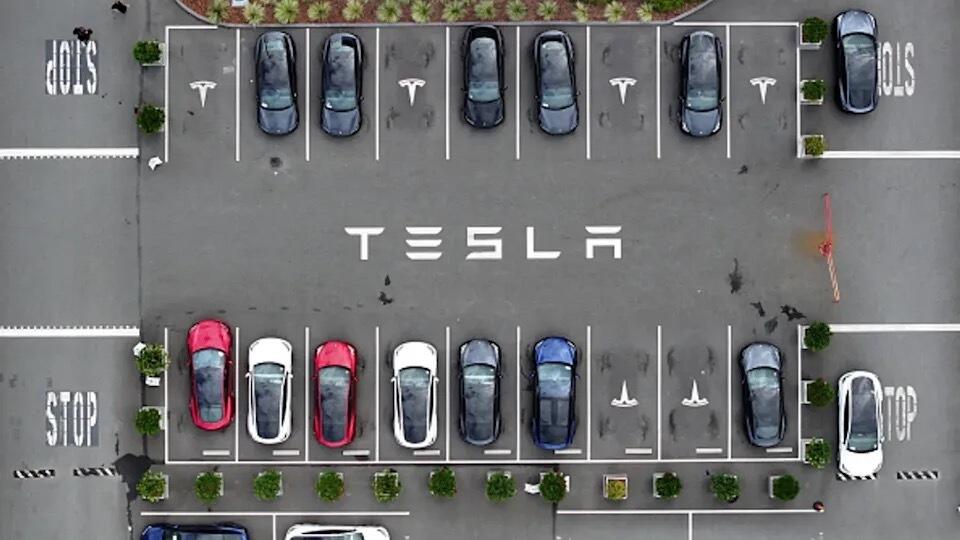
Lemonade CFO eyes self-driving car insurance, cross-selling growth
Founded in 2015, the New York-based insurance upstart is under financial pressure to meet profitability goals while also seeking to expand.
Lemonade CFO Timothy Bixby said the New York-based insurer is spending money to expand beyond its core renter and pet policies as it also balances profitability goals.
In a presentation at an investor conference last week, Bixby noted that there is at times a cost to cross-selling in order to win more business from existing customers — and to get them to add other offerings such as its insurance for homes or self-driving cars.
"There's not many folks who are driving many miles under fully autonomous [vehicles], but it's growing pretty rapidly," Bixby said Thursday at the KBW Insurance Conference, referring to the self-driving car insurance it launched in January for Tesla vehicles with full self-driving systems. "It's not a premium driver for us yet, but I would think of it as an indicator of where Lemonade is headed."
People
Grange Insurance CEO John Ammendola to retire | Insurance Business
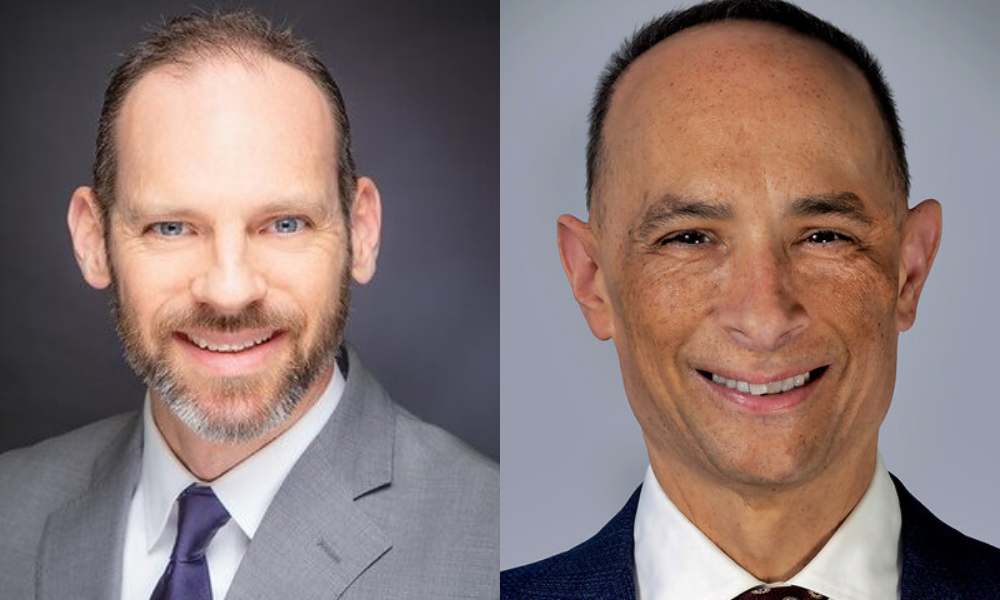
Grange Insurance has announced that Ryan Michel (pictured, left) will become the company's next chief executive officer effective March 1, 2027, succeeding John Ammendola (pictured, right), who is retiring after 12 years in the role and 16 years with the company overall.
Ammendola's broader P&C insurance career spans nearly four decades.
Marnette Perry, chair of Grange Mutual Holding Company's board, credited Ammendola with steering the mutual insurer through a difficult stretch while growing the business.
"John has been instrumental in propelling our transformation journey and ensuring the organization's ability to serve our policyholders well into the future. An enduring testament to John's leadership, we have navigated difficult challenges like the global pandemic, record inflation and seismic industry disruptions while growing profitably, further diversifying our business, and consistently maintaining our A.M. Best 'A' (Excellent) rating," Perry said.

Alex Wells selected as Zurich U.S. Chief Executive Officer
Zurich U.S., a leading commercial insurance provider, today announced that Alex Wells has been selected to serve as CEO of Zurich U.S., subject to customary approvals. Wells will lead Zurich U.S. effective immediately.
Wells ascends to the U.S. leadership role following the departure of Sierra Signorelli. He previously served as President of Zurich U.S. Middle Market, Programs, Captives and Direct Markets, which together comprise the largest business within Zurich U.S. This role included serving on the Zurich U.S. Executive Committee.
Wells is a seasoned commercial insurance executive with over 25 years of experience. He has led Zurich U.S. Middle Market for the past six years. He earlier held senior leadership roles in commercial insurance for Chubb and ACE.
Podcast Sponsor

Audio Version - 'Connected: The Podcast' --- Sponsored by Pulse Podcasts
The ‘Connected’ Podcast by Alan Demers and in dedication of Stephen Applebaum, is a condensed audio version of the day's ‘Connected' newsletter, a daily scan of all the happenings in the world of Insurance & InsurTech News.
Pulse Podcasts: Introduce a new way for your audience to hear your voice! We are a podcast creation service that helps businesses turn their written content, like blog posts and news articles, into beautiful podcasts. Our platform writes the script, records the voices, and mixes the audio to create engaging content for your audience. It's affordable and has super-fast turnaround!
LISTEN AND SUBSCRIBE BELOW
Recommended Events
Stop Guessing Why Your Claims AI Won't Scale - Take the Test
"Why do some claims AI pilots make it to production while others stall?
It’s not always the technology. Often, there’s a weak link elsewhere in the operation, from data and decision logic to workflow integration, governance or adjuster trust.
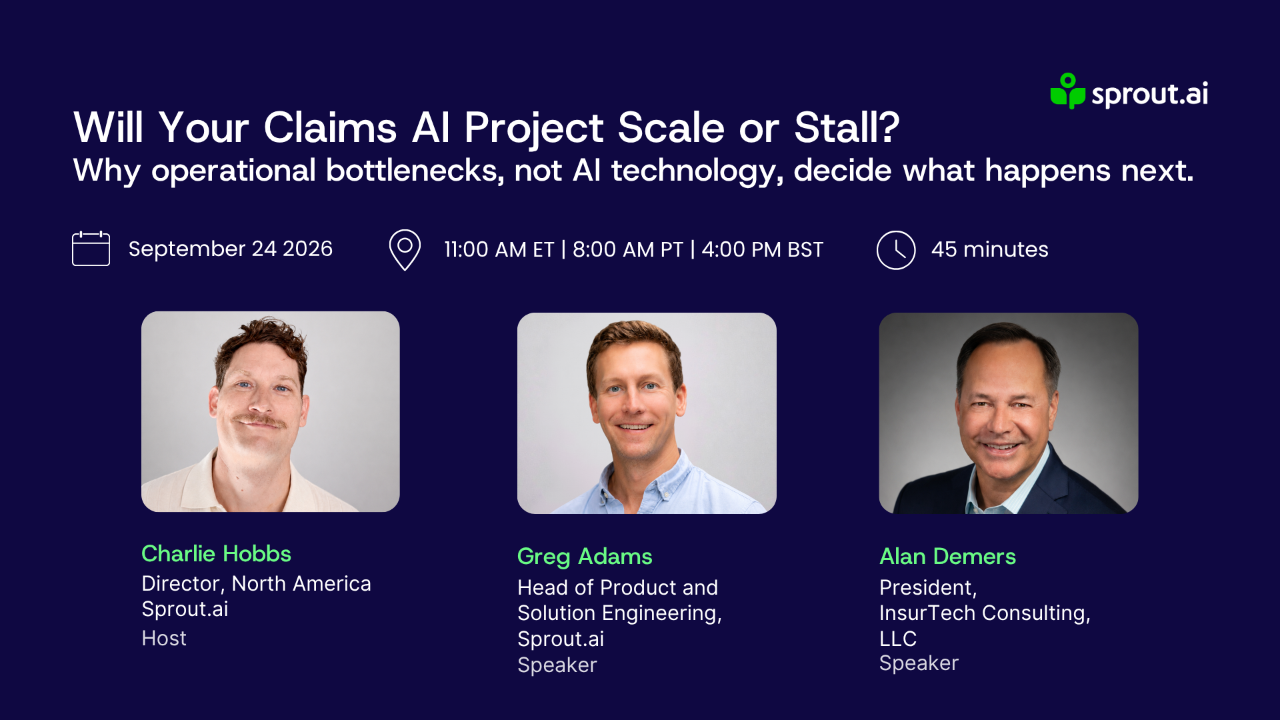
On 24th September, Alan Demers will join Charlie Hobbs and Greg Adams from Sprout.aito launch the Claims AI Readiness Test, a practical seven-dimension scorecard designed to identify the operational bottleneck most likely to stop your AI from scaling.
We’ll explore:
- Why claims AI projects stall
- The seven dimensions of readiness
- How to identify your weakest link
- Lessons from three real-world claims operations
Attendees will also get first access to the free digital scorecard, including a personalised radar profile and recommended next steps.
If you’re exploring, piloting or scaling claims AI, join us.
24 September | 45 minutes