
Financial Results
US P&C underwriting gains improved in H1’26, but performance varied by line of business and geography: Verisk - Reinsurance News
ICYMI
US property and casualty (P&C) insurers have posted strong underwriting gains of $31.7 billion through the first half of 2026, up from the $11.6 billion recorded through midyear 2025, according to Verisk and the American Property Casualty Insurance Association (APCIA) data, yet line-specific and geographic challenges persist.
Net written premium growth slowed to 2.1%, reflecting competitive market conditions as rate increases moderated. Policyholders’ surplus increased to $1.3 trillion, strengthening insurers’ ability to absorb future catastrophe losses and support long-term market stability.
Half-year profitability was also supported by higher investment income; however, catastrophe exposure remains elevated and continues to pose significant long-term risk.
News

How 9/11 rewired American insurance
And why Congress just extended its biggest fix for another seven years
On June 29, the US House of Representatives voted 373-15 to extend the Terrorism Risk Insurance Program through 2034. A Senate companion bill is pending. It's a routine-sounding vote on paper, but it's really Congress renewing, for the fifth time, a program built in direct response to a single morning in 2001 that changed more about how American insurance works than any event before or since.
Twenty-five years on, it's worth tracing exactly what changed, because the fixes Washington built in the weeks after the attacks are still the scaffolding the industry leans on today.
A loss shaped like nothing the models had seen
The attacks on the World Trade Center and the Pentagon killed nearly 3,000 people and produced, according to the Congressional Research Service, roughly $60 billion in insured losses in current dollars - spread simultaneously across property, aviation, life, workers' compensation and liability coverage.
Announcements
Agero, Through Its Urgently Acquisition, Partners with MOTER
Agero, Through Its Urgently Acquisition, Partners with MOTER to Advance Connected Vehicle Claims and Digital Driver Assistance
Agero, through its Urgently acquisition, announced a partnership with MOTER Technologies, Inc. (MOTER), an insurtech company that transforms connected vehicle data into real-time risk and claims insights. Together, the companies will deliver an integrated solution that connects roadside assistance, accident support, claims intelligence, and driver engagement to help insurers and automakers respond more proactively to vehicle incidents.
The collaboration pairs Urgently’s digital roadside assistance platform and Agero’s nationwide service network with MOTER’s connected vehicle intelligence, claims visualization, and driver risk technologies.
The integration enables connected vehicle incidents to trigger digital roadside and accident assistance automatically while simultaneously creating a data-backed claims package. By expediting first notice of loss (FNOL) and claim triage, the solution helps insurers shift from reactive claims handling to a more proactive, streamlined response model, reducing friction, limiting fraud exposure, and improving the policyholder experience.
Cyber Risk

Bloc Cyber Launches Specialty Cyber Insurance and
Bloc Cyber, a newly launched specialty cyber insurance brokerage headquartered in The Woodlands, Texas, officially opens its doors to serve regulated industries nationwide. The independent, carrier-agnostic firm provides access to over 100 specialty cyber carriers and delivers quote turnarounds in under 24 hours.
With compliance-mapped programs addressing HIPAA, CMMC, PCI-DSS, FERPA, GLBA, and SOC 2 requirements, Bloc Cyber simplifies risk management for healthcare, banking, legal, technology, education, energy, manufacturing, construction, and defense sectors across all 50 states.
Bloc Cyber officially launches as an independent cyber insurance broker designed to address the growing gap between accelerating cyber threats and the complexity of buying appropriate coverage. Organizations in regulated industries struggle to navigate competing carrier offerings while maintaining compliance with industry-specific frameworks. Bloc Cyber solves this challenge by combining carrier-agnostic access with plain-language policies and incident response support tailored to business-critical needs.
AI in Insurance

AI in Portfolio Management: A Tool, Not a Decision Maker
Farah Ismail examines how commercial insurers can apply AI to portfolio management without displacing disciplined analysis, governance and human judgment.
Portfolio management is a critical discipline for P&C insurers seeking sustainable profitability in an increasingly complex market. The principles apply across commercial auto, property, liability and specialty lines. Done well, portfolio management enables data-driven decisions that protect margins and guide growth, even when data is imperfect.
Insurers increasingly look to artificial intelligence (AI) to strengthen portfolio management capabilities. AI can help surface signals earlier, connect insights across functions and reduce the manual effort required to monitor a complex and evolving book of business. However, AI on its own does not create better decisions. Without clarity on what matters, how the portfolio should be steered and which trade-offs leaders are willing to make, even the most advanced tools risk producing noise rather than insight.

Three ways AI is reshaping independent insurance agencies
AI is changing the independent insurance channel right before our eyes. It’s happening so fast and so drastically that it can be hard to see where the end point is.
According toJames Thom, Vertafore’s Chief AI Officer, artificial intelligence provides a technological leap that results in more capacity for agents, which will fundamentally change agency work.
Here are three ways AI is transforming agency operations.
AI can give agents more capacity to be proactive Roughly 4 of 5 policyholders say they do not receive proactive outreach from their insurance agents. And proactive communication is key to for agents to gain trust and show their clients they’re looking out for them. CONTINUES
Claims

The Road Ahead for Auto Medical Cost Management
Auto medical costs are showing encouraging signs of stability after several years of rising severity, but maintaining that progress may be the bigger challenge.
In the latest Enlyte Envision podcast, Ed Olsen and Michele Hibbert explore findings from the auto casualty section of the Enlyte Envision Trends Report and what they mean for insurers. They discuss why the decline in allowed medical cost per claimant should be viewed as a positive signal rather than a permanent turning point, particularly as treatment patterns, unit costs and regulatory requirements continue to change.
Ed and Michele also examine how insurers can use data to identify claims at risk of becoming long-term, why regulatory differences can produce dramatically different outcomes across states, and how carriers can evaluate emerging treatments without sacrificing evidence-based cost management. Listen to the podcast to learn what insurers should be watching next and what it will take to sustain recent improvements in auto medical costs.
State News
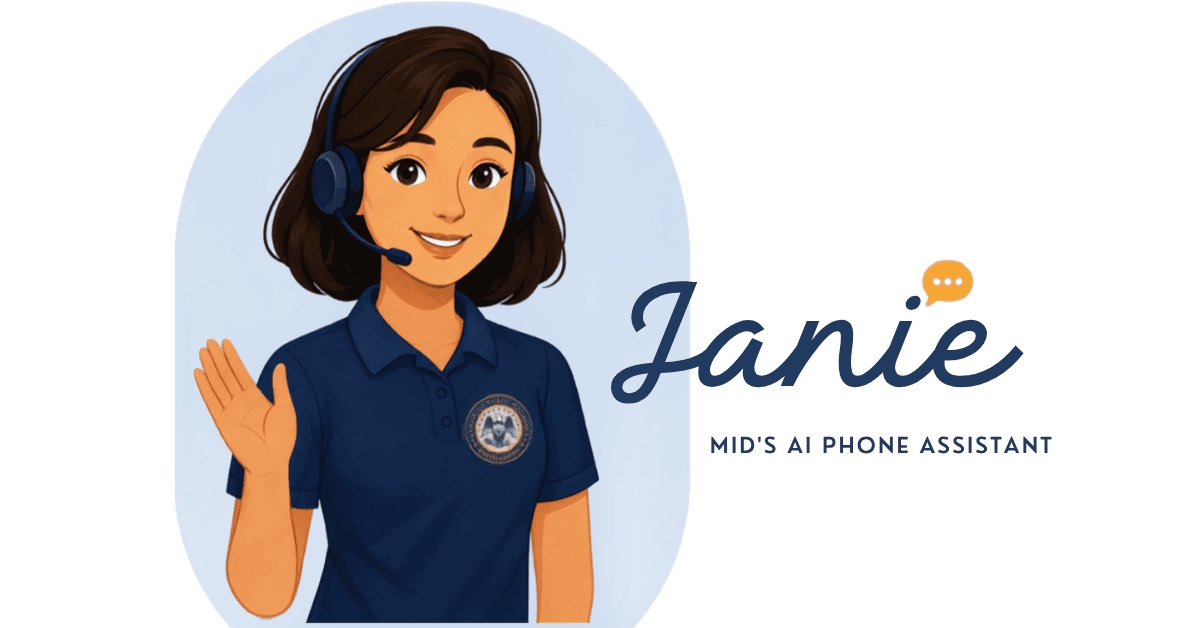
Insurance Commissioner announces AI assistant "Janie" to help public when filing complaints - Magnolia Tribune
Human customer service staff at the Mississippi Insurance Department will remain on hand for more complicated matters that require experience and a more personal touch.
Mississippi’s Insurance Commissioner announced Monday that his office has enlisted the help of an AI phone assistant named Janie. However, the office will continue to have human staff man the state agency’s customer service department.
Insurance Commissioner Mike Chaney said the Mississippi Insurance Department is giving the public another method to find assistance. Those needing assistance can call Janie by phone at (601) 843-6925 for help with filling out complaint forms.
“For some people, filling out an online form is easy. For others, it can be confusing or frustrating. Janie can walk consumers through the complaint process over the phone, step by step,” Chaney said.
Janie is powered by entratus.ai. The company touts over 25 years of experience in insurance, risk management, and enterprise tech.
Human customer service staff are said to be unaffected by the addition of Janie

New state regulations for auto insurers in bid to reduce costs
The state Department of Financial Services has introduced new regulations intended to limit the increase of auto insurance rates as part of a push by Gov. Kathy Hochul to reduce premium costs.
The regulation, published this week in the State Register, requires insurers to receive prior approval following a review from the department for any increase for auto insurance rates in New York. It builds upon guidance previously issued by the department directing auto insurance companies to disclose how new laws passed in the state budget earlier this year will lead to decreased rates.
“This regulation delivers on our commitment to strengthen consumer protections and give policyholders greater confidence that insurance companies are being held to clear standards,” Hochul said in a statement announcing the new regulation. “We are helping families and businesses make informed decisions and ensuring insurers remain accountable to their customers.”
Fraud
Digital Threats Are Hijacking the Insurance Claims Process
Bad actors are intercepting policyholders online before they ever file a claim, steering them toward litigation instead, according to Todd Kozikowski, CEO of 4WARN, on the Predict & Prevent® podcast.
The big picture:
- A hidden digital ecosystem — spanning public adjusters, lead generators, and cybercriminal networks — now operates in the moments right after a loss, before an insurer ever hears from the policyholder, Kozikowski tells podcast host Pete Miller, CPCU, CEO of The Institutes.
- This activity shapes whether a claim gets filed normally or escalates into litigation.
- 4WARN’s research into “digital claims instigation” grew out of questions about why litigated claims in Florida outpaced insurers’ market share.
How it works: Search ads, doppelganger websites, and manipulated AI-generated answers in search engine results intercept policyholders seeking help after a loss, often diverting them away from their actual insurer’s contact information, Kozikowski explains.
Podcast Sponsor

Audio Version - 'Connected: The Podcast' --- Sponsored by Pulse Podcasts
The ‘Connected’ Podcast by Alan Demers and in dedication of Stephen Applebaum, is a condensed audio version of the day's ‘Connected' newsletter, a daily scan of all the happenings in the world of Insurance & InsurTech News.
Pulse Podcasts: Introduce a new way for your audience to hear your voice! We are a podcast creation service that helps businesses turn their written content, like blog posts and news articles, into beautiful podcasts. Our platform writes the script, records the voices, and mixes the audio to create engaging content for your audience. It's affordable and has super-fast turnaround!
LISTEN AND SUBSCRIBE BELOW