
News
Property insurance market to remain competitive
Commercial property insurance buyers are expected to benefit from a more competitive market through the rest of 2026, according to a report released Thursday by brokerage Alera Group.
But commercial auto and excess liability remain the industry’s toughest lines as “social inflation” — higher court awards and settlements — continues to drive losses, the report said.
Overall commercial property/casualty premium growth averaged just 0.2% in the first half of 2026, the lowest level since 2017. Strong insurer balance sheets and record capital levels are fueling increased competition for business, the brokerage said.
Commercial property insurance rates are projected to decline by 4% on average for the rest of 2026. Buyers with favorable risk profiles outside catastrophe-prone areas are expected to receive the strongest pricing, while wildfire-exposed and other catastrophe risks will continue to face tighter underwriting, Alera said.

Soft P/C Market May Be Shallower Than Previous Cycles: Swiss Re
Global insurance premium growth is expected to slow sharply this year due to geopolitical uncertainty, supply chain disruption and continued inflation, according to Swiss Re Institute’s latest sigma report.
But Swiss Re said the current underwriting cycle may prove shallower than past soft markets as rising repair costs and growing catastrophe exposures limit pricing corrections.
Swiss Re forecasts that global P/C premium will grow only 0.6% in 2026, significantly below the long-term trend of 3.6% (2015-2024 CAGR), before recovering slightly to 1% in 2027.
Advanced markets are seeing a sharp deceleration in 2026, Swiss Re said, with real premium growth slowing to near zero compared to 3.9% in 2025, marking the weakest expansion in almost two decades. CONTINUES

Elliott Builds Stake in CCC as AI Insurance Firm Weighs Sale
Two threads worth tying together landed on the same day. Bloomberg reported that Elliott Investment Management has built a large stake in CCC Intelligent Solutions, the Chicago-based company whose AI-powered workflow software connects more than 35,000 participants across the motor insurance ecosystem, including insurers, vehicle repair shops, parts suppliers and original equipment manufacturers. The engagement is being led by investors from Elliott's private equity business, not its more public activist wing, which is a small detail with a big implication.
That detail matters because CCC has separately hired Morgan Stanley to advise on a sale process and has already reached out to prospective buyers, including private equity firms. Shares rose about 13% to $6.09 in after-hours trading on the sale report, and CCC's market capitalisation has fallen to roughly $3.3 billion from about $6.4 billion a year earlier. The reasons the reporting cites are pretty mundane for a growth software story: slowing revenue growth, weaker industry claims volumes, and slower-than-expected adoption of some of its newer software products.
Put those together and the shape of the trade looks familiar. Advent International took CCC public through a SPAC merger in 2021 and fully exited its investment in 2025, the multiple has roughly halved, an auction is already live, and Elliott is showing up through its PE arm. That is more consistent with a take-private path than a slow, loud proxy fight.

Counterfeit Air-Bag Parts Are Killing U.S. Drivers—and the Government Can’t Stop It - WSJ
The National Highway Traffic Safety Administration (NHTSA) is racing to stop more drivers from being killed or injured by air-bag parts it says appeared to originate from the Chinese manufacturer called Jilin Province Detiannuo Safety Technology, also known as DTN Airbag.
In a response to NHTSA in April, that company said it doesn’t do business in the U.S. Air bags have saved tens of thousands of lives, but they can pose dangers to drivers when improperly assembled replacements are installed in used cars whose original bags have deployed in a previous accident. Such replacements, sometimes labeled with counterfeit logos of American carmakers, are widely available online. That counterfeit supply chain has long been a concern for automakers, who employ teams to scour for fake parts out of reputational fear and to protect customers.
Announcements
Farmers Insurance® Introduces a Refreshing Approach to Understand Insurance
Farmers Insurance is introducing a series of changes, through a phased approach, designed to make insurance easier to understand and more transparent for consumers. The enterprise-wide effort reflects a continuing commitment to helping consumers better understand their options and make more confident coverage decisions before they need it most.
"The strategy is grounded in a simple belief: our customers' insurance coverage should be easy to understand, with no jargon, no big words, and no lawyer needed to make sense of it," said Eleanor Solomon, Head of Creative for Farmers Insurance. "Farmers is introducing tools that help make insurance easier to navigate—highlighting what is and is not covered, offering coverage reviews even if your policy is with another insurer, and, in some cases, helping consumers explore alternatives when Farmers isn't a fit for them."
Changes include the new Farmers Coverage on a PageSM resource, a snapshot of coverage included in select Farmers auto and home policies designed to plainly show what's covered and what's not.
AI in Insurance
The AI Revolution Comes to the Insurance Industry. Look Who’s Winning. - Barron's
The Norwegians are taking over America.
There’s Erling Haaland, the giant Viking king of Norway’s streaking World Cup soccer team with its legion of rowing fans. (They play England on Saturday.) And did you see fellow Norwegian Viktor Hovland win the Travelers Championship last month in a sudden-death playoff over Scottie Scheffler, the top-ranked player in the world? The gallery roared as Hovland sank a birdie putt to clinch his eighth PGA Tour title. Congratulations, too, came from Travelers CEO Alan Schnitzer, who handed Hovland the trophy (and a $3.6 million check to boot).
Dig a little bit deeper, though, and you might think Schnitzer deserves a trophy, too. Not for his golf, mind you—he’s just so-so at that—but for what he’s doing at his day job running that iconic property-and-casualty insurer. OK, I admit, this is just a way into a story that’s actually about insurance, but bear with me because this old-school company upping its game is pretty amazing stuff.
Travelers (yup, they of the red umbrella) has been through the wars, both in terms of a stressed business model and a convoluted history. Given a rudimentary awareness of the P&C insurance business environment—which is to say on the one hand catastrophic weather, higher claim costs, and inflation, and on the other hand investors’ infatuation with all things AI, hyperscalers, and chips—you could be forgiven for thinking Travelers stock would be a market laggard, and maybe by a wide margin. If so, you would be quite mistaken.

Building the AI-Augmented Claims Workforce
[Ed. Note: This is a thoughtful piece about how AI in insurance claims is calling for new skills and talent- recommended reading]
While technology increasingly automates routine claims evaluation, the future of the profession relies on leadership actively upskilling existing teams in uniquely human, higher-order capabilities like AI literacy, negotiation science, data interpretation, and emotional influence.
For most of the last 40 years, we’ve known exactly what made a good claim professional. Read the policy. Establish coverage. Assess liability. Value damages. Those four competencies defined the craft, and the professionals who mastered them built careers on it. Our industry’s leaders have hired, trained, and promoted against that profile for years.
That profile is not wrong. It is just no longer sufficient.
The work of evaluating coverage, liability, and damages is not disappearing, but its routine forms of practice are being absorbed by technology faster than most claims organizations have planned for. What separates strong claim practitioners from average ones is migrating to a different layer of the job. Over the next five years, the competitive question will not be whether your people can evaluate a claim. It will be whether they can do the things software cannot.
Taylor Smith, founder and president, Suite 200 Solutions
State News
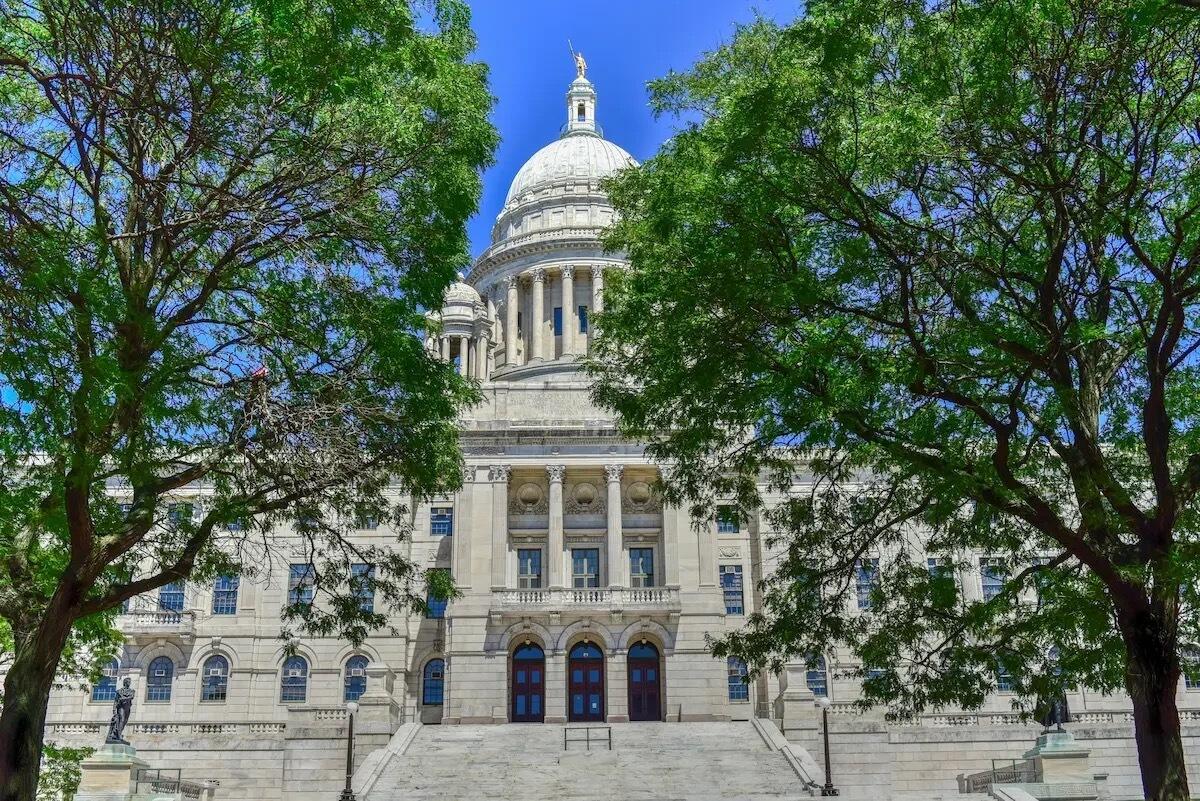
Rhode Island Total Loss Threshold Law Takes Effect - Autobody News
New law raises the state's total loss threshold to 85%.
A bill that raises Rhode Island's vehicle total loss threshold from 80% to 85% has become law after Gov. Dan McKee allowed it to take effect without his signature. A higher threshold keeps more vehicles with extensive damage in the repairable category rather than diverting them to salvage, directly affecting the volume of work collision repair shops receive.
Senate Bill 3115 amends Rhode Island's Unfair Claims Settlement Practices Act to raise the point at which an insurer may declare a vehicle a total loss from 80% to 85% of its pre-accident fair market value. Under the law, an insurer cannot declare a vehicle a total loss unless repair costs exceed 85% of the vehicle's fair market value immediately before the accident, according to the bill text.
THRESHOLD TAKES EFFECT WITHOUT GOVERNOR'S SIGNATURE
Homeowner, auto insurance reform bills arrive on Pritzker’s desk - Capitol City Now
The Illinois Insurance Association told WAND News this change could cause homeowner insurance premiums to increase up to 20% or $230.
Two major insurance reform plans have arrived on the governor’s desk just weeks after tornadoes and other intense storms ripped through central Illinois. Lawmakers hope to protect consumers from unfair rate hikes for homeowner and auto insurance.
House Bill 4273 could ban insurance companies from increasing homeowner insurance premiums by more than 10% without notifying consumers 60 days in advance. It also prohibits home insurance premiums from being excessive, inadequate, or unfairly discriminatory.
“The average Illinois homeowner now pays well over $3,000 annually for coverage,” said Sen. Michael Hastings (D-Frankfort). “Those aren’t just numbers on a page. These are real people in Frankfort, Springfield and Chicago and every community in between, who are forced to choose between paying their insurance premium and covering groceries.”
However, the Illinois Insurance Association told WAND News this change could cause homeowner insurance premiums to increase up to 20% or $230.
“The more regulatory burdens you put on through legislation, that will do nothing more than increase costs and increase premiums that people are going to have to pay,” said Illinois Insurance Association Executive Director Kevin Martin.
InsurTech/M&A/Finance💰/Collaboration
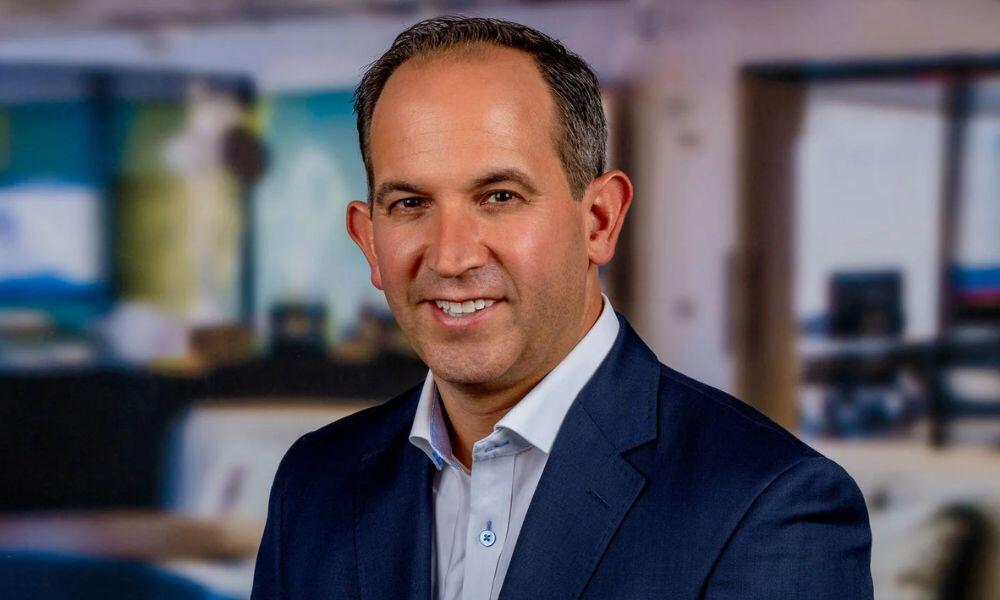
Insurance M&A market ‘ripe’ for larger deals in second half of 2026: EY leader
Competitive pressure could drive larger transactions before year-end
The insurance market remains “ripe for M&A activity,” with competitive pressure and the time required to assemble larger combinations likely to push major announcements into the latter part of the year, according to Jeremy Spier (pictured), EY-Parthenon Americas Insurance Sector Leader.
Spier expects more megadeals to emerge during the second half of 2026 following a relatively quiet opening six months for transactions valued above $1 billion. “We obviously saw a bit of a slowdown in those during the first half of 2026, but I think we’ll see a couple of them happen in the second half of the year,” he told Insurance Business.
Some of the delay reflects the complexity of completing major combinations, as well as the need for companies to absorb and respond to large transactions announced during 2025.
“There is a bit of a buildup as people continue looking at valuations and at some of the megadeals and think, ‘What do I have to do to keep up? What sort of megadeal do I need to do to keep up with my competitors?’” Spier said.
Mile Auto Acquires Insurance House to Scale AI-Driven Pay-Per-Mile Insurance Platform
Mile Auto has acquired The Insurance House to create a diversified pay-per-mile auto insurance platform. The deal combines Mile Auto’s patented AI technology with Insurance House’s 62-year MGA heritage, serving 55,000 policyholders and 1,600 agencies with nearly $100 million in annual premiums across the Southeast United States.
How Does the Mile Auto Acquisition Benefit Independent Agents?
Independent insurance agencies gain immediate access to a more robust, technology-enabled platform that blends traditional underwriting expertise with modern pay-per-mile auto insurance solutions. By merging Mile Auto’s AI-driven tools with The Insurance House’s established network, agents can offer more personalized, privacy-focused pricing to their clients. Key benefits for the distribution network include:
- Access to patented computer vision technology that eliminates the need for invasive telematics hardware.
- A combined reach of 1,600 independent agencies across 10 states, primarily in the Southeast.
- Continued support from Southern General Insurance and Cimarron Insurance Company, ensuring stable underwriting capacity.