
News

Update: Best's Rankings: Progressive Moves Into Top Spot for US Private Passenger Auto Liability, Top P/C Line
U.S. property/casualty 2025 direct premiums written by line in 2025 rose 5%, compared with the prior year, to reach $1.11 trillion, according to a new Best's Rankings report.
In the largest line, private passenger automobile liability, Progressive Insurance Group took the top spot, with a market share of 19.9% with 49.9% of its premiums coming from the line, according to the report. State Farm Group, which took second place, held a 17.9% market share and the line accounted for 32.8% of its total DPW.
The line industrywide accounted for DPW of about $211 billion in 2025, which was up 5.1% from the prior year, according to the report. It accounted for 18.9% of all P/C DPW.
Rounding out the top three lines, No. 2 homeowners multiple peril had DPW of $188.87 billion in 2025, which was up 9.1% and accounted for 17% of industry DPW. Automobile physical damage took third place with $177.39 billion in 2025 DPW, up 1.3% and 15.9% of industry DPW. State Farm took the top spot in each, with market share of 18.7% and 17.9%, respectively. Homeowners multi-peril accounted for 30.6% of its total DPW and auto physical damage was 27.5%, according to the report.
Allstate Insurance Group took the No. 2 spot in homeowners multi-peril with a market share of 9.4%, while the line accounted for 29.9% of its total DPW, according to the report. Progressive was second in auto physical damage, with a market share of 16.5% in 2025 and the line accounting for 34.8% of its total DPW.
The ranking includes DPW by line, top and second-place writers, line's percent of total market, percent change from the previous year, adjusted loss ratios for 2025 and 2024, percent of market share and percent of writer total DPW for lead and second writers.
State Farm blinked. That doesn't mean their agents won
Three weeks of agent fury has forced a partial concession from the insurance giant. Everything else still stands
On June 12, State Farm's chief agency, sales and marketing officer Kristyn Cook sent a video message to the company's 19,000 exclusive agents. It was a partial concession. The Annual Investment Payment Programme - the deferred compensation scheme that many agents had relied on as their primary retirement vehicle - would not end immediately after all. Agents would receive AIPP payments in 2026, 2027 and 2028. From 2029, payments would be tied to sales performance targets; the formula for calculating them would be disclosed in the coming weeks.
The reversal, first reported by P&C Specialist on June 15, was genuine. It was also carefully circumscribed. The elimination of health insurance for agents and their spouses stands. The shift from trailing renewal commissions to new-business incentives stands. The requirement to sign a new contract by 2028 or accept a buyout of $50,000 to $300,000 - payable at State Farm's discretion - stands. The $400-a-month Medicare supplement for retired agents ends in December regardless. Three years of extended AIPP payments, with sales targets attached from year four, is what the backlash produced.
Research

Conning Viewpoint Examines Investment Strategy as the Next Differentiator for P&C Insurers
Conning has released a new viewpoint, The Next Differentiator: Investment Strategy in the Evolving P&C Market, examining how P&C insurers are adapting portfolios as underwriting conditions become more competitive and the tailwind from rising interest rates begins to fade.
Drawing on Conning's analysis of P&C insurer investment portfolios, the viewpoint highlights trends including evolving asset allocations, increased adoption of structured securities, greater use of private placements and collateralized loan obligations (CLOs), and growing interest in private credit and asset-based finance strategies.
"As market conditions evolve, investment strategy may become an increasingly important differentiator among insurers," said Matt Reilly, Managing Director and Head of Insurance Solutions at Conning. "Insurers today have access to a broader range of investment opportunities, creating new ways to enhance portfolio income, diversification, and capital efficiency."
AI in Insurance

5 Principles for Insurers: Testing Agentic AI’s Next Wave
Executive Summary
The distance between AI experimentation and real operational impact is shrinking fast, writes Xceedance's Priti Joseph, offering a key takeaway from the introduction of personal AI assistant OpenClaw for insurers. Suggesting that insurers need to pay attention to direction of technology, even if new tools are immature and not enterprise-ready, Joseph offers five steps to help them build the institutional muscle to continuously test, learn, adapt and scale.
Among other recommendations, she describes the role of translators, who sit at the intersection of business operations and technology, and urges the use of centralized repositories of AI product learnings.
Translators, grounded enough in insurance workflows "to know what actually matters," can be drawn from within—made up of professionals on existing process excellence and operational teams, upskilled with AI literacy and prompt design.
In AI product repositories, teams can share reusable prompts, workflows, code libraries and implementation learnings—avoiding duplicated work, fragmented governance and innovation slowdowns. FULL ARTICLE

Orbital AI data centers begin insurance talks as space industry eyes new frontier
Space-based AI data centers are in early talks with insurers as Musk/Bezos-backed orbital computing gains traction.
Companies developing space-based data centers have begun discussions with insurers, an early step toward turning a futuristic concept championed by Elon Musk and Jeff Bezos into a viable business, Reuters reported Thursday, citing industry sources.
The idea of placing AI-powered data centers in orbit has gained momentum in recent months, particularly after Musk described orbital computing infrastructure as a long-term solution to the growing power demands of artificial intelligence. Supporters argue that moving data centers into space could help overcome terrestrial energy constraints.
Securing insurance will be a key hurdle. Coverage is often required before lenders are willing to provide the debt financing needed to fund large-scale infrastructure projects.
Blue Origin (BORGN), along with startups including Orbital (OBTEF), Starcloud, Lonestar Data Holdings and Cowboy Space, have all expressed interest in developing orbital data center networks.
According to insurance brokers, underwriters and industry executives, conversations about how such facilities might be insured are already underway, though the market remains in its infancy. Marsh said several companies have approached insurers to explore potential coverage structures, while Lonestar recently hosted a briefing for insurers at Lloyd's of London.
The space insurance market already covers launch failures, satellite malfunctions, orbital debris and space weather, generating roughly $500 million in annual premiums. But orbital AI infrastructure presents new challenges, particularly because insurers have little historical data on the technology.
Industry participants say current discussions are focused less on pricing and more on determining whether the risks can be modeled at all. Questions remain about how to value rapidly evolving AI hardware and how advanced chips would perform in the harsh environment of space.
Claims

Triple-I: Lightning Caused $1.65 Billion in US Homeowners Claim Payouts in 2025; Average Cost Per Claim Surges Nearly 43% -
U.S. insurers paid an estimated $1.65 billion in lightning-related homeowners insurance claims in 2025, a 59% increase from the $1.04 billion paid in 2024, according to the latest figures from the Insurance Information Institute (Triple-I).
The total number of lightning-caused claims also rose in 2025, increasing 11.6% to 61,986 claims from 55,537 the prior year. While the number of claims increased modestly, the average cost per claim surged 42.8% to $26,616, reflecting higher rebuilding and repair costs, inflation-driven increases in labor and materials expenses, and the growing value of increasingly sophisticated home electronics and connected devices.
Florida, California and Texas led the nation in the number of lightning-related homeowners insurance claims. Texas recorded the highest average cost per claim among the top states at $60,382 per claim.
“The sharp increase in average claim costs reflects broader trends affecting homeowners across the country, including rising reconstruction costs, inflation, the growing value of property and technology inside the home, as well as litigation abuse,” said Triple-I CEO Sean Kevelighan. “These trends are making lightning-related losses more expensive and underscore the importance of preparedness and resilience.”
In recognition of National Lightning Safety Awareness Week (June 21-27)
Commentary/Opinion

License Plate Cameras Will Soon Track Phones, Wearables, Infotainment, and Even Your Pets
A new kind of license-plate-reading camera will also scrape the smart devices you take with you, and wrap all that data in a nice little bow for law enforcement and the government.If data brokers can track the devices you take with you, they know where you live, where you go, and what you do.
And the stakes are only poised to climb higher, now that surveillance companies that sell automatic license plate readers (ALPRs) are getting in on the game. Defense contractor Leonardo is promoting a new technology called SignalTrace that will package plate cameras with sensors that can scrape unique identifiers tied to your smart devices and make that data available to law enforcement.
A recent report by 404 Media dives into the objective of SignalTrace and how it’s being marketed to authorities. Police, border security, and other government agencies already comprise Leonardo’s customer base, and with this technology, those clients seek to correlate footage from these cameras to phones, tablets, wearables, AirTags, and, naturally, the electronics inside cars themselves.
State News
Stand Launches Florida Hurricane Insurance Program Built to Strengthen Homes, Not Just Cover Them
Stand today launches its first open market hurricane insurance offering in Florida, a program built on a straightforward idea: understand what makes a home more vulnerable to hurricanes, connect homeowners with the improvements that matter most, and reduce their premiums based on those changes.
Traditional insurers price risk by zip code based on past disasters. But storms are getting more severe and frequent, and the past no longer predicts the future. Stand's approach is rooted in understanding what makes individual homes more resilient to the specific hazards they face.
Here's how it works:
Simulate: The Stand World Model uses physics-based analysis to understand how catastrophes interact with individual structures down to specific property features and how they affect survivability. The model was developed and validated in California's wildfire-prone communities, and now, Stand is deploying this same approach for hurricane risk in Florida.
Fire Survivors Seek Formal Role in State Farm Claims-Handling Enforcement Proceeding, says Consumer Watchdog
Consumer Watchdog today joined Every Fire Survivor's Network (EFSN), Michelle Meyers, a partner at Singleton Schreiber, and wildfire survivors at Palisades Charter High School as EFSN announced its petition to intervene in the California Department of Insurance enforcement proceeding against State Farm General Insurance Company over its handling of claims from the January 2025 Eaton and Palisades Fires.
In the petition, EFSN, represented by Michelle Meyers of Singleton Schreiber and Consumer Watchdog, seeks full party status in the proceeding, including the right to receive filings, conduct discovery, present evidence, cross-examine witnesses, submit briefing, present oral argument, and participate in pre-hearing conferences and settlement discussions.
Survivors at today's press conference described delays, denials, lowball estimates, repeated adjuster changes, and other barriers that they say have slowed their ability to rebuild and return home. EFSN also asked that evidentiary hearings be held in Los Angeles County, where the fires occurred, where the affected properties are located, and where survivor witnesses live.
InsurTech/M&A/Finance💰/Collaboration
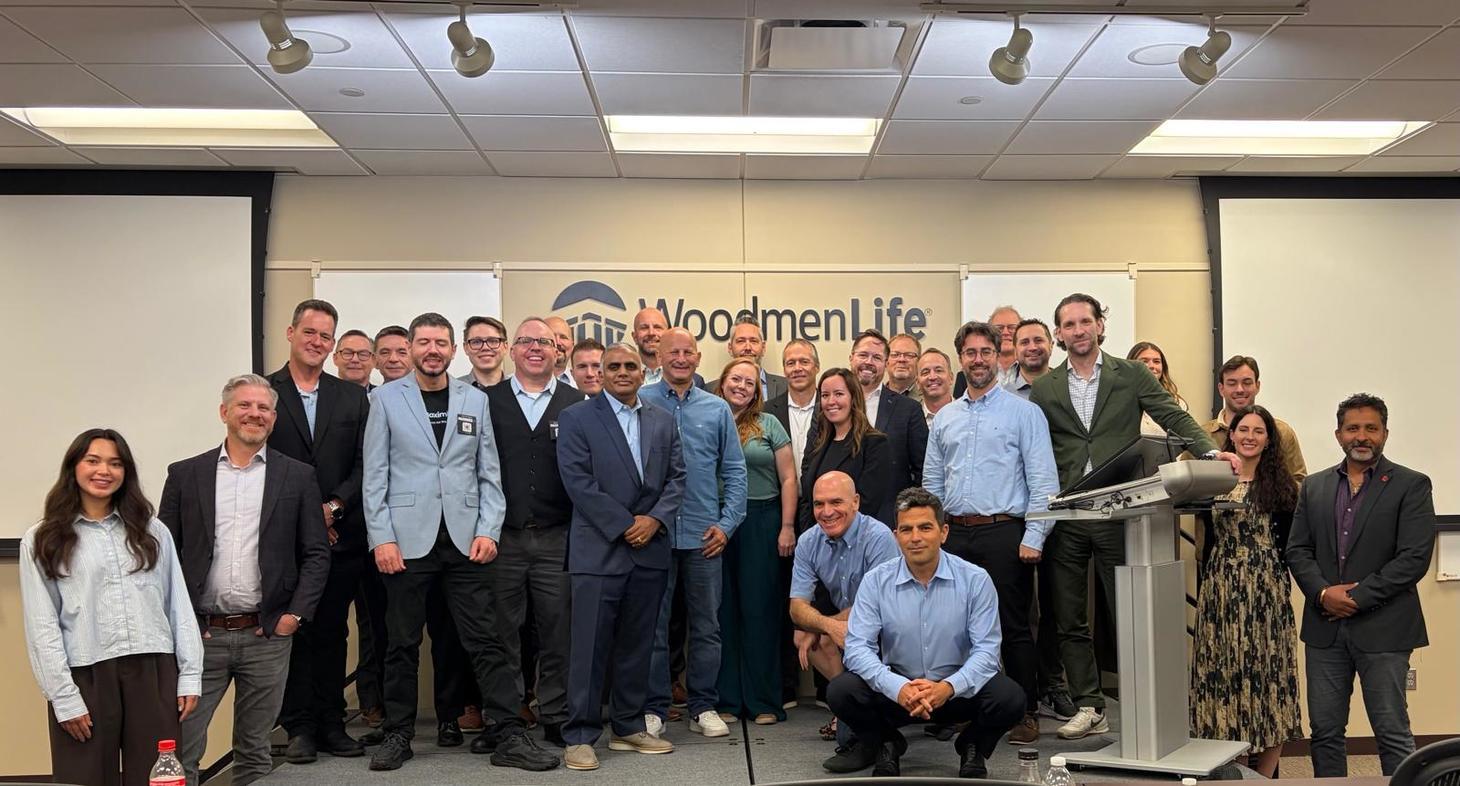
From New York to the Heart of the U.S. Insurance Industry: InsurTech Israel’s 2026 U.S. Delegation and Roadshow
For more than a week, InsurTech Israel led one of its most ambitious international initiatives to date – combining participation in InsurTech Insights New York with an exclusive four-day roadshow across the United States, providing Israeli startups with direct access to some of the most influential insurance companies in the world.
The delegation brought together nine innovative Israeli startups: Cantora, GEOX.ai, Nolona AI, SettWiz, Maximizer AI, Miss Moneypenny Technologies, Hear.ai, Toonimo, and LepreCon.
Together, they embarked on a journey that went far beyond traditional conference networking. The goal was simple but powerful: create meaningful face-to-face meetings between Israeli entrepreneurs and senior decision-makers from leading U.S. insurers.
Starting in New York: The Global Stage of InsurTech
The journey began at InsurTech Insights New York, one of the world’s leading insurance innovation conferences.
At the Israeli Pavilion, organized by InsurTech Israel, the startups held dozens of meetings with insurers, brokers, investors, reinsurers, and innovation leaders from around the globe. The conference provided valuable exposure, but it also served as the launching point for the next phase of the journey.
While many delegations return home after the event, our startups boarded planes and buses and headed directly into the heart of the American insurance industry.MORE
Legal System Abuse/Social Inflation
Ohio House Passes HB 105 to Bring Transparency and Accountability to Third-Party Litigation Funding
COLUMBUS—State Representatives Meredith Craig (R–Smithville) and Jim Thomas (R-Jackson Township) this week announced the Ohio House of Representatives passed House Bill 105, legislation to reform Ohio’s third-party litigation funding practices to protect consumers, strengthen Ohio’s legal system, and improve the state’s business climate.
“The business of nonrecourse litigation funding has operated without guidelines for too long,” said Rep. Craig. “House Bill 105 protects our judicial system from outside influence, guards against interference, and will ensure that justice in Ohio is never for sale to foreign actors.”
House Bill 105 establishes a comprehensive regulatory framework for nonrecourse litigation funding, a growing practice where third-party companies advance money to plaintiffs, law firms, or businesses in exchange for a share of any future lawsuit recovery. The bill creates a uniform registration and oversight system under the Attorney General to bring greater transparency to this practice.
The legislation aims to prevent hidden actors or anonymous funders from influencing legal outcomes behind the scenes.