
News

Global InsurTech funding extends decline as investment falls 50% in April
Global InsurTech investment cooled further in April, with eight deals raising approximately $119m, marking another step down from March’s already subdued $237m.
That represents a roughly 50% month-on-month decline in funding, reinforcing the sharp pullback seen since February’s $1bn-plus peak and underlining a clear contraction in both capital deployment and deal volume.
Unlike earlier in the year, April was defined entirely by smaller rounds, with no deals exceeding $100m for the first time this year.
This also sits in line with a broader structural shift in deal composition across the sector from 12 months ago. Research from FinTech Global shows that deals over $100m plummeted by 85% in H1 2025, falling to $275m from $1.9bn in H2 2024, as investors pulled back from larger, later-stage commitments.
The largest raise of the month came from US-based Counterpart, which secured $50m in a Series C round to expand its AI-driven underwriting and risk platform. The deal accounted for a substantial share of the month’s total and highlights the continued investor preference for specialist, data-led insurance models.
Climate/Resilience/Sustainability

Kin Secures $335 Million Catastrophe Bond, Its Largest and Most Expansive Yet
Kin Insurance, the direct-to-consumer digital home insurance provider, today announced the successful completion of its largest-ever catastrophe (CAT) bond: a transaction through Hestia Re Ltd. (Series 2026-1) totaling $335 million across four bonds that secures multi-year financial protection for homeowners against major storms.
Catastrophe bonds raise funds from institutional investors who agree to cover losses if storm damage exceeds a set threshold, giving Kin stable, long-term backing. This is Kin's fourth such CAT bond placement, and by every measure, its best.
Kin Insurance, the home insurance provider, announced its largest-ever catastrophe (CAT) bond totaling $335 million.
"This is our fourth catastrophe bond, and with each one, the terms improve while investor demand grows," said Kin Founder and CEO Sean Harper. "This year's deal is our largest yet, covering more of the country than ever before, and achieving our best pricing to date. Our CAT bonds have historically outperformed other similar CAT bonds, which drives investor demand."
Financial Results

Hagerty Reports First Quarter 2026 Results; Reaffirms 2026 Growth Outlook
- Completed strategic evolution to assume control of Markel program and 100% of premium post transition to fronting arrangement
- Policies in force increased 15% to 1.8 million with a record 112,000 new policies added in the first quarter
- Earned premium increased 42% to $240 million
"First quarter results and the breadth of momentum across our ecosystem give us increasing confidence in our full year outlook that we reaffirmed today. We delivered 18% written premium growth in the first quarter, ahead of our full year outlook, and earned premium growth of 42% with the January 1, 2026 increase in quota share to 100%. 2026 is performing better than expected economically, even if the financial presentation looks different as we transition to the new Markel Fronting Arrangement. The presentation is different but the business is not, as we delivered another quarter of record growth," said McKeel Hagerty, Chief Executive Officer and Chairman of Hagerty.
AI in Insurance

The moment of AI truth for property & casualty insurance: trailblazers see 21% higher revenue growth while broader industry lags - Capgemini
Property & casualty (P&C) insurers face a widening competitive divide, with only 10% of the industry successfully scaling AI, while others struggle to capture meaningful benefits.
Now in its 19th edition, the Capgemini Research Institute’s World Property & Casualty Insurance Report 2026 suggests the AI maturity gap can be partly explained by the fact that 42% of insurers track no AI metrics. Without a way to measure and validate what works, 60% of insurers remain in the exploration or proof-of-concept stage.
The report shows only a small cohort of insurers are currently treating AI as a core operating capability, rather than a set of tools, by ensuring alignment across strategy and talent, technology foundation, and organizational adoption simultaneously. These insurers are defined as “intelligence trailblazers,” achieving up to 21% higher revenue growth and approximately 51% greater increase in share price over three years.
According to the report, trailblazers distinguish themselves from mainstream insurers in several ways. These organizations are nearly four times more likely to invest in change management beyond basic training; nearly three times more likely to have explainable AI infrastructure that drives enterprise-wide confidence; and nearly twice as likely to ensure AI responsibilities are embedded directly into job descriptions creating accountability.

Ethos Launches ChatGPT App To Bring Instant Life Insurance Estimates to 900 Million Users | Markets Insider
Ethos Technologies Inc. (NASDAQ: LIFE), a leading life insurance technology company on a mission to democratize access to life insurance, today announced the launch of its native ChatGPT app, becoming the first life insurance provider to build a dedicated experience directly inside the world's most-used AI assistant. The integration is now available via the ChatGPT app store.
"Life insurance is one of the most important financial decisions a family can make, yet it's historically been one of the most opaque and intimidating,” said Prassath Leelakrishnan,Chief Growth Officer of Ethos. “At Ethos, our focus is on removing that friction and meeting people where they are. As more consumers turn to AI to get answers, the Ethos ChatGPT app allows us to deliver clear, personalized information instantly—so families can take action to protect what matters most.”

Insurity Challenges AI Hype in Insurance Core Systems, Calls on Insurance Carriers to Demand Real Cost and Timeline Reductions from Core System Vendors
Insurity, a leading provider of cloud-based software for property and casualty insurance carriers, brokers, and MGAs, today called into question the wave of “agentic AI” announcements from legacy core systems vendors that promise more intelligence but leave carriers with the same long timelines and heavy services bills.
Insurity is instead focusing AI on the key outcome that matters to commercial and specialty carriers: radically lowering the cost and time it takes to launch and maintain insurance products in core systems.
“AI was supposed to reduce cost for carriers, not add a new line item to their vendor and SI invoices,” said Jatin Atre, President at Insurity. “I urge every carrier CEO and CFO to stop and ask a simple question: why, in 2026, with all this AI, are we still paying so much and spending so long to set up a new insurance product in our policy administration software? Why does it take an army of system integrators? If AI is just filling the coffers of software companies and their implementation partners, it has missed the plot. Stop signing contracts, extensions, and expansions. Call us. Our AI will reduce your costs, let you control your timelines, and finally put the benefit where it belongs: with you, the carrier.”
Claims
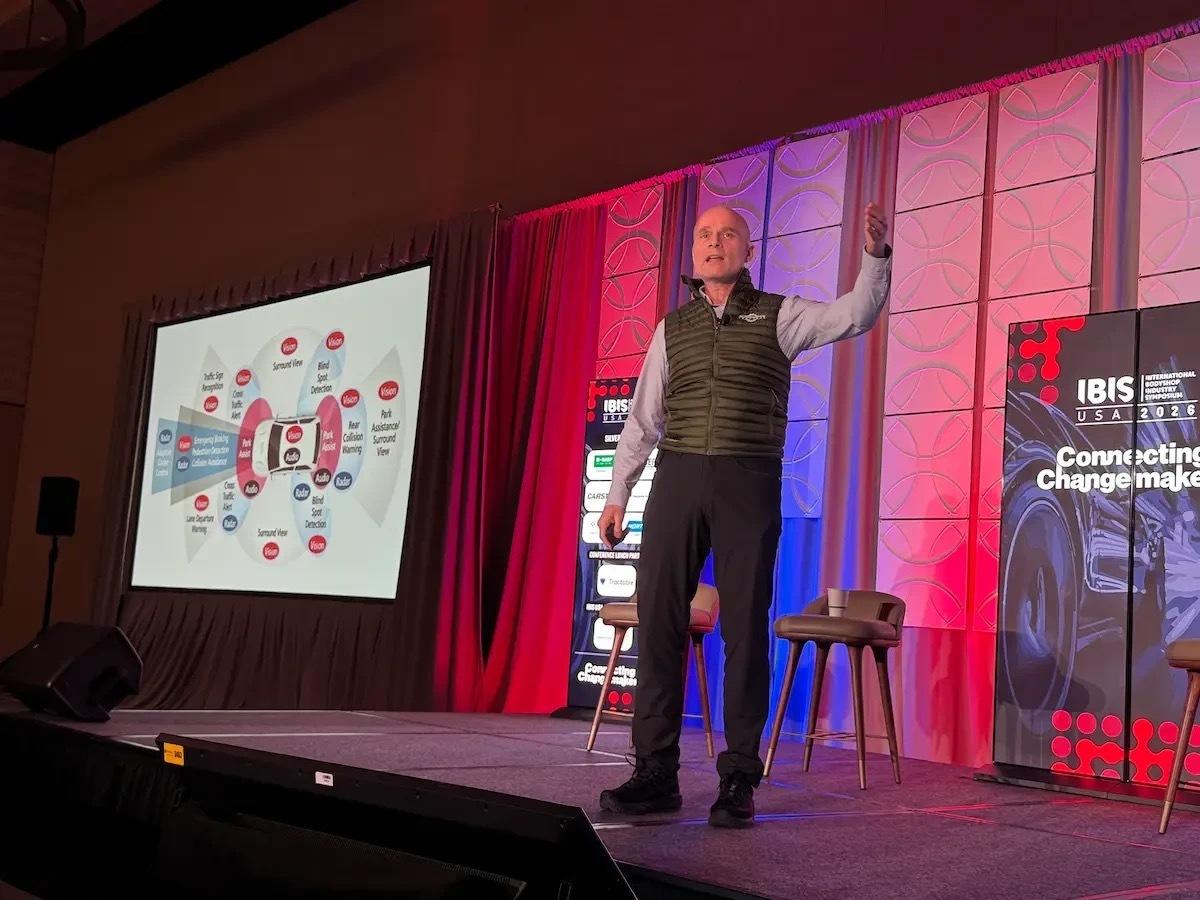
Top Trends Defining the Future of Collision Repair - Autobody News
In a presentation he described as “a little controversial and provocative,” futurist Steve Greenfield provided insight into what the future might hold for collision repairers during the recent IBIS USA 2026 conference in Scottsdale, Ariz.
Greenfield, a general partner at Automotive Ventures and author of two books "The Future of Mobility" and "The Future of Automotive Retail," discussed "what's front and center for the industry changemakers" and future trends to anticipate. These included increasing vehicle complexity, the possible entry of Chinese vehicles to the U.S. market, the rise of autonomous vehicles, and artificial intelligence (AI).
VEHICLES ARE GETTING HARDER — AND COSTLIER — TO REPAIR
Greenfield pointed out how much automotive technology has changed in just a decade. “The complexity of cars continues to increase and there's no slowing this down,” he said.
According to data Greenfield shared from PwC (Statista), automotive electronics are expected to be half the cost of building a car by 2030. As a result, vehicle repairs are increasingly becoming more complicated.
Those who plan to work on the sophisticated cars of the future, according to Greenfield, will need technicians with the right skills.
Specialized tooling will also be required as parts and vehicle construction become more complex.
State News
California moves to penalize State Farm for delaying, underpaying wildfire claims
The California Department of Insurance is hoping to level penalties against State Farm after it found the insurance company excessively denied, delayed and underpaid claims filed by survivors of the 2025 Los Angeles wildfires.
“Survivors deserve a fair, timely recovery, not obstacles and delays,” Commissioner Ricardo Lara said in a statement released Monday.
The Palisades and Eaton fires burned through more than 37,000 acres from Jan. 7 2025 to Jan. 31 2025. They killed at least 29 people and razed more than 16,000 structures.
The recent action is spurred by the results of a “Market Conduct Examination” initiated last year, which found that out of a sampling 220 claims processed by the insurer, 114 contained violations of state law, ranging from investigation timelines stretching longer than permitted to smoke damage claims being denied without requisite tests.
In a legal document filed against State Farm, the department seeks millions of dollars in financial penalties, as well as a temporary suspension of the company’s ability to conduct business in the state.
Telematics, Driving & Insurance

OCTO and Sedgwick Announce Strategic Telematics Partnership
OCTO, a global leader in telematics and data analytics, today announced a strategic partnership with Sedgwick, the world’s leading provider of claims and risk management solutions. Together, the two companies will reshape the future of insurance and mobility by combining advanced telematics with claims management services.
The collaboration aims to create a new model where telematics and efficiency come together to transform the customer experience.
By integrating OCTO’s cutting-edge telematics insights with Sedgwick’s global expertise in claims handling, the partnership will unlock a series of tangible benefits: enhanced speed and accuracy in crash and claims intake, quicker and more consistent liability assessments, fraud validation and reduction, optimized alerts to improve driver safety, and significant reductions in the overall cost and lifecycle of claims.
Regulation & Public Policy

Transportation History: Nationwide Insurance and Seatbelts - YouTube
In the early 1960s, America was on the move. Highways crisscrossed the nation, cars rolled off assembly lines faster than ever before, and traffic accidents were climbing. At the time, only 9% of cars had seatbelts. Right here in Ohio, one company decided to do something about it...
Watch the groundbreaking story of how Nationwide advanced seat belt usage across the country and reshaped the way Americans travel. WATCH HERE
Fraud
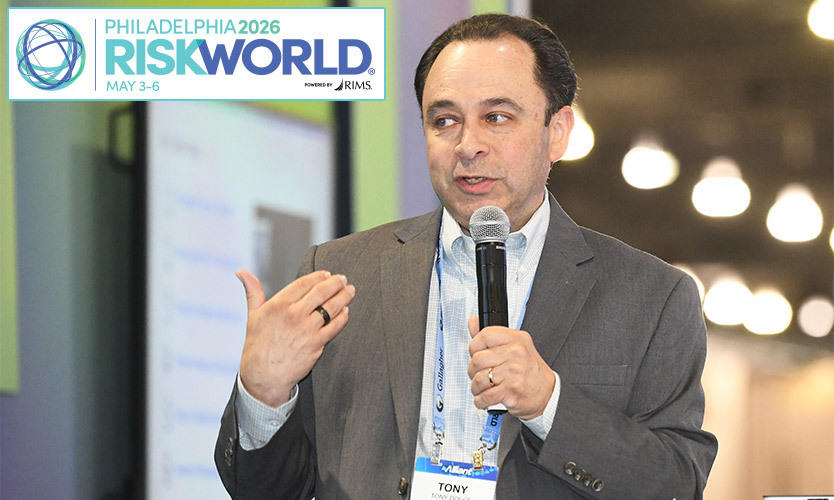
AI-fueled fraud creates new cybercrime frontier for risk managers - Business Insurance
As artificial intelligence reshapes cybercrime, risk managers are facing a new frontier where fraud is faster, more convincing and harder to stop, according to an expert who spoke Monday at the Risk & Insurance Management Society’s Riskworld conference.
Deepfakes, business email compromise and payment fraud are rapidly overtaking traditional ransomware and data breaches as the most frequent cyber claims, forcing companies to rethink both prevention and insurance coverage, said Anthony Dolce, Hartford, Connecticut-based head of professional liability, cyber, tech E&O at The Hartford.
Mr. Dolce focused on how threat actors are increasingly using AI to scale social engineering attacks, impersonate trusted executives and manipulate payment systems. While ransomware still drives major losses and headlines, he said lower-severity but high-frequency fraud events such as phishing, invoice manipulation and fraudulent wire transfers are now creating a “death by a thousand cuts” for organizations.
People
Berkshire taps Charlie Shamieh to succeed Ajit Jain as insurance chief, WSJ reports | Reuters
Berkshire Hathaway (BRKa.N), opens new tab has selected Gen Re Chairman Charlie Shamieh as successor to longtime insurance leader Ajit Jain, the Wall Street Journal reported on Monday, citing people familiar with the matter.
Shamieh, a veteran of the insurance industry, is set to take over Berkshire's vast insurance operations once 74-year-old Jain retires, the report said.