
News
Supply-demand softening property at a pace "I'll only describe as dumb" - Chubb CEO Greenberg - Artemis.bm
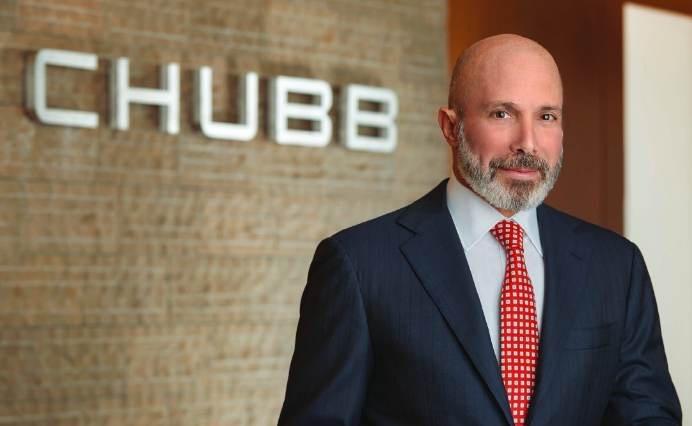
Speaking during the Chubb first-quarter earnings call today, CEO Evan Greenberg called out supply-demand factors related to capital in the insurance and reinsurance industry, as well as high levels of intermediation cost, as softening the property insurance market at a pace he called “dumb”.
Evan Greenberg, ChubbChubb reduced exposures in its Major Accounts and E&S divisions by non-renewing a substantial proportion of shared and layered property insurance business that was up for renewal, while also purchasing additional reinsurance to protect these risks, the company reported.
Asked about this during the earnings call, Evan Greenberg highlighted a “hunger” that is making the difference, saying that how the capital is showing up is a big cause of price pressures.
On large account property risks, both admitted and excess and surplus lines (E&S), Greenberg said the pricing levels are judged to be inadequate, driving the pull-back by Chubb in Q1.
“In a number of important markets, property and financial lines pricing conditions are soft, with property pricing in those markets softening at a pace that, frankly, I’ll only describe as dumb,” he stated.
Greenberg further explained that, “If I sort of step back and look at overall market rate, in shared and layered in North America and in London, pricing overall is off 25% in the quarter, heading to thirty. You can actually see it’s accelerating in that trend.
“And by the way, loss costs, to put a point on it, loss costs are moving at about four to 5% in shared and layered property, so you can work out the math there.”
After stolen cars from DC ended up in Africa, 6 charged in vehicle-theft ring
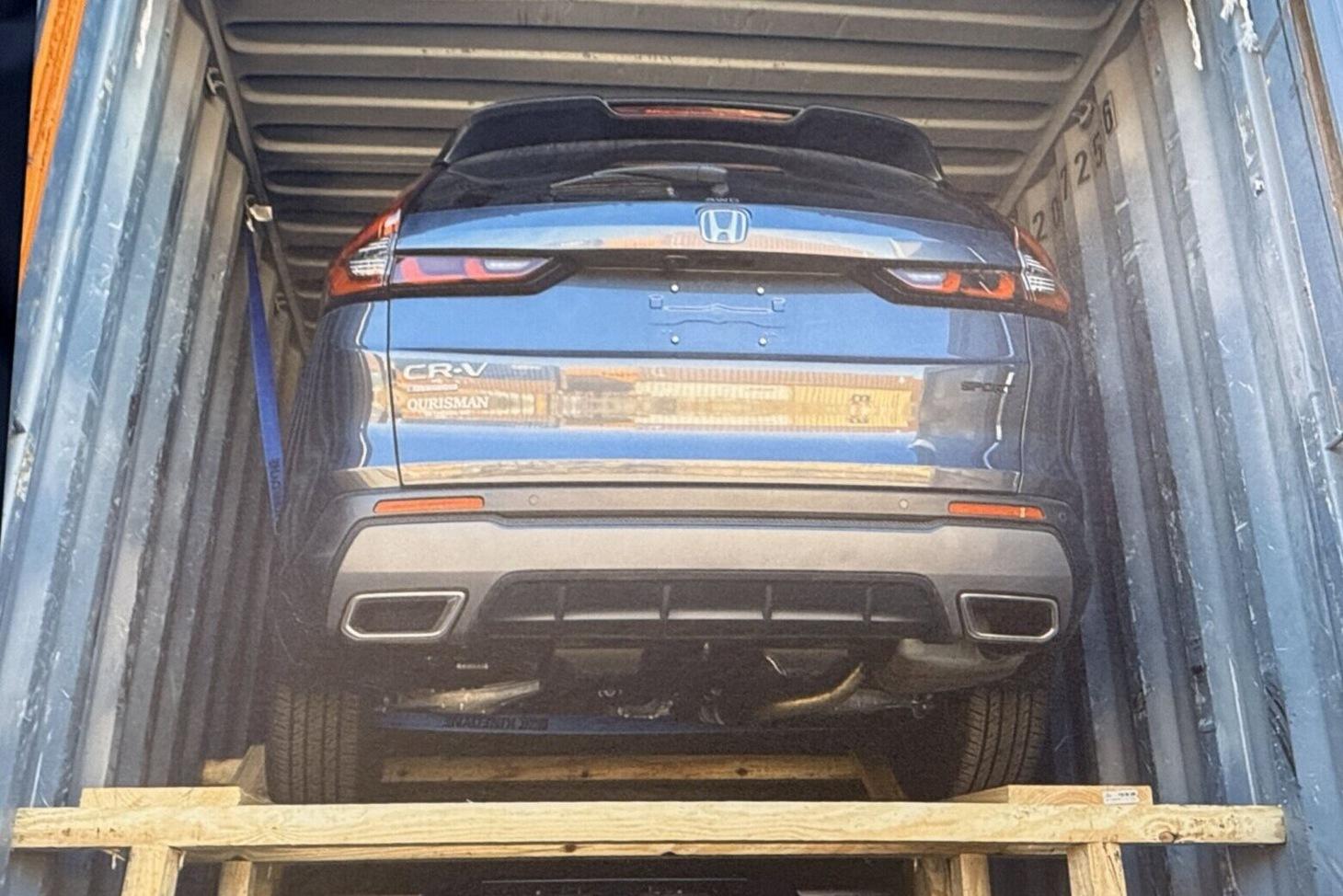
Six people have been arrested and charged with plotting to steal at least 20 cars from the D.C. area and sell them to buyers in the U.S. and Ghana in West Africa, according to a federal indictment unsealed Wednesday.
Jacob Hernandez, 29, of Los Angeles; Khobe David, 24, of Upper Marlboro, Maryland; Dustin Wetzel, 23, of Woodbridge, Virginia; Chance Clark, 25, of Waldorf, Maryland; James Young, 23, of Hyattsville, Maryland; and a sixth person whose name is redacted in the filing were arrested earlier this week after a grand jury returned the 15-count indictment.
U.S. Attorney for D.C. Jeanine Pirro said it’s possible more than 100 cars were stolen from D.C. and more than 30 from Prince George’s County, Maryland. They would be taken to one of two garages — one located on 70 I St. SE in the Navy Yard and another at a Marriott Hotel in Maryland. There, the license plates would be switched out, the vehicle identification number was sometimes changed and GPS devices were reset.
“From there, they are loaded onto shipping containers that are labeled ‘furniture’ as opposed to ‘cars,’ because there will not be as much scrutiny,” Pirro said. “Then, the shipping containers are sent across the ocean to Africa, where they get top dollar on the black market. This is a sophisticated ring turning everyday cars into international cargo.”
Pirro said demand for the vehicles in Africa is “sky high” — with buyers paying more than the cars would be sold for in the U.S. because the vehicles are so difficult to obtain, thanks to high tariffs.
Targeted vehicles included Corvettes, Camaros and several Hondas, including Civics, which Pirro said have additional value because their parts can be used with other vehicles. She said the thefts date back to at least February 2025, with the indictment saying late January of that year may have been when the first vehicle was stolen.
How it happened
Pirro laid out the simplicity of the scheme when she opened her news conference Wednesday, calling it “the new world of car theft.”
“They don’t need keys and they don’t need hot wiring. No smashed windows, no drama — just a sleek electronic device called an Autel,” Pirro said. “In under a minute, the car’s brain is rewritten. The car is gone in 60 seconds.”
Those Autel devices can be bought online by anyone for just a few hundred dollars, something Pirro said needs to change.
Financial Results
Abundant capacity and intense competition drive further commercial insurance rate declines in Q1: Marsh
Marsh’s latest Global Insurance Market Index (GIMI) shows that global commercial insurance rates declined by an average of 5% in Q1 2026, following a 4% fall in Q4 2025 and marking the seventh consecutive quarter of rate reductions.
According to the index, the downward rate movement in the opening quarter was again fuelled by abundant capacity and intense insurer competition across most major product lines.
Marsh reported that all global regions recorded year-over-year composite rate decreases in Q1 2026, with the Pacific and India, Middle East and Africa (IMEA) regions posting the largest declines of 12% and 10%, respectively.
In the US, where the overall composite rate was flat in Q4 2025, rates declined by 1% in Q1 2026.
OLD REPUBLIC REPORTS RESULTS FOR THE FIRST QUARTER 2026
Old Republic International Corporation (NYSE: ORI) today reported the following results for the first quarter 2026:
- Net income of $330.0 million, compared to $245.0 million last year.
- Net income excluding investment gains (net operating income) of $170.5 million, compared to $201.7 million last year.
- Consolidated combined ratio of 96.6%, compared to 93.7% last year.
- Favorable loss reserve development of 1.5 points, compared to 2.6 points last year.
Commentary/Opinion

Reality: Long Term Impact of Oil Crisis on Auto/Insurance
The damage is already done but the most severe consequences are yet to emerge
Stephen Applebaum & Alan Demers
For some reason, most Americans seem to think that if and when the US-Iran conflict comes to an end, oil prices and the broader economy will quickly bounce back to “normal”. Unfortunately, that is just not realistic and the longer-term damage is already set in motion. Subject matter experts are predicting a twelve-to-eighteen-month correction period once the situation stabilizes. The back up of oil tankers in the Strait of Hormuz will take at least a year to clear.
A year‑long oil crisis would hit both automobile sales and auto insurance in ways that go far beyond just higher gas prices. The short version: vehicle demand would likely shift sharply toward fuel‑efficient and electric models, overall sales could soften, and auto insurance costs would almost certainly rise due to inflation, repair costs, and economic stress. Below is a structured breakdown grounded in recent reporting and economic analysis.
Impact on Auto Insurance
Rising premiums driven by inflation and repair costs, Auto insurers are already facing a “severity crisis”: repair costs have surged due to inflation, supply chain issues, and the increasing complexity of modern vehicles. A prolonged oil crisis would worsen these pressures by raising transportation and parts costs. Insurers have been “racing to take rate,” and pessimistic outlooks suggest continued premium increases.
Higher replacement costs due to vehicle shortages. If automakers produce fewer vehicles because of high energy costs or supply disruptions, replacement vehicles become more expensive. Insurers must pay more for totaled cars, which pushes premiums higher. This dynamic has already been observed during labor strikes and supply chain disruptions.
The rise of deductible insurance
Insurance premiums have surged, with homeowners seeing their premiums increase by an average of 24% over the past three years. But rising premiums are only part of the story.
Deductibles in homeowners insurance are also rising. Average deductibles increased by more than 20% in 2025 alone, marking the second consecutive year of double-digit increases. Climate volatility is intensifying, reinsurance costs remain high, and carriers are refining their risk models. These factors make high deductibles a primary target for maintaining profitability.
Insurance is not only becoming more expensive, but it is also becoming harder to access when it matters most. It’s also worth noting that while most of the conversation focuses on homeowners, the same structural pressures are increasingly affecting commercial property owners as well.
The hidden consequences of high deductibles
When deductibles reach a certain threshold, many homeowners simply stop using their insurance. Instead of filing claims, they delay repairs or patch over damage. A cracked exterior might get a coat of paint. A leaking roof might be temporarily sealed rather than replaced.
In the short term, this avoids the cost of a claim. Over time, it leads to more severe damage, higher repair costs and properties that deteriorate faster than they should.
The impact extends beyond individual homeowners. Poorly maintained properties become harder to insure and can affect surrounding property values. Insurers, in turn, face larger losses when deferred damage eventually results in more severe claims. The system begins to work against itself.
Mortgage lenders are also exposed. If a homeowner cannot afford to repair storm damage because their deductible is too high, the underlying value of the property declines. A $400,000 home that remains unrepaired after a major loss is likely no longer a $400,000 asset.
AI in Insurance
Generative AI in Insurance Market Opportunity Analysis and Forecast Report 2026-2035: Integration of Advanced LLMs and Contextual Response Systems Fuels Sophisticated Claims Evaluation
The "Generative AI in Insurance Market Size, Industry Dynamics, Opportunity Analysis and Forecast 2026-2035" report has been added to ResearchAndMarkets.com's offering.
The generative AI market in insurance is experiencing rapid growth as insurers increasingly adopt artificial intelligence technologies to streamline operations and improve customer engagement. In 2025, the market reached a valuation of USD 1.11 billion and is projected to expand significantly to USD 14.35 billion by 2035. This growth reflects a CAGR of approximately 29.11% during the forecast period from 2026 to 2035.
Generative AI technologies are transforming multiple insurance processes by enabling automation, improving data analysis, and supporting more personalized services. One of the most significant applications is document analysis automation, where AI systems can process large volumes of unstructured information such as policy contracts, claims forms, and customer communications. By extracting insights from this data efficiently, insurers can accelerate operations while reducing human error and administrative costs.
IMA Financial Group Places $4 Billion Property Insurance Program for AI Data Center
IMA Financial Group, a North American insurance brokerage firm specializing in risk management, employee benefits and investment advisory services, today completed a $4 billion property insurance placement on behalf of a publicly traded AI and high-performance computing (HPC) data center company.
Structured through a leading global property carrier, the transaction ranks among the largest single property placements in the digital infrastructure sector and is one of several billion-dollar programs the independent brokerage firm has advised on in recent years.
IMA has built a track record of structuring large, complex insurance solutions across the digital infrastructure landscape, with multiple placements exceeding $1 billion in total insured value. The firm began specializing in data center risk in the early 2000s, building the technical fluency and sector expertise that today's AI and HPC facilities demand. That foundation and a deep understanding of how these facilities are built, operated, and valued have positioned IMA as a trusted advisor to many of the country's leading data center operators as the ind

The Onset of 'Death by AI' Claims | Insurance Thought Leadership
The insurance industry can take pride in the fact that innovation can't happen without it. Until innovators and their insurers figure out how to defray the risk from driverless cars, commercial space flight, etc., they can't go to market. But innovation also can't happen without lawyers. While we non-lawyers complain about how they slow things down, innovations can't scale until the legal system develops a framework for adjudicating the inevitable problems.
Generative AI is moving into its early legal phase, according to a report from Gartner Group. The report predicts that by the end of the year there will be more than 2,000 legal claims worldwide related to "death by AI," as mistakes by the software or by those implementing it may be the root cause of fatalities.
The implications will be most immediate for health insurers but will be felt soon enough in just about every corner of the insurance industry, especially where AI is being used to try to anticipate and prevent losses.
Let's have a look.
Gartner frames the "death by AI" issue as a broad one for companies in all industries, suggesting that general counsels need to be aware of the risks and need to work with insurers to purchase coverage. Gartner predicts that by 2030 there will be a 60% increased in corporate spending on security and governance related to AI. From that standpoint, AI looks like a big, new opportunity for insurers.
I'm more concerned about the potential surprises that may be waiting for insurers.
Paul Carroll, ITL Editor-in-Chief
State News
QBE Exits Homeowners Market - ERRRA
QBE Insurance is exiting the homeowners market in North Carolina, marking a full withdrawal as it narrows its focus.
The company will stop writing new homeowners policies on July 1, 2026. Nonrenewals will begin September 1, 2026, rolling over roughly a year. The exit impacts 7,707 policies, representing about $16.2 million in in-force premium.
This is not a partial pullback. The filing ties the move to a broader strategy to exit homeowners insurance across all states.
The affected book includes standard HO3 and HO6 policies. Renters business had already been withdrawn.
To manage the transition, program administrator Millennial Specialty Insurance is working with Builder Reciprocal Insurance Exchange to offer replacement coverage. If approved, the reciprocal plans to step in with similar policy forms to retain customers and limit disruption.
Nonrenewal notices will be sent at least 60 days in advance, with the process spread across the policy cycle rather than a single cutoff date.
Predict & Prevent
How The Hartford is reshaping commercial insurance through real-time risk prevention
At The Hartford, digital tools and data-driven insights are redefining the role of the insurer. Rather than focusing solely on risk transfer, the company is advancing a model centered on prevention, using technology to intervene before losses occur. This shift reflects broader changes across commercial insurance, where clients increasingly expect measurable operational value beyond claims payments.
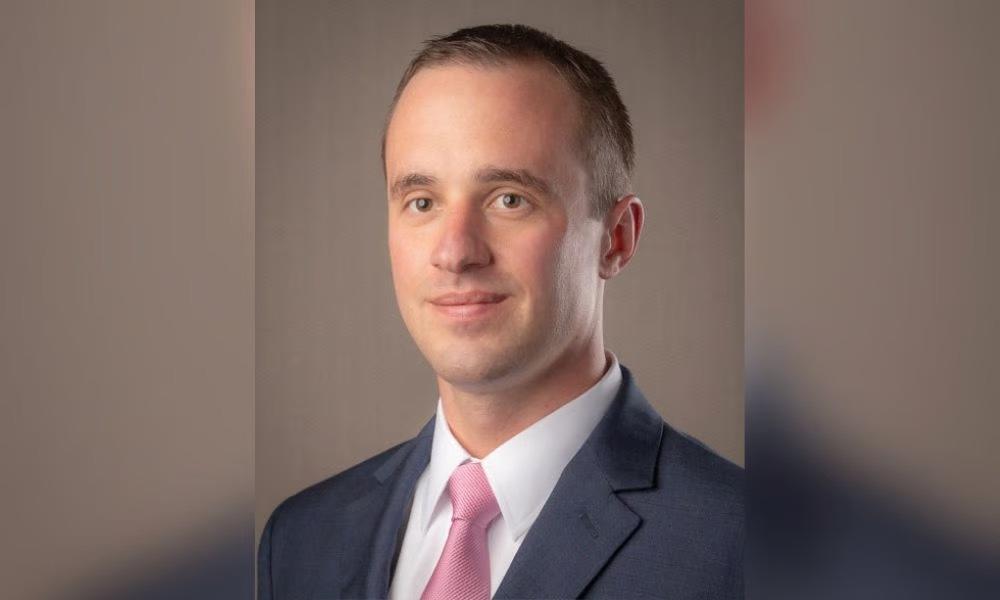
Dan Campany (pictured), who leads risk services at The Hartford, positioned pre-claim mitigation as central to the insurer’s identity.
“The risk-transfer insurance policy is intended to be the financial backstop for things that are unpredictable or unpreventable,” he said. “The pre-claim risk mitigation is our opportunity to help customers stop those things from happening in the first place.”
He framed the issue as both economic and human. Claims events often involve injuries, operational disruption, and cascading business impacts that extend well beyond financial loss. “There are downstream implications for the business that go beyond the simple financial transaction,” he said.